

By late morning in Naples or Fort Myers, the problem is usually obvious. The room with the best view is also the room that heats up first. West-facing glass starts throwing glare across the floor, the sofa fabric takes the sun every afternoon, and the air conditioner keeps cycling like it never gets a break.
That's the Southwest Florida trade-off. We build and buy homes for light, openness, water views, and indoor-outdoor living. Then the same glass that makes a house feel beautiful can make it feel hot, bright in the wrong way, and expensive to cool.
If you've been asking what Solar Control Glass is, the short answer is simple. It's glass designed to let daylight in while cutting down the sun's unwanted heat and glare. In a climate like ours, that isn't a luxury detail. It's part of making a home livable.
Beat the Florida Heat with Smarter Glass
In Southwest Florida, standard clear glass often does exactly what you don't want. It invites in strong sun, pushes heat into living spaces, and creates bright patches of glare that make a beautiful room less comfortable. The issue isn't sunlight itself. The issue is uncontrolled sunlight.
Solar control glass is the smarter fix. Think of it as a more selective skin for the window. It still welcomes daylight, but it's designed to reduce solar heat gain, which can help lower cooling demand in homes and commercial buildings. That's a big reason the category keeps gaining traction. The global solar control glass market was USD 7.76 billion in 2024 and is projected to reach USD 13.66 billion by 2030, according to Grand View Research's solar control glass market analysis.
For a Florida homeowner, that matters in everyday ways:
- Lower indoor heat load means rooms near large windows don't feel punished by afternoon sun.
- Less harsh glare makes TVs, laptops, and dining areas easier to use.
- Better comfort near glass changes how a room feels, not just how it looks.
A lot of homeowners start with blinds, shades, or films because those feel like the quickest answer. Sometimes they help. But if the glass itself is wrong for the exposure, you're still managing a problem after it enters the house.
Why this matters more in Naples and Fort Myers
Waterfront homes, open floor plans, tall sliders, corner windows, and bright coastal finishes all make solar exposure more noticeable. In Southwest Florida, the goal usually isn't to darken the home. It's to keep the house bright without making every sunny afternoon feel like a battle with the thermostat.
That's why glass choice belongs in the same conversation as insulation, shading, and HVAC. If you're looking at broader Tips for home energy savings, window performance deserves a place near the top of the list.
Good glass doesn't make a home feel closed off. It makes a sunny home feel usable.
There's also an aesthetic reason people choose it. Better-performing glass supports the clean, polished look people want in modern coastal interiors without turning the whole house into a dim cave. That's one reason high-end glass details often contribute to the overall feel of the space, much like the design ideas discussed in ways glass can make a home feel luxurious.
How Solar Control Glass Manages the Sun
“Sunglasses for your house” is the easiest way to explain it. Not blacked-out sunglasses. More like a high-quality lens that cuts the harshness without ruining the view.
Solar control glass manages solar radiation through reflectance, transmittance, and absorbance, as explained by Pilkington's solar control glass guide. In plain language, that means the glass does three jobs at once. It reflects part of the sun's energy away, lets useful visible light pass through, and absorbs some heat before it can drive up interior discomfort.
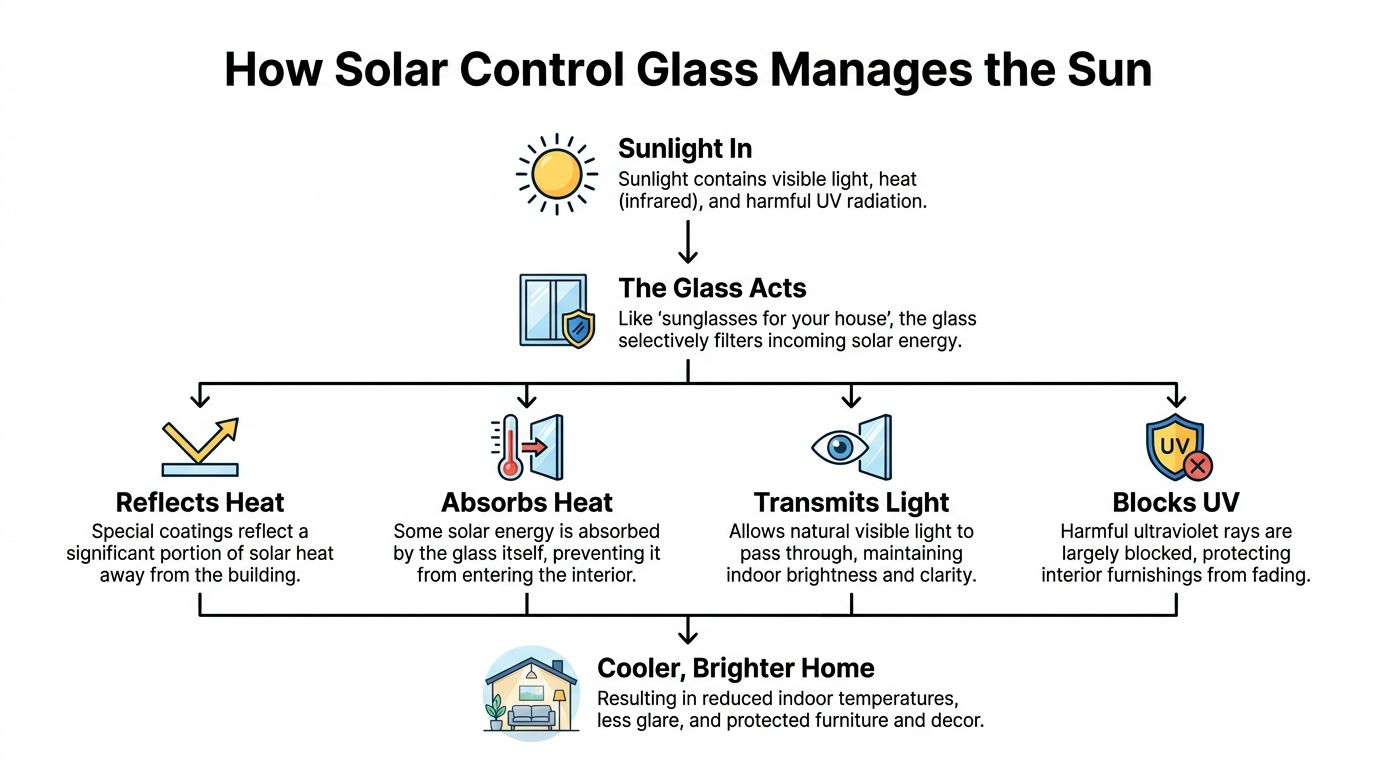
The three ways the glass works
Here's how that plays out on a sunny Florida day:
- Reflects part of the heat so not all of the sun's energy enters the room.
- Absorbs some energy in the glass itself instead of passing it directly indoors.
- Transmits daylight so the room can still feel open and naturally lit.
That combination is why modern solar control products perform better than the old idea of “just tint it darker.” Darker glass may cut brightness, but that doesn't automatically mean it creates the best balance of comfort, view, and daylight.
Why coatings matter more than color
The best-performing options usually rely on coatings, not just body tint. Many homeowners still picture solar control glass as noticeably dark or mirrored. Some products do look that way, and sometimes that's intentional. But a lot of today's better solutions are more subtle.
A modern low-e or solar control coating can be tuned to reject more unwanted solar energy while still keeping a clear, bright appearance. That matters in Southwest Florida homes where the owner wants Gulf views, pool views, or a clean contemporary facade without a heavy reflective look.
Practical rule: If the only selling point is “it's darker,” keep asking questions. Darkness and performance aren't the same thing.
The number that tells you how much heat gets through
The main performance term you'll hear is Solar Heat Gain Coefficient, or SHGC. Pilkington describes SHGC as a value from 0 to 1, where a lower number means less solar heat enters the building through the glass. For homeowners, that makes it the easiest metric to understand. It's the heat-entry number.
That doesn't mean the lowest possible SHGC is always the best answer. In Naples, the right glass for a west-facing family room may not be the right glass for a shaded front elevation or a space where preserving brightness matters more.
The best results come from matching the glass to how the sun hits the property.
Decoding the Performance Numbers on Your Windows
When homeowners compare window packages, they often hear a stream of technical terms and tune out. That's understandable. The problem is that the wrong number to focus on can lead to the wrong glass.
In Southwest Florida, the key is knowing which ratings affect comfort in a hot, bright climate and which ones sound impressive in a sales pitch.
The three numbers that matter most
Start with these:
- SHGC tells you how much solar heat gets through the glass. Lower means less heat entering the home.
- VLT stands for visible light transmittance. This tells you how much daylight passes through.
- U-value relates to insulation, or how well the window assembly resists heat transfer.
Homeowners tend to obsess over one number and ignore the others. That's where mistakes happen. A low SHGC can be useful in Southwest Florida, but if the glass becomes too dark, you may end up solving one problem by creating another.
A quick-reference table for SWFL
| Metric | What It Measures | Ideal Range for SWFL |
|---|---|---|
| SHGC | How much solar heat enters through the glass | Generally lower is better for sun-exposed elevations |
| VLT | How much natural daylight passes through | Moderate to high, depending on glare, view, and room use |
| U-value | How well the full window system insulates | A strong, efficient assembly suited to the project and code requirements |
That table is intentionally practical. It avoids fake precision because there isn't one perfect number for every home in Naples or Fort Myers. A waterfront living room with western exposure has a different job than a bathroom window tucked under an overhang.
Why darker isn't always better
A common Florida mistake is assuming the darkest glass must be the best glass. It sounds logical. If less light comes through, less heat should come through too. Sometimes that's partly true. But it can also leave the room flat, gray, and dependent on electric lighting even during the day.
That's the wrong win.
A better target is balanced performance. You want a glass package that cuts the right amount of heat, softens glare, and still allows the room to feel alive in natural light. Designers usually notice this first because they know what happens when flooring, cabinetry, wall finishes, and views all lose clarity behind overly aggressive tint.
If you can't enjoy the daylight or the view, the glass may be solving the climate problem too bluntly.
How these ratings affect real rooms
Instead of thinking like a spec sheet, think room by room.
A breakfast nook with eastern sun can often tolerate more daylight because morning light is easier to live with. A west-facing great room is different. That's where glare gets hard, floors heat up, and people close shades during the best part of the day. In that room, stronger solar control may make sense.
A designer should also think about finish palette and reflections. Pale stone, glossy surfaces, water outside, and white interior walls all amplify brightness. The same glass can feel comfortable in one home and too intense in another because the room itself changes how light behaves.
The practical buying mindset
When you're comparing options, ask questions in this order:
- Which elevations get the hardest sun
- How important is preserving a bright, clear view
- Which rooms are used most in the afternoon
- Will occupants tolerate a visible tint or reflective exterior look
- Does the full window system support the glass properly
That last point matters. Great glass in a weak frame or poor assembly won't perform the way you expect. Ratings should guide the decision, not replace judgment.
Common Types of Solar Control Glass
Not every solar control product looks or behaves the same. In practice, most projects in Southwest Florida fall into a few familiar patterns. The right choice depends on whether the priority is glare control, preserving a clean view, managing a commercial facade, or combining solar performance with impact resistance.
Tinted glass for strong sun and glare
Tinted solar control glass is the option many people recognize first. It reduces brightness and can soften aggressive glare, especially on exposed elevations. In a room that gets hammered by late-day sun, a tint can make the space immediately calmer.
The trade-off is visual. Some tints are perfectly acceptable. Others start to mute interior color and reduce the crispness of the outdoor view. That's why tinted glass works best when glare control matters more than maximum clarity.
A good example is a media room, stairwell, or secondary elevation where comfort beats view purity.
Reflective glass for privacy and facade control
Reflective solar control glass has a more pronounced exterior appearance. You'll often see it used in commercial settings or modern facades where a sharper, more mirrored look fits the architecture.
For some homes, it can add daytime privacy and reduce solar load. For others, it's too visually assertive. In upscale coastal neighborhoods, homeowners usually need to decide whether they want the glass to disappear or make a statement.
Spectrally selective low-e glass for a balanced look
This is often the sweet spot for residential work. Spectrally selective low-e glass aims to reject unwanted solar energy while keeping the glass visually lighter and more neutral than older dark tints.
If a homeowner says, “I want it cooler, but I don't want my windows to look smoked,” this is usually the category worth discussing first. It's especially useful in homes where open views and natural daylight are part of the design intent.
For projects where color fidelity matters, many people also compare finish options like ultra-clear glass because lower iron content can change how bright and true the glass looks.
Impact glass with solar control built in
In Southwest Florida, the conversation quickly turns practical. Most new construction and many renovations already involve impact-rated glazing because storm protection isn't optional thinking here. The good news is solar control performance can be built into impact glass assemblies.
That means you don't have to choose between storm protection and heat control. The better approach is choosing a system designed to handle both.
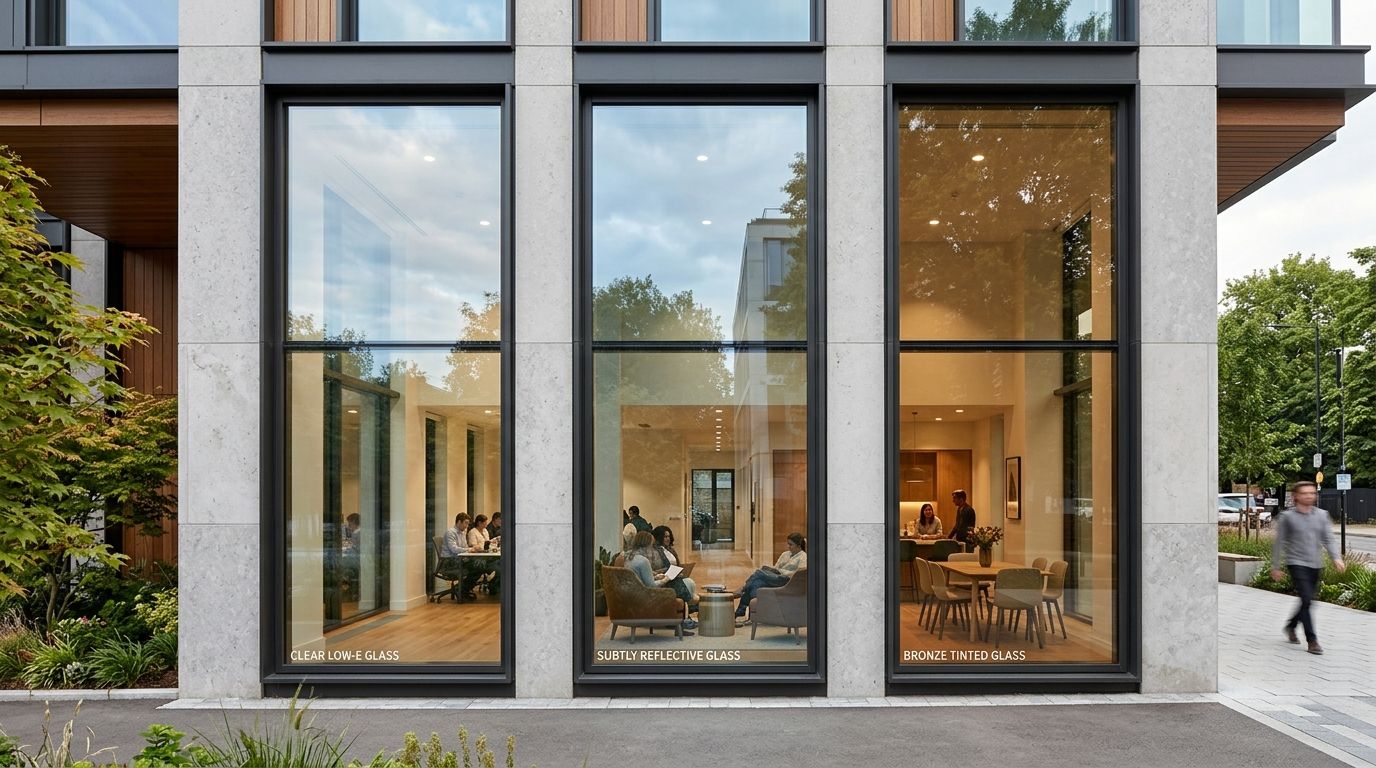
A quick visual overview helps when comparing the categories and how they look on a building:
For homeowners, the lesson is simple. Don't ask for “solar glass” as if it's one product. Ask which type best fits the room, the exposure, the architecture, and the level of storm performance the project requires.
How to Choose the Right Glass for Your Property
The best glass for Southwest Florida isn't the one with the most aggressive spec sheet. It's the one that fits the house, the orientation, and the way you live in the space.
That point gets missed all the time. The core trade-off with solar control glass is the balance between solar heat gain control and visible light, and focusing too hard on blocking heat can push buyers toward darker glass than they really need, compromising daylight and views, as noted by Everest's explanation of solar glass.
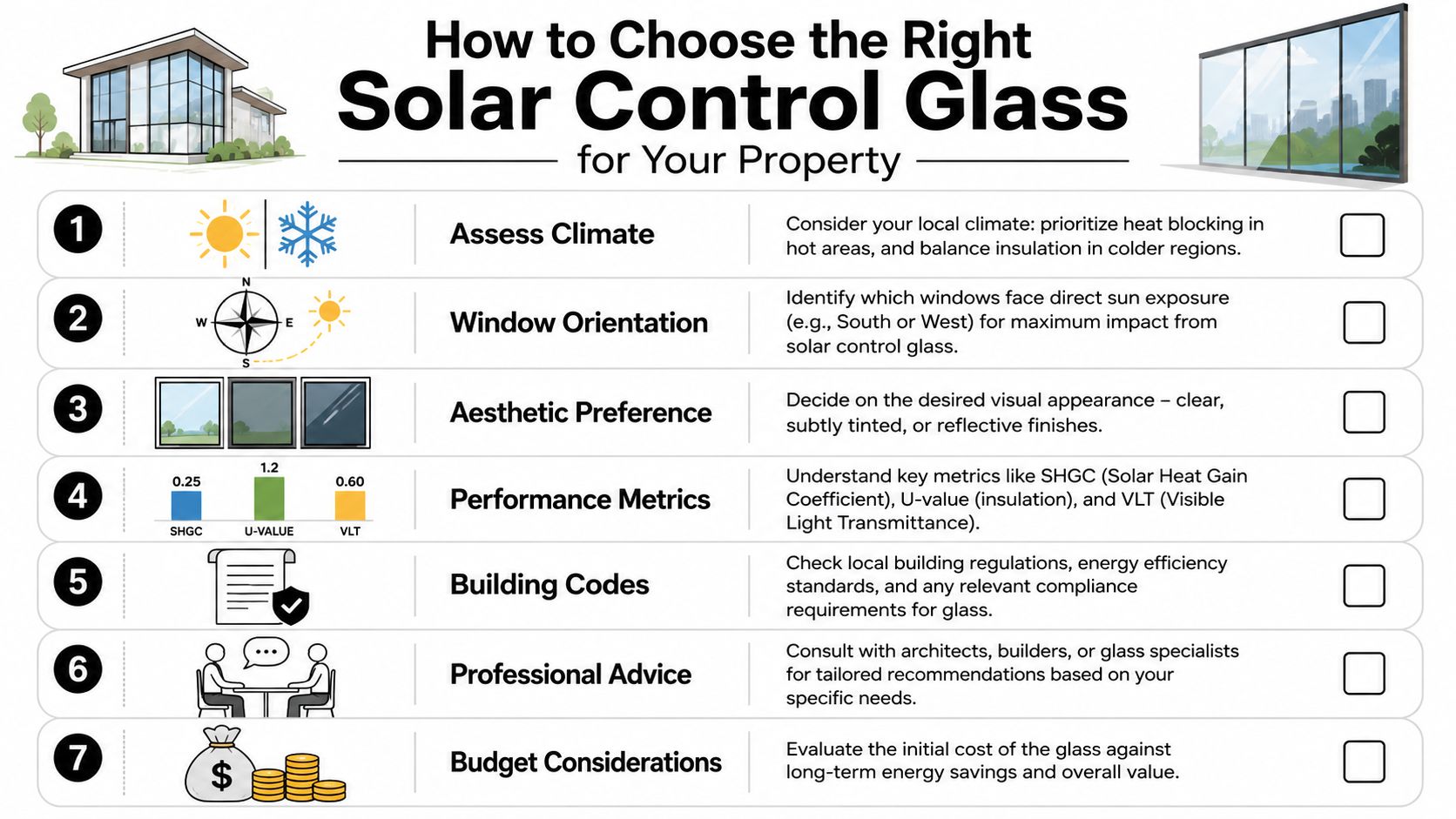
Start with orientation, not product names
A west-facing wall in Naples is a different animal from a shaded north-facing opening. The west side usually needs the most discipline because afternoon sun is hotter, brighter, and harder on comfort. South-facing glass also deserves attention, especially in rooms with big expanses of glazing.
Before picking a coating, answer these questions:
- Which windows get the worst afternoon exposure
- Which rooms need a clear, bright view to feel right
- Where do people sit close to the glass most often
- Are you dealing with water reflection, pool reflection, or pale hardscape outside
That last one matters in Southwest Florida. The sun doesn't only come straight from the sky. It bounces off water, white roofs, concrete, and light-colored pavers.
Match the glass to the room's job
A kitchen, great room, office, and stair landing don't need the same solution.
For a waterfront great room, preserving the view may be the top priority, so a more neutral, higher-clarity solar control option usually makes sense. For an office with laptop use all day, glare control may matter more than maximum brightness. For a front elevation with privacy concerns, a subtle tint or reflectivity may be perfectly appropriate.
The right glass should support how the room is used at 3 p.m., not just how it looks in the showroom.
Don't copy another climate blindly
Homeowners often read articles from other hot-weather markets and assume the same answer applies here. Some of that advice is useful. For example, comparisons like these best Phoenix home cooling solutions can help you think through exterior shading versus glazing strategies. But Southwest Florida adds its own variables, especially humidity, coastal brightness, view preservation, and frequent impact-glass requirements.
A practical selection checklist
This is the filter I'd use before signing off on a product:
Climate fit
In Southwest Florida, cooling performance matters, but not at the expense of making the home gloomy.Exposure map
Mark the windows that take direct afternoon sun first. Those usually deserve the most attention.Appearance tolerance
Decide whether you want the glass to look nearly clear, lightly tinted, or noticeably reflective.View value If the home overlooks the Gulf, a canal, a pool, or gardens, don't sacrifice clarity casually.
System compatibility
Make sure the chosen glass works within the window or door system you're installing. Browse complete glass product options only after you know the performance target.
The strongest choice usually isn't the darkest and it isn't the most expensive by default. It's the one that handles Florida sun while keeping the room pleasant to live in.
Professional Installation and Long-Term Care
Even excellent glass can underperform if the installation is sloppy. Poor measurement, bad edge conditions, weak sealing, or a system that isn't fitted square can undermine comfort, create stress on the unit, and leave the owner blaming the glass for a problem that started with execution.
That's especially true in Southwest Florida, where large openings, impact-rated assemblies, and coastal exposure leave less room for shortcuts. The glass specification matters. The install quality matters just as much.
Why installation quality changes the result
A good installer doesn't just “put in glass.” The installer verifies dimensions, accounts for the opening, protects the unit during handling, and makes sure the whole assembly performs as intended.
That's one reason experienced local teams matter. Work like this depends on careful field measurement, product knowledge, and disciplined installation practice, not guesswork. If you want to understand what that level of workmanship looks like, review the standards described on the glass company background and service approach.
Premium glass can't rescue a poor install. The system has to be right from opening to seal.
How to care for solar control glass
Maintenance is straightforward, but it should be thoughtful.
- Use soft cleaning materials so you don't scratch the glass surface.
- Avoid abrasive cleaners that can damage coatings or surrounding finishes.
- Rinse coastal residue promptly because salt and grime are tougher on glass near the water.
- Follow manufacturer guidance if the unit includes specialty coatings or fabricated surfaces.
For homeowners who want easier upkeep, protective surface treatments can help reduce spotting and simplify cleaning. In coastal homes, anything that preserves clarity and cuts maintenance effort tends to earn its keep quickly.
Frequently Asked Questions About Solar Control Glass
Can solar control glass also be impact glass
Yes. In Southwest Florida, that's often the practical path. Solar control performance can be incorporated into impact-rated glazing systems, so you can address storm protection and sun management in the same overall assembly.
Will solar control glass make my room too dark
Not if it's chosen well. That's one of the biggest misconceptions. Older or overly aggressive tinted products can make a room feel dim, but modern options can be much more selective. The goal is to reduce unwanted heat and glare without stripping the room of useful daylight.
Is aftermarket tint film the same as solar control glass
No. Film and purpose-built solar control glass aren't the same thing. Film can be useful in some retrofit situations, but integrated glass solutions are generally a cleaner answer when you're replacing windows or building new because the performance is part of the glazing system itself.
Is the best option always the one with the lowest SHGC
No. In Florida, low SHGC often helps, but the best choice still depends on orientation, daylight goals, view quality, and how the room is used. Chasing one number alone can lead to glass that performs on paper but feels disappointing in daily life.
Does solar control glass help with glare on water-facing homes
It can. Homes near the Gulf, bays, canals, and pools often deal with reflected brightness, not just direct sunlight. The right glass can make those spaces more comfortable, especially during the strongest sun hours.
Is it worth asking a specialist to review room by room
Absolutely. Different elevations and rooms can justify different solutions, especially in custom homes. A specialist can help match the glass choice to each opening instead of treating the entire house like one uniform condition.
If you still have practical questions about compatibility, maintenance, or glass selection, a solid place to continue is this glass FAQ resource.
If you're in Naples, Fort Myers, or the surrounding Southwest Florida area and want help choosing glass that suits your sun exposure, architecture, and lifestyle, talk with AmeriGlass Industries. Their team handles precision measurement, professional installation, and custom glass solutions built for coastal homes and commercial spaces.