
You spend good money on a frameless shower, the installer leaves, the bathroom looks sharp, and then the glass starts turning milky. A few weeks or months later, you're wiping circles into it with vinegar, glass spray, or whatever was under the sink, wondering how brand-new glass already looks tired.
In Naples and across Southwest Florida, that frustration is common. The problem usually isn't neglect. It's chemistry. Our water doesn't just leave behind the usual calcium and magnesium residue. In many homes, especially on well water near the coast, the mineral mix is more stubborn than the generic advice online assumes.
That's why a lot of DIY fixes disappoint. They treat every haze mark like a simple surface stain, then push people toward scrubbing harder when the glass needs a smarter approach. If you want to keep a luxury enclosure looking like a luxury enclosure, surface integrity matters as much as cleaning power.
That Cloudiness on Your New Shower Isn't Your Fault
A new frameless shower can look incredible on day one, especially if you chose a clearer, more refined glass option like ultra-clear shower glass. Then the first cloudy film shows up, and it feels like something's already gone wrong.
It usually hasn't.
In Southwest Florida, the local water profile creates a rough environment for shower glass. Recent environmental data from Southwest Florida indicates that 42% of local well water samples contain high chloride levels at or above 150 ppm, which react with calcium to form insoluble complexes that traditional vinegar-based cleaners cannot dissolve. That's why many homeowners keep cleaning and still see the spots remain.
Coastal Florida water is different
A lot of online advice assumes every water spot is basic calcium residue. In this region, that's often incomplete. Coastal conditions can add chloride into the mix, and once that residue dries repeatedly on warm shower glass, the haze can become far more stubborn than a quick wipe-down can handle.
That matters because the wrong response is usually more scrubbing.
Aggressive cleaning often damages the very surface you're trying to preserve.
I've seen homeowners do what seemed reasonable. They use stronger acids, rougher pads, or scraping tools because the spots won't move. The immediate result may look better for a moment. The long-term result is often worse because the glass becomes more vulnerable after the surface is disturbed.
The real fix starts with diagnosis
Before you decide how to clean the glass, figure out what you're looking at:
- Fresh residue often wipes away more easily and feels like a topical film.
- Mineral buildup tends to look white or chalky and can feel rough.
- Etching or coating failure leaves a dull, cloudy look that cleaning alone may not reverse.
That distinction is what most generic guides miss. If you treat every mark like dirt, you can turn a maintenance issue into a restoration issue.
Why Hard Water Spots Are More Than Just Stains
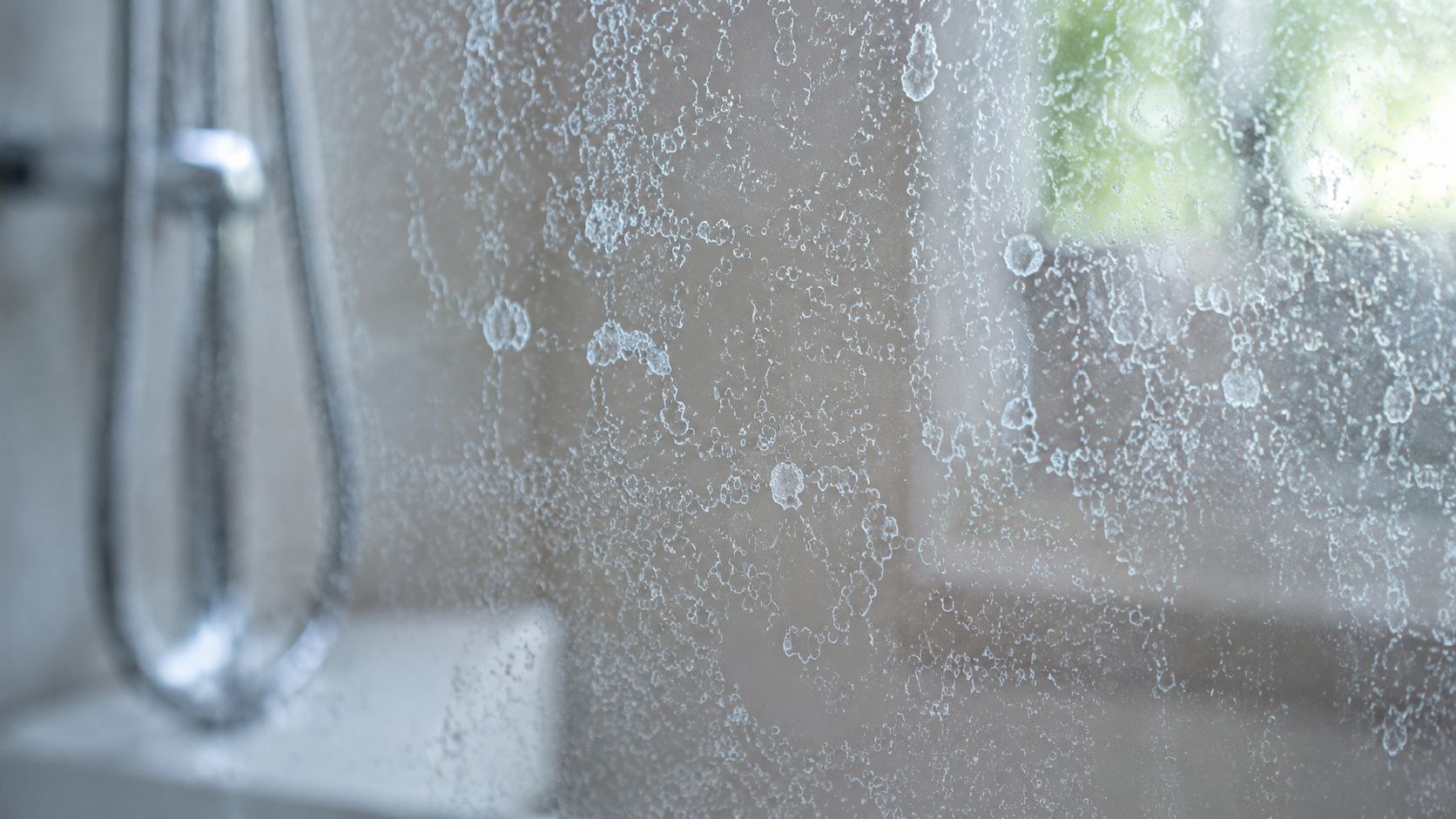
What most homeowners call water spots are often more serious than simple staining. On shower glass, repeated mineral exposure can become a form of surface corrosion. In the trade, people sometimes call it shower glass cancer because it spreads slowly, bonds tightly, and gets harder to fix the longer it sits.
What's actually building up on the glass
Each shower leaves behind tiny amounts of minerals. The main culprits are calcium and magnesium. Add soap residue, shampoo overspray, and normal bathroom humidity, and those materials begin to harden into a bonded layer.
At first, the problem looks cosmetic. Later, it starts behaving like surface damage.
Statistical analysis from household maintenance experts reveals that 95% of shower glass owners report visible clouding or spotting within the first year of installation if the glass remains uncoated, which is why unprotected glass so often becomes a cleaning battle instead of a simple wipe-down.
Residue and etching are not the same thing
Consequently, people lose time and accidentally damage glass.
- Soap scum is usually a filmy layer sitting on top.
- Mineral deposits are more stubborn and can harden onto the surface.
- Etching means the glass itself has started to lose its smooth finish.
If the door still feels slick and the haze changes after cleaning, you may still be dealing with removable buildup. If it looks permanently dull, especially under side lighting, the minerals may have already altered the surface or damaged the protective layer.
What matters most: once mineral buildup hardens past the reach of normal cleaning, the cloudy appearance can become permanent.
Why generic tips often miss the mark
A lot of homeowners search broadly for answers and find general water-quality advice mixed with cleaning tips. If you're comparing regional water issues more broadly, even resources on how to improve your Melbourne tap water quality can help illustrate the bigger point. Water chemistry drives maintenance outcomes. The glass is only half the story.
That's why water spots on shower glass need to be treated as a materials issue, not just a housekeeping issue.
Your Tiered Cleaning Arsenal From Daily Wipes to Deep Restoration
Not every shower door needs the same response. The right method depends on whether you're dealing with fresh water residue, established mineral film, or stubborn alkaline deposits that have been sitting for months.
Level one for light daily spotting
If the glass still looks mostly clear and you're seeing fresh droplets dry into faint marks, keep it simple.
- Use a squeegee immediately after showering. Remove standing water before it evaporates.
- Follow with a microfiber towel if you notice corners or edges holding moisture.
- Skip harsh sprays that leave residue or attack coatings.
This level is all about interruption. You're stopping evaporation from leaving minerals behind.
Level two for weekly maintenance
When the door has a visible film but not heavy crusting, move to a weekly routine.
Use a pH-neutral glass cleaner, a clean microfiber cloth, and light hand pressure. Focus on consistency, not force. If your cleaner leaves the glass squeaky but not clearer, that's a sign you're probably cleaning over mineral buildup rather than removing it.
For homeowners looking at specialty products outside the home-glass world, some marine detailing guides can be helpful because boats deal with stubborn mineral spotting too. This breakdown of a Boat Juice water spot solution is useful for understanding why dedicated water spot chemistry outperforms ordinary glass spray.
A solid routine matters more than random deep cleans. For more practical upkeep habits, this guide on shower door maintenance is worth reviewing before the buildup gets away from you.
Level three for stubborn alkaline deposits
Once you have opaque white spots, patchy haze, or rough-feeling panels, the best approach is not “spray more acid and hope.” The most effective professional-style method is a gel-work and neutralization approach.
The most effective protocol for removing alkaline hard water spots involves a commercial lime-removing gel worked into the surface, then neutralized with a citrus-based cleaner to prevent re-deposition, which otherwise occurs in 90% of cases within 30 days, as shown in this technical demonstration of the gel-work and neutralization method.
Here's what that means in practice:
- Pre-rinse the glass so loose debris isn't dragged across the panel.
- Apply a heavy-duty lime-removing gel made for calcium and magnesium deposits.
- Work it manually with a microfiber applicator in a side-to-side motion. This physical action matters.
- Apply a second pass so the deposit is fully saturated.
- Neutralize with a citrus-based cleaner so residue doesn't re-form on the surface.
- Finish with a ceramic-infused glass cleaner and a premium microfiber towel.
That sequence works better than a quick acid spray because it breaks down the deposit and then shuts down the chemical conditions that let it come right back.
What not to use
Many expensive shower doors frequently suffer damage here.
Existing advice often pushes razor blades, steel wool, and abrasive compounds. Those tools may remove some visible spotting, but they can also strip a protective seal or scratch the surface enough to make future spotting worse.
Don't use:
- Razor scraping unless a glass restoration professional has confirmed it's safe for that exact condition.
- Steel wool, especially on coated glass or unknown glass.
- Abrasive powders or pads that leave micro-scoring behind.
Clean the deposits without roughening the glass. That's the difference between restoration and repeated damage.
Shower Glass Cleaning Methods Compared
| Method | Frequency | Tools Required | Best For |
|---|---|---|---|
| Squeegee and microfiber dry | After each shower | Squeegee, microfiber towel | Fresh water residue |
| pH-neutral maintenance clean | Weekly | pH-neutral cleaner, microfiber cloth | Light haze and routine upkeep |
| Gel-work and neutralization | As needed for buildup | Lime-removing gel, microfiber applicator, citrus-based cleaner, ceramic-infused cleaner | Stubborn alkaline mineral deposits |
| Abrasive scraping or steel wool | Avoid | Razor, steel wool, abrasive pad | Not recommended for preserving surface integrity |
How to Win the War on Water Spots Through Prevention
The easiest water spots to remove are the ones that never get a chance to dry on the glass.
If you live in Naples or anywhere nearby, prevention isn't optional. It's the cheapest way to protect the look of your shower and the finish of the glass itself.
Daily habits beat heroic cleaning
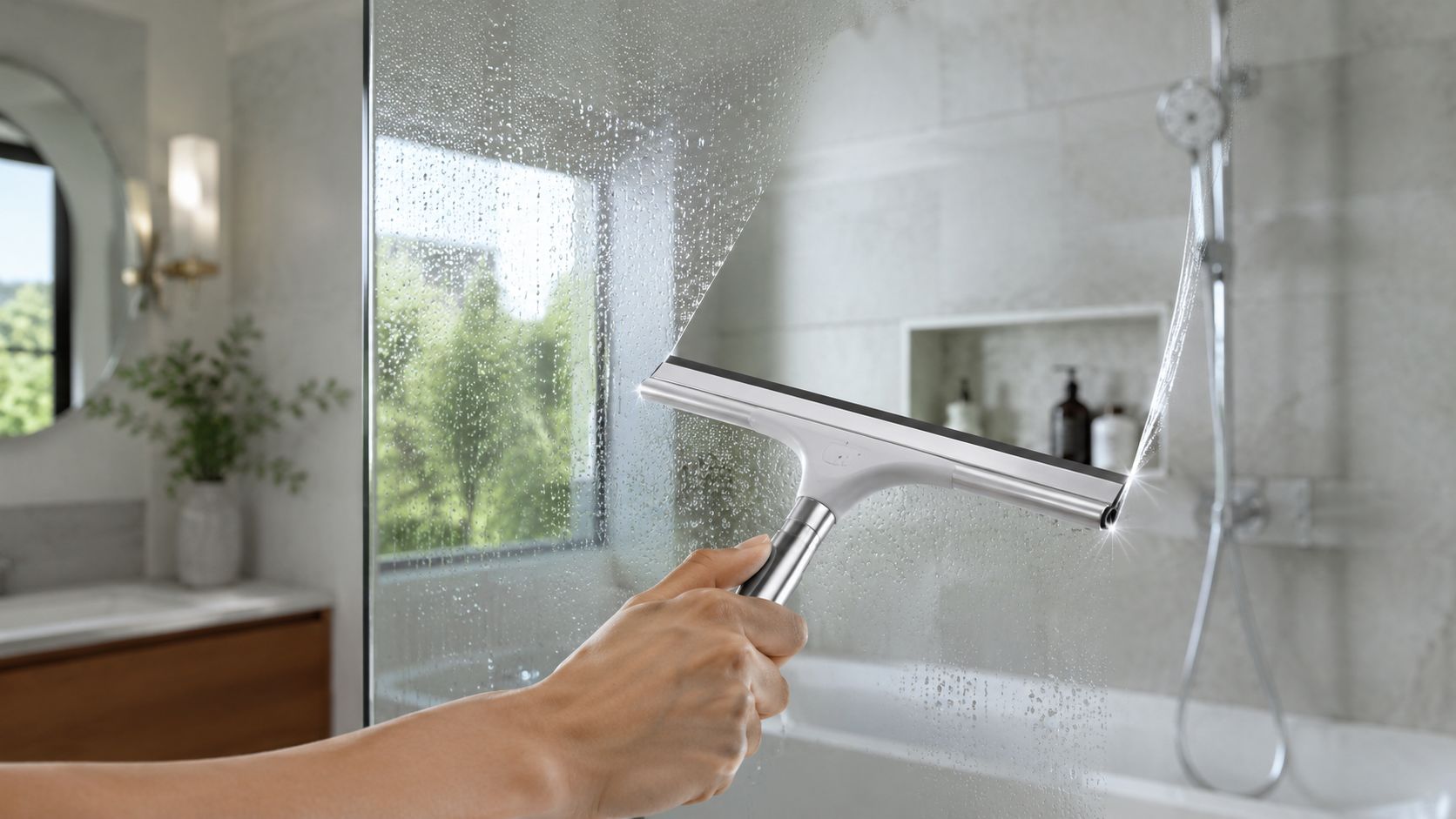
A squeegee takes less effort than a restoration appointment. Use it right after the shower while the water is still sitting on the panel. Then hit the bottom edge and hardware area with a microfiber towel.
That simple habit matters because standing water is what leaves the mineral map behind.
For homeowners building a better routine, this advice on hard water prevention from Altitude Cleaning Crew lines up with what works in the field. Remove the water first, and you avoid most of the frustration later.
Add layers of protection
Daily drying is your first layer. The second layer is surface protection.
Consumer-grade hydrophobic sprays can help, but they're usually temporary and sensitive to how clean the glass was before application. If the panel still has a faint film on it, the product may haze, wear unevenly, or fail to bond properly.
That's why the condition of the glass before sealing matters so much. A dirty panel doesn't become protected glass. It becomes sealed-in residue.
If you're planning a remodel or replacing an older enclosure, it helps to think about maintenance at the design stage too. Glass selection, enclosure layout, and coating choices all affect long-term care, which is worth considering when you design your shower door.
Control the source when you can
Some homes need more than wiping and spray protection. If your water is especially mineral-heavy, a water softener can reduce the mineral load before it ever reaches the shower.
There's also strong performance data behind that preventive approach. A hydrophobic ceramic glass coating with a molecular contact angle of at least 115° reduces water adhesion and mineral deposition. Untreated glass in high-mineral areas above 3 GPG can show visible stains within 14 days, while coated glass can extend that interval to 90+ days with the same water chemistry. Showers with daily squeegee habits have a 0% incidence of permanent hard water staining over a 2-year period, while those without daily removal show an 85% incidence. Reducing water hardness to 3 GPG or below with a water softener cuts mineral load by 95%, according to Glass Doctor's discussion of hard water and shower doors.
This short video gives a useful visual on the kind of daily care that keeps spotting from taking hold:
Prevention works best when you stack it. Dry the glass, protect the surface, and reduce the minerals if your water is rough enough to justify a system-level fix.
When to Call a Professional for Coating and Restoration
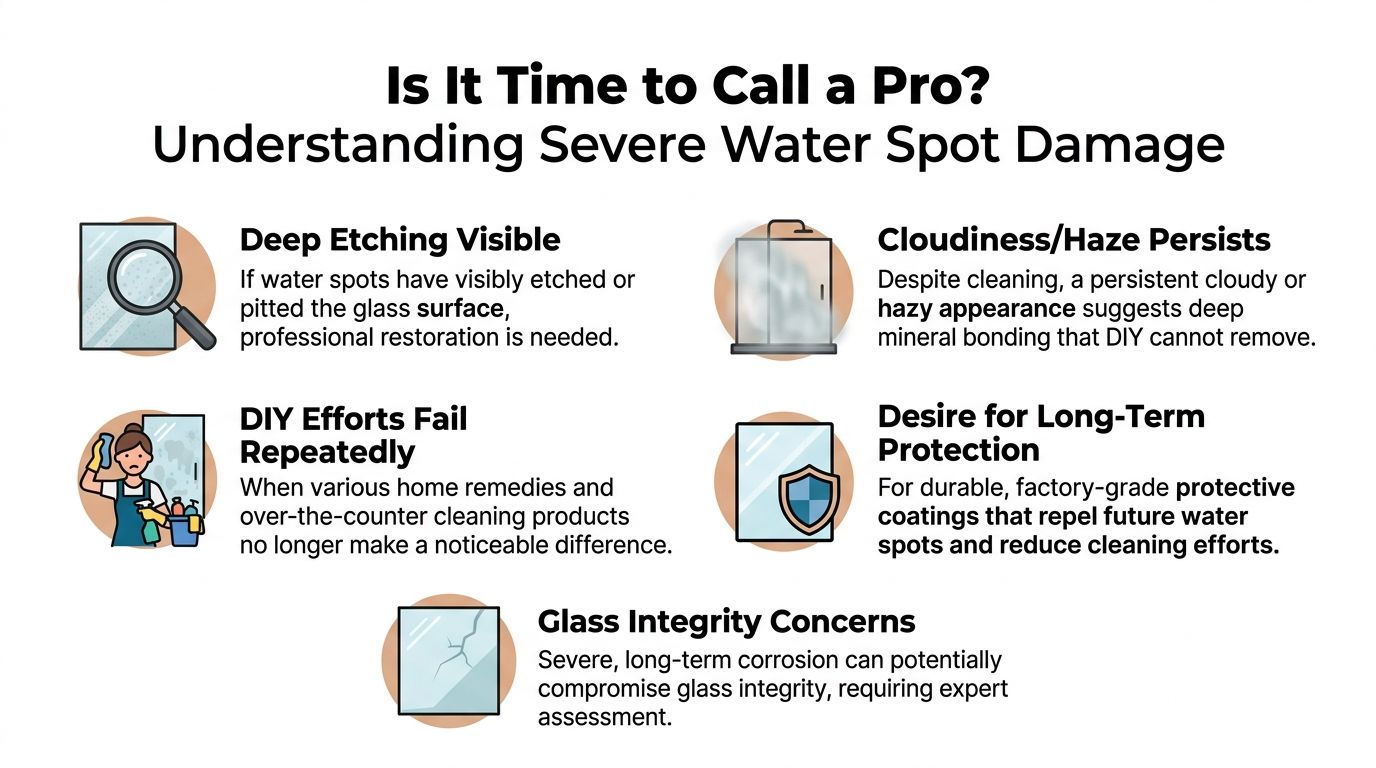
There comes a point when more DIY effort stops helping. If the glass still looks cloudy after careful cleaning, the spots come back quickly, or the panel has a dull, tired look no matter what product you use, you're probably past the simple-maintenance stage.
Signs the glass needs more than household cleaning
Look for these red flags:
- Persistent haze after cleaning that doesn't change when the surface is dry.
- Patchy clarity where some areas stay dull and others brighten.
- Repeated spot return soon after treatment.
- Concern about damaging the glass with stronger tools or chemicals.
- Interest in long-term protection rather than another short-lived fix.
If any of those sound familiar, the issue may be etched mineral damage, coating failure, or surface roughness that now attracts more residue than before.
Why professional coating changes the equation
At that stage, restoration alone isn't the whole answer. You want the glass corrected and then protected.
A professional protective barrier, like a ceramic-infused coating, can reduce necessary cleaning efforts by up to 90%. This is because it prevents the initial 100% of water and grime adherence that causes spots on uncoated glass, keeping it clear for years.
That's a major difference in real life. It means fewer aggressive cleanings, less frustration, and less chance of damaging the surface while trying to keep it clear.
If you've invested in a premium frameless enclosure, think about the value the way you would with stone counters or custom cabinetry. You don't wait until the finish is wrecked. You protect it. The same logic applies here, especially in a coastal market where water chemistry is hard on exposed glass.
For homeowners who care about preserving the upscale look of the bathroom as a whole, this perspective on how glass can make a home feel more luxurious is relevant. Clean, clear shower glass isn't a small detail. It changes how the entire room reads.
Professional help makes sense when your goal shifts from “clean it today” to “keep it clear for years.”
Enjoying a Crystal-Clear View for Years to Come
Water spots on shower glass aren't just a nuisance in Southwest Florida. They're a predictable result of local water chemistry, humidity, and daily evaporation. Once you understand that, the right strategy becomes clearer.
Protect the surface first. Clean with methods that respect the glass. Avoid abrasive shortcuts that create a bigger problem later. Build a daily drying habit, and if your water is especially tough, consider a better barrier or a whole-home solution upstream.
A frameless shower is one of the most visible features in a bathroom. When the glass stays clear, the whole room feels brighter, cleaner, and more finished. When the glass clouds over, even a beautiful bath starts to look neglected.
If you're planning upgrades, comparing glass options, or thinking long-term about maintenance, it helps to review the full range of custom glass products available for residential spaces.
If your shower glass is already cloudy, or you want to stop the problem before it starts, AmeriGlass Industries can help you choose the right path, from new frameless shower glass to protective coating options that keep it looking clean and sharp in Southwest Florida conditions.
Tired of water spots? AmeriGlass Industries installs frameless shower doors with an optional protective coating and offers shower door repair across Naples, Fort Myers, Bonita Springs and Cape Coral. Call (239) 426-6884.