

You're probably in the middle of a decision that looked simple at first. The designer wants a frameless shower. The builder is talking about glass railings. Someone else says your new sliders or fixed windows need impact glass because you're in Naples, Fort Myers, or Bonita Springs. Then the same question keeps coming up: tempered glass or laminated glass?
In Southwest Florida, that choice isn't cosmetic. It affects safety, hurricane performance, maintenance, inspections, and in some cases what your insurer wants to see after a storm claim. National articles usually stop at “tempered breaks safely” and “laminated stays together.” That's true, but it's not enough for this market. Salt air changes hardware decisions. Humidity affects long-term maintenance. Coastal exposure changes what works well on paper versus what holds up in the field.
Choosing the Right Glass for Your Florida Home
A common renovation path in Naples starts with one upgrade and turns into five. A homeowner replaces an outdated shower, then adds a glass stair rail, then starts asking whether the rear lanai opening should get a cleaner glass system with more view and less frame. That's usually when the glass conversation gets real.
The wrong assumption is that all safety glass does the same job. It doesn't. One type is built to break in a safer way. The other is built to keep acting like a barrier after impact. For a shower door, that distinction points one direction. For an exterior opening in a storm-prone area, it often points another.
Southwest Florida also adds a layer that many guides skip. Local code review, permit requirements, product approvals, exposure to wind-driven rain, and the practical cost of enclosing or upgrading outdoor spaces all change the recommendation. If you're comparing project scope before committing, this breakdown of glass porch enclosure costs and permits is useful because it reflects the reality that glass decisions in Florida rarely happen in isolation.
Aesthetics still matter. Clean sightlines, low-iron glass, minimal hardware, and easier maintenance all matter in higher-end homes. But the smartest approach is to choose the glass by application first, then design around it. If the goal is a more refined interior feel, this look at how a glass company can make your home feel luxurious helps frame why the right glass selection changes more than just appearance.
Here's the quick comparison most homeowners want first:
| Feature | Tempered Glass | Laminated Glass |
|---|---|---|
| Basic construction | Single pane heat-treated glass | Multiple glass layers bonded with an interlayer |
| Breakage pattern | Small pebble-like pieces | Cracks but usually stays together |
| Best known for | Safe breakage | Retention, security, storm performance |
| Common residential use | Shower doors, some interior panels, many code-required safety locations | Impact windows, certain railings, exterior doors, sound-control applications |
| Cost direction | Usually lower upfront | Usually higher upfront |
| Florida relevance | Excellent for many interior uses | Often the stronger choice where opening protection matters |
What is Tempered Glass The Safety Standard
Tempered glass is standard glass that goes through a heat-treatment process. The glass is heated to a very high temperature, then cooled quickly. That rapid cooling changes the stress pattern inside the panel.
Similar to a tightly loaded spring, its outer surfaces end up in compression, and the core holds tension. That stress balance is what gives tempered glass its strength in everyday use. It handles hard use better than ordinary annealed glass, which is why you see it so often in showers, doors, and other places where people might bump into it.

How it gets its strength
The important part isn't just that tempered glass is “stronger.” It's stronger because the manufacturing process puts the surface under controlled compression. Surface damage has a harder time turning into a full crack because that compression resists the start of failure.
That's also why fabrication has to happen first. Once the glass is tempered, you can't casually cut it, drill it, or notch it on site. The panel has to be measured correctly, ordered correctly, and installed on hardware that matches the finished glass.
For homeowners choosing decorative or functional products, browsing custom glass product options can help show where tempered glass commonly fits in real residential applications.
Why it's called safety glass
Tempered glass earns the “safety glass” label because of how it breaks. When a tempered panel fails, it typically breaks into many small, blunt-edged pieces instead of dangerous dagger-like shards. Installers often call this the dicing pattern.
That break pattern matters in bathrooms and door locations. If a shower panel breaks, you don't want a sheet of razor-edged glass collapsing into the room. You want a failure mode that reduces the chance of severe cuts.
Practical rule: Tempered glass protects people mainly by reducing injury during breakage, not by staying in place after breakage.
That distinction is where many homeowners get tripped up. Tempered glass is strong in service, but if it does fail, the opening is now open. For some projects that's acceptable. For others, especially where storm protection or post-breakage containment matters, it isn't enough.
Where tempered glass works best
Tempered glass is usually the right answer when you need:
- Safer breakage near people: Shower enclosures, bathroom doors, and interior glass close to walking paths.
- A clean monolithic look: Frameless applications often benefit from the clarity and simplicity of a single panel.
- Reliable day-to-day durability: It holds up well to normal residential use when edges are protected and hardware is installed correctly.
What it doesn't do well is act like a retained shield after impact. Once it goes, it goes all at once.
What is Laminated Glass The Security Shield
Laminated glass is built differently from tempered glass. Instead of one monolithic pane, it's a layered assembly. Two or more pieces of glass are bonded together with a plastic interlayer, commonly PVB or SGP, depending on the application and performance needs.
That layered construction changes the job of the glass. Laminated glass isn't only about surviving impact. It's about what happens after the glass cracks. The interlayer keeps the broken pieces attached, so the panel can continue acting as a barrier.
How the glass sandwich works
A good way to think about laminated glass is as a glass sandwich. The outer glass layers provide rigidity and surface durability. The interlayer in the middle provides retention. When the panel is hit hard enough to crack, the broken fragments stick to that interlayer rather than raining down or dropping out of the frame.
This is why laminated glass often shows a spider-web crack pattern. The glass may be broken, sometimes badly, but the opening is not instantly exposed in the same way it is with tempered-only glass.
For design applications where specialty finishes, privacy options, and custom glazing details matter, examples of mirrors and specialty glass styles help show how layered glass systems can support both performance and appearance.
Why homeowners choose laminated glass
Laminated glass earns its reputation as a security shield because it keeps doing part of its job after damage. That matters in several real-world Florida scenarios:
- Storm events: Wind pressure and debris are one concern. Keeping the opening from becoming a wide breach is another.
- Forced entry resistance: Laminated glass is harder to defeat quickly because the interlayer keeps the panel together.
- Overhead or high-level safety situations: In some assemblies, retained broken glass is much safer than glass that fully vacates the opening.
Broken laminated glass often looks dramatic, but it usually remains in place long enough to keep people safer and protect the opening.
PVB versus SGP in practical terms
Homeowners don't always need to know interlayer chemistry, but builders and architects should care. PVB is commonly used where sound control and general laminated performance are priorities. SGP is the stiffer option and is often preferred when structural behavior, edge stability, and demanding exterior conditions matter more.
Along the Gulf Coast, that distinction can become important on exposed railings, high-end exterior glazing, and projects where moisture exposure and long-term edge performance deserve extra attention. The interlayer choice isn't something to guess on. It should match the system, the exposure, and the code path for the opening.
Head-to-Head Tempered vs Laminated Glass Compared
When clients ask about tempered glass vs laminated glass, they usually want one winner. In practice, each wins in different situations. The right comparison is less about “better” and more about what problem the glass needs to solve.
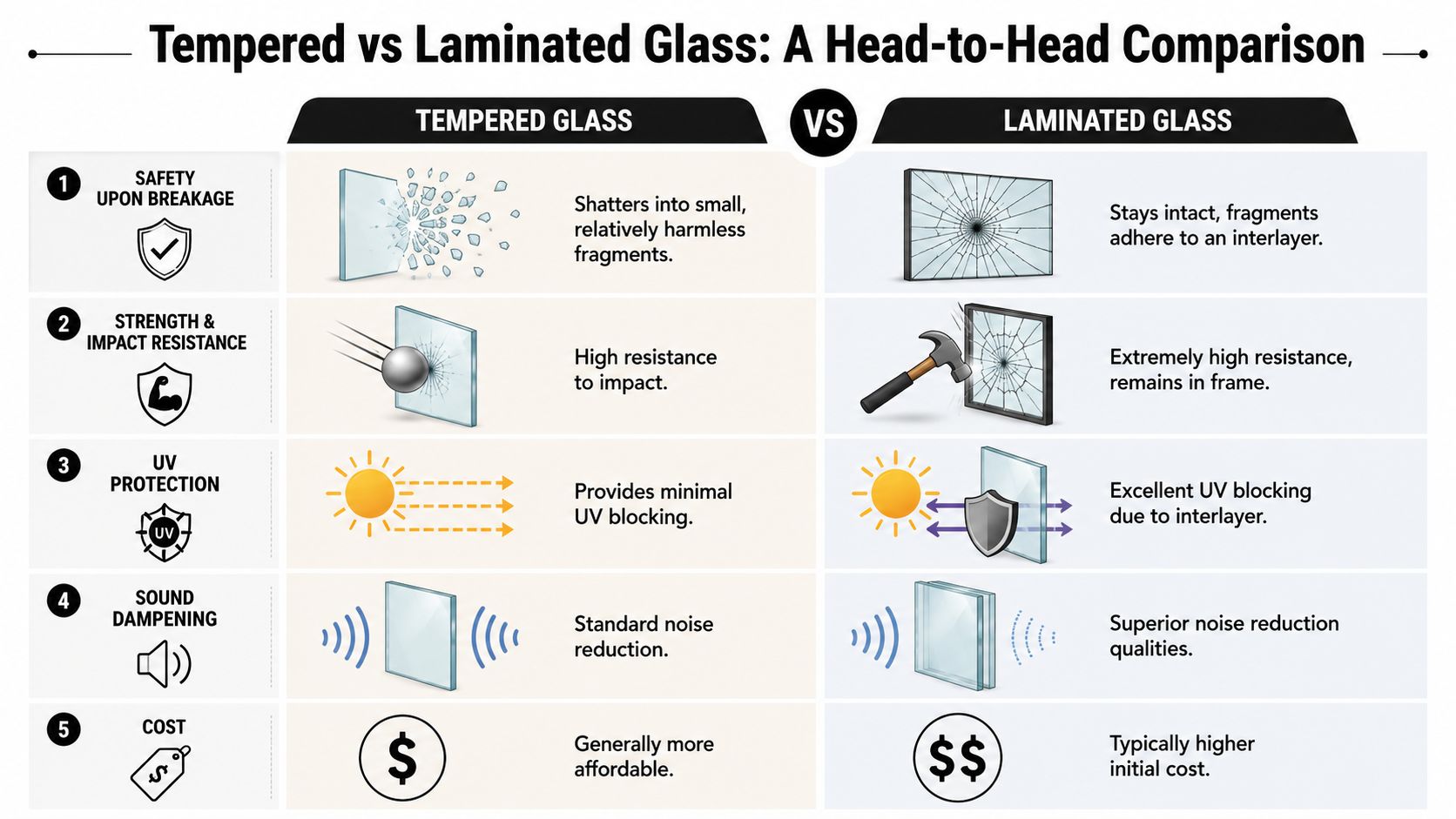
Strength and impact resistance
Tempered glass is tough for a single pane. It handles direct daily abuse well, which is one reason it performs so well in showers, doors, and partitions. But impact resistance in the field isn't only about the first hit. It's also about whether the assembly still functions after a hard strike.
Laminated glass often has the edge where continued containment matters. Even when the outer lite cracks, the interlayer can keep the system from opening up immediately. In Southwest Florida, that matters more than people expect because storm damage is rarely tidy. Wind, pressure changes, and water intrusion don't stop at the first crack.
Breakage behavior and safety
This is the single biggest distinction.
Tempered glass shatters into safe pieces. Laminated glass stays in one piece when shattered.
Tempered glass protects by reducing injury from sharp shards. Laminated glass protects by holding the broken panel together. If you're choosing for a shower, tempered often makes sense. If you're choosing for an exterior opening or a guard where retention matters, laminated usually deserves stronger consideration.
UV and sound insulation
Laminated glass also helps in ways homeowners notice every day. The interlayer can reduce noise transfer and help protect interiors from sun-related fading. That can make a difference near busy roads, community amenities, pool decks, and bright west-facing exposures.
Tempered glass doesn't bring that same built-in interlayer benefit. If comfort, quieter interiors, and better furniture and flooring protection matter, laminated glass usually gives you more functional value.
If you're comparing the full window system instead of glass alone, this Superior Home Improvement window comparison is worth reviewing because homeowners often confuse glass type with overall window package performance.
A short visual overview helps before getting into project-specific recommendations:
Optical clarity and appearance
For a clean, minimal look, tempered glass can be beautiful. It's a straightforward single panel, and in many interior applications that simplicity is exactly what clients want. Laminated glass can also look excellent, especially in premium assemblies, but it introduces another layer into the makeup of the glass.
Most homeowners won't notice a meaningful visual compromise in a well-made laminated unit, but ultra-minimal interior applications sometimes lean tempered for the simplest appearance and lighter assembly.
Quick decision guide
| Priority | Better fit |
|---|---|
| Shower enclosure safety | Tempered glass |
| Post-breakage barrier retention | Laminated glass |
| Exterior storm-focused application | Laminated glass |
| Lower upfront price | Tempered glass |
| Noise control | Laminated glass |
| Basic interior partition | Often tempered glass |
The Best Glass for Your Southwest Florida Project
The best glass choice depends on where the panel lives and what happens if it breaks. In Naples and the surrounding coast, that means balancing appearance with code, exposure, and maintenance. A panel inside an air-conditioned bathroom has a very different job from one facing salt air and storm season.
Frameless shower doors
For frameless shower doors, tempered glass is usually the right choice. It's the industry standard for good reason. It has the strength needed for a daily-use door, it gives you the crisp frameless look most homeowners want, and if it ever fails, it breaks into smaller pieces rather than large blades.
In a humid Florida bathroom, the bigger long-term issue usually isn't whether the glass is tempered or laminated. It's water quality, soap residue, ventilation, and whether the glass has a protective treatment that makes routine cleaning easier. The hardware finish matters too, especially in homes near the beach where airborne salt can find its way indoors.
If you're actively planning this upgrade, details from frameless shower door installation in Naples Florida help connect glass choice with proper measuring, swing clearance, and hardware fit.
Glass railings
Railings need a more careful answer. For some low-risk applications with supporting structure and the right system design, tempered glass may be acceptable. But once the glass is part of the safety barrier over a real drop, laminated glass becomes much harder to argue against.
Why? Because a railing doesn't just need to look good while intact. It needs to protect people if a panel takes damage. A tempered-only panel can disappear as a barrier once it shatters. A laminated panel can remain in place long enough to preserve protection.
On elevated decks, balconies, and stairs, the question isn't only “Will the glass break?” The better question is “What happens to the guard if it does?”
For Gulf-view homes and upper-level lanais, this is one of the most important judgment calls in the whole project.
Windows and exterior doors
In most Southwest Florida exterior applications, especially where storm exposure matters, laminated glass is often the better fit. It supports impact-rated assemblies and helps maintain the opening after damage. That's the performance homeowners usually mean when they say they want “hurricane glass.”
National advice frequently falls short. In Florida, the opening itself matters. If glass failure allows wind and water to breach the envelope, the damage can escalate fast. Builders know this. Homeowners often find out only after a permit review or storm season wake-up call.
For sliding doors, fixed glass, entry systems, and larger expanses facing open exposure, laminated glass often makes the most practical sense even when the upfront price is higher. It can also offer a quieter interior, which is a welcome benefit near traffic corridors or active communities.
Interior partitions and office glass
For interior partitions, tempered glass is often sufficient. It gives clean lines, plenty of light transfer, and good day-to-day durability. If the partition isn't part of an impact-rated exterior system and there's no special security or acoustic requirement, laminated glass can be more than you need.
That said, there are times when laminated makes sense inside. Home offices, conference spaces, and rooms where sound control matters can benefit from it. Some homeowners also choose laminated interior glass for added privacy performance or because they want retained broken glass in a family-heavy environment.
Wine enclosures and specialty rooms
Wine enclosures deserve their own category because they combine aesthetics, climate control, and precision detailing. Here the answer depends on design goals. Tempered glass often works well for interior enclosure doors and fixed panels where clean visual presentation leads the project. Laminated glass can make sense when acoustic separation, specialty performance, or additional retention is part of the brief.
On beachfront homes, I'd pay close attention to hardware compatibility, perimeter sealing, and edge conditions before I focused on the abstract “best” glass type. In Southwest Florida, systems fail at details. Wrong gasket material, exposed edges, poor ventilation, and low-grade hardware create more headaches than the glass label alone.
What works and what doesn't
A quick field-tested summary:
- Works well: Tempered for frameless showers, many interior doors, and standard interior partitions.
- Works well: Laminated for impact-focused exterior openings, many coastal door systems, and safety-critical railings.
- Often fails in practice: Choosing tempered-only glass for a barrier that must still protect people after breakage.
- Often disappoints later: Choosing by price alone without checking hardware grade, exposure level, and permit requirements.
The best results come from matching the panel to the risk, not just to the rendering.
Cost Building Codes and Insurance in Florida
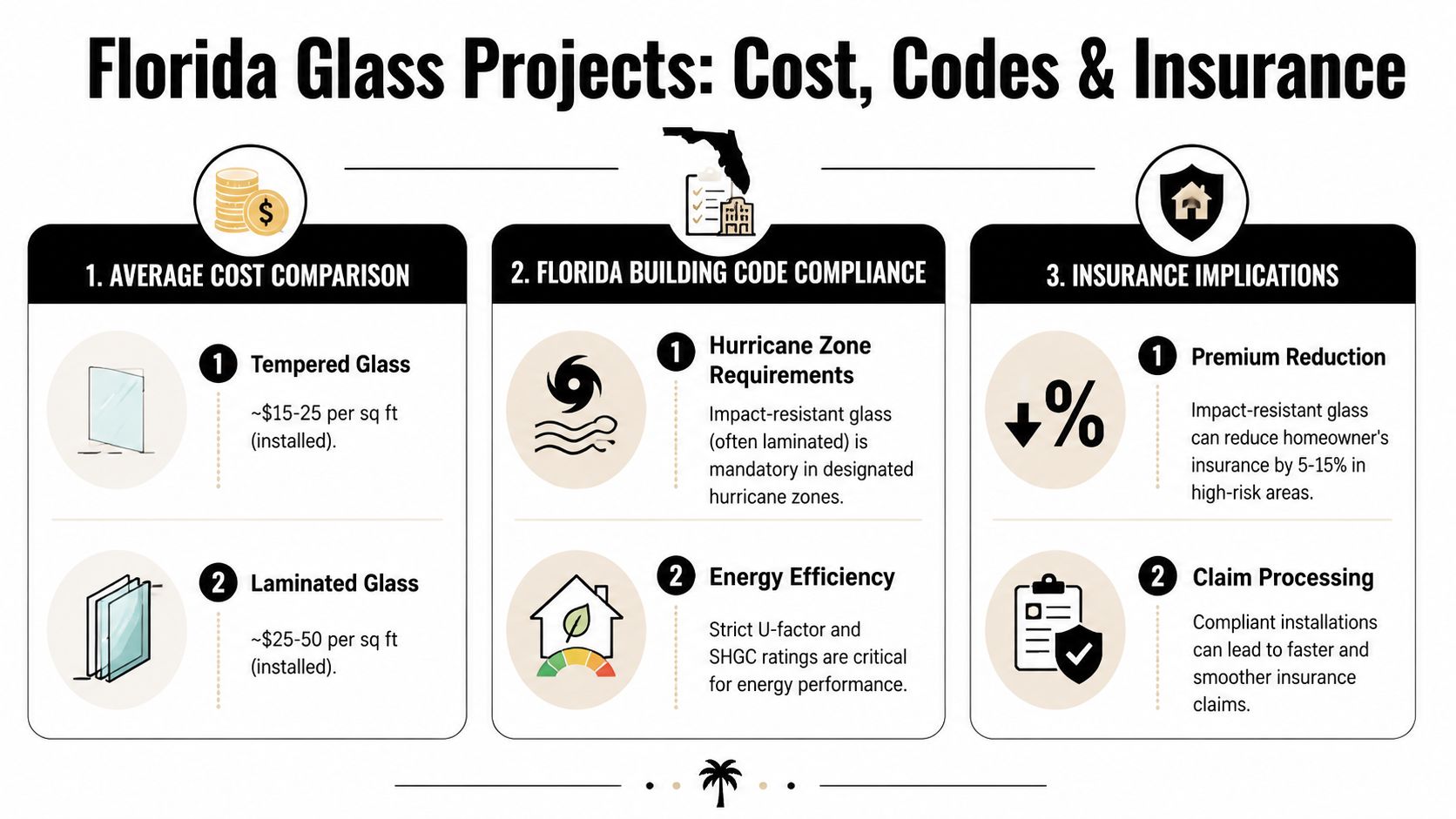
Tempered glass is usually the less expensive option upfront. Laminated glass generally costs more because the product itself is more complex, the fabrication path is more involved, and the full assembly may require heavier framing, compatible hardware, and tighter specification.
That extra cost can be justified quickly in Florida because the discussion doesn't stop at purchase price. It moves straight into code compliance, product approval, and whether the opening is expected to resist storm-related damage in your location.
Building code in the real world
Southwest Florida builders don't spec glass in a vacuum. They work backward from the opening, occupancy, location, and exposure. Certain locations require safety glazing because people are likely to walk into or fall against the glass. Exterior openings in hurricane-prone areas bring another layer of review.
In practical terms, homeowners should expect three code-related questions:
- Is this a hazardous location? That determines whether safety glazing is required.
- Is this opening in an area where impact-rated protection is required? That can push the project toward laminated systems.
- Is the glass acting as a guard or part of a barrier assembly? If yes, post-breakage behavior becomes a major concern.
Local jurisdiction review matters. Naples, Fort Myers, Bonita Springs, and surrounding areas may all follow the broader Florida code framework, but plan review and documentation still have to line up with the exact product and installation.
Insurance considerations
Insurance is where laminated glass often makes more sense than the raw quote suggests. Carriers and inspectors care about how the home is protected, especially on openings vulnerable to storm damage. If your project ties into larger opening protection upgrades, it's smart to review an expert guide for Florida homeowners so you understand how insurers evaluate home protection features generally.
Don't assume every laminated product automatically changes your premium. The key issue is whether the installed assembly meets the insurer's and code authority's requirements for the property. Documentation matters. Permits matter. Final inspection matters.
A cheaper glass package can become the expensive choice if it triggers redesign, fails plan review, or leaves you with an opening that doesn't meet the protection level your home needs.
Where homeowners go wrong
The most common mistakes are simple:
- Comparing glass only by square-foot price: The assembly, hardware, frame, and approval path matter just as much.
- Assuming “impact” and “tempered” are interchangeable: They aren't.
- Skipping documentation: Keep product approvals, invoices, and permit records together for future claims or resale.
- Ignoring the frame: Great glass in a weak or incompatible frame won't deliver the result you expect.
For broader project questions, permit timing, and maintenance concerns, a solid Florida glass project FAQ resource can save time before you order anything.
FAQs for SWFL Homeowners and Builders
Which glass holds up better on a beachfront property
Salt spray doesn't really choose between tempered and laminated the way people think. The bigger issue is the system around the glass. On beachfront homes in Fort Myers or Naples, hardware finish, sealant quality, edge protection, drainage, and cleaning habits usually determine long-term satisfaction more than the glass label alone.
If the application is exterior and storm-exposed, laminated glass often makes more sense because of its barrier performance. But on the maintenance side, poorly chosen hardware will age badly even if the glass itself is right.
Is laminated glass overkill for an interior office partition
Usually, yes. For a standard interior office partition in a conditioned space, tempered glass is often the practical choice. It gives you code-appropriate safety glazing in many common situations, keeps the assembly lighter, and controls cost.
Laminated glass becomes worth it inside when you want better sound control, more security, or retained broken glass for a specific reason.
Can protective coatings be used on both tempered and laminated glass
In many cases, yes, protective surface treatments can be used on both, provided the coating and the specific glass product are compatible. In Southwest Florida's humidity, that can be a smart upgrade because hard-water spotting, soap film, and general haze are constant complaints.
The key is making sure the coating, cleaning method, and installation details all work together. A good coating helps, but it won't fix poor ventilation, bad water, or neglected maintenance.
Can tempered glass be used in a hurricane-rated system
Tempered glass can be part of certain assemblies, but homeowners shouldn't assume a piece of tempered glass by itself equals hurricane protection. Impact-rated performance is about the tested and approved system, not a shortcut label.
For storm-prone exterior openings, always ask for the exact product approval and installation requirement for your project location. That's the only safe way to know what you're buying.
If you want a recommendation based on your exact opening, exposure, and design goals, AmeriGlass Industries can help you sort out whether tempered glass, laminated glass, or a specific custom assembly makes the most sense for your Southwest Florida home or build.
Need safety glass installed? AmeriGlass Industries installs tempered frameless shower doors, glass partitions and commercial glass across Naples, Fort Myers, Bonita Springs and Cape Coral. Call (239) 426-6884 for a free estimate.