

You're probably at the point where the bathroom plan looks great on paper, but the shower is where the decisions get real. You want the room to feel open, bright, and finished. You also don't want to spend good money on glass that looks beautiful for a month and then shows every spot, leaks at the curb, or feels slightly off every time the door swings.
That's where a tempered glass shower enclosure either enhances the whole remodel or exposes every weak decision around it.
In Naples, a lot of homeowners start with inspiration photos and broad ideas about clean lines, light tile, and a more open layout. Then the practical questions hit. Should the enclosure be frameless? Is thicker glass always better? Will the walls even allow the look you want? And what happens after install, when hard water and daily use start testing the finish?
If you're still comparing bathroom remodel shower options, that's a useful place to sort through layout ideas before locking in the glass details. The enclosure itself is often the element that gives the room that upscale, airy finish homeowners are after, much like the design principles behind making a home feel more refined with custom glass features.
Your Vision for a Modern Bathroom Oasis
A good remodel usually starts with a simple goal. You want the bathroom to feel less crowded and more intentional. Maybe you're replacing a bulky framed door, maybe you're taking out an old enclosure that cuts the room in half visually, or maybe you're building from scratch and want the shower to look like it belongs in the house rather than being dropped into it.
A tempered glass shower enclosure is often the piece that makes that vision work. It keeps sightlines open, lets tile and stone do their job, and gives the room a cleaner architectural look than a heavy framed unit ever can.
But the best result doesn't come from style alone. The enclosure has to match the room you have, not the room in the inspiration photo. In Southwest Florida remodels, that often means dealing with walls that aren't perfectly plumb, corners that aren't perfectly square, and surfaces that can magnify even small measuring mistakes.
The homeowners who end up happiest usually aren't the ones who choose the flashiest option. They're the ones who choose the design that fits the room, the maintenance habits, and the way the shower will be used every day.
That's the difference between a shower that looks impressive on install day and one that still feels right long after the remodel dust is gone.
The Foundation of Modern Showers Safety and Strength
Regular glass has no place in a shower enclosure. The material used for this application is tempered safety glass, and that isn't a luxury upgrade. It's the standard that makes modern shower design possible.
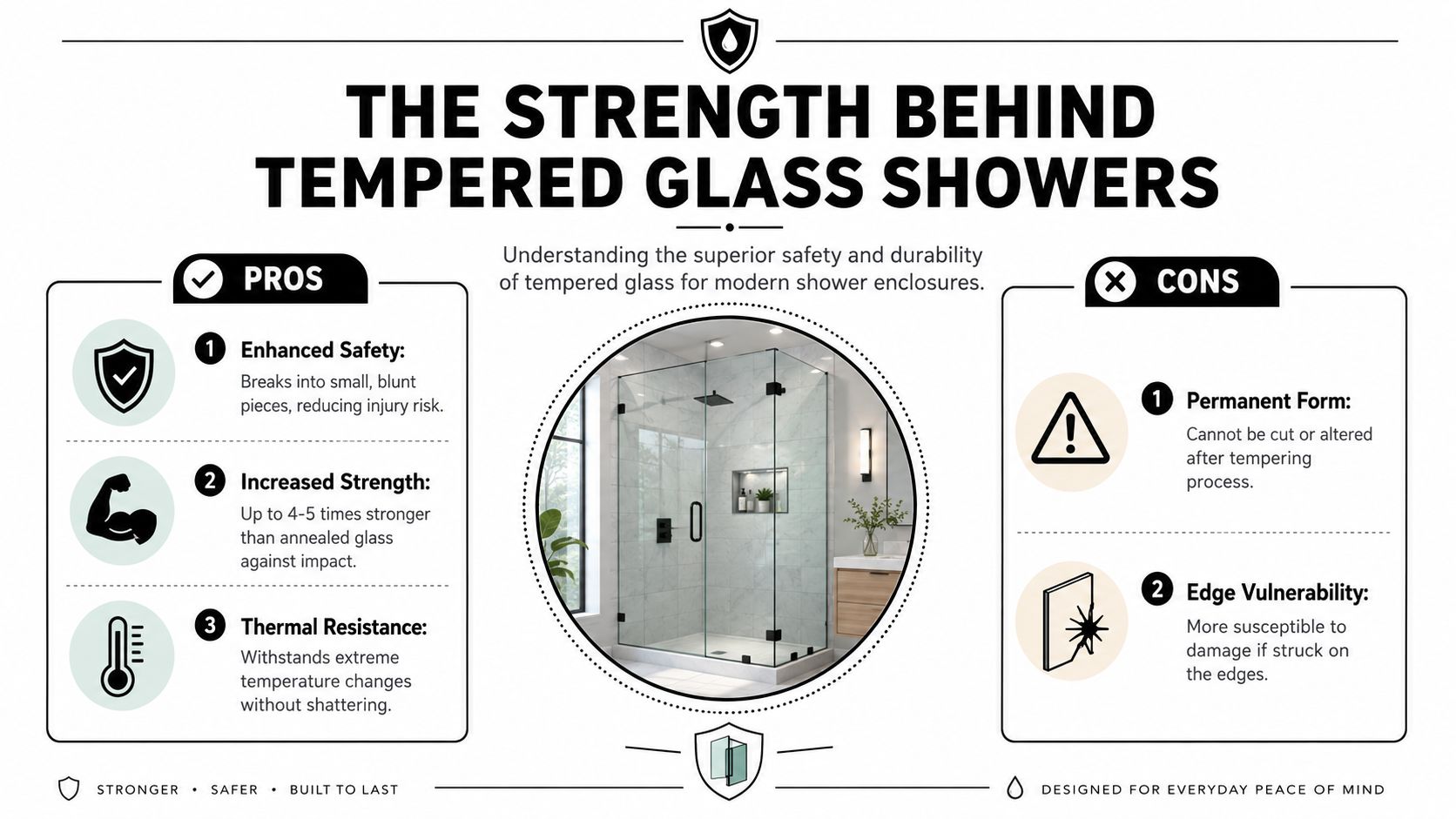
The reason is straightforward. During tempering, the glass is heated to around 1,000°F and then rapidly cooled, creating internal stresses that make it up to 4 to 5 times stronger than non-tempered glass, according to industry guidance on shower glass safety. That same guidance notes that since 1961, building codes have required safety glass for shower door applications.
Why the tempering process matters
Think of the process as putting the surface of the glass under controlled tension so it can handle the demands of real use better. Shower doors and fixed panels deal with repeated opening and closing, hardware loads, daily vibration, and the occasional bump at exactly the wrong angle. Tempered glass is built for that environment.
Its safety behavior matters just as much as its strength. If tempered glass fails, it breaks into small, blunt fragments instead of large jagged shards. That controlled break pattern is a major reason it became the accepted standard in shower applications.
What homeowners should actually take from that
The practical takeaway isn't just “tempered is safer.” It's that the enclosure is a system, and the safety of that system depends on more than the word tempered on a quote.
Look for these basics:
- Permanent safety labeling: Proper shower glass should carry permanent safety marking.
- Clean edge quality: Edges matter because damage at the edge is one of the biggest risks to glass durability.
- Correct fabrication before tempering: Once glass is tempered, it can't be cut or reshaped later.
- Installation that respects the material: A strong panel can still be compromised by poor handling, bad hinge placement, or pressure points at contact locations.
Practical rule: Don't judge shower glass by thickness alone. Safety comes from the right glass, properly fabricated, with the right hardware and the right installation conditions.
A tempered glass shower enclosure works because the material is engineered for this exact use. Skip that standard, and the whole project starts on the wrong footing.
Designing Your Enclosure Frameless vs Framed
Most homeowners know the look they prefer before they know the terms. They want the bathroom to feel bigger, lighter, and less cluttered. That almost always points toward frameless glass.
Here's what that looks like in practice.
How the main enclosure styles differ
A framed enclosure uses metal around the perimeter and around the door. It can be functional, and in some bathrooms it's the right budget move. But it also introduces more visual interruption, more lines, and more places for soap residue and grime to collect.
A semi-frameless enclosure sits in the middle. You'll usually see some metal structure, but less than a fully framed unit. It can work well when the design needs a little more support or when a homeowner wants a compromise between cost and appearance.
A frameless enclosure relies on heavier glass and minimal hardware. This is the look commonly associated with a modern shower. It shows more tile, keeps the room from feeling boxed in, and usually makes cleaning easier because there are fewer tracks and frame channels trapping buildup.
Side by side comparison
| Style | Best for | What works well | What usually disappoints |
|---|---|---|---|
| Framed | Budget-focused remodels | Familiar look, more enclosed feel | More visual bulk, more metal to clean |
| Semi-frameless | Middle-ground projects | Cleaner than framed, can fit many layouts | Still not fully open in appearance |
| Frameless | High-end modern bathrooms | Open sightlines, cleaner look, easier upkeep | Demands better measurement and tighter installation precision |
Homeowners often assume framed means practical and frameless means purely aesthetic. In reality, frameless can be the more practical daily choice if you care about easy cleaning and a room that doesn't feel visually crowded.
For a broad look at how homeowners compare costs and configurations, Western Bathroom Renovations' screen pricing gives a useful outside view of how different enclosure types are commonly discussed. If you're specifically looking at local frameless installation details and design possibilities, this overview of frameless shower door installation in Fort Myers, Florida shows the kind of finished look many Southwest Florida homeowners are after.
A short visual example helps show how much the hardware footprint changes the feel of the room:
Where frameless goes wrong
Frameless isn't automatically the right answer for every bathroom. It demands more from the room itself. If the walls are out of plumb, if the curb has slope issues, or if the tile work is uneven, a frameless enclosure won't hide those flaws. It will expose them.
That's why the right question isn't “Which style is most premium?” The right question is “Which style fits the room conditions and the finish level of the rest of the work?”
Choosing the Right Glass Thickness and Clarity
Frequently, many buyers get pushed toward the wrong decision. They hear that thicker glass is more premium and assume the best enclosure must use the heaviest glass available. That isn't how good shower design works.
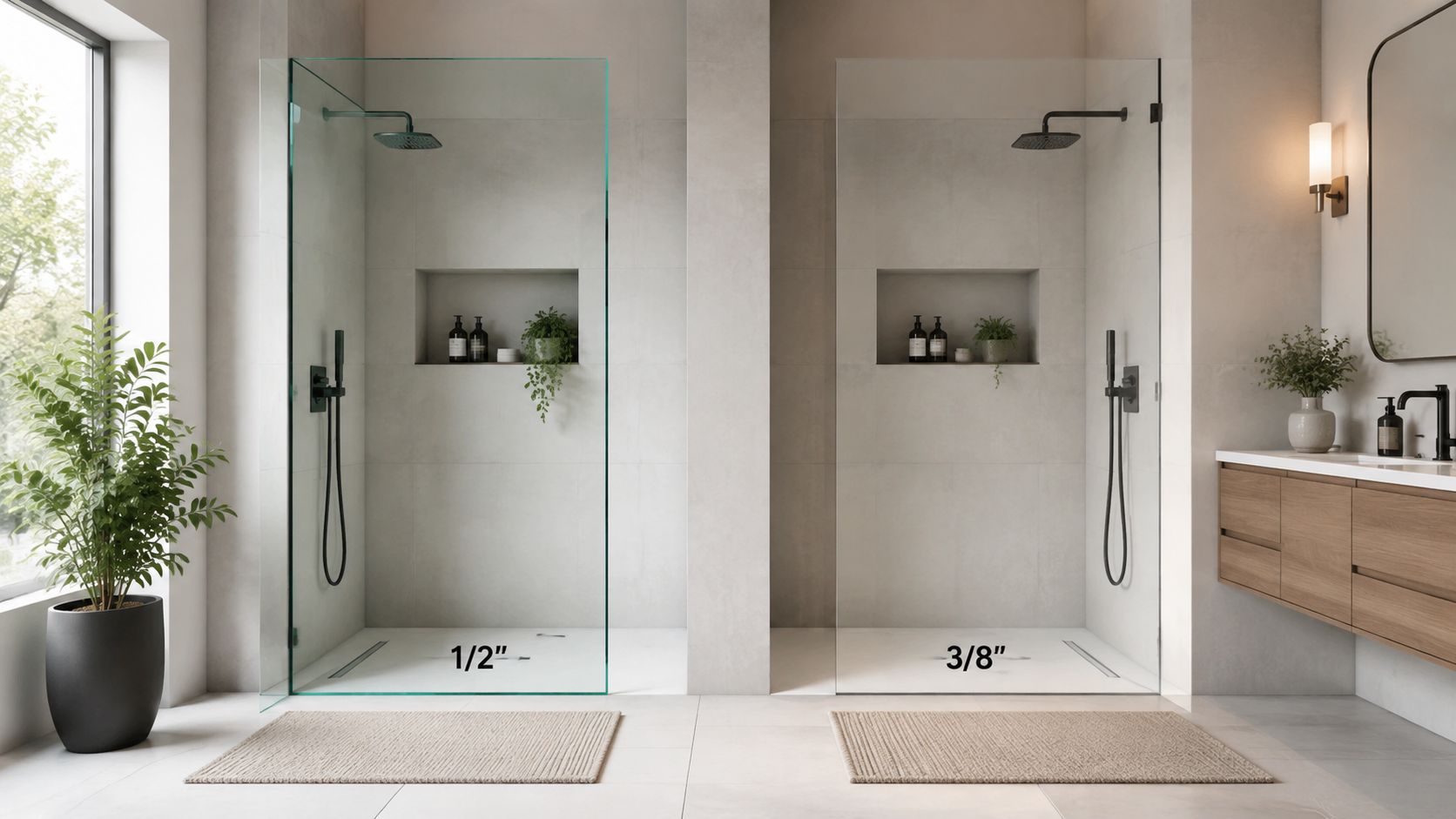
For frameless enclosures, 3/8-inch (10 mm) tempered glass is the dominant baseline, and Glass Magazine's guidance on safe frameless design notes practical limits of 84 inches in height when supported on two vertical edges and the base, plus an unsupported-corner width limit of 30 inches for full-height panels adjacent to a door. When a design goes beyond those conditions, the answer isn't “use thicker glass.” The answer is proper design review.
When 3/8-inch glass is the right choice
In most well-designed frameless showers, 3/8-inch glass gives you the balance you want. It feels substantial, supports a clean frameless look, and works well without turning the enclosure into an unnecessarily heavy system.
That matters for more than cost. Heavier glass changes hinge demands, affects swing feel, and can increase the strain on attachment points if the surrounding construction isn't excellent.
Choose 3/8-inch when:
- The panel sizes are within standard practical limits: Such conditions make frameless systems most straightforward.
- You want a refined look without unnecessary mass: Good design often looks lighter because it is more disciplined.
- The wall and substrate conditions are solid: Stable support makes the system work as intended.
When thicker glass may make sense
There are projects where a designer or fabricator may call for thicker glass. Tall panels, unusual spans, or special layouts can justify it. But “thicker” should come from engineering judgment and site conditions, not showroom upselling.
If a bathroom has poor wall conditions, thicker glass won't rescue a bad plan. It can actually make the consequences of weak support more serious.
That's the trade-off many homeowners don't hear enough about.
Clarity matters more than many buyers expect
Standard clear glass often has a subtle green cast, especially visible against white tile, pale stone, and bright painted walls. If your design leans crisp and light, ultra-clear glass can make a noticeable difference because it reduces that green tint and lets the tile color read more accurately.
This is one of those upgrades that doesn't shout. It refines the whole room subtly. If you're comparing visual differences, this look at ultra-clear glass options helps show why some homeowners consider it worth the step up.
The maintenance upgrade many people should consider earlier
Clarity on day one isn't the whole story. In Naples and across Southwest Florida, maintenance matters because water quality and humidity can work against a spotless look. Protective coatings can reduce how aggressively minerals and residue cling to the glass surface, which makes routine cleaning less frustrating.
A lot of buyers spend too much time debating 3/8-inch versus 1/2-inch and not enough time asking whether the enclosure will still look clean with their real lifestyle. For many households, the smarter upgrade isn't thicker glass. It's better clarity or easier maintenance.
The Finishing Touches Hardware and Finishes
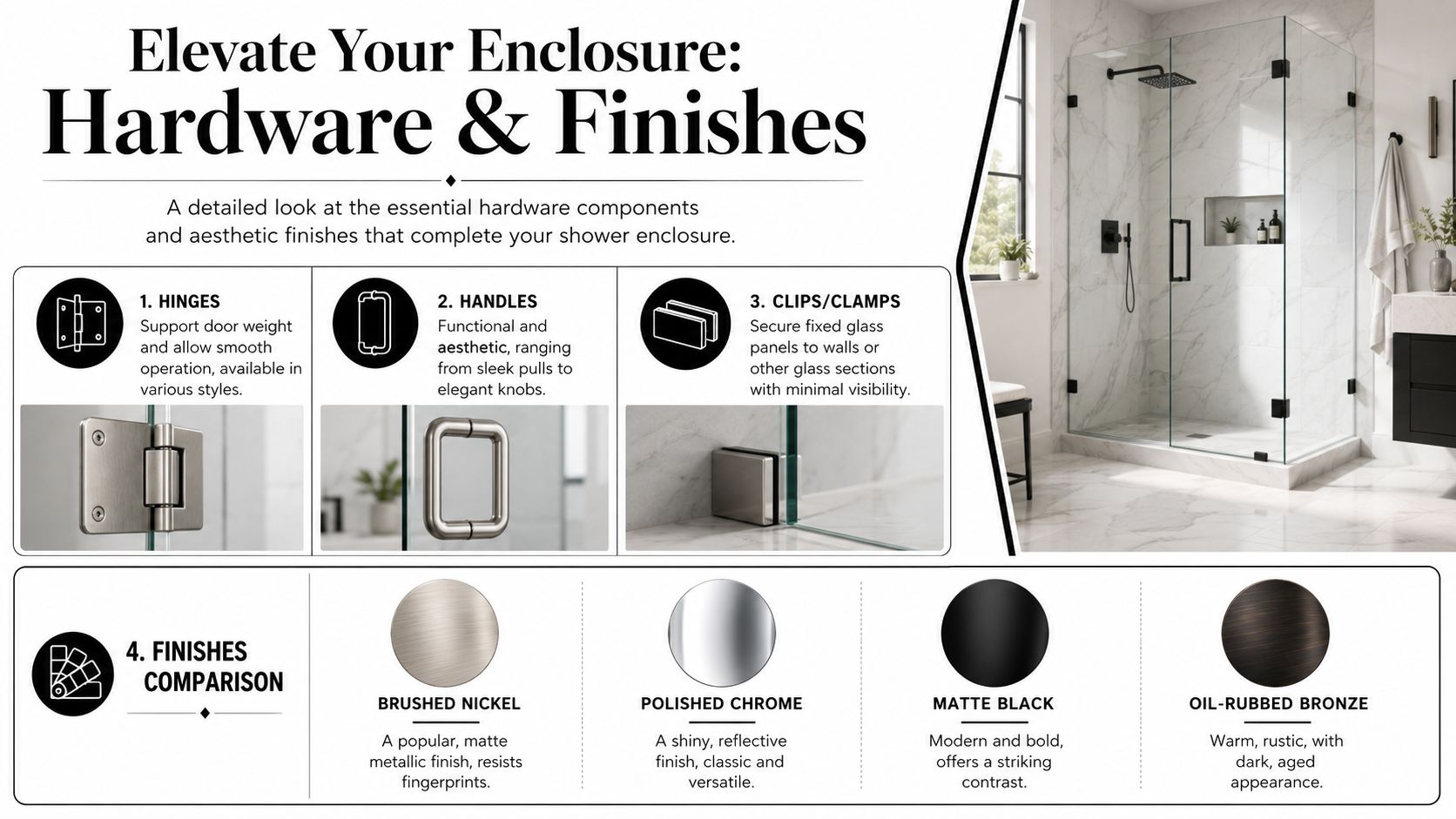
A frameless shower doesn't look polished because the glass is there. It looks polished because the glass and the hardware belong together. Hinges, handles, clips, clamps, and support pieces determine how the enclosure moves, how stable it feels, and how finished it looks from across the room.
Cheap hardware is one of the fastest ways to make good glass feel disappointing.
Matching finish to style
Different finishes change the personality of the enclosure more than most homeowners expect.
- Polished chrome fits classic bathrooms and works well when you want a bright, reflective finish that ties into many faucet collections.
- Brushed nickel softens the look and tends to feel a little more understated. It's often a safe choice when you want warmth without going ornate.
- Matte black creates strong contrast and can look sharp in modern bathrooms, especially against white tile or lighter stone.
- Oil-rubbed bronze suits more traditional or warmer design palettes.
The right finish should connect with the faucet, towel bars, lighting, and cabinet hardware. It doesn't need to match every piece exactly, but it should look intentional.
What matters beyond color
Homeowners naturally focus on finish first, but function comes first in the field. Good hardware should feel steady, move smoothly, and resist corrosion in a humid bathroom environment.
Check for these points:
- Hinge quality: The door should feel controlled, not loose or abrupt.
- Handle comfort: It should look right and feel natural in the hand.
- Clamp and clip placement: Minimal hardware only works if it's well positioned.
- Finish durability: A good-looking finish that degrades quickly isn't a premium choice.
A useful way to preview combinations is to explore shower door design options and hardware finishes before finalizing the enclosure.
Good hardware shouldn't call attention to itself while you're using the shower. It should simply feel correct every time the door opens and closes.
That's what separates decorative parts from actual shower hardware.
From Measurement to Installation The AmeriGlass Process
A shower enclosure project usually feels simple until measurement day. That's when the room tells the truth.
A homeowner may have selected the tile, approved the curb, chosen the hardware finish, and settled on the glass style. Then the measurements show that one wall leans, the opening narrows slightly from bottom to top, or the threshold isn't as straight as it appeared. Those aren't unusual surprises. They're common conditions in remodel work.
The room comes first
The process starts with a site visit and real field measurement. That's where the practical decisions happen. The installer isn't just checking width and height. They're reading the room for plumb, level, corner consistency, wall condition, hardware attachment points, and the exact way water will behave at the opening.
That's also why custom glass is not a product you choose from a shelf. It has to be fabricated for the actual opening.
Why measuring is the make-or-break step
A frameless enclosure has very little visual forgiveness. A small alignment issue can show up as an uneven reveal, a door that doesn't feel right in motion, or a gap that draws the eye every time you enter the room.
Professionals use modern measuring methods because the room isn't theoretical. It's tile, stone, framing, and substrate that may all vary slightly. The goal is to build to the space as it exists, not to the plan as it was drawn.
Here's what a careful process should address before fabrication:
Wall condition
Out-of-plumb walls affect gap consistency, hinge alignment, and seal performance.Threshold and curb condition
If the base isn't correct, leak control becomes harder no matter how nice the glass is.Door swing and clearance
Handles, vanities, toilets, and traffic flow all matter.Attachment integrity
Hardware needs sound backing and appropriate mounting points.
A clean install starts long before the glass arrives. It starts when somebody measures the room honestly and designs around the conditions they find.
Fabrication and installation
Once measurements are finalized, the glass is fabricated to match the opening and the approved hardware layout. Because tempered glass can't be altered after processing, the details have to be correct before production.
On install day, experienced technicians set panels, align hardware, check swing, tune reveals, and finish the enclosure so it looks calm and deliberate. A good crew also protects the space, works cleanly, and leaves the bathroom ready to use.
That level of workmanship matters in a category that keeps growing. The U.S. glass shower door market was valued at about USD 3.20 billion in 2020 and is projected to reach USD 4.51 billion by 2026, a 6.47% CAGR, according to Arizton's U.S. glass shower door market report. More homeowners are investing in this feature, which makes proper execution even more important. The demand is there. The difference is whether the project is handled with the precision custom glass requires.
Protecting Your Investment Cost ROI and Maintenance
The cost question is reasonable. A tempered glass shower enclosure isn't just a line item. It's one of the more visible finish investments in the bathroom, and homeowners want to know what they're getting beyond appearance.
The clearest answer is this: value comes from fit, durability, and how the enclosure performs over time. A poorly planned enclosure can look expensive and still feel frustrating. A well-designed one can make the whole bathroom feel more considered and easier to live with.
Where value really comes from
Homeowners often focus on the upfront quote, but the long-term value usually comes from these factors:
- Daily usability: The door opens well, seals properly, and feels solid.
- Visual payoff: The room feels larger and the tile work stays visible.
- Maintenance burden: The enclosure stays easier to keep presentable.
- Resale appeal: Buyers generally respond well to clean, modern shower design.
The strongest return usually comes from choosing options that support longevity, not just visual impact.
The maintenance reality in Southwest Florida
This is the part many guides skip. In hard water conditions, unprotected tempered glass can quickly show water spots, and Northside Glass's discussion of frameless shower doors points to protective coatings as an important part of long-term satisfaction.
That matters because the clean frameless look comes with a responsibility. If you want clear glass and minimal visual obstruction, you also need a maintenance plan that matches the environment.
A practical routine usually includes:
- Use a squeegee consistently: It reduces standing water and mineral residue.
- Vent the bathroom well: Humidity extends the life of spotting and film.
- Use cleaners made for shower glass: Harsh products can create new problems.
- Consider protective treatment early: It's easier to plan for prevention than to fight buildup later.
For homeowners comparing care requirements, this guide to shower door maintenance is a good reference point.
The upgrade that often pays off in peace of mind
A protective coating won't turn a shower into a self-cleaning system. What it can do is reduce how quickly the glass starts looking neglected. That makes a difference in busy households and in homes where a spotless bathroom is part of the standard.
If you're deciding where to allocate budget, don't think only in terms of what photographs best on install day. Think about what still looks good with real water, real use, and normal life.
Why Your Installer Is Your Most Important Choice
By the time homeowners reach the final decision, they usually know the style they want. The larger risk is assuming the materials will carry the project on their own. They won't.
A tempered glass shower enclosure succeeds or fails at the measurement and installation stage. Good glass, attractive hardware, and a clean design can still disappoint if the walls weren't read correctly, if the opening wasn't measured precisely, or if the installer treated a custom enclosure like a standard door package.
That's why installer choice matters more than most finish selections. You want a team that understands out-of-square conditions, knows when site prep matters more than thicker glass, and cares about alignment, leak control, hardware placement, and finish protection.
Even homeowners researching broader plumbing and renovation logistics can benefit from practical planning resources like this guide to planning a bathroom remodel in Sydney, because the same principle applies everywhere. The best-looking bathroom is built on correct sequencing and skilled trades, not wishful thinking.
If you want the enclosure to feel effortless when it's done, choose the installer with the discipline to sweat the details before the glass is ever ordered.
If you're ready to build a shower that fits your space properly and stays beautiful in daily use, AmeriGlass Industries is the team to call. From precise measurement and custom fabrication to frameless enclosures, ultra-clear glass, and maintenance-friendly protective coatings, they bring the craftsmanship Naples homeowners expect when the details matter.