

That awful grinding sound your shower door makes? It's not just annoying—it's the rollers crying for help. Those little wheels are the secret to a smooth, quiet glide, and when they start failing, your whole morning routine feels the friction. The good news is, getting that effortless slide back is usually a fix you can handle yourself.
Why a Smooth Glide Is a Big Deal
You might not think about it much, but a shower door that works perfectly is one of those small details that just makes your bathroom feel right. When the rollers get gummed up with soap scum or worn down from moisture, the door gets stubborn. It might stick, jump the track, or make a racket every time you open it.
This is more than just a nuisance. A door that fights you puts extra stress on the glass panels and the frame, which can lead to bigger, more expensive problems down the road. Taking care of worn-out rollers right away is a simple bit of maintenance that protects your whole shower enclosure and keeps your bathroom feeling like a calm escape.
The Shift to Modern Sliding Doors
There's a reason you see so many sliding glass doors in modern bathrooms—they look clean, save space, and just work. This isn't just a hunch; the market backs it up. The global shower door market was valued at a whopping US$18.8 billion in 2023 and is expected to hit US$39.5 billion by 2034.
A huge chunk of that growth, often 25-30% of all sales, is driven by the demand for high-quality, smooth-gliding systems. People want doors that feel solid and operate flawlessly.
This guide is designed to give you the practical, no-nonsense advice you need to fix those common roller problems yourself. Once you know what you're looking at and have a clear plan, you'll be surprised how quickly you can get your door back in top shape.
Key Takeaway: Fixing your sliding shower door rollers isn't just about silencing a squeak. It's about maintaining the safety, function, and even the touch of luxury in your bathroom. A small repair now can save you from a major headache later.
I'll walk you through everything—from figuring out what’s wrong to finding the right parts and getting the job done. After all, understanding how a glass company can make your home feel luxurious starts with making sure every little detail, like a perfectly gliding door, is working as it should. And if you decide it's a job you'd rather hand off, we'll talk about when it's time to call in a pro like AmeriGlass Industries for a perfect fix.
Pinpointing Your Roller and Track Problems
Before you even think about grabbing a screwdriver, you need to play detective. A few minutes spent figuring out exactly what's wrong with your sliding shower doors rollers will save you hours of frustration, not to mention a trip to the hardware store for the wrong parts. Most roller problems fall into just a few buckets, and you can usually diagnose them with nothing more than your eyes, ears, and hands.
The Sounds of Trouble
Your first clue is almost always what you hear. Is the door making a grinding, scraping, or high-pitched squeaking noise? That’s your hardware crying out for help. It could be something simple, like a buildup of hair and soap scum clogging the track. But more often, that grating sound is the tell-tale sign of worn-out bearings inside the rollers themselves.
What to Look For
Next, get down on the floor and look at the track at eye level. Slide the door back and forth slowly and watch the rollers like a hawk. Do they look wobbly? Does the door seem to jump or dip as it moves along the track? A wobbly roller usually means a loose screw or a cracked wheel, while a door that hops off the track is a classic symptom of rollers that are either totally shot or badly misaligned.
How the Door Feels
Don't just look and listen—the feel of the door is a dead giveaway. If you have to put your shoulder into it just to get the door moving, you're likely dealing with corrosion. Rust on the rollers or track creates a ton of friction, making the door feel incredibly heavy.
Another really common issue is the dreaded "flat spot." After years of rolling back and forth over the same path, the little wheels can wear down and lose their perfectly round shape. When this happens, the door won't glide anymore; it'll feel like it’s bumping or catching along the track with a noticeable "hitch" in its movement.
Don't underestimate the diagnostic power of a simple visual and tactile inspection. More than 80% of roller-related issues can be accurately identified without ever picking up a tool. This ensures you’re prepared with the right parts and plan before starting the repair.
Connecting the Symptoms to the Cause
To make things even clearer, let's connect the dots between what you're seeing and what it means. Think of this as your cheat sheet for translating your door's bad behavior into an actionable diagnosis. For a deeper dive into maintenance and other common shower door fixes, you can always check out our full collection of articles.
Use this quick guide to connect common symptoms with their likely causes and your first move.
Troubleshooting Common Shower Door Roller Issues
| Symptom | Likely Cause | Recommended First Action |
|---|---|---|
| Grinding or Squeaking Noise | Debris in the track or failing roller bearings. | Thoroughly clean the track; if noise persists, inspect bearings for rust. |
| Door Jumps the Track | Misaligned, worn, or broken rollers. | Check roller alignment screws and inspect wheels for cracks or damage. |
| Heavy or Sticking Door | Soap scum buildup, rust, or flat spots on wheels. | Clean the track and rollers, then lubricate; inspect wheels for wear. |
| Wobbly or Rattling Door | Loose roller assembly screws or worn-out wheels. | Tighten all visible screws; if rattling continues, check for wheel wear. |
With this table, you should have a much better idea of where to start your repair. The next steps will walk you through the fix itself.
Replacing Your Sliding Shower Door Rollers
When a little lubrication and a quick adjustment just don't cut it anymore, swapping out those old, tired sliding shower doors rollers is your best bet. Honestly, this is a project you can handle, and the feeling of a door that glides like it’s brand new is incredibly rewarding. Success here is all about getting the prep work right.
Before you even think about touching the door, do yourself a favor and lay a thick blanket or a sturdy piece of cardboard down in your shower. It’s a simple move that can save your tub or tile from a nasty scratch if something slips. Next, get your tools ready. You don’t need a specialized kit—just your basic Phillips and flathead screwdrivers, a small adjustable wrench or some pliers, and, of course, your shiny new rollers.
Safely Removing the Door and Old Rollers
I can't stress this enough: this part of the job is absolutely a two-person job. Glass shower doors are deceptively heavy and incredibly awkward to handle. Trying to wrestle one on your own is just asking for trouble.
With your helper ready, get a firm grip on each side of the door. Lift it straight up into the top track; this should give you just enough wiggle room to swing the bottom of the door out and away from the lower track. Carefully set the door down on the blanket you laid out.
With the door lying flat, you can finally get a good look at the roller assemblies. You’ll usually find them held on by a screw or two at the bottom corners of the door. Just back those screws out, and the old roller assembly should come right off.
If you're not sure whether a full replacement is necessary, this little diagnostic process can help you pinpoint the problem.

It’s all about using your senses. Listen for grinding, look for obvious damage, and feel for any resistance. This helps ensure you’re fixing the actual root cause, not just a symptom.
Finding the Perfect Replacement Parts
Sourcing the right replacement sliding shower doors rollers is the make-or-break moment of this whole project. The easiest way to avoid a headache is to take one of the old rollers with you to the hardware store for a direct comparison. If you're buying online, you'll need to grab a couple of key measurements:
- Wheel Diameter: Use a ruler or calipers for an accurate measurement of the wheel's diameter.
- Offset: This is the distance from the wheel's center to the mounting bracket. Get this wrong, and your door will hang crooked.
Material selection is also a big deal, particularly in humid places like Southwest Florida. The right materials add years to the life of your rollers. Back in the early 90s, metal rollers were a nightmare, with 55% of doors showing corrosion in coastal areas. Fast forward to 2015, and advanced UV-stabilized polymer rollers had slashed failure rates to under 10% over a decade.
Pro Tip: I always recommend rollers made from stainless steel and nylon. The stainless steel hardware fights off rust, while the nylon wheels give you that quiet, smooth glide and won't develop the flat spots that make a door feel bumpy.
Installing New Rollers and Rehanging the Door
Putting the new rollers on is just as straightforward as taking the old ones off. Slide the new assembly into its slot, line up the screw holes, and tighten them down. Just be careful not to overtighten—you don't want to strip the threads.
Now, grab your partner again and carefully lift the door back into position, essentially reversing the removal steps. Hook the top of the door into the upper track first, then gently lower it until the new rollers sit perfectly on the bottom track.
Slide the door back and forth a few times. Feel that? Smooth as silk. Most new rollers have adjustment screws, so you can fine-tune the door's height to get it perfectly level.
While this is a very doable DIY project, you can find more great tips in other guides on how to replace sliding glass door rollers. And remember, for more complex jobs like a full frameless shower door installation in Fort Myers, Florida, calling in a professional is often the smartest move.
Getting Things Rolling Again: Adjustment and Lubrication
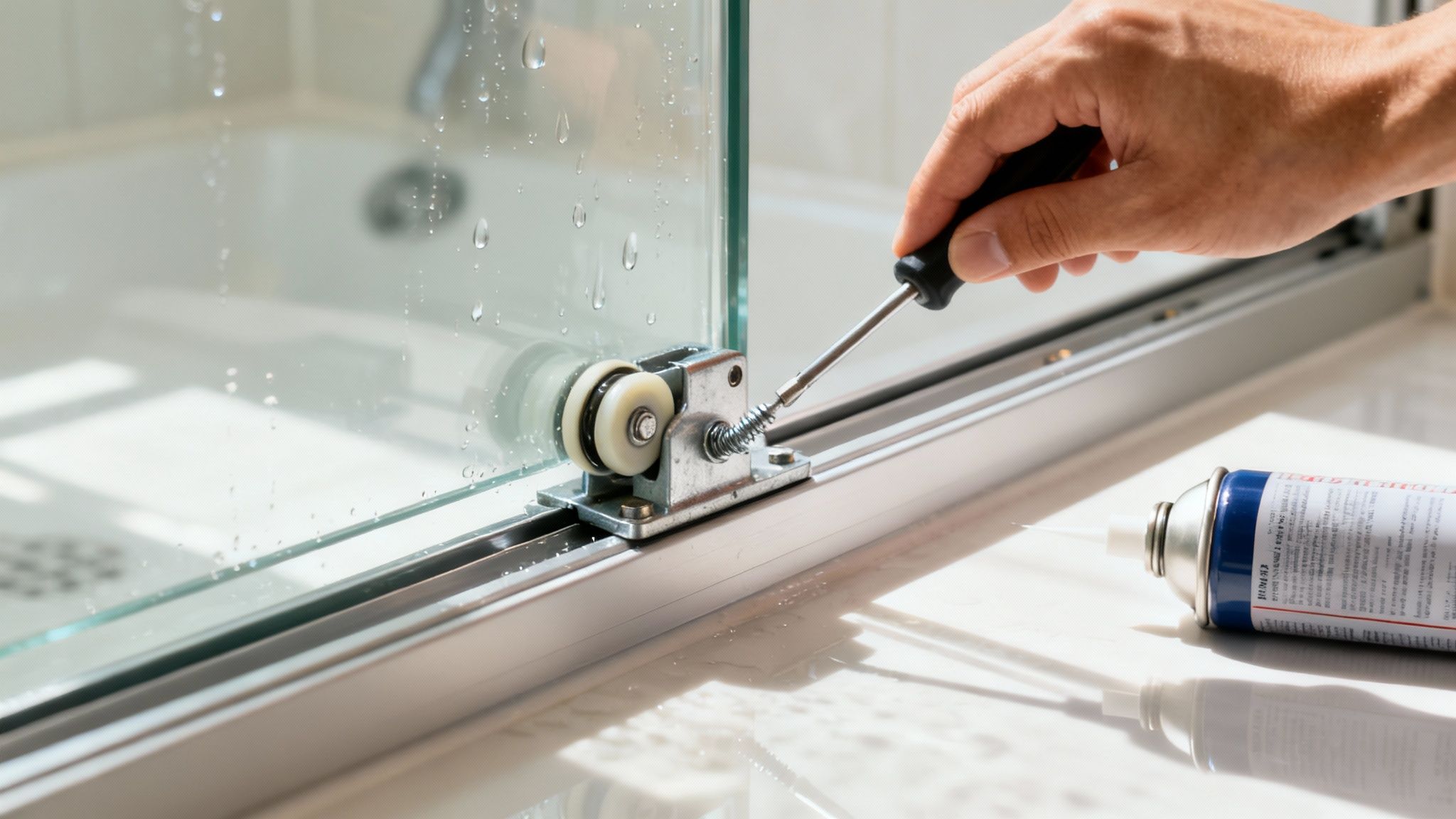
Before you start pricing out new parts, hold on a minute. More often than not, your sliding shower doors rollers don't need to be replaced—they just need a little TLC. A few quick adjustments can bring back that brand-new, silent glide and save you the hassle and cost of a full-blown repair.
Most shower door rollers are built with adjustment screws for this exact purpose. Look for small screws on the roller housing itself, which you can usually access from the side or bottom of the door. These screws are designed to raise or lower that specific corner of the door, letting you get it perfectly level in the frame.
Nailing the Adjustments
Is your door dragging on the bottom track or hanging at an angle? The adjustment screws are your best friend. All you need is a Phillips head screwdriver. Find the small access holes on the edge of the door frame, right near the rollers.
- To lift a corner of the door, turn the screw clockwise.
- To drop a corner, turn it counter-clockwise.
The key here is to go slow. Make small, quarter-turn tweaks, one roller at a time. After each little adjustment, slide the door back and forth to see how it feels. You're aiming for a perfectly even gap along the bottom track, so the door glides freely without scraping or catching. This tiny fix also prevents the roller wheels from wearing down unevenly.
Pro Tip: A level door doesn't just feel better—it takes a ton of stress off the entire shower enclosure. Getting the alignment right prevents the rollers from failing early and protects the glass from strain, which can add years to the life of your shower.
Don't Forget to Lubricate
Once you've got the door hanging perfectly straight, it's time for the final touch: lubrication. But first, you have to clean. Soap scum, mineral deposits, and stray hairs are the mortal enemies of your rollers. Grab an old toothbrush and a non-abrasive cleaner and give the track and rollers a good scrub until all that gunk is gone.
Now, you can lubricate. I know it’s tempting to reach for the can of WD-40, but please don't. While it's a household staple, it’s a solvent that actually attracts dust and eventually turns into a sticky mess, making your problem even worse down the line.
The right tool for the job is a silicone-based spray lubricant. Silicone is waterproof, won't attract grime, and leaves behind a super slick coating that helps the bearings in your sliding shower doors rollers move without friction or rust. Just a quick spray on the rollers and along the track every few months will keep that glide feeling effortless. This principle isn't just for showers; knowing how to lubricate door rollers for smooth operation is a useful skill for keeping all sorts of things around the house working quietly and for longer.
Keeping Your Shower Door Rollers in Prime Condition for the Long Haul
You've just put in the work to get your shower door sliding like new again. That’s a great feeling, but you definitely don't want to make it a regular chore. The real secret to a long-lasting, smooth glide isn't just the repair—it's what you do next. A little bit of consistent, proactive care is your best defense against having to do this job all over again in a couple of years.
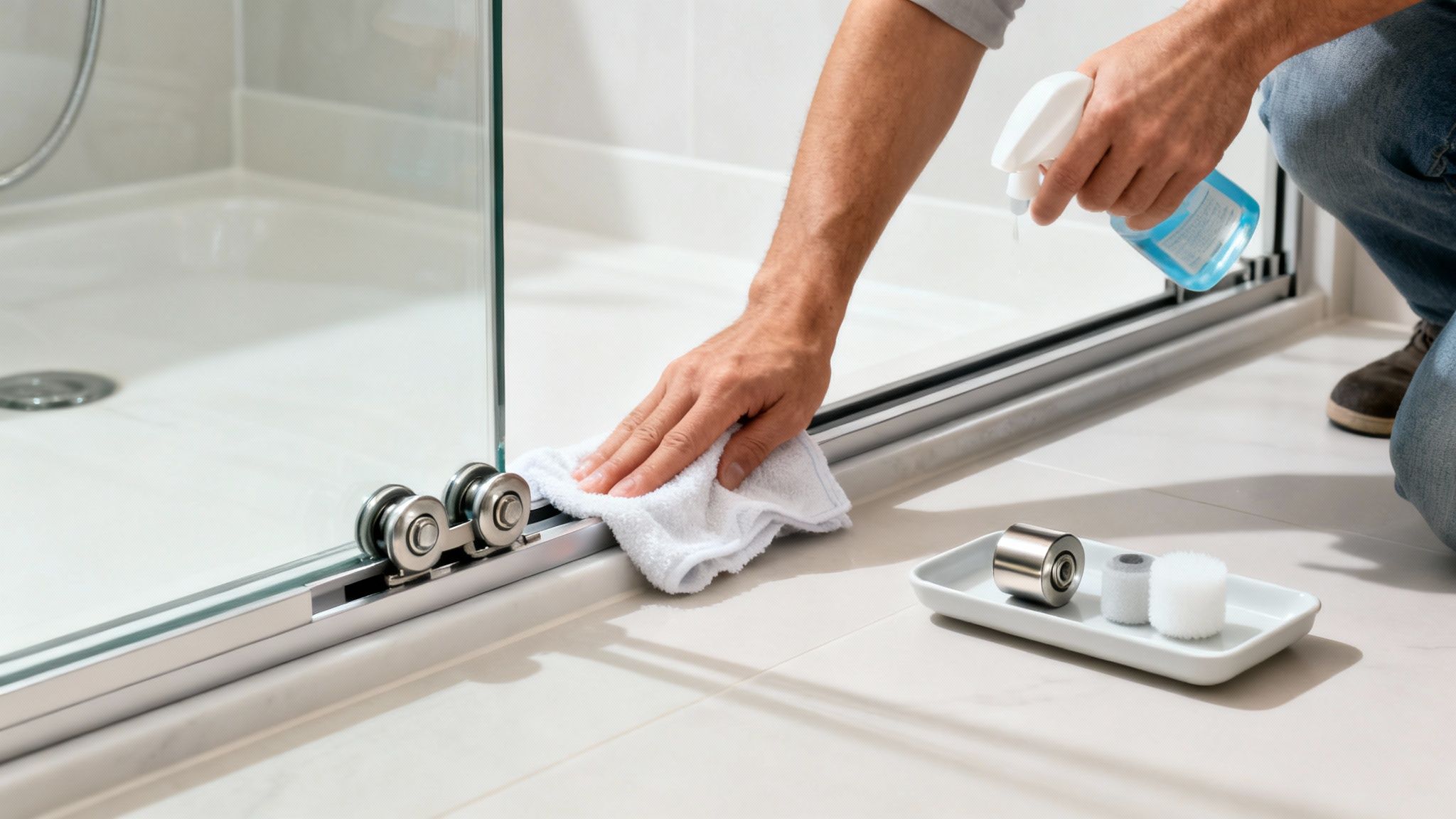
Think of it like this: you wouldn't drive your car for years without an oil change. Your shower door hardware is no different. A few minutes of prevention stops the gunk—soap scum, mineral deposits, and other grime—from grinding its way into the roller bearings and creating that frustrating friction.
The 5-Minute Monthly Clean-Up
Once a month, set aside just a few minutes to give the track a good, focused cleaning. You can skip the harsh, abrasive chemicals. A simple spray bottle with some vinegar and water, or your favorite non-abrasive bathroom cleaner, is all you need.
- Hit the track and rollers with your cleaning solution. Let it sit for a minute to break down any buildup.
- Grab an old toothbrush or a small detail brush. This is the key to getting into all the little nooks and crannies where grime loves to hide.
- Wipe it all down with a clean microfiber cloth and give it a quick rinse.
That’s it. This quick routine is hands-down the most effective way to prevent the number one cause of roller failure. For a deeper dive, our complete guide on professional shower door maintenance has even more tips to keep your whole setup looking and working like it was just installed.
The Quick Quarterly Check-In
Every three months or so, build on your cleaning routine with a quick inspection. This is your chance to spot minor annoyances before they escalate into full-blown problems.
Gently slide the door back and forth a few times. Listen for any new squeaks or grinding sounds. Feel for any hitches, bumps, or spots where it seems to drag.
Then, take a closer look at the roller assemblies. Are any screws working their way loose? Tighten them up. Inspect the wheels themselves. Do you see any cracks, chips, or flat spots from wear? Catching this stuff early means you can fix it before it starts damaging the track or throwing the door out of alignment.
Keeping your rollers in top shape is more than just a matter of convenience; it’s a smart move. The performance of these small parts has a massive ripple effect on the entire bathroom hardware market. In fact, the demand for reliable, smooth-gliding systems is a major reason the U.S. shower glass door market is projected to grow to $6,781.9 million by 2030. Consumers, especially in high-growth areas like Southwest Florida, expect durability. You can learn more about these market trends and the innovations driving them.
And a pro tip for those with frameless doors: think about a protective coating like Diamond-Fusion. It’s amazing for keeping the glass spotless, but it also has a great side benefit. Water and soap just bead up and roll right off, making cleanup on your hardware that much easier.
Got a Few More Questions? We've Got Answers
Even the best-laid plans can leave you with a question or two about your sliding shower doors rollers. That’s completely normal. Having worked with homeowners all over Southwest Florida, we’ve heard just about every question in the book. Here are a few of the most common ones we get, along with some straight-shooting advice.
What’s the Deal with Roller Materials?
When you’re shopping for new rollers, the material is everything—especially with the humidity we get here. If you want something that’s going to last, you need to be picky.
- Stainless Steel Hardware: Look for rollers where the axle and bearings are made from stainless steel. It’s your absolute best bet against the rust and corrosion that can completely lock up a roller in just a few months.
- High-Quality Nylon Wheels: The part that actually rolls, the wheel, should be a solid, durable nylon. This is what gives you that satisfying, quiet glide. It’s also tough enough to resist getting the "flat spots" that make your door feel bumpy and rough.
I know it's tempting to grab those cheap zinc-plated or all-plastic rollers to save a buck. Trust me on this one—don't do it. They’ll break down in a steamy shower environment so fast you'll be doing this whole job again before you know it.
Can I Just Spray Some WD-40 in There?
This is easily the question I hear most often, and my answer is always a hard "no." It feels like the right move for a squeaky wheel, but WD-40 is actually a solvent, not a real lubricant. It will eventually attract dust and soap scum, creating a gunky mess that makes the sticking even worse.
For a lasting fix, grab a silicone-based spray lubricant. Silicone is waterproof and repels grime. It creates a slick, durable surface that lets the bearings spin freely without gumming up the works. It’s simply the right tool for this job.
When Should I Throw in the Towel and Call a Pro?
Look, replacing sliding shower doors rollers is a great project for a handy homeowner, but there are definitely times when calling for backup is the smarter—and safer—move. It’s probably time to call us if you’re facing one of these situations:
- Heavy Frameless Doors: If you have those beautiful, thick, frameless glass doors, please don’t try to wrangle them yourself. They are incredibly heavy and awkward, and handling them safely requires special equipment and a lot of experience.
- A Damaged Track: New rollers can't fix a bad track. If the metal track is bent, dented, or has corroded sections, a professional needs to take a look. They can tell you if it’s salvageable or if it’s time for a replacement.
- Chipped or Cracked Glass: The second you see any chips or cracks in the glass, especially near the roller hardware, stop what you're doing. Putting pressure on a weak spot is a recipe for a shattered door.
For even more expert insights, you can always check out our complete FAQ page.
Ready to get your shower door gliding like new again? The team at AmeriGlass Industries has the know-how to get the job done right, every single time.
Schedule Your Free Estimate with AmeriGlass Industries Today!
Rollers worn out? AmeriGlass Industries replaces rollers and hardware through our shower door repair service across Naples, Fort Myers, Bonita Springs and Cape Coral. Call (239) 426-6884 for a free estimate.