You’re probably looking at your bathroom and trying to solve a very specific problem. You want the room to feel brighter and more current, but you don’t want a fully exposed clear-glass shower sitting in the middle of the space. In Southwest Florida, there’s usually a second concern right behind that one. You also want something that won’t become a maintenance headache once humidity, hard water, and salty air start doing their work.
That’s where a shower frosted glass panel earns its place. It gives you privacy without closing the room in. It softens the look of the enclosure, diffuses light, and usually hides day-to-day spotting better than clear glass. But not every frosted panel performs the same over time, and that matters a lot more near the coast than most online guides admit.
Homeowners in Naples, Fort Myers, and Bonita Springs often focus first on the finish. The smarter move is to look at the full picture. How the frosting is made, how the panel is protected, how thick the glass is, and how carefully it’s installed will decide whether your shower still looks clean and sharp years from now.
The Enduring Appeal of Frosted Glass Showers
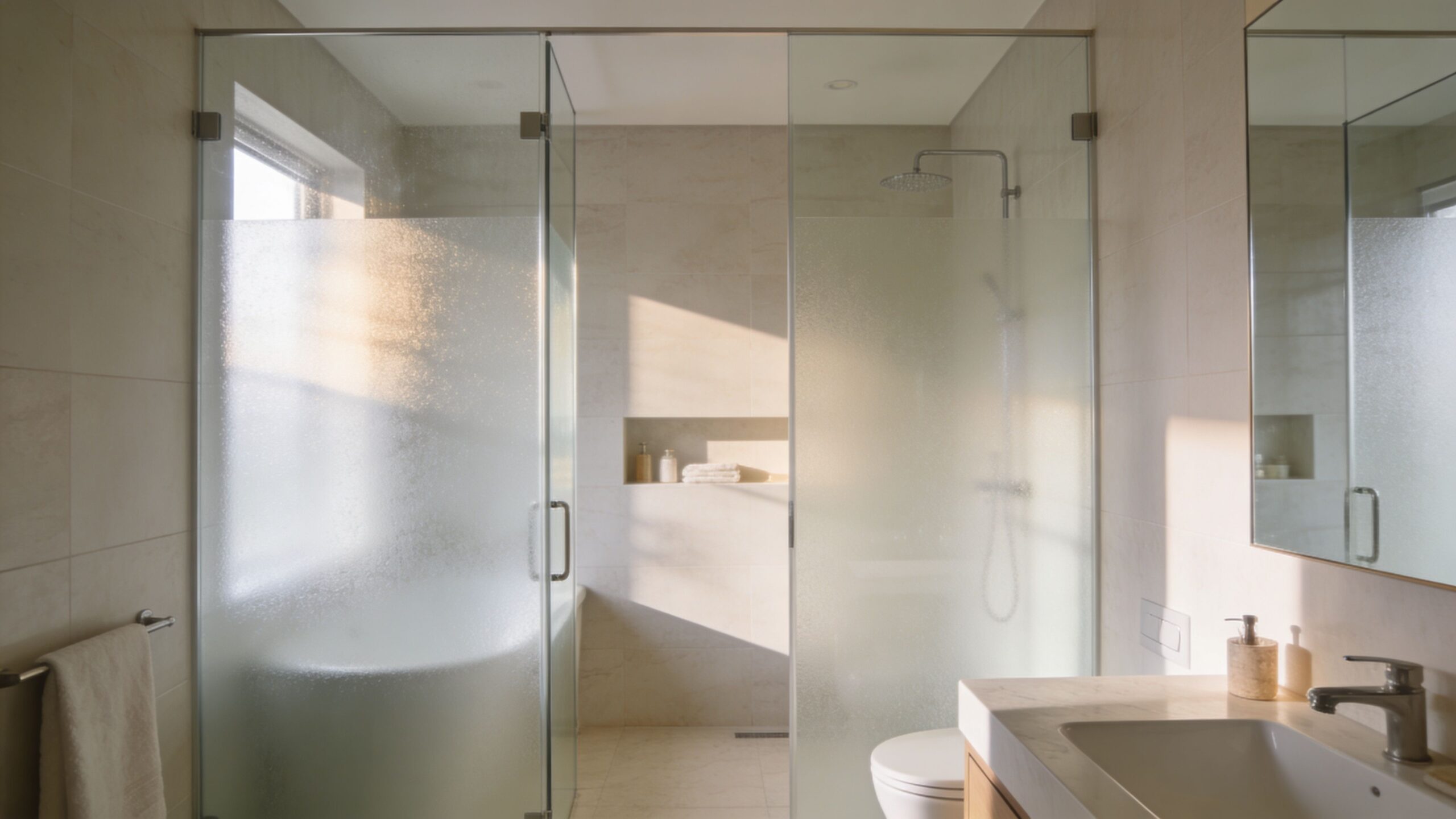
A frosted shower enclosure solves a design tension that comes up in almost every remodel. Homeowners want openness, but they also want privacy. Frosted glass handles both at once by letting light move through the shower while softening visibility enough to make the space feel comfortable.
That balance is a big reason frosted panels have stayed relevant through changing bathroom styles. According to this review of shower door design trends, frosted glass shower panels reached peak popularity in the early 2000s, and by 2014 frameless showers were ranked among the top 5 bathroom trends, which pushed more demand toward privacy-forward options like frosted, fluted, and reeded glass.
Why frosted glass still works so well
In practice, frosted glass does three jobs at the same time:
- It protects privacy: You don’t get the direct line of sight that clear glass allows.
- It keeps the room bright: Light still filters through the enclosure instead of stopping at a solid wall or heavy curtain.
- It adds finish to the room: Frosted glass feels intentional. It reads as part of the design, not just a barrier for water.
That last point matters. A shower curtain can separate the space, but it doesn’t contribute much visually. A frosted panel becomes part of the architecture of the bathroom.
Frosted glass works best when the homeowner wants the room to feel open from the doorway but doesn’t want the shower interior on full display.
Privacy isn’t one-size-fits-all
A lot of buyers hear “frosted” and assume there’s only one look. There isn’t. Some finishes are lighter and more mist-like. Others are much denser and more opaque. The right choice depends on the room layout, the amount of natural light, and how much privacy you want from different viewing angles.
For a primary bath with strong daylight, a heavier frost can still keep the room from feeling dim. For a smaller guest bath, a lighter frost may preserve more openness. A sample in the actual room helps more than a catalog image.
Why it fits Southwest Florida homes
Frameless design has become a natural match for frosted glass in this market. Clean lines work well with coastal contemporary homes, updated condos, and transitional remodels. Frosted glass also pairs easily with brushed metal hardware, large-format tile, and modern vanities without making the bathroom feel busy.
The appeal is simple. You get a shower that feels lighter than a wall, more refined than a curtain, and more forgiving than clear glass in everyday use.
Understanding Frosted Glass Manufacturing Methods
The phrase “frosted glass” describes a look, not a single process. That distinction matters. Two shower panels can appear similar on day one and perform very differently after years of heat, moisture, and cleaning.
For shower use, the three methods homeowners usually encounter are acid-etched glass, sandblasted glass, and adhesive privacy film. The visual result can overlap, but the surface character and long-term maintenance profile are not the same.
What each method actually does
Acid-etched glass uses a chemical process to create a permanent frosted finish. The surface tends to feel more even and refined than rougher alternatives. It’s a true glass finish, not a layer applied on top, so it usually gives the most consistent look across the panel.
Sandblasted glass is made by driving abrasive material against the glass to roughen the surface. It can produce a beautiful effect, especially for decorative work, but that texture can hold onto grime more aggressively if the finish isn’t protected.
Adhesive film is exactly what it sounds like. A translucent film is applied to glass to imitate frosting. It’s often used when someone wants a lower-commitment privacy solution or a quick visual change.
Here’s the practical side-by-side view.
| Method | Durability | Maintenance | Typical Cost | Best For |
|---|---|---|---|---|
| Acid-etched | Permanent finish with strong long-term stability | Easier to clean than more textured finishes, but still benefits from protective coating in coastal conditions | Higher than film | Homeowners who want a durable, built-in frosted look |
| Sandblasted | Permanent, but the rougher texture can be less forgiving over time | More demanding because textured areas can trap residue | Varies by design complexity | Decorative effects and custom patterns |
| Adhesive film | Least durable in a shower environment | Can become a problem in moisture-heavy spaces | Usually lowest upfront cost | Short-term privacy changes, not ideal for long-term shower use |
What works and what doesn't in a coastal bathroom
The biggest mistake I see is choosing by appearance alone. In a dry environment, that can be manageable. In Southwest Florida, moisture changes the equation.
The source material on coastal maintenance points out that adhesive films can peel or yellow in 2 to 5 years in humid conditions, and that’s exactly why film is rarely my first recommendation for a primary shower enclosure in this region. A shower is one of the hardest places in the house for a film product to age gracefully.
Sandblasted finishes can also ask more of the homeowner over time because the added texture tends to hold residue. If the goal is a panel that stays attractive with less frustration, a permanent etched finish is usually the smarter direction.
Practical rule: For a long-term shower frosted glass panel, choose a permanent finish over a surface-applied shortcut.
If you want to compare decorative finishes before settling on a shower design, AmeriGlass keeps examples of mirrors and specialty glass styles that help homeowners understand how texture, opacity, and surface character change the final look.
Essential Safety and Thickness for Frameless Showers
A frameless shower has no frame to hide weak glass, loose hardware, or sloppy measurements. In Southwest Florida, that matters even more. Humidity, salt air, and daily use put steady stress on hinges, clamps, sealants, and wall anchors, so the glass package needs to be specified correctly from the start.
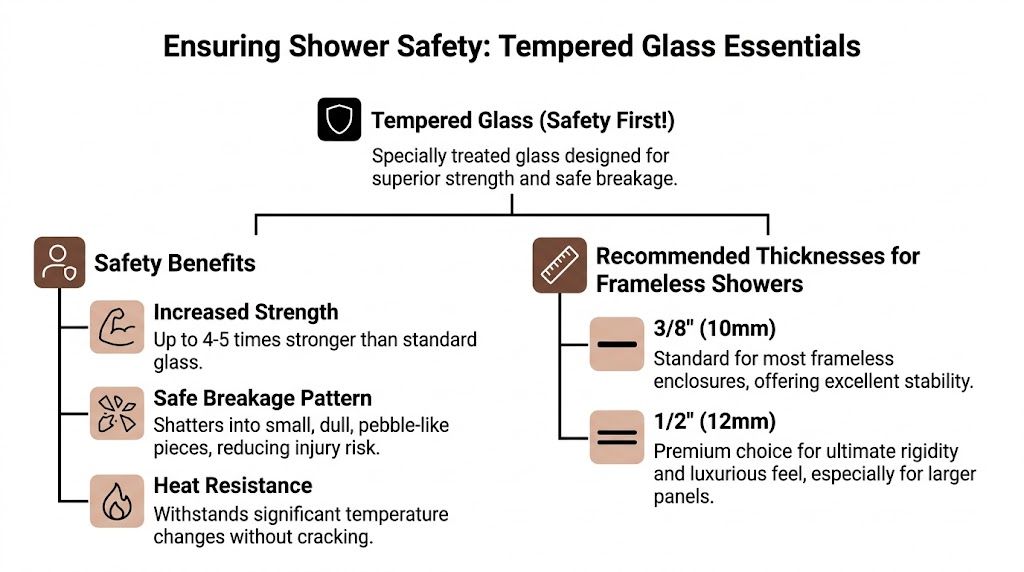
Every frameless enclosure should use tempered safety glass. The point is not just strength. It is safer breakage behavior. As the National Glass Association explains in its safety glazing guidance, tempered glass is designed for hazardous locations like shower enclosures because it breaks into small pieces instead of large sharp shards.
Why 3/8-inch glass is the real benchmark
For most frameless shower frosted glass panel installations, 3/8-inch tempered glass is the standard I recommend. It gives the panel the rigidity a frameless system needs without creating unnecessary strain on hinges or wall structure. You feel the difference every time the door opens and closes.
Thinner glass can be used in some semi-frameless or smaller fixed-panel applications, but it often feels lighter, flexes more, and puts more importance on perfect hardware alignment. In a high-use bathroom, that can show up later as hinge adjustment issues, door movement, or a less solid feel overall.
Thicker glass has its place. Large panels, oversized doors, and certain custom layouts may justify it. The trade-off is weight. Heavier glass demands better backing in the walls, tighter installation tolerances, and hardware that is chosen for the load, not just the look.
Thickness affects more than appearance
Homeowners usually notice thickness as a visual detail first. Installers notice what it does to the whole system.
A frameless enclosure works as one assembly. Glass thickness affects hinge performance, clamp pressure, door swing, panel stability, and how forgiving the installation will be if walls are out of plumb. In coastal homes, I also look at long-term service conditions. Salt air and constant moisture do not weaken tempered glass itself, but they can expose cheap hardware faster. A properly sized panel paired with quality hardware holds its alignment better over time.
That is one reason low quotes deserve a closer look. If the price is far below comparable bids, ask what has been reduced. Sometimes it is the glass thickness. Sometimes it is the hardware finish, the wall anchoring method, or the time spent on final measurement after tile is complete.
What to verify before you approve a frameless enclosure
Ask direct questions and expect direct answers:
- What glass thickness is specified for each panel and door
- Is every shower panel fully tempered safety glass
- Is the hardware rated for that panel size and door weight
- Will final field measurements be taken after finished walls and tile are complete
- What protection is used on the glass surface to help with mineral buildup and cleaning in a humid coastal bathroom
That last point gets missed in generic shower guides. In Southwest Florida, a protective glass coating can make a real difference, especially on frosted surfaces that already diffuse residue better than clear glass. It will not eliminate cleaning, but it can reduce buildup and make regular maintenance easier over the long run.
Buy the structure behind the photo.
If you want to compare door swings, panel layouts, and hardware choices before ordering, AmeriGlass offers a custom shower door design planner that helps homeowners sort out the configuration details that affect safety and performance.
Frosted vs Clear Glass A Practical Homeowner Comparison
Most homeowners narrow the decision to one of two options. They either want the airy openness of clear glass or the privacy and forgiveness of frosted. Both can work. The right answer depends less on trend and more on how you live.
Daily upkeep is where the difference shows
Clear glass shows everything. On a showroom floor, that can look crisp and minimal. In a real bathroom with hard water, body oils, and frequent use, it behaves like a dark car finish. Every spot is visible.
Frosted glass is much more forgiving. According to this architectural glass reference, frosted glass can conceal over 95% of water spots and fingerprints because its micro-rough surface scatters light, and that makes it 3 to 5 times easier to maintain than clear glass in hard-water regions like Southwest Florida.
That doesn’t mean frosted glass never needs cleaning. It does. It means the enclosure usually looks acceptable much longer between cleanings.
How the room feels with each option
Clear glass has one clear advantage. It visually disappears. If you have beautiful tile work, a compact bathroom, or a view you want uninterrupted, clear glass keeps the sightlines open.
Frosted glass changes the feeling of the room in a different way. It still passes light, but it softens contrast and adds visual depth. In bathrooms where privacy matters more than full transparency, that trade is often worth it.
Here’s the simple comparison:
- Choose clear glass if you want maximum visibility, a fully open look, and you don’t mind staying on top of maintenance.
- Choose frosted glass if you want privacy, better day-to-day forgiveness, and a softer visual effect.
- Choose based on lifestyle, not the showroom sample. A panel that looks perfect under store lighting may behave very differently in a humid bath used twice a day.
For homeowners still torn between a privacy finish and a fully transparent enclosure, comparing ultra-clear glass options can help clarify whether your priority is visual openness or practical concealment.
The Secret to Effortless Maintenance in Humid Climates
Southwest Florida changes how shower glass ages. High humidity, hard water, and salty coastal air create a tougher environment than most national design articles assume. That’s why a frosted finish alone isn’t the whole answer.
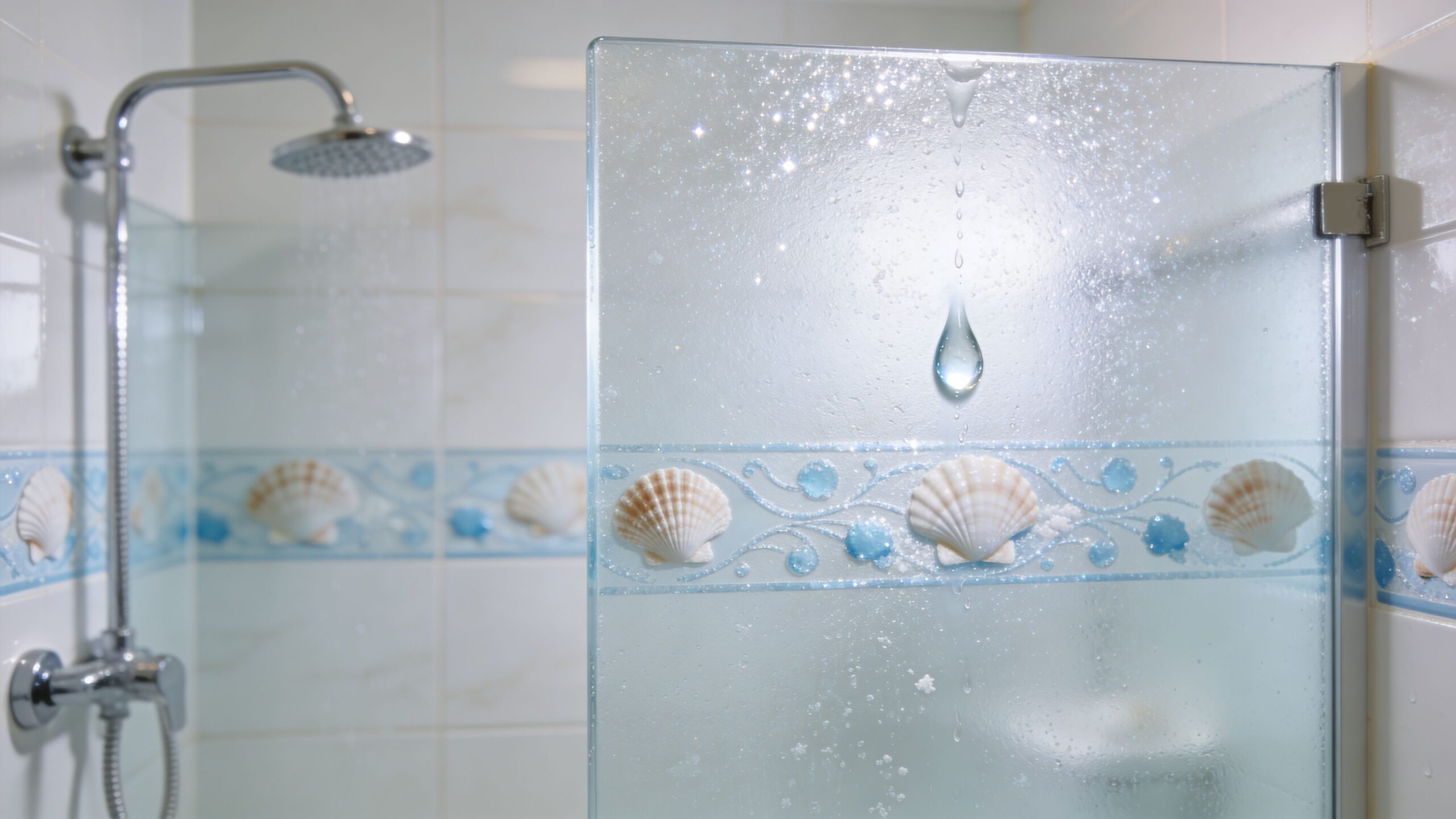
The local issue isn’t just visible spotting. It’s what happens over time when minerals and moisture keep settling onto the same surface. In coastal conditions, unprotected frosted glass can develop frost bloom from mineral buildup, and adhesive films may peel or yellow in 2 to 5 years, as noted in this coastal maintenance discussion of frosted shower doors.
Why coatings matter more here
A protective coating changes the maintenance equation because it helps water and dissolved minerals release from the glass instead of clinging to it. For homeowners, that translates into easier routine cleaning and less long-term buildup.
This matters even more on frosted surfaces. Frosting hides many daily marks, but if mineral deposits are allowed to accumulate for years, the finish can lose the clean, even appearance people wanted in the first place. A coating helps preserve the look rather than forcing you into aggressive cleaning later.
One of the most practical upgrades in this climate is Diamond-Fusion. The verified guidance on frameless shower glass notes that fabricators recommend pairing frosted glass with Diamond-Fusion because it reduces surface tension and lowers spotting and cleaning effort in humid environments, according to the earlier thickness and maintenance data.
What to do in a real Florida home
Maintenance gets easier when the enclosure is part of a larger moisture-control strategy.
- Vent the room well: Run the bath fan long enough after showers to move moisture out.
- Use gentler routine cleaning: Let your coating do the work instead of reaching immediately for harsh chemicals.
- Reduce indoor humidity where possible: If your home stays damp year-round, broader moisture control helps the shower too. This guide on how to effectively reduce humidity in your South Florida home is a useful companion read because shower glass problems often start with whole-house humidity, not just the bathroom.
A lot of homeowners wait until the glass starts looking cloudy to take maintenance seriously. That’s backwards. The right time to protect the glass is before the buildup sets in.
For a simple upkeep routine after installation, this shower door maintenance guide covers the habits that help coated glass stay cleaner longer.
A quick visual explanation helps if you want to see how coating and care affect long-term performance:
Coastal bathrooms punish neglect faster than inland bathrooms do. The right coating is not cosmetic. It’s protective.
How to Choose a Glass Installer in Southwest Florida
The quality of the panel matters. The quality of the installer matters just as much. A beautiful shower frosted glass panel can still disappoint if the measurements are sloppy, the hardware is undersized, or the crew doesn’t understand how walls, tile tolerances, and local moisture conditions affect the final fit.
What to verify before you sign
Start with the basics, but don’t stop there.
- License and insurance: Ask for proof. A shower enclosure is a safety installation, not a handyman add-on.
- Field measurement process: Reputable installers measure after finished surfaces are in place. Tile, stone, and walls are rarely perfectly true.
- Local project history: A company that works regularly in Naples, Bonita Springs, and Fort Myers is more likely to understand the conditions that affect long-term performance.
- Warranty clarity: You want to know what is covered, what maintenance is expected, and whether coating care affects coverage.
Red flags homeowners should catch early
Some warning signs show up before the first measurement.
A vague quote is one. If the estimate doesn’t clearly state the glass type, thickness, hardware finish, and scope of installation, expect confusion later. Pressure to use thinner glass or lower-grade materials is another. So is any installer who talks mostly about price and very little about wall conditions, swing clearance, or panel support.
A careful installer usually asks better questions than the homeowner expected. They’ll ask about tile layout, curb pitch, out-of-square openings, and who is responsible for adjacent finishes.
If an installer doesn’t seem concerned about measurement details, you should be.
What a better process looks like
The strongest shower projects follow a straightforward pattern. The company reviews the space, confirms feasibility, takes precise site measurements, specifies the glass and hardware clearly, and installs with clean alignment and proper seal details.
For homeowners comparing local firms, a portfolio of frameless shower door installation work in Fort Myers is worth reviewing because it shows whether the company regularly executes the kind of enclosure you’re considering, not just whether it sells glass in general.
In this category, professionalism usually shows up in small details. Accurate lead communication. Clear answers. Clean edges. Hardware that lines up. Doors that swing correctly. Panels that look centered because someone measured for the actual room, not an idealized one.
Common Questions About Frosted Shower Panels
Will a frosted glass shower make my bathroom feel dark
In most bathrooms, no. Frosted glass still passes light, so the room usually stays brighter than it would with a shower curtain or a half wall. What changes is the character of the light. It becomes softer and less direct.
The result depends on the room. A bath with light tile, decent window light, and a moderate frost usually feels open. A small room with darker finishes and limited lighting can feel more muted, so sample review matters before the order is placed.
Can you still see silhouettes through frosted glass
Yes, sometimes. Privacy is not one fixed setting.
Silhouettes become more noticeable when the bathroom is dark and the shower is brightly lit, or when someone is standing close to the glass. Acid-etched and low-opacity frosted finishes often show more shape than homeowners expect from online photos. If privacy is a high priority, compare full-size samples under lighting conditions that match your bathroom, not just in a showroom.
Is frosted glass always lower maintenance
No. Frosted glass often hides water spots better day to day, but that does not mean every frosted panel is easier to live with over time.
In Southwest Florida, humidity, hard water, and salt exposure put more pressure on the glass surface. A panel with a surface-applied film can age differently than true acid-etched glass, and some textured finishes hold onto residue more aggressively. Protective coatings help. They do not eliminate cleaning, but they do reduce buildup and make routine wipe-downs faster, which matters a lot in coastal homes where mineral haze can become permanent if it is ignored.
Are there newer alternatives to static frosting
Yes. One high-end option is PDLC smart glass, which switches between clear and private modes with a control system. As noted in this privacy glass overview, it is gaining attention for bathrooms that need adjustable privacy.
It is still a specialty choice. Smart glass adds cost, electrical planning, and more components that can need service later. For many homeowners, traditional frosted glass remains the better long-term value because it gives privacy without adding another system to maintain in a wet environment.
Is frosted glass a good fit for a primary bathroom
For many primary baths, yes. It works especially well when the shower is visible from the vanity, when two people use the room on different schedules, or when the homeowner wants privacy without closing off light.
The better question is whether the specific frost type fits how the bathroom is used and cleaned. In my experience, the right panel for a Southwest Florida home is not just the one that looks good on installation day. It is the one with the right safety glass, the right finish, and a surface treatment that still looks clean after years of humidity and daily use.
If you’re planning a bathroom upgrade and want straight answers about glass type, frosting method, coating options, and frameless design, AmeriGlass Industries can help you evaluate the practical choices for a Southwest Florida home. A well-built shower enclosure should look right on day one and still make sense years later.