

Ever notice that little strip at the bottom of your shower entrance? That’s the shower door threshold, and it’s one of the most important, yet overlooked, parts of your entire bathroom. Think of it as the quiet guardian of your bathroom floor, working around the clock to keep water where it belongs.
The Unsung Hero of Your Bathroom Shower
Every high-functioning bathroom has a secret weapon, and it’s often the one piece you barely see. The shower door threshold is doing double duty. Its most obvious job is to act as a dam, stopping every last drop from escaping the shower. Without a properly installed threshold, you’re signing up for constant puddles, which can lead to serious water damage and mold.
But it does more than just stop water. The threshold is also the structural bedrock for your shower door, especially for the heavy glass used in frameless designs. It provides the solid, perfectly level base needed to hang the door, ensuring it swings true and closes securely for years to come. It’s the foundation for the entire enclosure.
From Bulky Curbs to Invisible Barriers
Shower thresholds have come a long way. Years ago, they were clunky, high curbs that were effective but created a major trip hazard and chopped up the look of the bathroom. Today’s designs are much smarter and more stylish.
This evolution has given us a fantastic range of options that blend form and function:
- Low-Profile Thresholds: These are sleek, often just an inch or so high. They do a great job containing water without forcing you to take a big step to get in and out of the shower.
- Curbless or Zero-Entry Showers: This is the peak of modern, accessible design. The threshold is completely gone, and the shower floor has a gentle, almost invisible slope towards the drain. It creates a seamless, open flow from the rest of the bathroom right into the shower.
- Integrated Materials: Thresholds are now a key design element. You can get them made from beautiful materials like marble, quartz, or solid surfaces to perfectly match your countertops or tile, tying the whole room together.
A great threshold doesn't just prevent leaks; it elevates the entire design of your bathroom. It elegantly separates the wet and dry zones, making the space feel more open, intentional, and luxurious.
Choosing the right one is about finding that perfect balance of safety, function, and style. As you start planning your bathroom project, understanding your options is the first step. Talking to experts, like the team at AmeriGlass Industries, can help you figure out the best solution for your Southwest Florida home. This guide will walk you through everything you need to know to pick a threshold that looks great and performs flawlessly.
Decoding The Different Types Of Shower Thresholds
Picking the right shower threshold isn't about following a strict set of rules. It’s about matching the design to your real-world needs, your personal style, and your long-term safety goals. Think of it like buying a car—you wouldn’t take a low-slung sports car on a rugged mountain trail. Each shower threshold is engineered for a specific job, striking a careful balance between keeping water in and making access easy.
There are three main designs to choose from, and getting to know them is the first step toward a bathroom that’s not just beautiful but works perfectly for you and your family, day in and day out. Let’s break them down.
The Curbed Threshold: A Classic Dam
The traditional curbed threshold is the workhorse of the shower world. For pure water containment, it’s tough to beat. Imagine it as a small, solid dam built at the entrance to your shower. Its one and only job is to create a physical barrier—usually a few inches high—that makes it almost impossible for water to splash or flow out onto your bathroom floor.
This design is a go-to for showers with high-pressure jets or for families with kids who love to splash. It offers maximum protection against leaks and water damage. The trade-off? That raised edge can be a trip hazard, making it a less-than-perfect choice for anyone with mobility concerns or those planning to age in place gracefully.
The Low-Profile Threshold: A Modern Speed Bump
Enter the low-profile threshold, the sleeker, more modern cousin of the traditional curb. Instead of a high wall, picture this one as a gentle speed bump. It’s a subtle but effective barrier, often just an inch or so high, designed to guide water back toward the drain without getting in your way.
This style strikes a fantastic balance between water control and easy access. It dramatically reduces the trip hazard while still giving your shower door a solid foundation to seal against. It's become an incredibly popular choice for contemporary bathrooms, looking especially sharp when paired with frameless glass doors. To see how these elements create a stunning, cohesive look, check out this guide on frameless shower door installation in Fort Myers, Florida.
Shower Threshold Types at a Glance
This quick comparison table can help you choose the best fit for your bathroom's style and functional needs.
| Threshold Type | Best For | Water Containment | Accessibility |
|---|---|---|---|
| Curb | Maximum water protection, family bathrooms | Excellent | Low |
| Low-Profile | Modern aesthetics, balancing access and water control | Good | Medium |
| Curbless | Universal design, aging-in-place, minimalist look | Good (requires precise slope) | Excellent |
Ultimately, your choice will come down to what you value most: impenetrable water defense or effortless entry.
This decision tree helps visualize whether your priority is maximum water control or creating an accessible, easy-entry shower space.
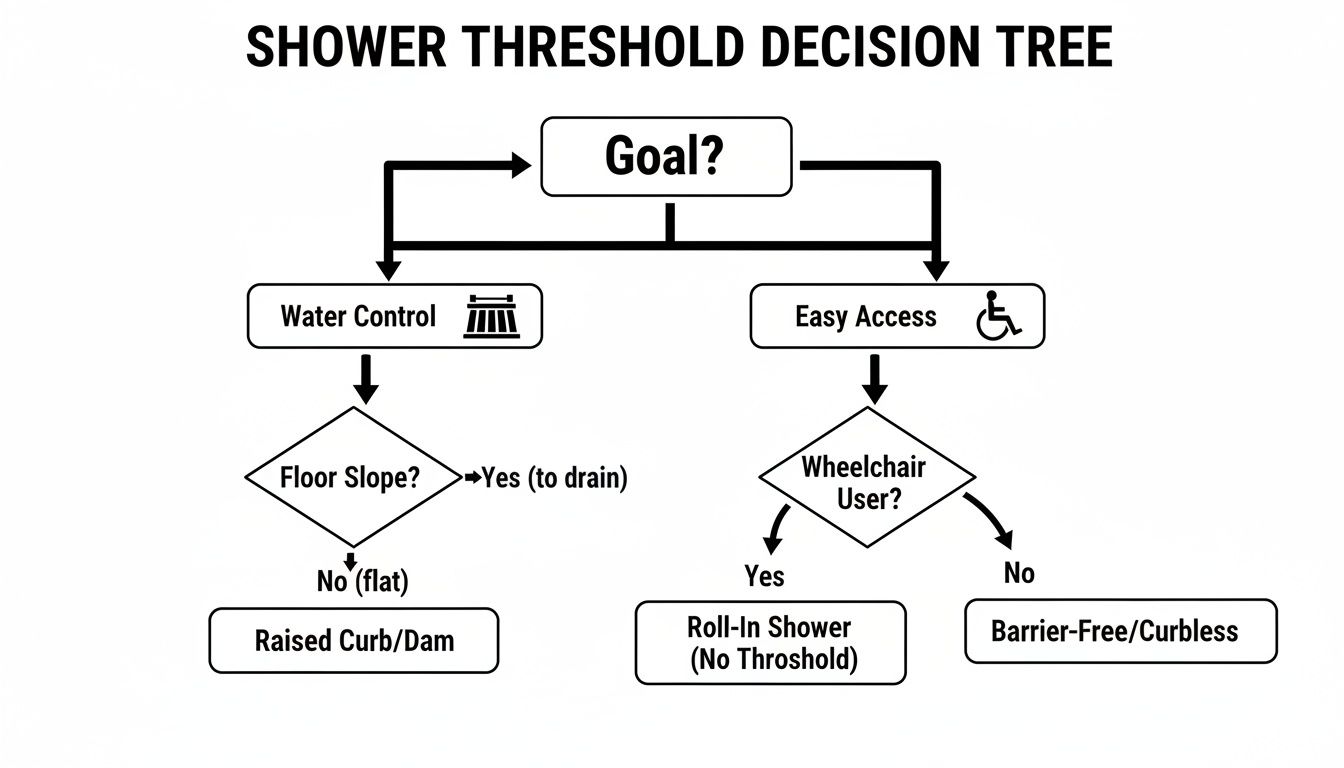
As the graphic shows, if keeping every drop of water contained is your top concern, a curbed design is your best bet. If creating a safe, barrier-free space is the goal, then a zero-entry design is the clear winner.
The Curbless Threshold: A Seamless Runway
Finally, we have the curbless or zero-entry threshold, the pinnacle of accessible, minimalist design. Think of it as a completely seamless runway that flows directly from your bathroom floor into the shower. There is no curb at all.
So how does it keep the water in? The magic is in the engineering. The entire shower floor is meticulously sloped—just enough to be unnoticeable when you walk on it, but perfectly angled to guide every drop of water straight to the drain. This design is the gold standard for universal design and ADA compliance, offering effortless roll-in access for wheelchairs, walkers, or anyone who simply wants to avoid stepping over a barrier.
A zero-entry shower does more than just enhance safety; it creates a sense of spaciousness and luxury, making a smaller bathroom feel significantly larger and more open.
This shift toward safety and open design isn't just a trend; it's a reflection of real-world needs. The U.S. Consumer Product Safety Commission logged over 38,000 bathroom slip-and-fall injuries each year between 2015 and 2020. A staggering 15% of those were linked directly to navigating a shower threshold. It's no wonder the premium residential market is responding, with 55% of new installations now featuring zero-threshold designs to support aging-in-place and universal accessibility.
Choosing the Right Materials for Your Threshold
Picking the right material for your shower threshold is where the rubber really meets the road—or in this case, where durability meets design. In a space that sees constant moisture, this choice is huge. It dictates not just how your shower looks, but how it holds up year after year. This isn't just about matching a color; it’s an investment in a material that can handle daily abuse without staining, degrading, or becoming a weekend cleaning project.
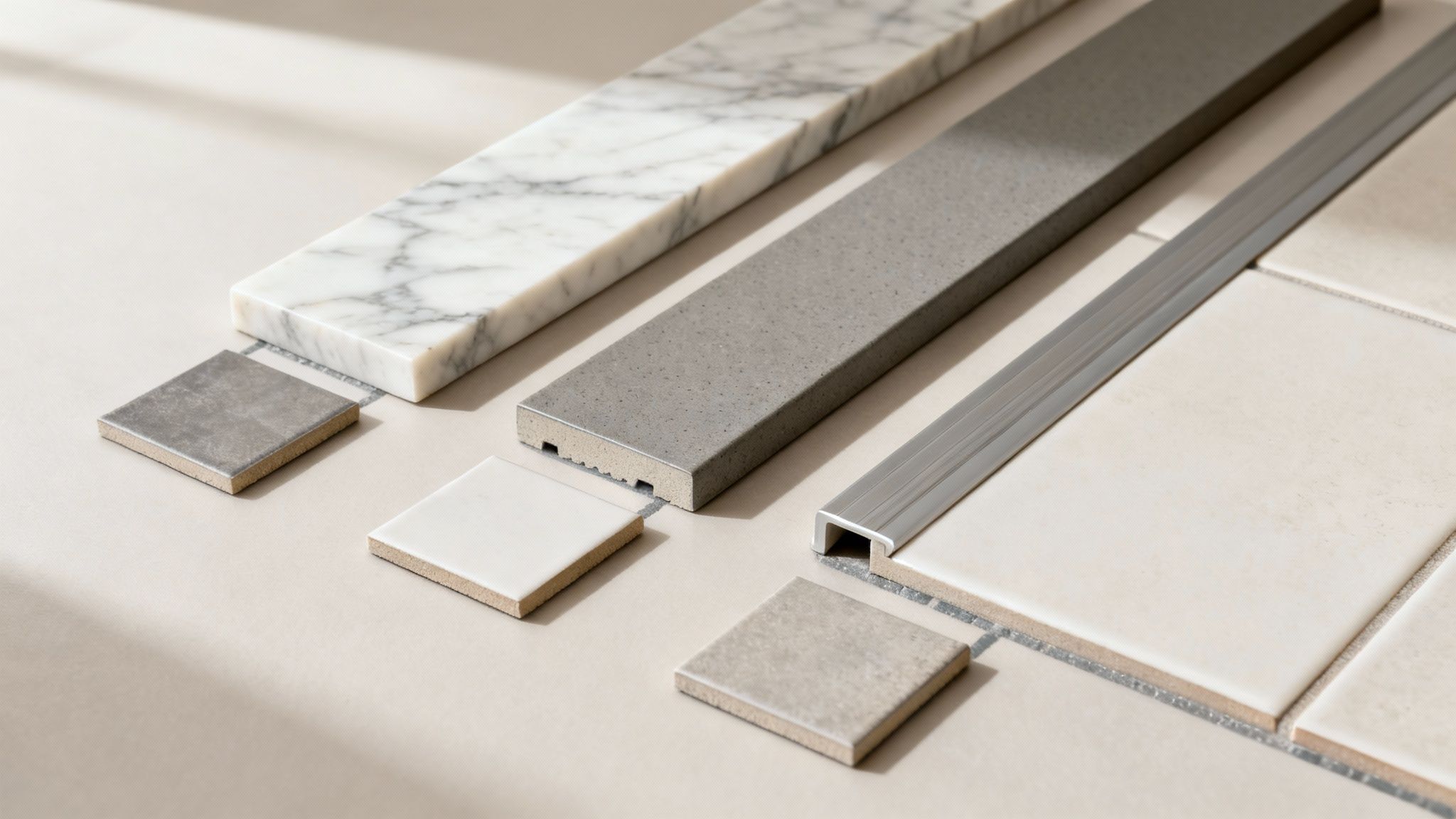
Think of the threshold as your first line of defense. It needs to be tough enough to support a heavy frameless glass door while also being beautiful enough to tie the whole room together. So, let’s walk through the leading contenders and find the perfect fit for your Southwest Florida home.
Natural Stone: Luxury and Upkeep
There's no denying the appeal of natural stone. Materials like marble, granite, and travertine bring a timeless, organic beauty into the bathroom that’s simply impossible to replicate. Every single slab is one-of-a-kind.
- Marble: It’s the classic, high-end choice known for its elegant veining. But it has a catch—it's porous. You have to seal it regularly to prevent it from staining from soap, shampoo, and our local hard water.
- Granite: This is the workhorse of natural stone. It’s far more durable and less porous than marble, making it a fantastic, low-maintenance option that stands up to scratches and stains like a champ.
- Travertine: If you're going for a warm, earthy vibe, travertine is perfect. It's also quite porous, though, so just like marble, it needs consistent sealing to keep water out and maintain its look.
The bottom line with natural stone is that you have to commit to the maintenance. If you skip the sealing, you’re looking at discoloration and damage that can be a real headache to fix.
The right material does more than just stop water; it complements your design vision. A sleek quartz threshold can echo your vanity countertop, while a carefully chosen tile can create a seamless transition from the bathroom floor into the shower enclosure.
Engineered Surfaces: Reliability Meets Style
For homeowners who love the look of stone but not the maintenance that comes with it, engineered materials are a brilliant solution. These surfaces deliver incredible durability and consistency.
Solid Surface materials are non-porous composites, which is a technical way of saying they never need to be sealed. They’re completely waterproof, tough on stains and mold, and can be fabricated into a single, seamless piece for a super clean, modern aesthetic.
Engineered Quartz is another heavy hitter. It’s made from crushed quartz blended with resin, making it one of the toughest materials you can get. It’s non-porous, scratch-resistant, and available in a massive range of colors and patterns that can mimic natural stone perfectly. When you're pairing a beautiful threshold with pristine glass, understanding options like ultra-clear glass can really take the whole look to the next level.
Classic Tile: Practicality and Versatility
Using tile for your shower curb is a really flexible and often budget-friendly way to go. It gives you the freedom to create a perfectly cohesive design by matching the threshold to your shower walls or the main bathroom floor.
But there’s a weak link here: the grout. Grout lines are porous, and they can be a magnet for dirt, mildew, and stains if you don't stay on top of sealing and cleaning them. For the best results, my advice is to use larger format tiles to keep grout lines to a minimum. Even better, use a high-performance epoxy grout for maximum resistance to water and stains. Do that, and your tiled threshold will stay as functional and beautiful as the day it was installed.
Mastering Waterproofing and Installation
A gorgeous marble or quartz threshold looks fantastic, but it's only as good as the waterproofing you can't see. If that seal isn't flawless, even the most beautiful materials are just window dressing for a disaster waiting to happen—leaks, mold, and serious structural damage.
Think of shower waterproofing less as a single step and more as a complete defense system. Its one job? To protect your home's subfloor from the constant assault of water.
The whole system works on a single, non-negotiable principle: gravity. Water needs a clear, downhill path straight to the drain. This all starts with a carefully calculated slope in the shower pan and threshold. It's an incline so subtle you'll barely notice it, but it's powerful enough to make sure every last drop is channeled away from your bathroom floor. It’s the silent hero of every leak-proof shower.
The Science of a Watertight Seal
Beneath all that tile and stone lies the most critical component: the waterproof membrane. This is your last line of defense, an impermeable sheet that acts like a hidden liner in a swimming pool. We meticulously install it over the sloped shower pan and up the sides of the walls and curb, creating one continuous, seamless basin. This contains water even if it somehow finds a way past the grout and tile.
Connecting this membrane to the drain and sealing the corners is where professional expertise really comes into play. Any little gap, tear, or improper fold creates a weak point. That's all it takes to compromise the entire system and let water seep into the wood structure of your home, causing rot and decay.
A correctly installed threshold isn't just set in place; it's integrated into a complete waterproofing assembly. This system ensures that your shower enclosure is a self-contained, watertight vessel, giving you total peace of mind every time you turn on the water.
Following Building Codes and Best Practices
In Southwest Florida, local building codes spell out the exact requirements for shower construction. They cover everything from minimum slope angles and drain integration to flood testing. These rules exist for one simple reason: safety. They’re designed to prevent the kind of catastrophic failures that lead to water damage and hazardous mold. A true professional doesn't just meet these codes; they build to exceed them.
This dedication to quality has completely changed the game. Shower thresholds have evolved from clunky, high-rise barriers to sleek, ultra-low profiles, a shift that has helped slash leak complaints by a whopping 40%. The market for parts like shower door bottom seals—absolutely critical for sealing a threshold—was worth $1.2 billion globally and is expected to nearly double by 2033.
The proof is in the numbers. Before 2010, installations had 25% higher water damage claims due to bad thresholds. By 2023, that figure plummeted to under 8%, all thanks to better materials and installation techniques.
For anyone tackling a more complex project, a detailed frameless shower door installation guide can be an incredible resource for getting the waterproofing and stability just right.
The Role of Professional Installation
Getting a perfect seal is about so much more than just squeezing a bead of silicone. It demands a real understanding of how different materials expand and contract with temperature changes, which sealants to use for each job, and the right techniques to create a bond that stays flexible and waterproof for years.
The most vulnerable spots for leaks are always the joints—where the threshold meets the glass door and where it meets the surrounding tile. An expert installer has specialized techniques to make sure these areas are sealed perfectly. This precision work guarantees your beautiful new shower doesn't just look flawless but also performs perfectly, protecting your investment for the long haul.
And remember, even the best installation needs a little TLC. A leak-free shower depends on a well-maintained seal, and our guide on shower door maintenance has practical tips to keep your entire enclosure in pristine condition.
Why Professional Installation Is Your Best Investment
Let's be honest, the idea of a DIY shower project can be tempting. It seems like a straightforward way to save a few bucks. But when it comes to installing shower door thresholds and frameless glass, this is one area where "close enough" is never good enough. Precision isn't just a goal—it's everything.
A tiny mistake in measurement, a slight error in the slope, or a less-than-perfect seal can quickly turn your dream bathroom into a source of constant headaches and water damage.
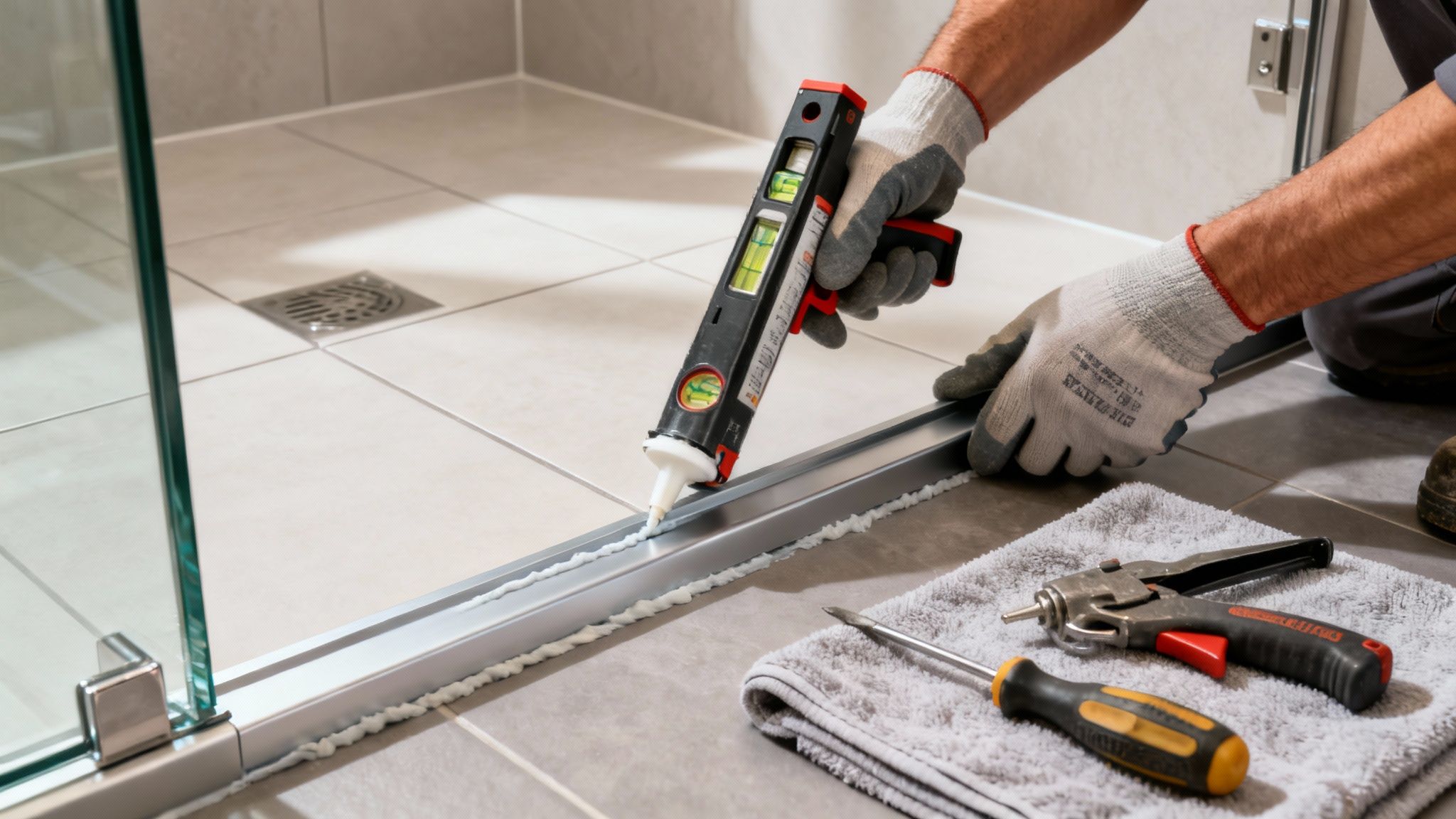
Think of the cost of professional installation not as just another line item on your invoice, but as an insurance policy for your entire bathroom remodel. It's a smart investment in your home’s value, safety, and durability, protecting you from the seriously expensive consequences of a job done "almost right."
The Hidden Costs of DIY Mistakes
Going it alone opens you up to some common but incredibly damaging pitfalls. Even a slightly incorrect slope on the threshold—something barely noticeable to the eye—can cause water to pool or leak out onto your bathroom floor. This creates a persistent slip hazard and gives water a direct invitation into your walls and subfloor.
Improper sealing is another huge risk. Grabbing the wrong type of caulk or applying it incorrectly leaves behind tiny gaps where mold and mildew can take root and thrive. Before you know it, you're fighting a losing battle against discolored, failing seals that are impossible to truly get clean.
These aren't just cosmetic annoyances. A slow, undetected leak can cause thousands of dollars in structural damage over time, completely erasing any money you thought you saved with a DIY attempt.
The Professional Advantage: Precision and Peace of Mind
When you hire a team of licensed and insured experts, you’re buying more than just their time. You're getting tangible benefits you simply can't replicate with a caulk gun and a YouTube tutorial. Professionals have a deep understanding of local Southwest Florida building codes, ensuring your installation is 100% compliant and safe from the get-go.
An expert installer doesn’t just place a threshold; they integrate it flawlessly into your shower’s entire waterproofing system. Their work is a guarantee that the job is done right the first time, protecting your investment and preventing future headaches.
They also come equipped with specialized tools and refined techniques that guarantee a perfect fit, which is especially critical with heavy frameless glass doors that demand absolute precision. From laser levels to proprietary sealing methods, these resources ensure a truly watertight and structurally sound enclosure.
The shower door industry is a major market, with North America alone valued at around $3 billion in 2023. As homeowners continue to prioritize quality and safety, professional installation has become the key to getting the seamless, leak-proof results that also reduce slip-and-fall incidents. You can explore more insights on the growing shower door market to see just how much quality is driving current trends.
In the end, a professional installation delivers more than just a beautiful shower. It gives you peace of mind—the confidence that comes from knowing your bathroom is protected, your family is safe, and your investment is secure for years to come.
Your Top Shower Door Threshold Questions Answered
When you're diving into a shower renovation, a few questions always pop up. Getting the small details right on your threshold is what separates a stunning, leak-free shower from a constant headache. We get these questions all the time from homeowners here in Southwest Florida, so let's get you some clear, straightforward answers.
Think of this as your final gut-check before you move forward. We've pulled together insights from years of hands-on experience to help you nail the details that truly make a difference.
Can I Install a Frameless Shower Door Without a Threshold?
Everyone loves the look of a true "zero-entry" or curbless shower, but that seamless design doesn't mean the water barrier just vanishes. It’s still there—it’s just cleverly engineered into the floor itself with a very precise slope. This isn’t something you can easily add later; it has to be planned from the very start of a build or major remodel.
The magic is in getting the entire shower floor to tilt perfectly toward the drain, guiding every drop of water where it needs to go. To get a truly leak-proof result, the subfloor needs to be prepared by a pro before any glass is even measured, let alone installed.
The beauty of a curbless shower is its seamless blend of style and accessibility. But that beautiful result is built on the invisible foundation of a perfectly sloped floor—a job where professional skill is absolutely essential.
How Do I Clean My Shower Threshold to Prevent Mold?
The best defense against mold and mildew is simply not giving them a chance to grow. It all comes down to preventing moisture from lingering on any surface for too long. A little consistent upkeep goes a long way.
Here’s a simple routine that works wonders:
- Stick to Gentle Cleaners: If your threshold is natural stone or tile, a pH-neutral cleaner is your best friend. Steer clear of harsh, acidic chemicals or abrasive sponges that can etch the material and break down the sealant.
- Wipe it Down After Every Use: This is the big one. After you shower, take a moment to squeegee the glass and wipe the threshold dry with a microfiber cloth. This one small habit makes a massive difference in preventing moisture buildup.
- Don't Forget the Door Sweep: That little vinyl seal at the bottom of your door needs love, too. Clean it regularly with some mild soap and water to keep soap scum and residue from building up.
This simple routine is all it takes to keep your shower enclosure looking brand new for years. For more tips, you can always check out our detailed FAQs on shower glass and maintenance.
What Is the Ideal Height for a Shower Threshold?
There’s no single "perfect" height—it really depends on your shower's design, the slope of your floor, and what you need in terms of accessibility. That said, modern designs have some pretty clear guidelines that do a great job of balancing water containment with safety.
Most of today's low-profile shower door thresholds are somewhere between 1/2 inch and 1 1/2 inches high. This is the sweet spot for keeping water in without creating a major trip hazard. For ADA-compliant or universal design showers, the rules are much stricter, usually calling for a beveled threshold no higher than 1/2 inch to make roll-in access easy. A seasoned pro can take one look at your bathroom and recommend the perfect height that marries safety with your style.
Ready to put the finishing touches on a flawless, beautiful shower enclosure in your Southwest Florida home? The team at AmeriGlass Industries is all about precision—from measurement and custom design to professional installation. We deliver shower door thresholds that work perfectly and look incredible.
Get your free estimate today and let's build the bathroom of your dreams.
Need a threshold fixed or a new door fitted? AmeriGlass Industries handles shower door repair and frameless shower door installation across Naples, Fort Myers, Bonita Springs and Cape Coral. Call (239) 426-6884 for a free estimate.