

You’re probably staring at a shower that still works, but annoys you every day. The metal frame looks tired, the track holds grime, the glass feels dated, and the whole enclosure makes the bathroom seem smaller than it is. In Southwest Florida, those frustrations get worse fast. Humidity hangs around, hard water leaves its mark, and any weak point in the installation starts showing up sooner than homeowners expect.
A well-executed shower door custom project fixes more than appearance. It changes how the room feels, how easily it cleans up, and how confidently the door performs year after year. The difference is rarely the glass alone. It comes from the full chain of decisions, from design and measurement to hardware selection, fabrication, and installation that respects local conditions like salt air and moisture exposure.
Transform Your Bathroom from Basic to Breathtaking
A lot of bathroom frustrations are small on their own. The shower curtain drifts inward. The framed door traps residue along the bottom rail. The opening feels cramped. The tile you paid for barely gets noticed because the enclosure chops up the sightlines.
Then the room starts feeling older than the rest of the house.
Why custom changes the room
A custom frameless enclosure does two things at once. First, it removes visual clutter. Second, it solves fit problems that builder-grade doors often ignore. That matters in real homes, because shower openings are rarely perfectly square, walls aren’t always plumb, and tile layouts create details that off-the-shelf kits don’t handle gracefully.
A frameless door lets the bathroom breathe. Light travels farther. Tile and stone become part of the design instead of background. The enclosure starts looking built for the room instead of dropped into it.
If you’re still deciding on finishes, layout, or tile combinations, it helps to look at realistic bathroom remodel previews before finalizing glass style and hardware. Seeing how glass, metal finishes, and wall materials work together can prevent expensive second thoughts.
A shower enclosure should disappear visually and perform mechanically. If you notice the frame more than the tile, the design is working against the room.
What homeowners usually want, and what actually works
Most homeowners don’t ask for “a custom frameless enclosure” on day one. They ask for practical outcomes:
- Less visual heaviness: They want the bathroom to feel open.
- Easier cleaning: They’re tired of corners and tracks that collect buildup.
- A cleaner finish: They want the renovation to look intentional, not pieced together.
- A better fit: They want a door that swings properly, seals correctly, and doesn’t fight the opening.
That’s why the best projects start with the room, not the catalog. A narrow opening may call for a single-door layout. A larger walk-in may need fixed panels and carefully placed hinges. The right answer depends on how the bathroom is used.
Homeowners often look for inspiration before they’re ready to commit to glass details, and that’s smart. A good place to understand how glass changes the feel of a room is this look at how a glass company can make your home feel luxurious. It captures the shift people are after, which is less clutter, more light, and a bathroom that finally feels finished.
Framed vs Frameless Shower Doors
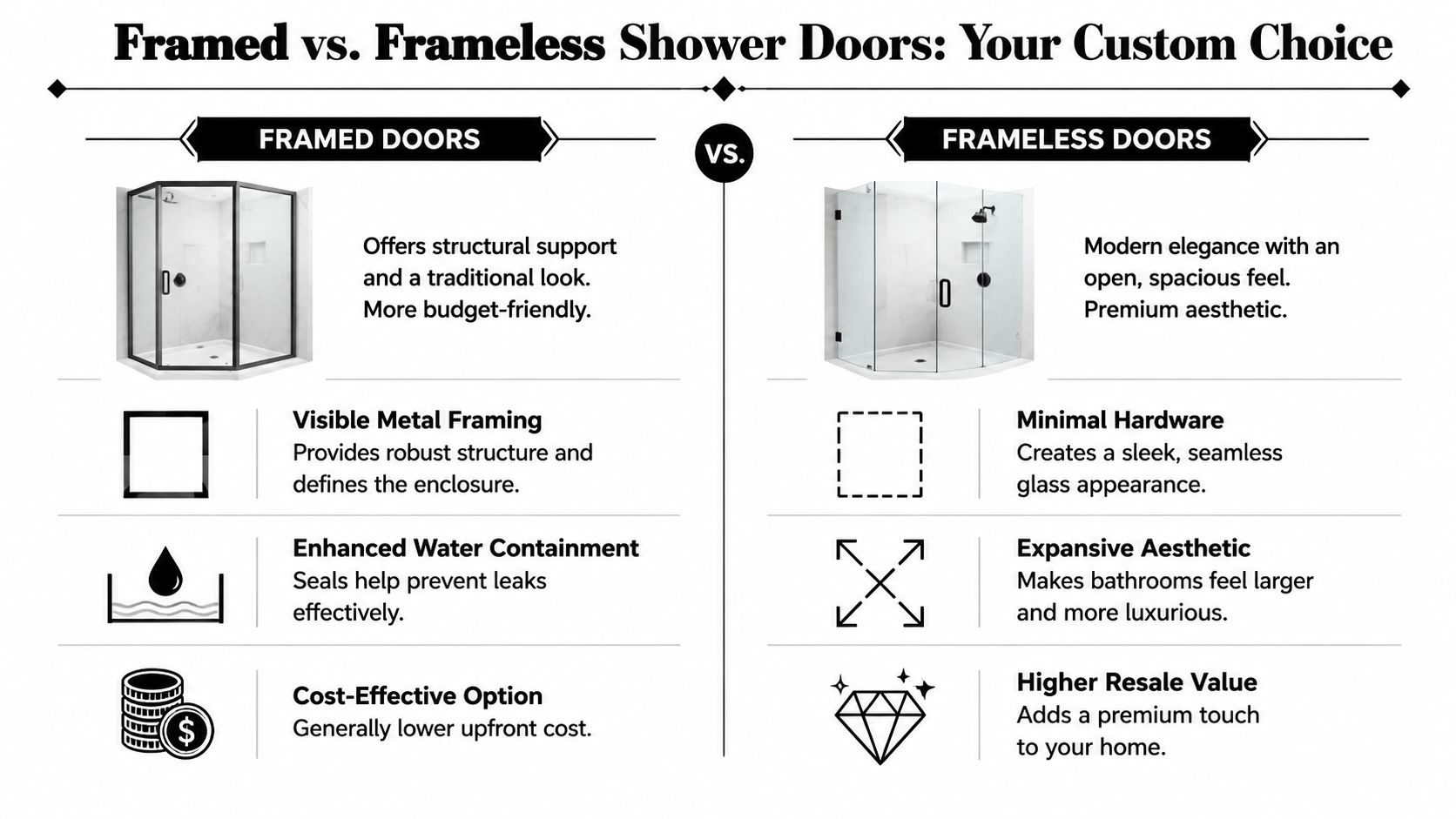
The framed versus frameless decision isn’t just about style. It affects cleaning, hardware visibility, the sense of space, and how premium the finished bathroom feels.
Where framed doors still make sense
Framed doors have a place. They use more metal to create structure, and that can help with certain budget-driven projects or basic enclosures where aesthetics aren’t the priority. The frame and sweeps can also help with water containment in straightforward openings.
But framed doors ask you to live with visible metal lines, more places for residue to collect, and a look that tends to read older even when it’s new.
Why frameless usually wins in higher-end homes
Frameless doors rely on heavier glass and well-chosen hardware rather than perimeter framing. The result is cleaner and quieter visually. In a bathroom with quality tile, stone, or a carefully selected wall finish, that matters a lot. You get the full effect of the materials instead of covering them with aluminum.
Here’s the practical comparison homeowners care about most:
| Consideration | Framed | Frameless |
|---|---|---|
| Overall look | More traditional | More modern and architectural |
| Cleaning | More edges and tracks to scrub | Fewer places for buildup |
| Visual openness | More segmented | More spacious and light-filled |
| Hardware presence | High | Minimal |
| Best fit for luxury remodels | Sometimes | Usually |
Practical rule: If you’ve invested in tile, stone, or custom fixtures, don’t hide them behind a heavy frame.
The trade-off most people miss
Frameless isn’t just “glass without a frame.” It demands better planning. The glass has to be sized correctly. The hinges have to be anchored correctly. The door swing has to be checked against toilets, vanities, curbs, and towel bars. That’s why a sloppy installer can make a frameless enclosure look worse than a decent framed one.
Done right, though, frameless is hard to beat. It gives the room a custom-built look instead of a product-install look. If you want to see how that approach is handled in actual local projects, this page on frameless shower door installation in Fort Myers Florida is a useful reference.
Choosing Your Glass Clarity Thickness and Hardware
These are the details that separate a basic enclosure from one that feels custom-fit for the room. Glass type, thickness, and hardware finish all affect the final result.
Start with clarity, not just transparency
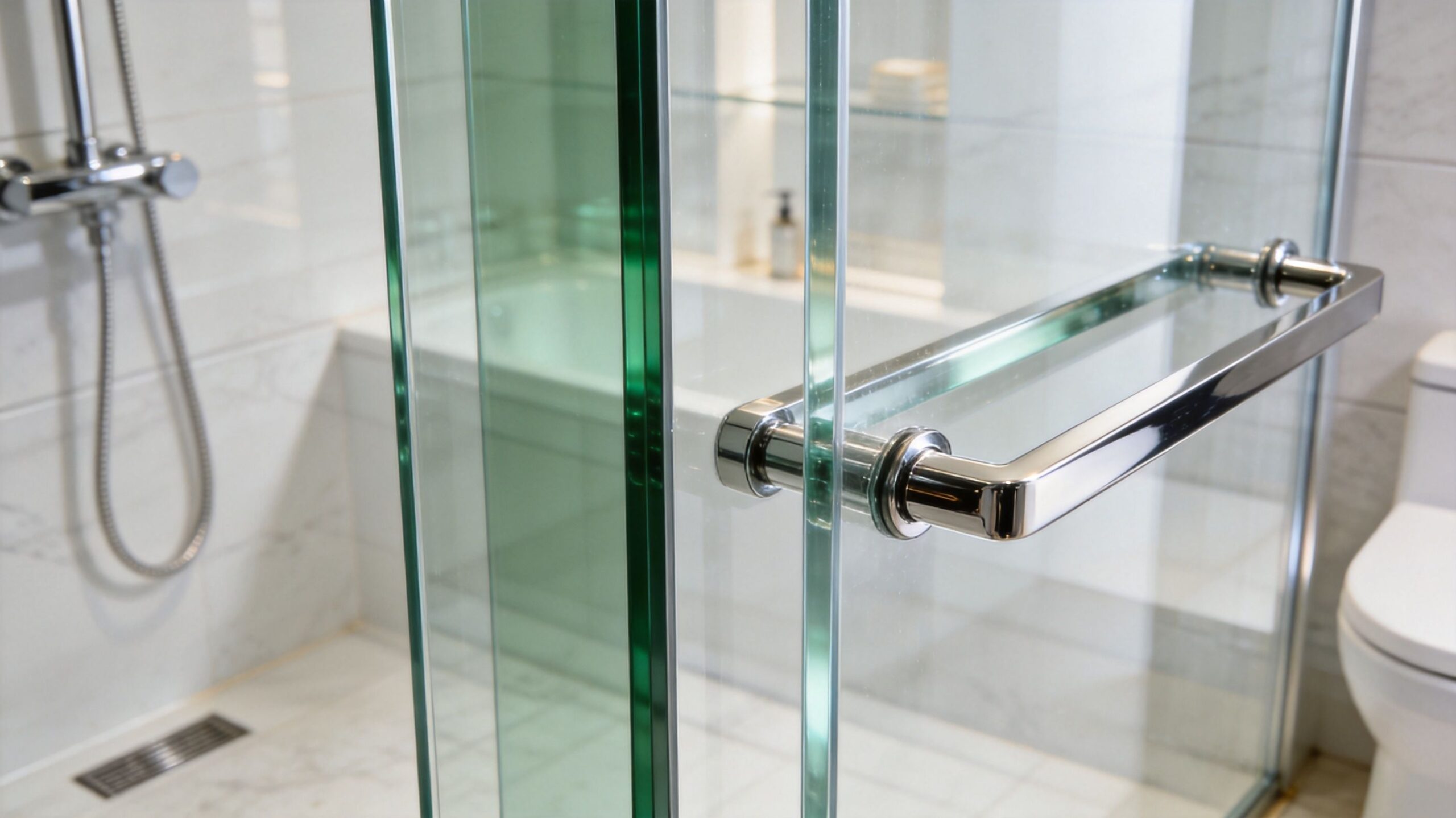
Not all clear glass looks the same. Standard clear glass often carries a subtle green cast, especially along polished edges or against white marble and light tile. Some homeowners never notice it. Others see it immediately once samples are side by side.
If your bathroom uses white, cream, pale gray, or a highly refined stone pattern, low-iron glass usually gives the cleaner look. Colors read truer, edges look crisper, and the enclosure feels less tinted. If you want to compare that option more closely, this overview of ultra-clear glass is worth reviewing before you choose your final glass package.
Thickness affects more than appearance
For frameless work, thickness is structural, not decorative. Custom frameless shower doors use 3/8-inch or 1/2-inch tempered glass. 3/8-inch is the standard for residential applications because it balances strength, safety, and manageable weight for wall-mounted hardware. 1/2-inch glass is often chosen for larger panels or steam shower conditions where additional rigidity is useful. The glass is tempered by heating it to approximately 1,200°F and rapidly cooling it, making it 4 to 5 times stronger than annealed glass according to Glass Doctor’s shower glass thickness guide.
Here’s the quick comparison.
Glass Thickness At-a-Glance
| Feature | 3/8-Inch Glass (Recommended Standard) | 1/2-Inch Glass (Heavy-Duty) |
|---|---|---|
| Typical use | Most residential frameless doors | Large panels and some steam showers |
| Weight | Easier on hardware and handling | Heavier |
| Rigidity | Strong for standard residential layouts | Greater rigidity |
| Visual feel | Clean and balanced | More substantial |
| Best choice for most homes | Yes | Only when the design calls for it |
Hardware is where climate shows up
In Southwest Florida, hardware choice isn’t a cosmetic afterthought. It’s a performance issue. Hinges, clamps, screws, and handles live in moisture every day, and in coastal areas they also deal with salt in the air.
Good hardware should match the design and hold up to the environment. Matte black can look sharp but needs the right finish quality. Brushed nickel tends to hide fingerprints well. Polished chrome reflects light and works beautifully in bright bathrooms, but every finish has to be paired with quality components and proper maintenance.
A smart glass conversation sometimes comes up in luxury builds, especially where privacy matters. It’s a niche option, but it shows how far the category has evolved beyond simple clear panels and standard handles.
The Professional Measurement and Fabrication Process
A custom enclosure doesn’t begin in the shop. It begins in the bathroom, with the room exactly as it exists.

Measuring the real opening, not the ideal one
Most shower openings look simple until you measure them. One wall leans slightly. The curb pitches a bit. The tile build-up varies near a niche or edge trim. Plumbing trim projects more than expected. A DIY buyer often measures width and height, orders glass, and assumes the rest will sort itself out.
That’s not how leak-free frameless work happens.
The fabrication process starts with on-site measurements that account for wall angles, fixture placement, tile heights, curb materials, and surrounding conditions. Even a 1/16-inch error can create major problems at installation. According to this look at how custom shower doors are made, those field specs are then used for CNC fabrication, where tempered glass is cut with tolerances typically held to ±1/8-inch. That same source notes automated cutting reduces human error variance to less than 0.5%, compared with 3% to 5% for manual cutting.
Small field errors become big glass problems. Glass doesn’t flex to forgive a bad measurement.
What gets checked before glass is cut
A proper measure includes more than the opening itself. The installer should be looking at:
- Wall condition: Out-of-plumb walls change hinge and panel geometry.
- Tile completion: Glass should be measured after tile and finished surfaces are complete.
- Swing path: Doors need clearance from vanities, toilets, and towel bars.
- Curb and threshold details: Water control starts at the bottom, not after installation.
- Hardware mounting points: Fasteners need solid, appropriate backing or approved anchoring conditions.
For homeowners who want to understand how design choices are translated into a buildable enclosure, this page to design your shower door gives a useful visual starting point.
A quick fabrication walkthrough helps make the process more concrete:
Why installation quality matters as much as fabrication
Perfectly cut glass can still fail in the field if the installer rushes hinge placement, over-tightens hardware, ignores seal details, or doesn’t account for how the door moves under real use. In Southwest Florida, where heat, moisture, and salt exposure test every component, precise installation is what protects the long-term result.
Understanding Costs Timelines and Southwest Florida Factors
Homeowners want straight answers. What affects the price, and how long will the project take?
What drives cost
The final number depends on complexity, not just size. A single-door enclosure with standard clear glass and straightforward hardware is a different project from a large layout with return panels, specialty glass, unusual angles, or upgraded finishes.
Cost usually moves based on a handful of factors:
- Layout complexity: Inline panels, return panels, notches, and unusual angles add work.
- Glass selection: Standard clear and low-iron don’t price the same.
- Thickness choice: Heavier glass can affect both material and installation demands.
- Hardware package: Hinges, handles, clamps, and finish quality matter.
- Site conditions: Tight access, fragile finishes, and coastal exposure can change labor planning.
Why timing varies more than homeowners expect
Lead time depends on field measuring, fabrication queue, hardware availability, and the room's readiness for glass. The biggest schedule mistake homeowners make is calling for final measurement before tile, curb finish, and wall conditions are complete. That almost always creates avoidable delay.
In practice, a clean project moves fastest when the bathroom is measurement-ready, the hardware choices are settled early, and the installer isn’t forced to work around unfinished trades.
The fastest shower door job is the one measured once, fabricated once, and installed on a finished opening.
What Southwest Florida changes
Local conditions shape both demand and decision-making. The North American shower glass door market was valued at $3,493.4 million in 2020 and is projected to grow at a 7.6% CAGR through 2030, with single-door configurations and the residential segment leading growth, according to P&S Market Research on the North America shower glass door market. That same market outlook notes 3/8-inch glass led historically and is expected to grow fastest, which lines up with what works well in many residential frameless installations.
For Southwest Florida homeowners, that broad demand shows up locally in a few ways. Renovation schedules can tighten during busy building cycles. Coastal properties demand more attention to corrosion resistance. High-end remodels in areas like Naples and Fort Myers often favor cleaner, more customized glass layouts over standard packages.
If you’re comparing proposals and trying to sort out what should be included, a practical next step is reviewing a solid list of shower door FAQs. It helps homeowners ask better questions about lead time, hardware, and what “custom” includes.
Protecting Your Investment with Coatings and Proper Care
A beautiful shower door can look neglected fast if the glass isn’t protected and cleaned correctly. In Florida, this matters more because moisture, mineral residue, and daily use don’t give the glass much rest.
Why untreated glass becomes a headache
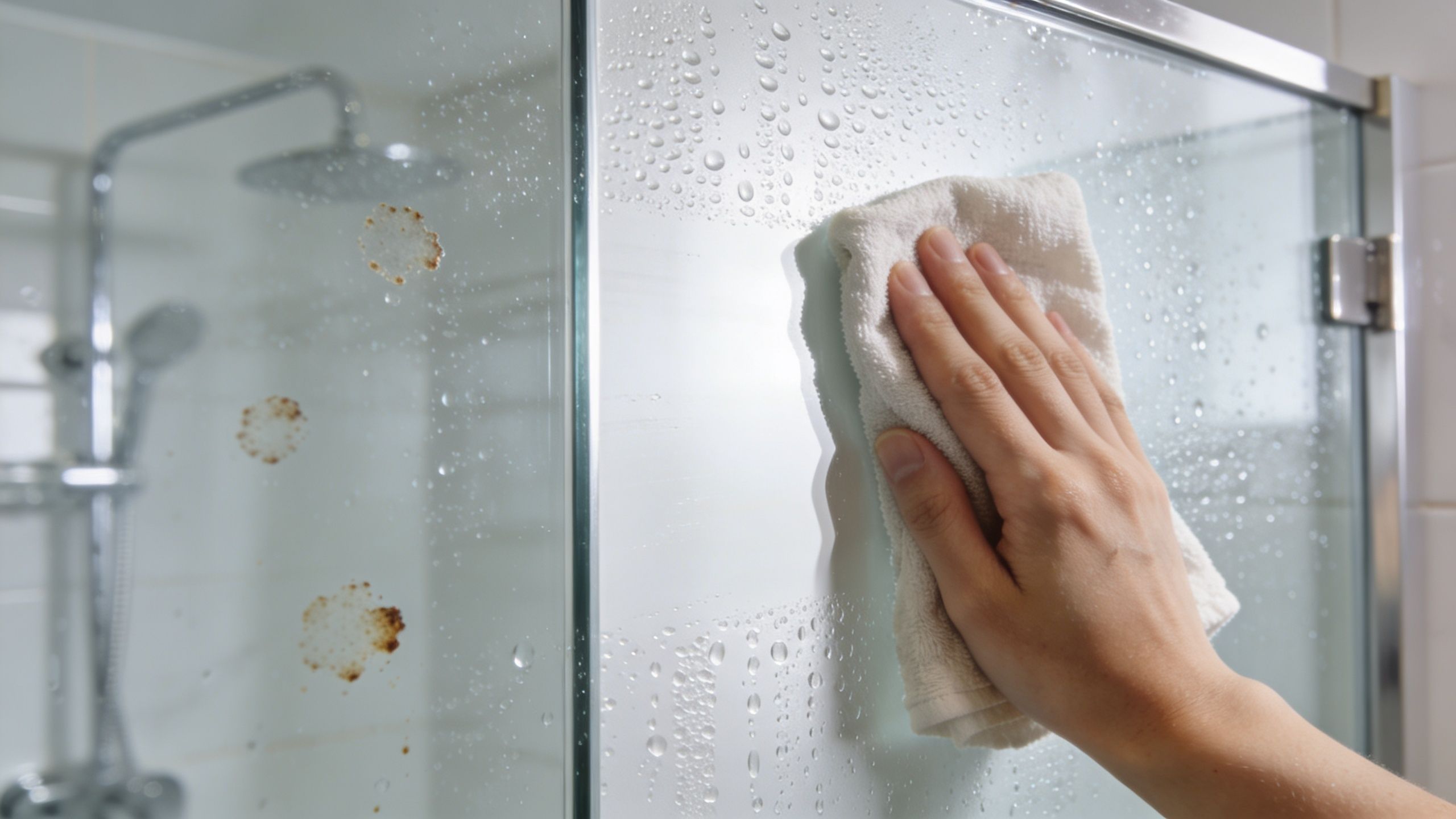
Many homeowners assume glass is non-porous and therefore easy to maintain forever. In real life, shower glass picks up soap residue, mineral deposits, and water spotting. Left alone, that buildup can turn from a cleaning nuisance into visible etching and haze.
Protective coatings help because they create a surface that sheds water more effectively and slows down the bond between minerals and the glass. The easiest way to think about it is like a non-stick pan. The coating doesn’t eliminate maintenance, but it makes routine cleanup faster and less abrasive.
What good maintenance looks like
The best care plan is simple and consistent:
- Squeegee after use: A few seconds cuts down standing water.
- Use a soft microfiber cloth: Avoid rough pads that can dull hardware finishes or damage coatings.
- Choose non-abrasive cleaners: Aggressive products often create new problems.
- Watch the hardware too: Hinges and handles benefit from regular wipe-downs in humid and coastal environments.
Water quality also plays a role. If your home deals with mineral-heavy water, it helps to understand what’s coming through the shower in the first place. These Water Filter Advisor hard water filter insights offer useful background for homeowners trying to reduce residue at the source.
Coatings are worth it when the goal is longevity
A lot of people hesitate on protective treatments because they think of them as an add-on instead of part of the system. That’s backwards. On a premium enclosure, glass protection is one of the few upgrades you’ll appreciate every week, not just on installation day.
Maintenance reality: The easier the glass is to wipe down, the more likely you are to keep it looking new.
A custom enclosure should still look sharp after regular use, not just right after a deep clean. Good coatings and simple habits make that much more realistic.
How to Choose the Right Shower Door Company
By the time you’re ready to hire, the question isn’t whether custom glass can improve the bathroom. It’s whether the company measuring, fabricating, and installing it will do the job correctly.
Questions worth asking before you sign
Not every contractor who sells shower glass specializes in frameless work. Some outsource key steps. Some rely on rough measurements. Some treat installation like a finish task instead of a precision trade.
Ask direct questions:
- Are you licensed and insured for this work? You want a company that treats glass installation as skilled, regulated work.
- Who does the measuring? The best answer is a trained field professional, not a salesperson guessing off builder dimensions.
- How is the glass fabricated? Precision manufacturing matters.
- What hardware materials are used? In coastal Florida, corrosion resistance isn’t optional.
- What happens if walls are out of plumb or the curb is uneven? The answer will tell you whether they understand real-world conditions.
- What kind of warranty and service support do you offer? Problems show up in use, not during the sales call.
Signs you’re talking to the right team
Good companies talk in specifics. They ask whether the tile is complete. They want to know door swing direction. They bring up hardware finish performance, not just appearance. They openly discuss maintenance instead of pretending all glass stays spotless on its own.
They also won’t rush you into the wrong choice. If a header makes sense for the opening, they’ll say so. If the layout would perform better as a fixed panel with a door in a different location, they’ll explain why.
For homeowners who want a practical reference on what mineral buildup can do over time, this Flagstaff pro's guide to window stains is useful reading. The surface may be different in context, but the lesson is familiar. Staining and buildup are far easier to prevent than to reverse.
The real decision
A shower door custom project looks simple after it’s done. That’s the point. The door opens smoothly, the lines are clean, the glass fits the room, and nothing calls attention to itself except the bathroom looking better.
That finish depends on decisions most homeowners never see. Measurement quality. Fabrication accuracy. Hardware selection. Installation discipline. Respect for local climate conditions. When a company handles all of that well, the enclosure feels effortless.
If you want a shower enclosure that’s measured precisely, fabricated for the actual opening, and installed with Southwest Florida conditions in mind, AmeriGlass Industries is a strong place to start. Their team serves Naples, Fort Myers, Bonita Springs, and nearby communities with frameless shower doors, custom glass, and installation work built around fit, safety, and long-term performance.