
You notice it on an ordinary afternoon. The light hits the patio doors just right, and what looked like a smudge turns out to be a chip. Or the bathroom window has that cloudy, trapped-between-the-panes look that never wipes away, no matter what cleaner you use. In Southwest Florida, glass problems rarely stay cosmetic for long. Humidity gets into weak seals. Salt air works on hardware. Wind-driven debris from summer storms turns a minor flaw into a real safety concern.
Good glass does more than close an opening in the wall. It helps your home feel bright, calm, and finished. It affects comfort, privacy, maintenance, and the way a room carries light from morning through evening. That's especially true in coastal homes, where large openings, shower enclosures, mirrors, and custom glass features do a lot of visual work.
A Clearer View for Your Southwest Florida Home
A homeowner usually doesn't start by searching for “residential glass repair” because they're thinking about industry categories. They start because something feels off. The slider doesn't look clear anymore. The shower glass has permanent haze near the bottom edge. A mirror has blackening at the perimeter. A pane cracked after a storm, and now every strong gust makes the problem feel more urgent.
In this region, those issues aren't random. Heat, moisture, salt exposure, and storm pressure all shorten the margin for error. A seal that might limp along in a milder climate often fails faster here. Hardware that looks fine from a distance can corrode underneath. Small edge damage on a door panel matters more when that glass gets used every day.
Why glass condition matters more than most owners think
When glass is sound, you barely notice it. When it isn't, it affects the whole room. Fogged insulated glass units can make a home feel older than it is. Scratched or etched shower panels flatten the look of an otherwise polished bathroom. Poorly repaired damage draws your eye every time the light shifts.
That's one reason demand for qualified service keeps rising. The global Glass Repair Services Market was valued at USD 59.92 billion in 2024 and is projected to grow to USD 87.83 billion by 2032, with growth tied to residential construction and weather-related glass damage, including storms and extreme temperature swings, according to ResearchAndMarkets market coverage published by Business Wire.
Good glass work should solve the actual problem, not just make the damage less obvious for a few months.
What homeowners should expect from a real evaluation
A useful glass assessment looks at more than the visible defect. It asks what caused it, whether the glass type is still appropriate for the opening, whether the surrounding frame or hardware contributed to the failure, and whether a repair will hold up in a coastal environment.
That's also why luxury and long-term value often overlap. Clear, well-fitted glass makes a home feel more refined, and glass features that elevate a home's look and feel usually depend on precise measurement, correct product selection, and clean installation. Quick patches don't deliver that.
Identifying Common Residential Glass Problems
Most homeowners describe the symptom first. That's normal. “My window is cloudy,” “my shower door is scraping,” or “there's a crack near the corner” are all useful starting points. The key is knowing what each symptom usually means.
Window issues you'll see in Southwest Florida
A fogged double-pane window usually points to seal failure. Moisture has entered the insulated unit, and no amount of surface cleaning will fix that. In this climate, persistent humidity makes weak seals show themselves sooner. If the pane also looks streaked from the inside, that's another clue the problem is inside the unit, not on the room side or exterior face.
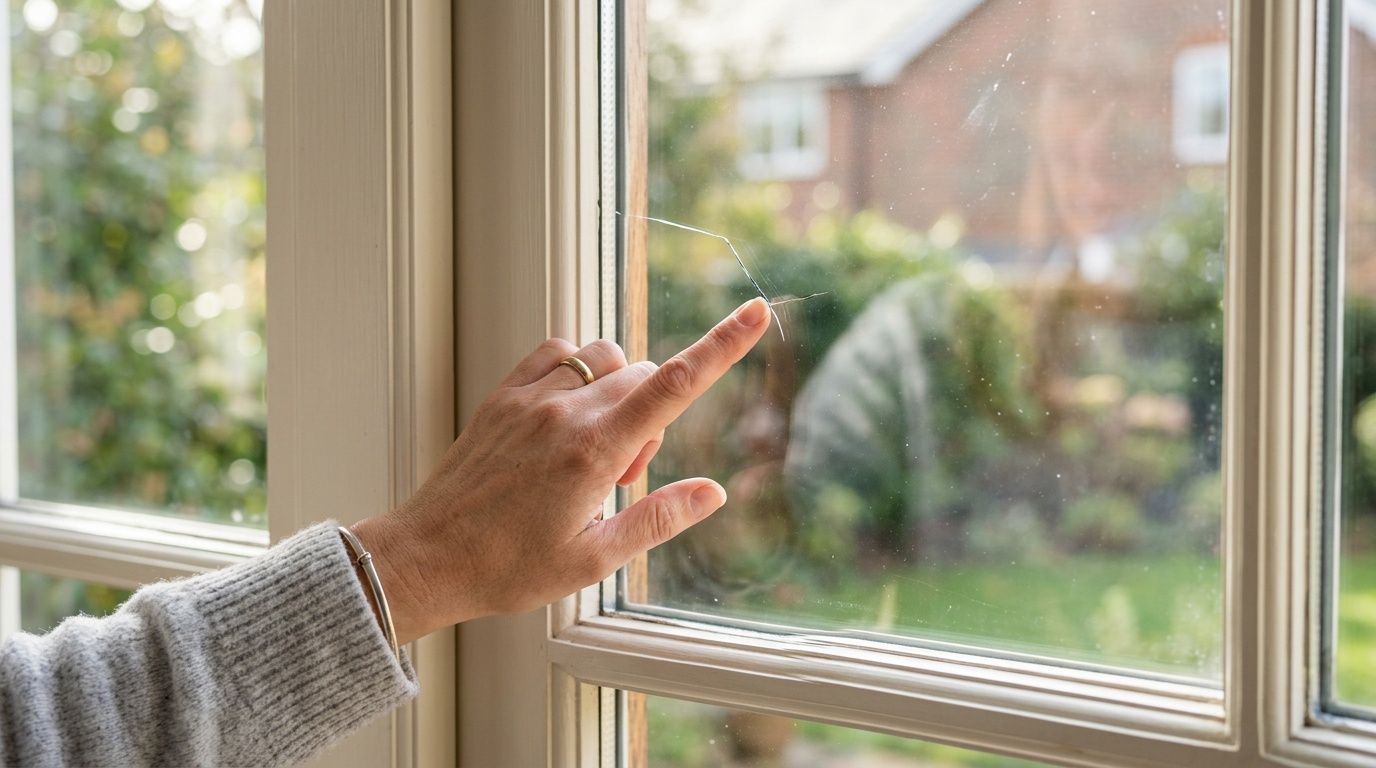
Cracks tell a different story. They can come from impact, shifting frames, or stress concentrated at an edge or corner. After a storm, debris strikes are obvious. Other times, a homeowner only notices a hairline fracture that seems to have appeared overnight. That often means the damage started small and expanded as the glass heated and cooled.
Watch for these signs:
- Cloudiness between panes: Likely insulated glass seal failure, not dirt.
- A crack starting at the edge: Often more serious than a center blemish because edge damage affects structural integrity.
- Rattling or movement: Sometimes the issue is partly glass, partly glazing, gasket, or frame condition.
- Drafts near a fixed pane: The glass may be intact, but the surrounding sealant system may not be.
Shower doors and enclosures
Shower glass suffers in a different way. The most common homeowner complaint isn't breakage. It's etching, staining, and rough-looking buildup that no cleaner seems to remove. Hard water leaves deposits, and over time those minerals can permanently mark the surface if the glass isn't protected or maintained properly.
Frameless doors also reveal installation problems quickly. A door that drifts, rubs, won't close cleanly, or shows uneven gaps may have hinge alignment issues, settling, or hardware corrosion. In Southwest Florida, salt air can accelerate wear on metal components, especially in homes near the coast or with open-window ventilation.
If shower glass still looks dirty right after cleaning, the surface may be etched, not just soiled.
Mirrors and custom interior glass
Mirrors often fail at the edges first. You may see black spots, dark perimeter creep, or backing deterioration. Bathrooms are common trouble spots because warm moisture repeatedly reaches the mirror's edges. Custom partitions, table tops, and decorative glass more often show scratches, chips, and edge damage from use or cleaning habits.
A clear description helps speed up diagnosis. Before you call, note:
- Where the problem is. Window, door, shower, mirror, railing, partition.
- What changed first. Fogging, chip, scraping, looseness, discoloration.
- Whether weather was involved. Storm, wind event, pressure washing, recent humidity spike.
- How the damage behaves. Spreading crack, recurring condensation, door misalignment.
For homeowners who want to compare symptoms before scheduling service, these glass service FAQs can help you put the issue into the right category.
The Critical Decision Repair or Replace
This is the question that matters most. Can the glass be repaired well enough to justify the work, or is replacement the smarter move? The right answer depends on safety, visibility, durability, and whether the underlying cause has been addressed.
A repair makes sense when the damage is limited, the panel remains structurally sound, and the finished result won't leave you with a weak spot or a visible compromise in the middle of an otherwise clean installation. Replacement makes more sense when the flaw affects safety glazing requirements, optical clarity, insulated performance, or the appearance of a premium space.
The hard line on chips and visible defects
There are situations where judgment gives way to standards. Industry standards define a point defect such as a chip as acceptable only if it does not exceed 1/16 inch in diameter. If a chip intrudes into the visible sightline by more than 1/8 inch, it constitutes a failure and requires replacement, as explained in this industry blemish standard reference video.
That matters because homeowners are often offered “repair” for damage that may still leave a visible scar, a distortion in the sightline, or a panel that no longer meets a high-quality finish standard. On a utility window, your tolerance may be different. On a front-facing fixed panel, shower enclosure, or custom interior feature, it usually isn't.
Repair vs. Replace Decision Matrix
| Factor | Best Case for Repair | Best Case for Replacement |
|---|---|---|
| Chip or blemish size | Small, limited, outside primary sightline | Larger defect, edge involvement, or visible intrusion |
| Safety | Damage does not compromise required safety performance | Glass type is wrong for the opening, or damage weakens the panel |
| Appearance | Finished result will be discreet in normal lighting | Any repair would remain obvious or distort the view |
| Cause of failure | One-time minor incident with no larger system issue | Seal failure, recurring stress, corrosion, or frame-related cause |
| Long-term value | Repair is durable and proportionate to the glass feature | Replacement avoids repeated service and protects the home's finish |
What usually favors repair
Repair tends to work best in a narrow set of conditions:
- Minor isolated damage: A small blemish that hasn't spread and doesn't sit in a critical visual area.
- Stable surrounding system: The frame, hinges, gaskets, and sealants are all in good shape.
- Non-recurring cause: The damage came from a specific event, not an ongoing moisture or alignment problem.
What usually pushes the decision toward replacement
Replacement becomes the better call when the glass has failed as a system, not just at one point. Fogged insulated units are a good example. You're not fixing surface dirt. You're dealing with a failed sealed unit. The same is true when a shower panel is severely etched, or when a door lite has edge damage in a high-use area.
Practical rule: If the proposed repair leaves you watching the flaw every day, it wasn't the right long-term solution.
Southwest Florida homes also deserve a stricter standard because bright sun exposes imperfections. A patch that looks acceptable in dim light often looks poor in full daylight. In a coastal or luxury property, replacement frequently protects value better than a marginal save.
The Professional Glass Repair Process Step by Step
Homeowners often worry less about the glass itself than about the disruption. They want to know who is coming into the house, how long the work will take, whether floors will be protected, and if the finished product will look right. A professional process should answer those concerns before tools ever come out.
What a well-run appointment looks like
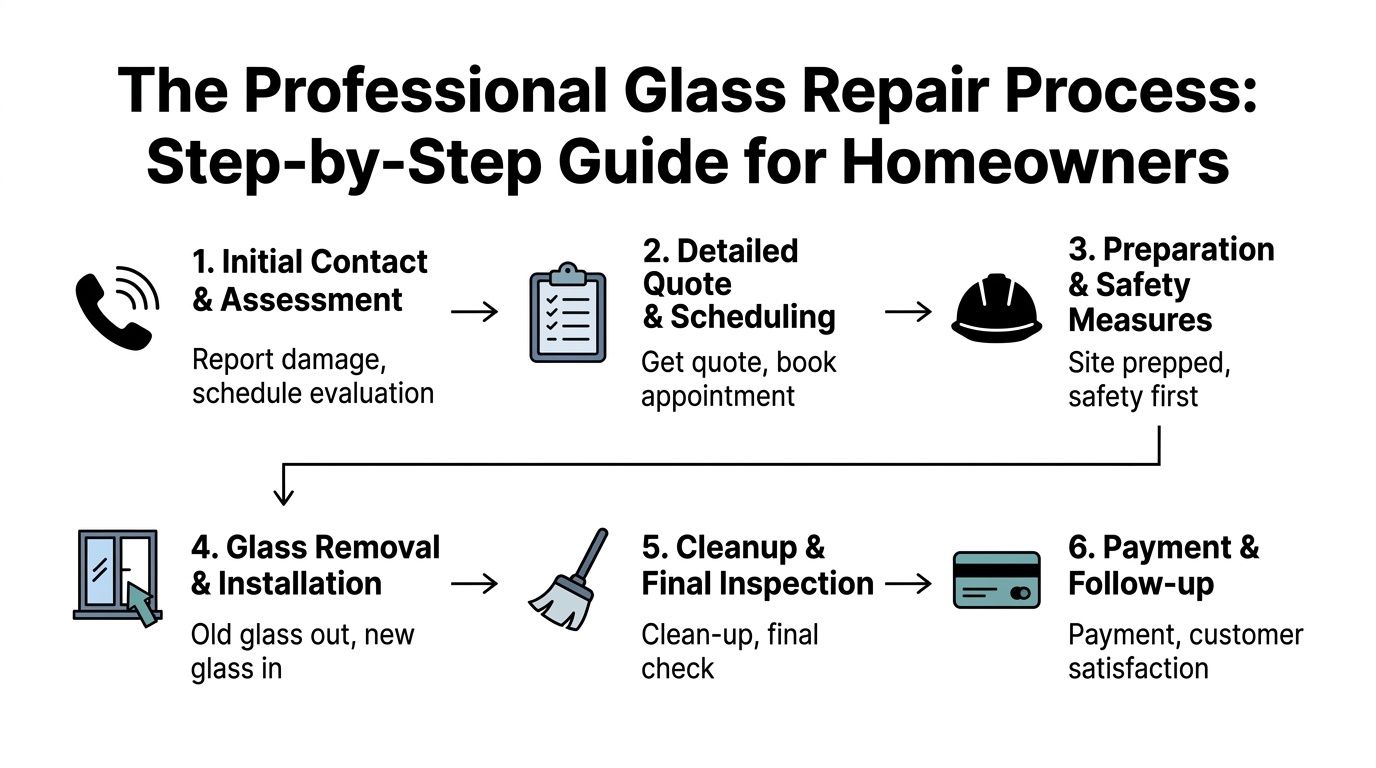
The first step is assessment. That means identifying the glass type, confirming dimensions, reviewing the surrounding conditions, and checking whether the issue is limited to the pane or tied to hardware, framing, or seal failure. Good technicians don't guess measurements and don't assume one opening matches another just because they look similar.
After that comes a clear quote and scheduling plan. Homeowners should know what is being repaired or replaced, what material is being used, and whether the work involves standard annealed glass, tempered glass, insulated units, mirrors, or specialty products. Ambiguity at this stage usually becomes frustration later.
During the work itself
Once the job is scheduled, the on-site process should feel orderly.
- Site protection comes first. Floors, nearby finishes, and access routes should be protected before removal starts.
- Removal should be controlled, not rushed. Broken or stressed glass can shift unexpectedly, especially in doors and large openings.
- Installation should account for fit and function. The glass must sit correctly within the opening, and moving parts need to align cleanly.
- Final inspection matters. Homeowners should see the completed work, test operation where relevant, and understand any care instructions.
A lot of quality in residential glass repair comes from details the homeowner may never notice directly. Clean edge handling. Correct setting blocks. Proper sealant choice. Hardware alignment that prevents future stress. Those details determine whether the glass still performs after months of heat, moisture, and daily use.
What separates a specialist from a general handyperson
Glass work looks deceptively simple from the outside. Remove the damaged piece, install the new one, wipe it down, done. In reality, glass tolerances are unforgiving. A slightly off measurement, an unsupported corner, or uneven hinge load can create future cracks, leaks, drag, or premature wear.
That's especially true for frameless enclosures and custom installations. Homeowners comparing options for bathrooms often get useful context from examples of frameless shower door installation in Fort Myers, Florida, because those projects show how much precision affects the final result.
Understanding Costs Safety and Local Codes
Price matters, but it shouldn't be the first filter. The lowest quote in glass work can hide the biggest problems. If a contractor skips the right glass specification, ignores code requirements, or leaves a weak seal in place, the “savings” disappear fast.
What affects the cost of residential glass repair
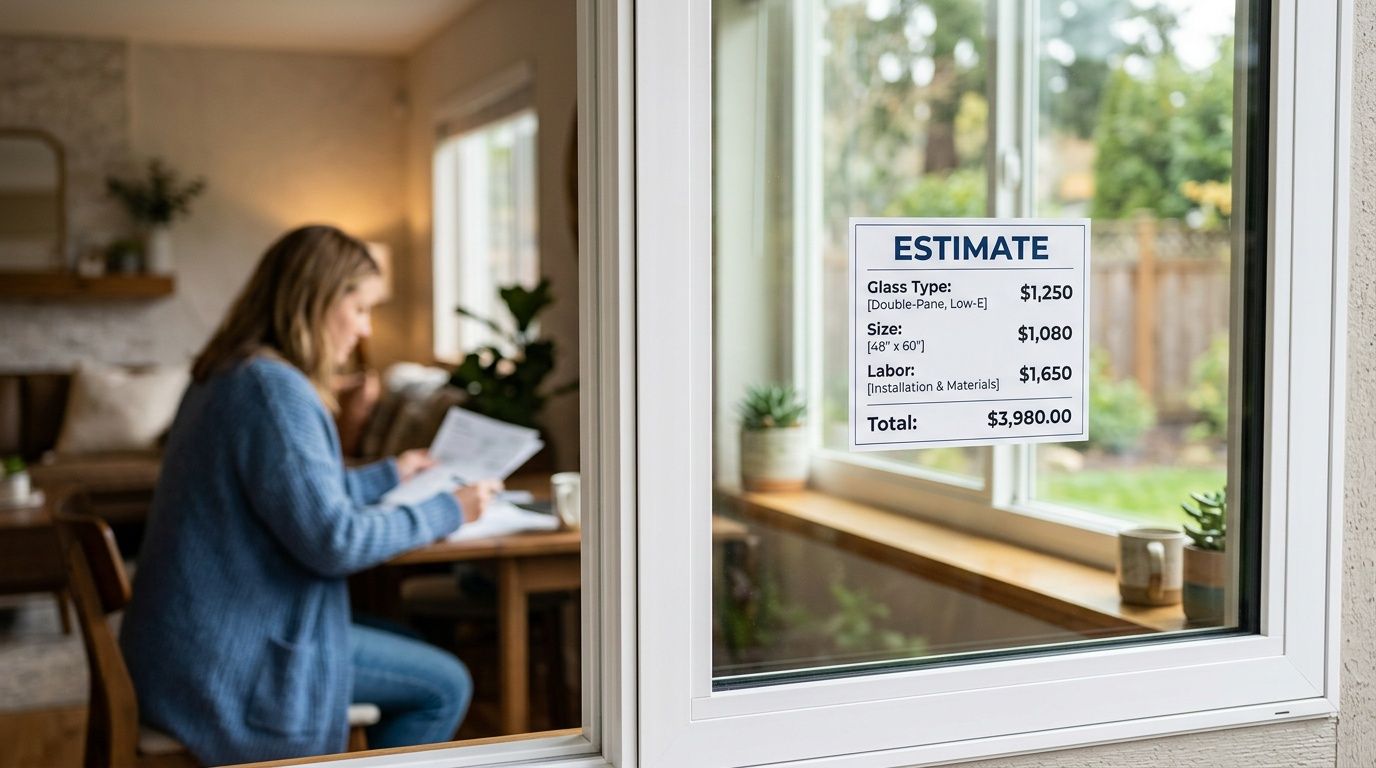
Several variables shape the final quote:
- Glass type: Standard clear glass, tempered glass, insulated units, mirrors, and custom fabricated panels don't involve the same material or handling.
- Location in the home: A simple accessible pane is different from a high foyer window, oversized slider panel, or frameless shower enclosure.
- Condition around the glass: Damaged frames, corroded channels, worn rollers, and failing hardware add labor and can change the scope.
- Finish expectations: In premium homes, visual quality matters. Tighter tolerances and cleaner finishes often require more exacting work.
If you want a broad consumer-oriented comparison of how contractors commonly frame pricing variables, Atomic Exteriors' glass repair guide is a useful companion read. It won't replace a site-specific estimate, but it can help homeowners ask sharper questions.
Safety glass isn't optional in the right locations
Experienced glass professionals distinguish themselves from bargain installers, particularly regarding critical safety requirements. For residential glass repair in hazardous locations, such as glazing adjacent to doors, safety glazing is mandated under IBC 2406.4.2. This requires tempered or heat-strengthened glass that meets ASTM C 1048 specifications, ensuring it fractures into small, granular pieces to reduce injury risk, as outlined in this safety glazing code reference.
In practical terms, that affects places like:
- Shower enclosures and doors
- Glass adjacent to doors
- Panels near walking surfaces in certain configurations
- Other impact-prone residential locations
Using the wrong glass in a hazardous location isn't a shortcut. It's a liability.
A homeowner may not know whether an opening legally requires safety glazing. That's normal. The contractor should know. In Southwest Florida, where storm prep and code awareness already matter in other parts of the home, glass should be approached with the same seriousness.
The estimate should answer more than price
A useful quote should tell you what glass is being installed, whether code-specific safety glazing applies, what surrounding components are included, and whether there are conditions that could affect long-term performance. If you're requesting pricing for a specific issue, it helps to start with a detailed glass project quote request.
Protecting Your Investment with Upgrades and Maintenance
The best residential glass repair job can still be undermined by bad maintenance habits. In Southwest Florida, moisture sits on surfaces longer, salt residue can accumulate, and hard water spots can become permanent if they're left alone. If the glass is new or newly restored, the goal is to keep it that way.

Maintenance that actually helps
You don't need a complicated routine. You need consistent habits that don't damage the surface.
- Use soft materials: Microfiber cloths, non-abrasive applicators, and squeegees are safer than rough scrub pads.
- Keep hardware dry when possible: Wipe hinges, clips, and handles after shower use, especially in homes near the coast.
- Avoid harsh cleaners: Aggressive chemicals can damage finishes, gaskets, and some surrounding materials.
- Address deposits early: Mineral spotting is easier to remove before it hardens into visible etching.
For shower enclosures, simple upkeep goes a long way. These shower door maintenance recommendations are worth following if you want the glass and hardware to stay cleaner and operate better.
Why protective coatings are worth considering
Not every upgrade is cosmetic. Some directly reduce future maintenance and extend the life of the installation. Protective coatings like Diamond-Fusion have become a key trend in glass products, offering enhanced resistance to stains, scratches, and weather damage while reducing repair frequency and extending service life, according to Wise Guy Reports market analysis.
That matters most on surfaces that get hit constantly by water, soap, and airborne residue. Shower glass is the obvious example, but coated glass can also make sense in homes where owners want easier cleaning and less risk of long-term dulling.
The right coating doesn't replace maintenance. It makes maintenance simpler and more effective.
For homeowners planning a high-clarity bathroom, custom enclosure, or other premium glass feature, that's a practical investment. It protects the look you paid for and reduces the temptation to use abrasive cleaning methods later.
Why Professional Expertise Matters and Your Questions Answered
A Southwest Florida homeowner often calls us after seeing a crack that seemed to appear overnight. By the time we get there, the glass has already told part of the story.
The crack pattern matters. A clean break that runs from the edge often points to edge damage during a past installation or from hardware pressure that stayed hidden until temperature swings and daily use finished the job. A curved or branching fracture can suggest movement in the opening, settlement, or a panel that has been carrying load in the wrong place. In coastal homes, we also look for the slower problems. Corrosion at fasteners, salt buildup around hardware, and moisture getting into surrounding materials can create stress long before the glass fails.
That kind of diagnosis is the difference between replacing a pane and solving the reason it broke.
We also see hidden water damage that homeowners have every reason to miss. On sliders, window walls, and shower enclosures, water can track behind trim or into frame pockets and stay there. In our climate, that trapped moisture can swell adjacent materials, stain finishes, and weaken anchoring points without leaving obvious surface signs right away. If the new glass goes in without catching that, the second failure is often blamed on the glass when the underlying problem is the opening.
This is why experienced residential glass work has value beyond installation. A good glass professional reads failure patterns, checks how the unit has been performing over time, and tells you whether the issue is isolated or part of a larger condition in the home.
Homeowners usually ask three practical questions near the end of that conversation.
One is whether insurance may help. If the damage is tied to a storm event, impact, or another sudden cause, it may be worth reviewing the policy and documenting the condition before temporary work changes the evidence. We regularly help homeowners by defining what failed so the scope is clear. That makes the next conversation with the carrier or adjuster more straightforward.
Another is what service area local companies really know well. In this region, local knowledge is not a marketing line. Homes in Naples, Fort Myers, Bonita Springs, and nearby coastal communities deal with humidity, airborne salt, intense sun, and storm exposure in combinations that affect glass, seal longevity, and hardware life differently than inland markets. Repair decisions that look fine on paper do not always hold up the same way here.
The last question is usually about warranties. Ask for plain language. You want to know what the company covers on workmanship, what the manufacturer covers on the glass or insulated unit, and what conditions can shorten the life of nearby hardware or finishes even if the glass itself is sound. Clear terms usually signal that the company has seen these jobs age in real homes and knows where problems tend to show up.
Some glass can be repaired well. Some should be replaced without debate. The honest answer depends on what caused the damage, whether clarity can be restored to an acceptable level, and whether the surrounding system is still stable enough to support the repair.
At AmeriGlass, that is the standard we use. Give the homeowner a straight diagnosis, explain the trade-offs, and recommend the option that will still make sense after another wet season, another stretch of salt air, and the next round of heavy weather.
For homeowners who want careful guidance and clean execution, AmeriGlass Industries provides expert glass and mirror solutions across Southwest Florida. If you're in Naples, Fort Myers, Bonita Springs, or nearby and need help with residential glass repair, custom shower glass, mirrors, or a code-compliant replacement, reach out for a free, no-obligation consultation.