

You’re probably looking at shower photos where the glass seems to disappear, the hardware looks intentional, and the whole room feels cleaner than a typical framed enclosure. Then the practical questions hit. Will a pivot door hold up to heavy glass, will it leak, and will the hardware survive Naples humidity and salt air without turning into a maintenance project?
Those are the right questions. Pivot hinges for glass shower doors can be an excellent choice, but only when the hinge type, glass spec, finish, and installation details all match the room. In Southwest Florida, that last part matters more than most national guides admit.
The Secret to a Truly Frameless Look
You see it right away in a well-built Naples shower. The glass reads as one clean plane, the hardware stays quiet, and the door feels planted instead of wobbly. That look comes from how the door is supported.
A pivot door carries its weight through the top and bottom mounting points rather than hanging everything off one side. On a heavier frameless panel, that changes both the appearance and the way the door behaves over time. The sightlines stay cleaner, and the load is managed in a way that usually suits larger glass better.
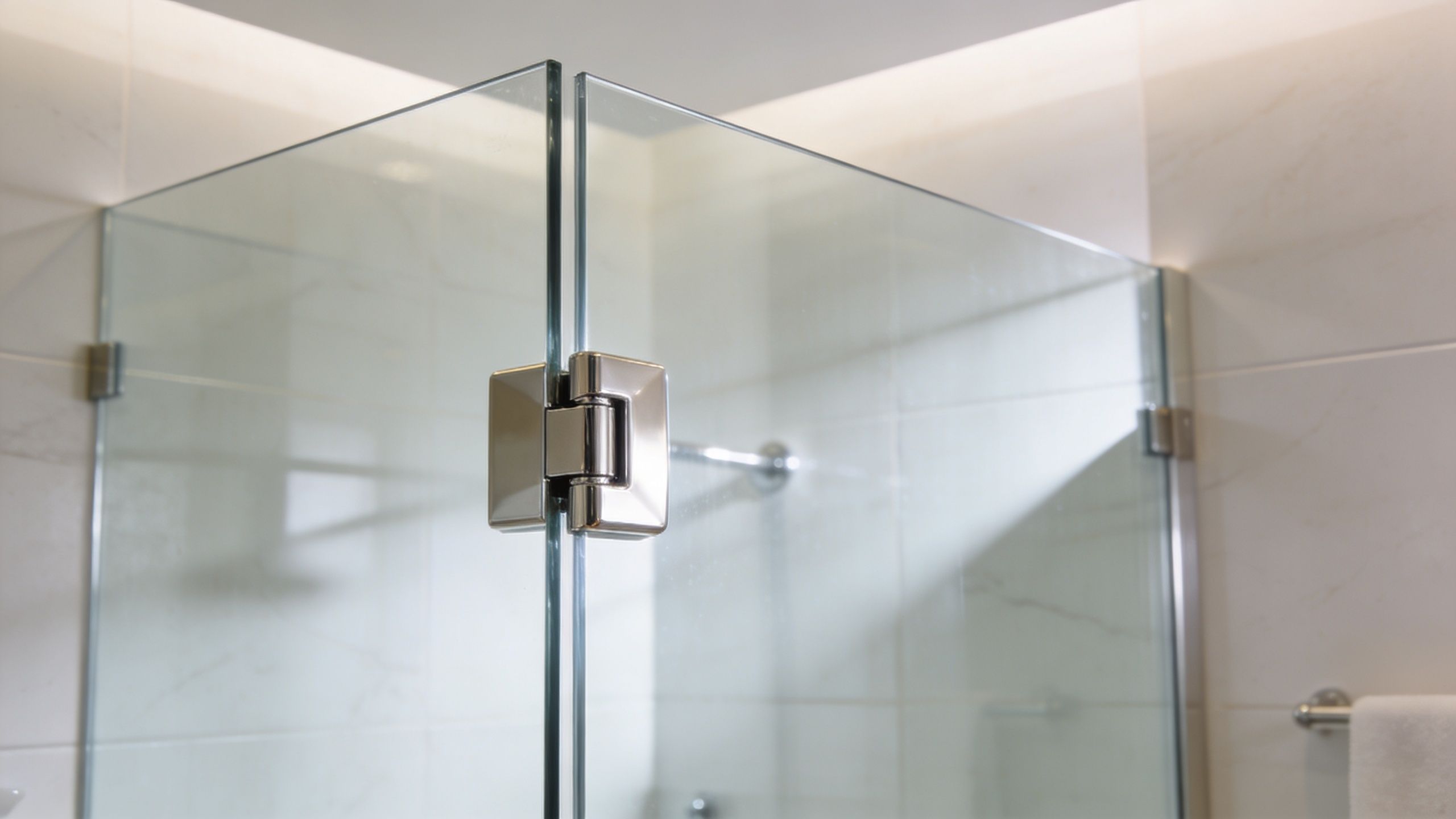
Why the door feels more planted
With a side hinge, the wall carries the working load. With a pivot, the load is shared through the base and the structure above. In the field, that matters most on wide, heavy doors where small alignment errors turn into drag, sag, or a door that stops closing cleanly after a season of use.
That does not mean every pivot door is automatically better. The top support has to be solid, the bottom mounting point has to stay dry and stable, and the glass layout has to match the opening. In Southwest Florida, I pay close attention to corrosion at fasteners, finish wear around the pivot body, and whether the installer used hardware that can tolerate humid air and salt exposure. A frameless look does not last long if the metal starts pitting.
What homeowners notice first
The first benefit is visual. Pivot hardware usually keeps the enclosure looking lighter because you avoid the heavier side-hinge look that can pull your eye toward the edge of the door.
The second benefit is cleaning. Many pivot-door layouts are built without a full bottom track, which removes one of the places where soap film and mildew like to sit. Coastal humidity makes that more than a cosmetic issue. Less hardware at the threshold usually means less buildup to scrub around.
The third benefit is swing flexibility. Depending on the hinge design, some pivot systems allow the door to swing in and out, which can help in bathrooms where a vanity, toilet, or bench limits the path of the door. C.R. Laurence notes this two-way swing capability in its Geneva Series pivot hinge specifications.
That flexibility helps, but it also adds a real-world trade-off. Inward swing means water management has to be planned carefully, especially if the shower head points toward the door or the curb pitch is marginal.
Why the best frameless showers still depend on the metal
Homeowners often focus on the glass and finish color first. I look at the alloy. In Naples, 304 stainless can look fine on day one and still be the wrong choice near the coast. For pivot hardware, 316 stainless holds up better in salt air and damp bathrooms because it resists chlorides more effectively. That does not make it maintenance-free. It gives you more margin before tea staining, pitting, and finish breakdown start to show.
Installation matters just as much. A pivot that is a little out of plumb, set into weak backing, or paired with the wrong sweep and seals will never feel high-end for long. The clean frameless look comes from tight tolerances, proper support, and hardware that fits the room conditions, not just the showroom sample.
If you are still sorting out the layout, start with the opening and the daily use pattern before choosing hardware. A custom shower door design planner helps narrow down what will work in your space.
Exploring the Types of Pivot Hinges
Not all pivot systems behave the same way. Homeowners often hear “pivot hinge” and assume there’s one standard setup. There isn’t. The hinge location changes the way the door swings, how much opening you get, and how the enclosure feels to use every day.
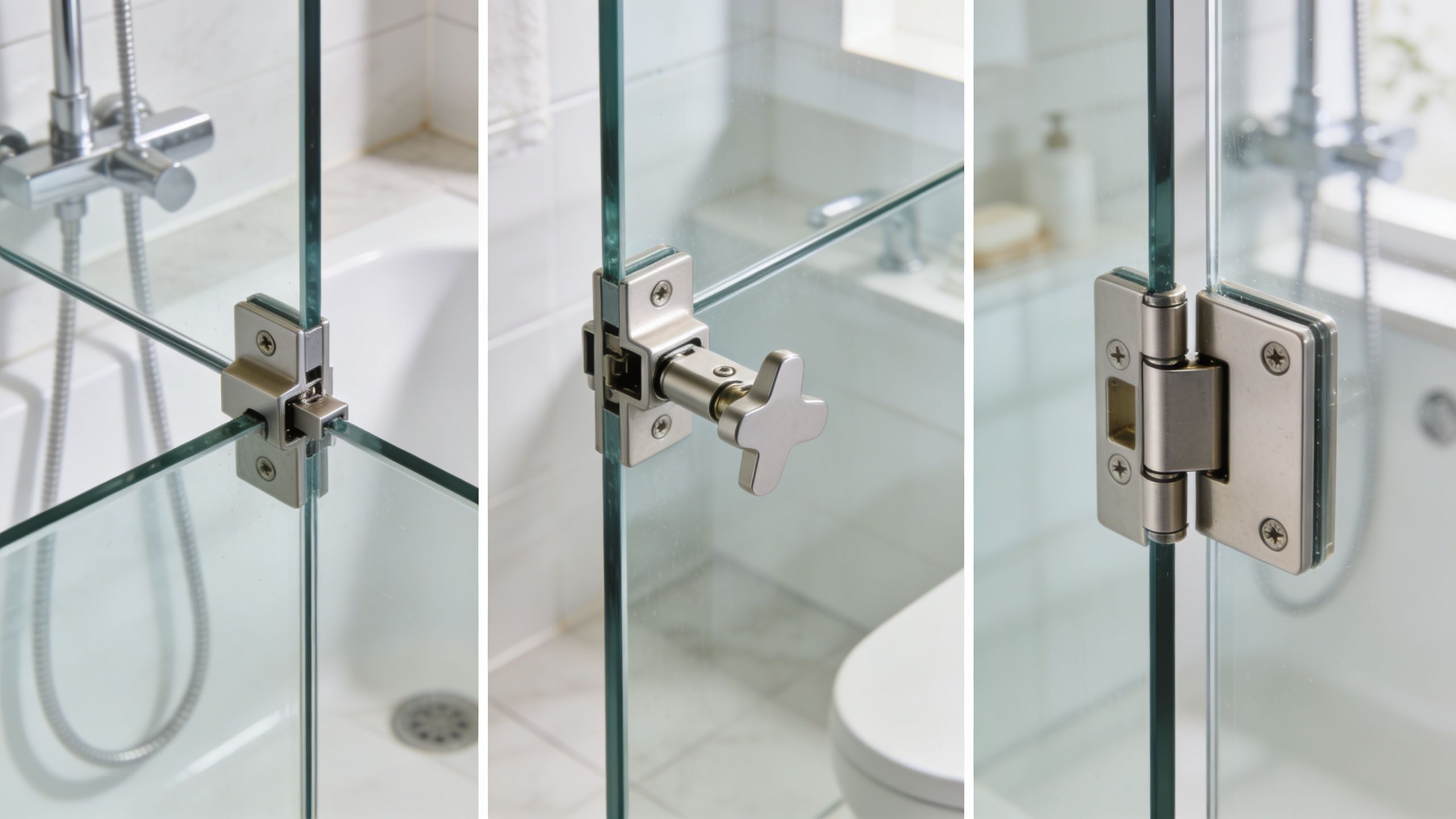
Corner pivots
This is the version commonly understood when pivot hinges for glass shower doors are discussed. The hardware mounts near the top and bottom corners of the door. It gives you a broad opening and keeps the look spare.
Corner pivots usually make the most sense when you want the widest practical entry from a single door while preserving that frameless appearance. In many bathrooms, this is the best balance of aesthetics, function, and structural logic.
A few details to watch:
- Best use case: Standard frameless shower entries and larger single-door openings
- What works well: Heavy glass, modern lines, bathrooms where a side-hinge would load the wall too much
- Trade-off: You still need solid support above and below. “Frameless” doesn’t mean “structure-free”
Floor-to-ceiling pivots
These systems create a dramatic architectural look. They’re often used when the design wants a stronger vertical statement, or when the shower enclosure ties into a taller glass composition.
They can look outstanding in a primary bath, especially with full-height glass and clean tile lines. But they demand more planning. Floor, ceiling, and alignment all matter. If the room is out of level, the door will tell on it.
A good product review phase helps here because the hardware family matters as much as the glass. Looking through actual frameless shower hardware and enclosure options gives you a better sense of what’s practical versus what only looks good in a rendering.
Center pivots
A center-pivot door creates the closest thing to a true revolving effect. It’s visually distinctive and can be a sharp design move in the right space. It’s also the easiest style to misapply.
Because the pivot point moves inward from the edge, the door needs more usable space around its swing path. That means center pivots are rarely the best answer for a compact bath where every inch matters.
A center-pivot can look sophisticated, but it asks more from the room. If the layout is already tight, it usually gives back less than a corner pivot.
Here’s a quick visual explainer before comparing them side by side:
Side-by-side comparison
| Pivot type | Best for | Main advantage | Main caution |
|---|---|---|---|
| Corner pivot | Most frameless showers | Wide practical opening, understated hardware | Needs reliable top and bottom support |
| Floor-to-ceiling pivot | Statement designs, taller glass compositions | Strong architectural look | More demanding alignment and structure |
| Center pivot | Specialty layouts, design-forward spaces | Unique swing and visual impact | Uses space less efficiently in tight baths |
If you want the shortest version, this is it. Corner pivots solve more everyday bathroom problems than the other styles. The others can be excellent, but only when the room and structure justify them.
Matching Hinges to Your Glass Door Specifications
A frameless shower door can look perfectly aligned on install day and still become a problem months later if the pivot hardware was undersized or paired with the wrong glass. In Naples and across Southwest Florida, that problem shows up faster because humidity, salt air, and daily use expose every weak choice.
The hinge has to match the glass thickness, door width, finished weight, and the structure receiving the pivot. In coastal bathrooms, material grade belongs on that checklist too. A 304 stainless component may look fine in the showroom. In a high-humidity home near the Gulf, 316 stainless usually holds up better against corrosion, especially at screws, set points, and exposed edges where tea staining often starts.
Start with the actual glass schedule
Tempered shower glass gets heavy fast. Hinge manufacturers publish limits for thickness, width, and door weight for a reason. For example, CRL’s senior Cardiff top and bottom mount pivot hinge is specified for 3/8 inch to 1/2 inch tempered glass, with a maximum door weight of 100 pounds and a maximum width of 36 inches, according to the CRL Cardiff hinge product specifications.
Separate heavy-duty models can carry more, but only when the glass thickness, door width, and mounting conditions all stay within the manufacturer’s limits, as shown in this heavy-duty top and bottom pivot hinge specification. Those ratings are not paperwork for the file. They determine whether the door swings cleanly or starts dragging, shifting, and stressing the glass.
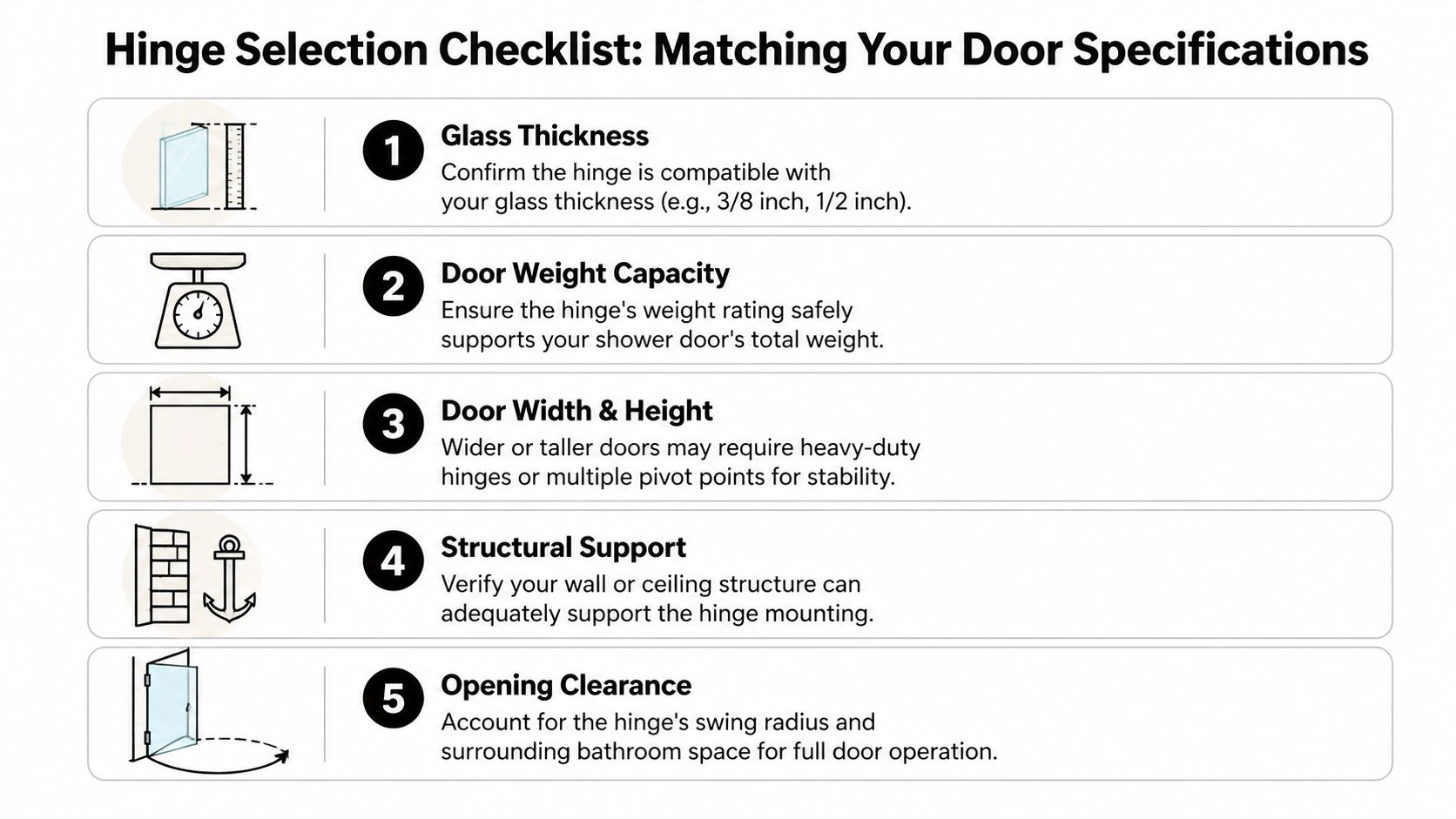
What I want to see in a quote
A good proposal identifies the hardware series, the approved glass thickness, and the rated load. It should also state where the top and bottom pivot points land. If that part is vague, the finish and brand name do not mean much.
Check these items before approving the job:
- Glass thickness: Confirm whether the door is 3/8 inch or 1/2 inch tempered glass, and verify that the hinge is approved for that exact range.
- Door weight: Ask for the estimated finished weight of the door and compare it to the hinge rating. Leave margin. A door that lives at the upper limit usually gives more service issues.
- Door width: Width changes the force on the pivot every time the door opens. That matters even when the weight looks acceptable on paper.
- Mounting surface: The curb, floor, header, or ceiling connection has to be flat, solid, and properly anchored. Pivot hardware depends on accurate plumb and level conditions.
- Material grade: In Southwest Florida, ask whether exposed hardware is 304 or 316 stainless. That answer affects how the enclosure will look two or three summers from now.
- Closing action: Self-centering pivots can help the door return to alignment near closed position, but they need proper installation to work as intended.
Field rules that save trouble later
Wider and heavier glass needs more than a stronger hinge. It needs cleaner installation. The pivot line has to be dead plumb, the gaskets have to fit the cutouts correctly, and the fasteners need protection from constant moisture.
I also watch for mixed-metal hardware packages. That is an easy way to create corrosion problems in a coastal bath. If the visible hinge is one grade and the screws or inserts are another, the weak part usually shows itself first.
A few practical rules hold up well:
Half-inch glass needs real support.
It looks excellent and feels substantial, but the hardware, anchoring, and alignment have to match the load.Wide doors punish borderline hinge choices.
Daily swing force works on the pivot points and mounting screws every single day.Out-of-level tile work should be addressed before hardware is ordered.
Installers can compensate for small irregularities. They cannot make a poorly built opening behave like a precise one.Salt-air homes should be specified for maintenance, not just appearance.
Homeowners need to know what the finish requires, what grade of stainless is being used, and what early corrosion looks like.
The right hinge is the one that matches the exact door, the exact opening, and the conditions inside the home.
Where quotes often miss the real issue
A lot of proposals spend more time on finish than on load, support, and corrosion resistance. That is backwards in this climate. The hardware should be chosen from the glass schedule first, then checked against the opening, then reviewed for material grade and finish durability.
For smaller enclosures, a straightforward single shower door layout often makes hinge selection simpler because there are fewer variables at play. Even then, the homeowner should expect a clear maintenance conversation. Hard water and mineral spotting can shorten the life of moving parts if the enclosure is ignored, and the same habits that keep glass cleaner also help protect hardware. This guide for stubborn window stains covers cleaning principles that apply well to shower glass too.
Beyond Function Finishes and Aesthetics
Hardware is the jewelry of a frameless shower. That’s not a design cliché. It’s exactly how the eye reads the room. With minimal metal and clear glass, every visible piece carries more visual weight than it would in a framed enclosure.
The finish you choose should connect the shower to the faucets, shower trim, vanity hardware, and mirror details. If those pieces speak different design languages, the room feels unsettled even when the layout is excellent.
Finish choice is about style and upkeep
Polished chrome reads crisp and reflective. Brushed nickel softens the room a bit and tends to hide daily fingerprints better. Matte black gives the enclosure a graphic edge and works well when the bathroom already uses contrast as part of the design.
Oil-rubbed and darker bronze tones can add warmth, especially in transitional homes where pure contemporary hardware would feel out of place. The key is consistency. Don’t make the shower hardware compete with the rest of the bath.
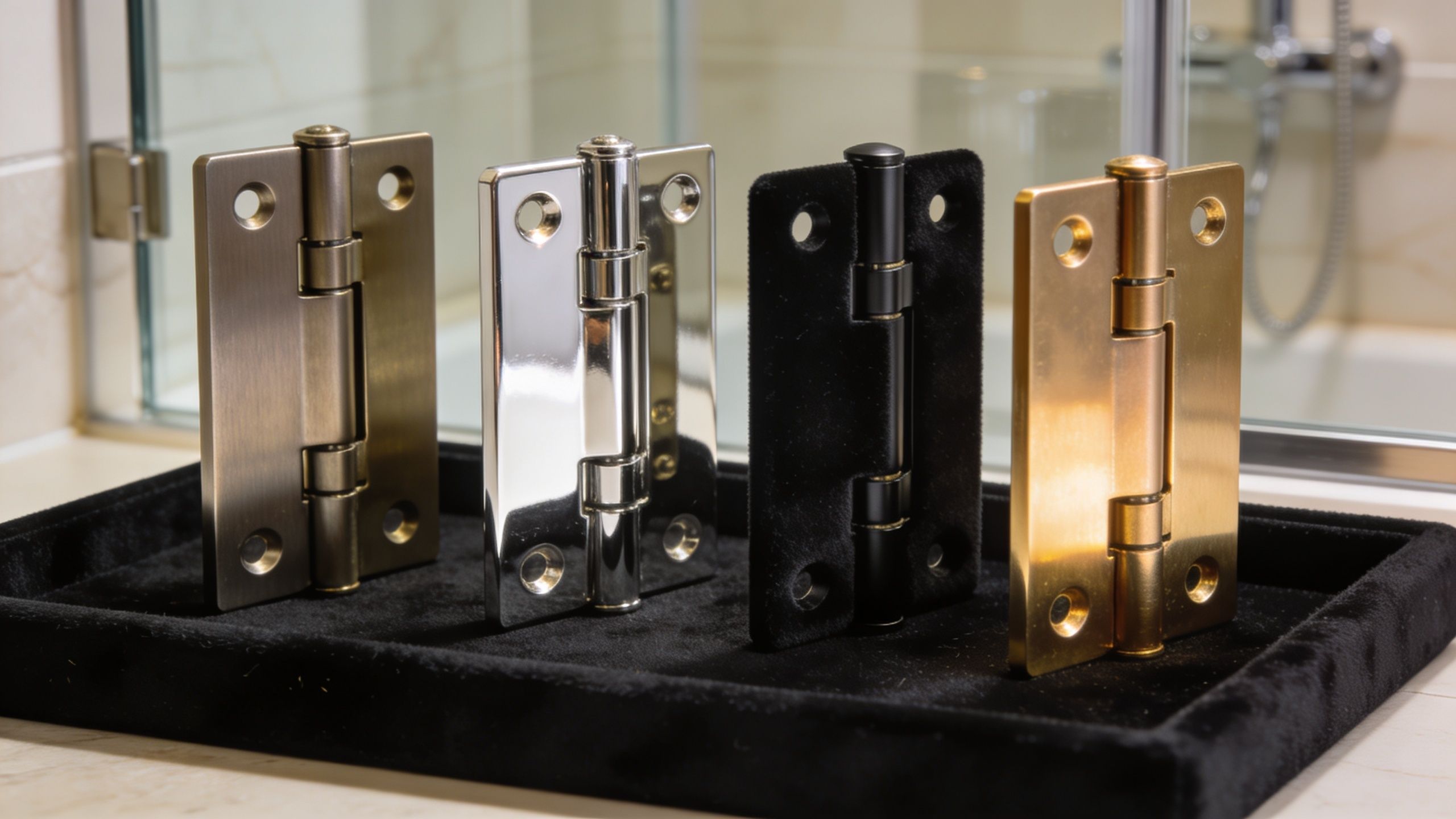
What looks best in coastal bathrooms
In Southwest Florida, bright finishes can look beautiful because they play well with natural light. But the practical side matters too. Some finishes reveal spotting faster than others, especially when hard water enters the picture.
If you’ve dealt with mineral residue on exterior glass, the same general lesson applies indoors. Surface appearance and maintenance are tied together. A useful reference on that point is this guide for stubborn window stains, which helps homeowners understand how mineral deposits affect glass clarity over time.
Pair the hinge finish with the glass itself
The finish doesn’t live in isolation. It changes depending on the glass color and edge clarity around it. Matte black against low-iron glass feels sharper than matte black against standard green-tint clear glass. Brushed finishes often feel richer when paired with softer stone and warmer paint palettes.
If the goal is the cleanest possible look, ultra-clear shower glass options can make the hardware choice more precise because you’re seeing less tint and more true contrast. That’s especially noticeable in white, cream, and pale gray bathrooms.
Good finish selection does two jobs. It supports the design on day one, and it still looks intentional after months of steam, cleaning, and daily use.
Critical Factors for Your Buying Decision
A homeowner in Naples picks a pivot door for the clean frameless look, then calls a year later because the door feels heavier, the bottom sweep drags, and the hardware has started showing tea-colored staining near the fasteners. That usually traces back to buying decisions made too early, before anyone matched the hinge system to the room, the glass, and the environment.
Pivot hinges can be an excellent choice. They just need a harder review than the brochure usually gives them.
Entry width matters more than the rough opening
A pivot door swings from an offset point, so the usable walk-through is smaller than the full door width. In a wide opening, that may not matter. In a tighter bath, or one planned for aging in place, it can be the difference between a shower that feels comfortable and one that feels pinched every day.
I tell clients to ask for the clear pass-through with the door open to its normal stop point. Do not approve hardware from a sketch that only shows the nominal panel size. If the bathroom layout is still flexible, a frameless shower door installation in Naples, Florida should start with the actual entry path, not just the glass dimensions.
Friction, coatings, and wear need to be discussed together
Protective glass coatings help with cleanup, but they are not all equally compatible with every door configuration, cleaner, and service routine. The National Glass Association notes in its guide to shower glass protection and maintenance that coated shower glass still depends on proper care, and surface performance can be reduced by abrasion and harsh maintenance practices.
That matters with pivot doors because the hardware carries more of the door's movement at concentrated points. If the hinge is undersized, poorly aligned, or allowed to sag, the door can start rubbing where it should not. The coating issue is rarely the first failure, but it often becomes the first visible complaint.
The room type should influence the door choice
Some bathrooms work better with less door and more open space. If you are still deciding between an enclosed shower and a more open plan, Harrlie Plumbing's wet room guide is worth reading before you commit to a pivot layout. It helps frame the bigger design question, especially in baths where drainage, splash control, and access matter as much as the door hardware.
A pivot door should solve a layout problem, not create one.
Questions that separate a strong proposal from a weak one
Ask these before the glass is fabricated:
What is the actual clear opening once the pivot offset is accounted for?
Get the usable entry width in writing.Is the hinge body, fastener set, and pivot pin stainless 316 or 304?
In Southwest Florida, mixed-metal assemblies are where corrosion often starts.What supports the top pivot and how is that load transferred?
The answer should include blocking, anchorage, and how the wall or header was prepared.How will the installer handle an out-of-level curb or tile surface?
Pivot doors have little tolerance for sloppy substrate work.What cleaners and maintenance practices are safe for the glass treatment and finish?
Homeowners need that answer before day one, not after staining appears.
The right pivot hinge is the one that still swings true, protects the glass, and resists corrosion after years of steam, salt air, and daily use.
Why Southwest Florida Showers Demand Local Expertise
Naples bathrooms don’t live in the same environment as bathrooms in a dry inland market. Salt air, constant humidity, and long cooling cycles inside the home create a harder life for metal hardware. A pivot hinge that performs acceptably somewhere else can become a corrosion problem here much sooner.
That’s why a local installer should talk about material grade, substrate prep, and moisture management before talking about finish samples.
304 versus 316 matters near the coast
Many shower pivots are sold in 304 stainless steel, and for some interiors that can be acceptable. In coastal Southwest Florida, I’d want a hard conversation before using it without qualification. One regional source notes that corrosion can accelerate pivot hinge failure in 20 to 30% of coastal installations and specifically points to the importance of marine-grade stainless steel such as 316 instead of 304, along with proper floor leveling and vapor barrier integration, in this coastal pivot shower door guide.
That doesn’t mean every 304 component fails. It means the environment is aggressive enough that material choice stops being theoretical.
The floor assembly is part of the hinge system
Homeowners often focus on the visible hardware and forget what sits beneath it. A bottom pivot depends on the floor condition. If the tile assembly, setting bed, or substrate below has movement or moisture issues, the hinge will eventually feel that stress.
Three things matter here:
- Leveling: A pivot door wants a stable, level base. Small errors show up fast in door movement.
- Moisture control: Vapor management under and around the mounting area helps reduce long-term deterioration.
- Fastener planning: The mounting point must be thought through before the final finish stage, not improvised after the tile is complete.
Why local measurement and installation are worth it
National shower advice tends to flatten these issues into generic tips. Local experience separates the bathrooms that stay aligned from the ones that develop drag, corrosion staining, or binding.
For homeowners comparing providers, I’d look for a company that already works with frameless shower door installation in Naples and understands coastal conditions as an installation variable, not just a backdrop. That local knowledge affects hardware selection, glass recommendations, and even how the opening is measured.
In Southwest Florida, the hinge isn’t just a hardware choice. It’s a climate decision.
Frequently Asked Questions About Pivot Hinges
Can pivot hinges be used on a bathtub enclosure
Sometimes, but not every tub setup is a good candidate. The main questions are structural support, splash control, and door swing. A tub deck or curb condition can limit what’s practical, so this needs a site-specific review.
Are pivot hinges better than side-mounted hinges
Not automatically. Pivot hinges are excellent for certain frameless designs, especially when heavy glass and a clean visual line are priorities. Side-mounted hinges can still be the better answer when water containment, opening geometry, or structural conditions favor them.
Do pivot doors leak more
They can be less forgiving in some layouts because pivot systems aren’t always the best option for tight sealing. Good design, sweep selection, and panel placement matter. So does realistic use. If someone aims the shower head directly at the door gap every day, hardware alone won’t solve that.
How long do pivot hinges last in coastal Southwest Florida
That depends on the material grade, finish quality, maintenance habits, and how well the enclosure was installed. In this climate, good hardware can still disappoint if the wrong stainless grade is used or if moisture management was ignored during installation.
Are pivot hinges high maintenance
Not usually, but they are not “install and forget” hardware in a humid coastal home. Keep them clean, avoid harsh chemicals, and address stiffness or corrosion early instead of waiting for visible failure.
What should I ask before approving the order
Ask about glass thickness, hinge rating, clear walk-through width, stainless grade, support points, and whether the floor and upper mounting locations were checked for level and structure. Those answers will tell you more than the finish sample ever will.
If you’re planning a frameless shower and want guidance that fits real Southwest Florida conditions, AmeriGlass Industries can help you sort through the details that matter. Their team works with homeowners, builders, and designers across Naples and the surrounding area to measure accurately, match the right hardware to the right glass, and deliver installations built for long-term performance in a coastal environment.