

You’re probably here because your bathroom is somewhere between “fine for now” and “why does this still have that old shower door?” Maybe the glass looks cloudy no matter how much you clean it. Maybe the metal frame feels bulky. Maybe you’re scrolling through pictures of shower doors and realizing that the right enclosure can change the whole room.
That instinct is right. A shower door isn’t a finishing touch. It’s one of the visual anchors of the bathroom. It affects how open the room feels, how easy it is to clean, how much tile you see, and whether the space reads builder-grade or custom.
Your Bathroom Remodel Starts with the Perfect Shower Door
A lot of bathroom remodels follow the same path. New tile goes in. The vanity gets updated. Lighting improves. Then the shower opening gets treated like a last-minute decision. That’s usually where the room loses momentum.
A well-chosen glass enclosure pulls everything together. It frames the tile work without hiding it. It makes a compact room feel brighter. It turns a dark corner into a clean architectural feature instead of a visual dead zone.
That’s one reason demand has stayed strong. The global shower doors market reached US$ 18.8 billion in 2023 and is projected to reach US$ 39.5 billion by 2034, growing at a 7.0% CAGR, driven by residential construction and demand for elegant, functional bathroom interiors. Homeowners aren’t treating shower doors like an afterthought anymore. They’re treating them like part of the design.
In Southwest Florida, that shift is even easier to understand. Bright natural light exposes every flaw. Hard water makes maintenance visible fast. Open-plan homes and coastal interiors reward clean lines and uncluttered materials. A heavy framed enclosure can feel out of place in a bathroom that otherwise looks light and current.
Practical rule: If the shower door interrupts the room instead of blending into it, the remodel won’t feel finished.
Pictures help, but only if you know what you’re looking at. A beautiful photo doesn’t tell you whether a door needs swing clearance, whether the hardware suits a humid coastal home, or whether the opening is too tight for that style to work well. That’s where guidance matters.
If your bathroom connects to another room or serves family traffic, some expert Seattle shared bathroom insights are also worth reading because they show how layout decisions affect daily use, privacy, and door choice.
Exploring Frameless, Framed, and Sliding Shower Doors
Most homeowners start with saved photos. That’s useful, but the better question is this: what does each style do well, and where does it fall short? The best pictures of shower doors are the ones that help you compare function, not just appearance.
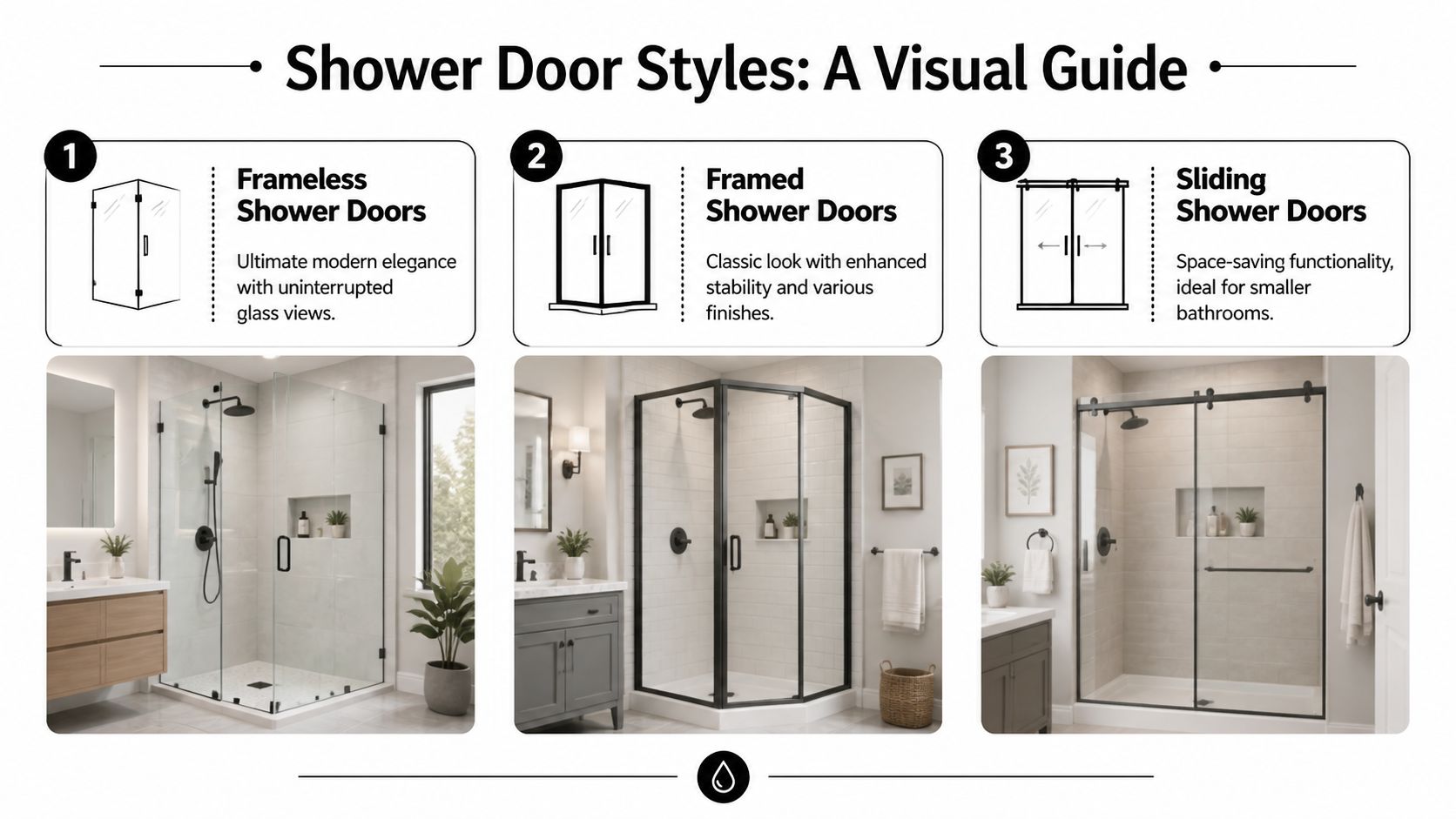
Frameless glass shower doors have been shaping bathroom design for a long time. They originated in the 1970s as a move toward open, light-filled bathrooms, and 63% of homeowners favor sliding glass shower doors in small bathrooms for their space-saving benefits and modern appeal. That tells you two things. People still want openness, and they also care about layout efficiency.
For a broader look at available configurations, hardware pairings, and enclosure options, it helps to browse a current shower door product collection.
Frameless doors
Frameless is the style people usually point to when they say they want a bathroom to feel custom. There’s very little visual interruption. You see more tile, more stone, and more of the room beyond the shower.
What works:
- Clean sightlines: Great for showcasing slab walls, detailed tile layouts, or niche lighting.
- Less visual weight: Especially effective in bathrooms with a lot of daylight.
- More current look: Pairs well with modern coastal, transitional, and minimalist interiors.
Trade-offs:
- Installation tolerance is tighter: Frameless glass doesn’t hide crooked walls well.
- Hardware matters more: Hinge placement, handle style, and panel size all show.
- Poor planning stands out: If the layout is off, frameless won’t disguise it.
Best fit: primary baths, custom remodels, and bathrooms where the tile deserves to stay visible.
Framed doors
Framed shower doors still have a place. In some bathrooms, they’re the practical answer. A frame adds structure and can help when the opening or surrounding surfaces aren’t ideal.
Here’s where they earn their keep.
| Style | Strongest advantage | Common drawback | Best use |
|---|---|---|---|
| Framed | Added support and a familiar look | More metal to clean around | Guest baths, budget-conscious remodels |
| Frameless | Open, high-end appearance | Needs more precise fabrication and install | Primary baths, designer-focused spaces |
| Sliding | No swing clearance needed | Tracks require attention | Smaller bathrooms and tub enclosures |
Framed styles usually suit bathrooms where durability and budget control matter more than a fully open look. They can also work well when homeowners want a finish that ties closely to existing fixtures.
Sliding doors
Sliding doors solve a practical problem elegantly. If you don’t have room for a door to swing out, a slider keeps the entry functional without crowding the vanity or toilet area.
In smaller bathrooms, the smartest choice often isn’t the most dramatic one. It’s the one you can use comfortably every day.
What works:
- Space-saving operation: No swing arc to plan around.
- Great for tub-shower combos: Keeps the opening contained and easy to access.
- Strong fit for tighter plans: Especially in condos, secondary baths, and compact suites.
What doesn’t:
- More hardware in view: Rollers, tracks, and overlapping panels create a busier look than frameless pivot doors.
- Cleaning takes intention: Tracks and panel overlaps need regular attention.
Pivot and hinged doors
A pivot or hinged door feels crisp and simple when the room has the clearance for it. This is often the most satisfying door to use because the motion is direct and solid.
Choose it when:
- The bathroom has floor space for the door to open without hitting a vanity or toilet.
- The opening is easy to approach and not pinched by nearby fixtures.
- You want a quieter look than a slider with tracks and overlaps.
If you’re collecting pictures of shower doors, pay attention to what the photo isn’t showing. A pivot door may look perfect in the image, but if your layout is tight, the better answer may be a slider or a fixed panel with a smaller entry.
The Details That Define Your Design
Once the style is set, the look of the enclosure comes down to two things. The glass itself, and the hardware that holds it.
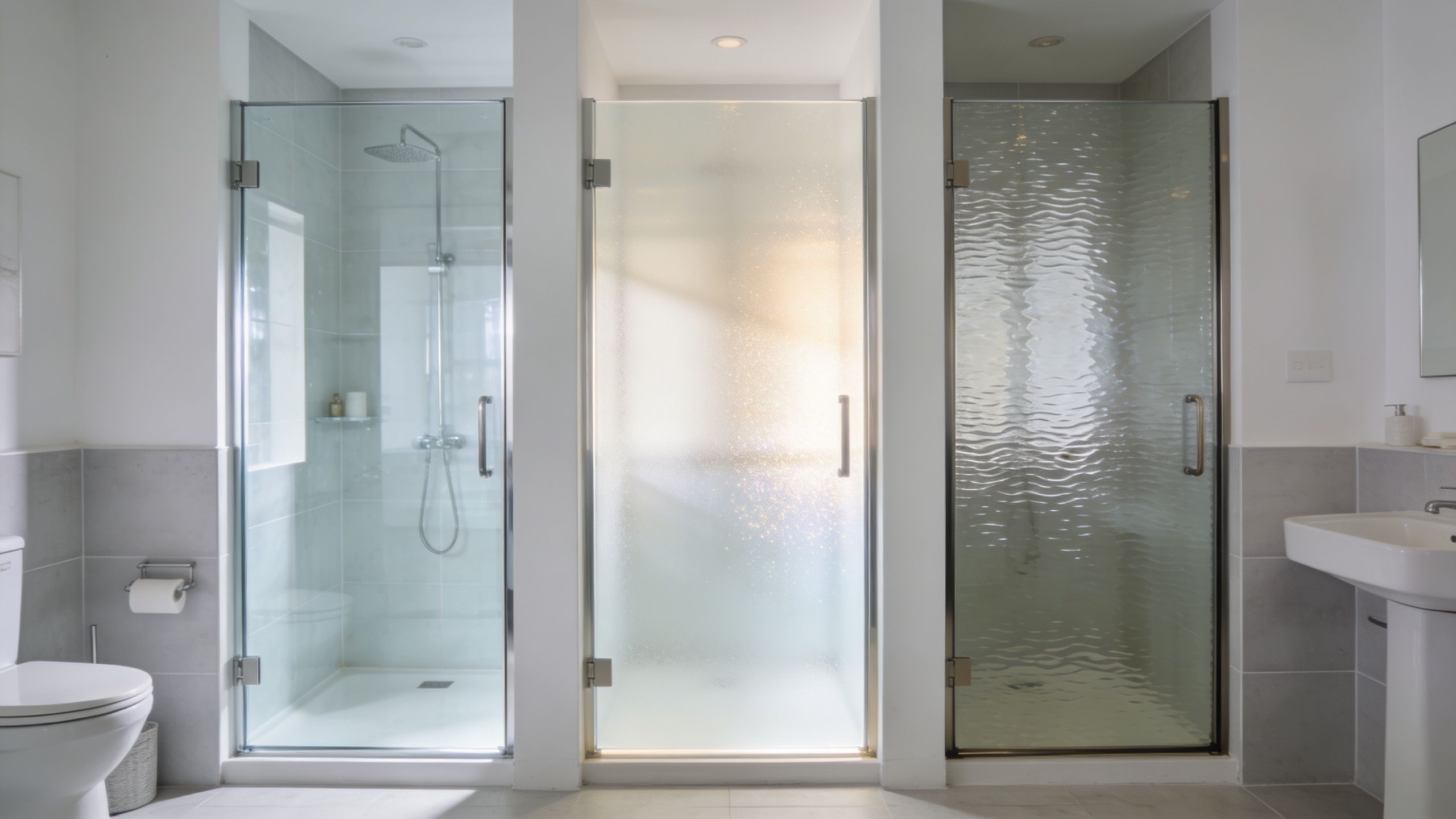
A lot of homeowners think “clear glass is clear glass.” It isn’t. Side by side, the differences are obvious, especially in bright Florida light and against pale tile.
Choosing the right glass look
A good way to think about glass is good, better, best.
- Good, standard clear glass: Functional and clean-looking, but it can show a green edge tint that becomes more noticeable on thicker panels.
- Better, privacy glass: Frosted, rain, or patterned glass gives more coverage and softens the view into the shower.
- Best, low-iron ultra-clear glass: This is the premium choice when you want the tile color to read accurately and the enclosure to disappear visually.
If the bathroom features white marble, warm limestone, handmade tile, or a decorative niche, low-iron glass usually gives the strongest result. It lets the finish materials do their job.
For homeowners comparing clarity levels, ultra-clear glass options for shower enclosures are worth reviewing before you finalize the spec.
Hardware changes the personality
The metal finish can make the same shower look classic, architectural, or bold.
- Chrome feels bright and familiar.
- Brushed nickel softens the look and pairs easily with many faucets.
- Matte black creates contrast and works well when you want the enclosure to read as a design feature.
- Brushed gold adds warmth and can enhance neutral tile without overwhelming it.
The mistake is treating hardware like a small accessory. On a frameless door, hinges, clamps, and handles are the jewelry of the enclosure. They need to align with the room’s other finishes, but they also need to suit the scale of the opening.
Here’s a useful visual reference on how different enclosures read in a finished bathroom:
Safety isn’t optional
Every shower door decision sits on one essential requirement. The glass must be tempered.
What matters on site: A shower door should never be chosen on looks alone. Safety glass, proper edge finishing, and correct hardware selection all matter just as much as appearance.
The best-looking enclosure is the one that still feels solid, smooth, and safe years after installation.
Keeping Your Glass Crystal Clear
In Southwest Florida, maintenance isn’t a side issue. It’s part of the buying decision. A shower can look excellent on install day and then start losing clarity once hard water dries on the glass again and again.
That buildup frustrates homeowners because ordinary cleaning often turns into scrubbing. The problem isn’t just soap residue. Minerals in water leave marks that bond to the surface over time, especially in a humid bathroom where droplets sit and dry repeatedly.
If you’ve ever looked up DIY boat stain removal tips, you’ve seen the same core issue in a different setting. Mineral stains love glassy, smooth surfaces. Bathrooms deal with a similar maintenance headache, just indoors and every day.
Why coatings matter
A protective coating changes the long-term experience of owning a glass shower. Instead of letting water and residue cling aggressively to the panel, the surface becomes easier to rinse, wipe, and maintain.
That matters more than commonly understood because cleaning habits are rarely perfect. Very few homeowners squeegee after every single shower forever. A coated surface gives you more margin for real life.
What works and what doesn’t
Some maintenance strategies help. Some only delay the problem.
- What helps: A quality protective treatment, a soft squeegee, and routine wipe-downs with non-abrasive products.
- What creates trouble: Harsh cleaners, rough scrub pads, and waiting too long after spotting starts.
- What people regret: Spending for premium clear glass, then skipping the protection that keeps it looking premium.
For practical upkeep habits and care recommendations, a dedicated shower door maintenance guide is a smart place to start.
Glass is easiest to preserve at the beginning. Once mineral deposits etch the surface, cleaning gets harder and results get less predictable.
That’s why many homeowners choose a protective coating up front instead of treating maintenance as a problem to solve later. It keeps the enclosure looking closer to the pictures of shower doors that inspired the project in the first place.
Ensuring a Perfect Fit with Precise Measurements
The photo you save online is only half the story. The rest happens at the opening itself, with a level, a tape, and a close look at the walls, curb, and tile conditions.
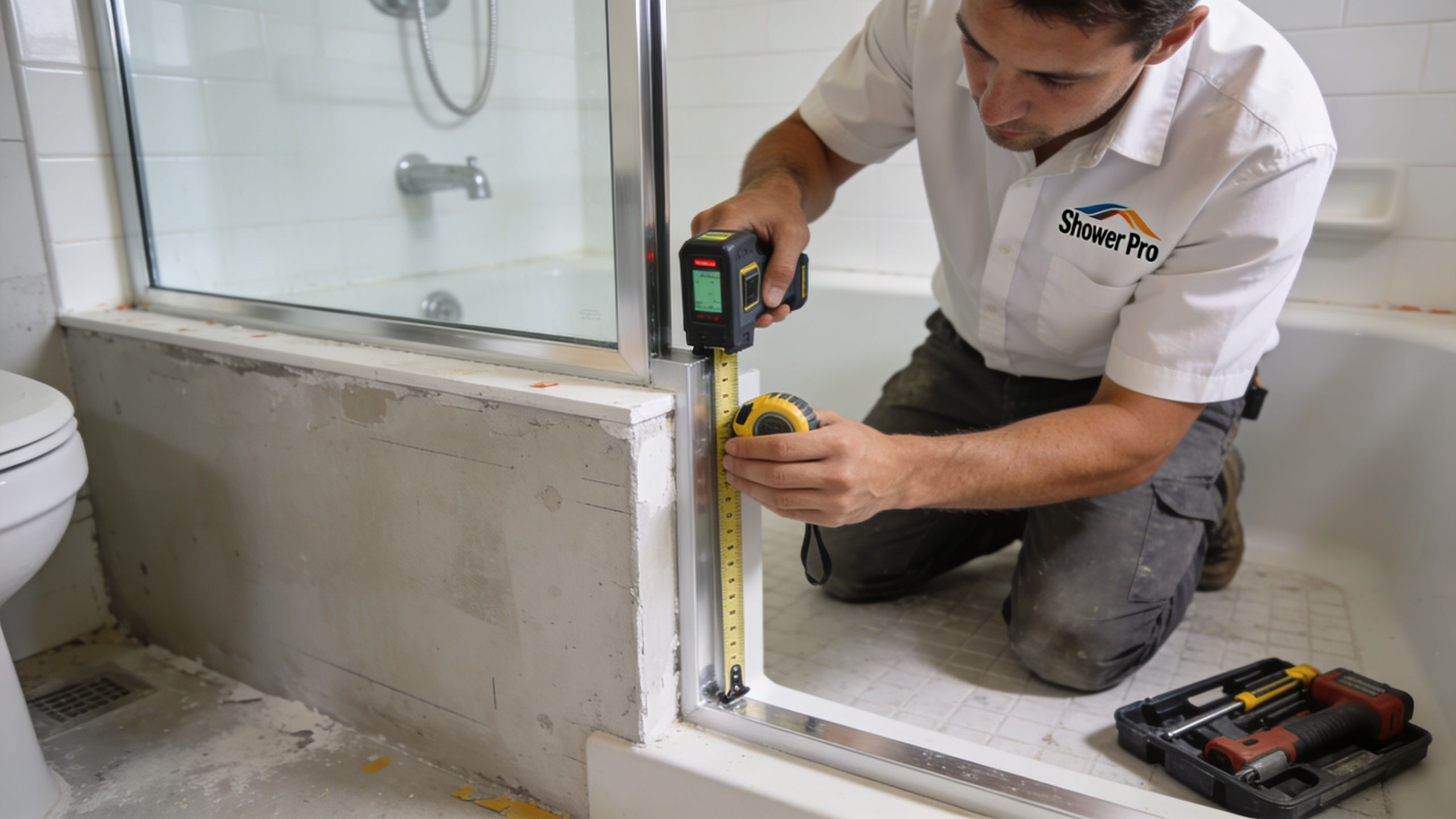
Bathrooms are rarely perfectly square. Walls lean. Tile build-up changes an opening by small but important amounts. Curbs can drift out of level. Those details decide whether a frameless enclosure looks precise or looks “almost right,” which is never good enough in glass.
What gets measured
A proper measurement visit looks at more than just width and height.
Opening width at multiple points
The top, middle, and bottom can all read differently. If they do, the enclosure has to account for that.Wall plumb
A wall that leans affects hinge alignment, panel fit, and the reveal around the door.Curb level
If the curb slopes or twists beyond normal expectation, gaps and water-control issues can follow.Tile and hardware conditions
Large-format tile, natural stone, and niche placement all influence where hardware can safely go.
Why frameless needs tighter tolerance
Frameless glass doesn’t get help from a full metal frame. The glass and hardware do the visual and structural work, so precision matters more.
For frameless shower doors, the minimum recommended glass thickness is 3/8 inch tempered glass, while 1/2 inch glass is used for wider or taller doors to reduce flexing and support long-term stability. That thickness gives the panel the rigidity it needs, but it doesn’t solve a bad measurement.
Here’s the practical difference:
| Site condition | What happens if ignored | What a proper measure prevents |
|---|---|---|
| Wall out of plumb | Uneven gaps and poor swing alignment | Cleaner reveals and better door action |
| Curb out of level | Water escape and awkward bottom clearance | Better sealing and a more balanced fit |
| Oversized door panel | Stress on hinges and rough operation | Safer movement and better longevity |
What homeowners can do before the visit
You don’t need to final-measure your own shower, but a little preparation helps.
- Clear the area: Move rugs, hampers, and décor so the opening is fully accessible.
- Know your priorities: Say whether you care most about openness, privacy, easy cleaning, or maximizing entry width.
- Share inspiration carefully: Bring pictures of shower doors you like, but also explain what you like about them. Often it’s the feeling of the photo, not the exact configuration.
A clean-looking enclosure starts with accurate field conditions, not just attractive hardware.
That’s why close enough doesn’t work with custom glass. Precision is what makes the finished door feel effortless.
Inspiring Custom Designs from the AmeriGlass Portfolio
The most useful pictures of shower doors aren’t generic showroom shots. They’re examples that solve real bathroom problems. That’s where custom work separates itself from catalog thinking.
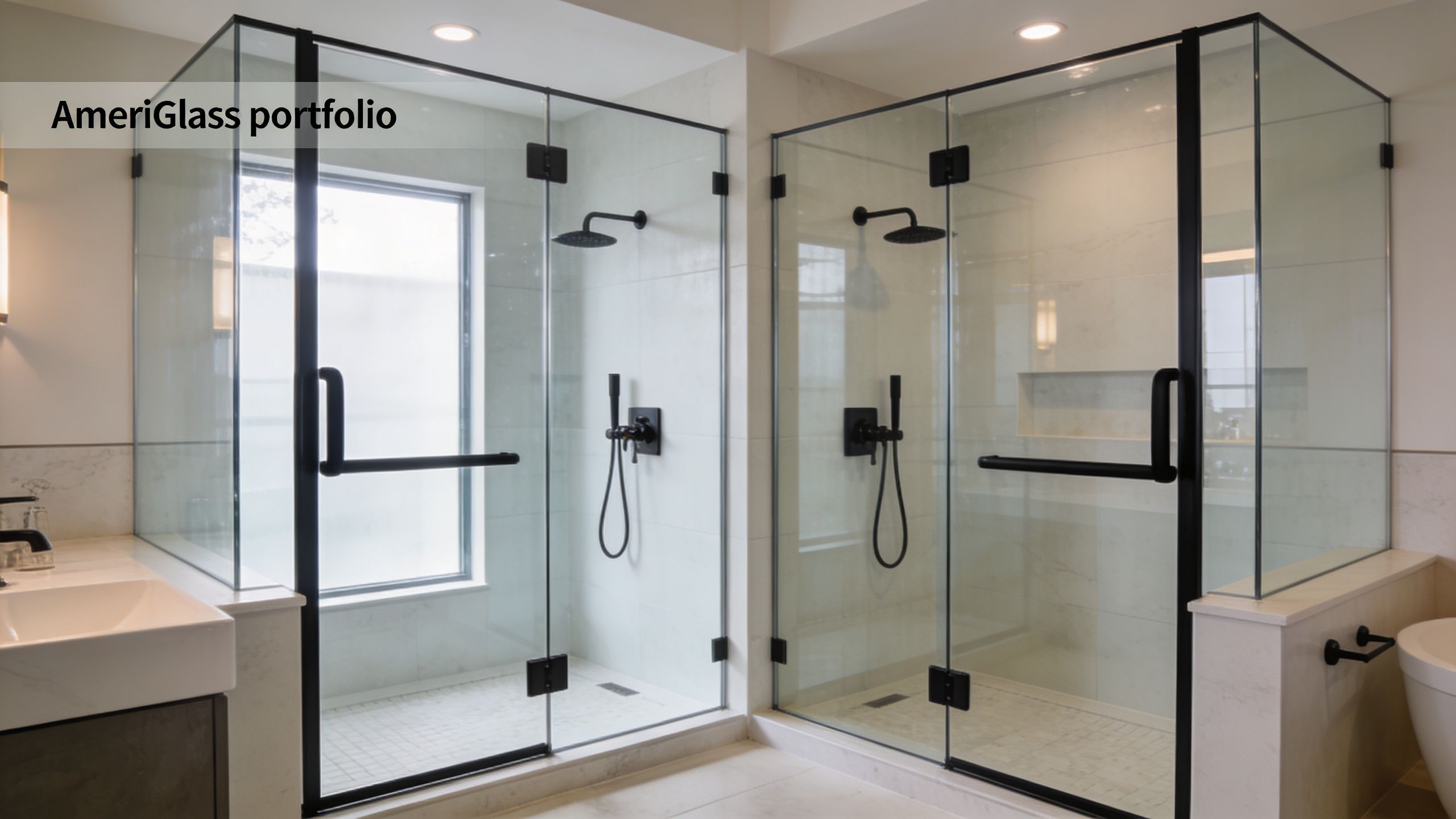
In Southwest Florida, some of the most interesting bathrooms don’t come with perfect geometry. Condos compress space. Older homes introduce unusual ceiling lines. Renovations uncover walls that aren’t as cooperative as the drawing suggested.
A compact corner that needed room to breathe
A corner shower in a condo often has one big challenge. The enclosure can dominate the room if it’s too heavy visually. In that setting, a neo-angle layout can create a better path through the bathroom than a square corner box.
The best version of that design uses glass to keep the footprint feeling light. The wrong version uses too much framing and makes the room feel cut up.
A taller enclosure for a luxury primary bath
Some bathrooms want the opposite. They need scale. In a larger primary suite with strong tile work and high ceilings, a small, over-framed enclosure can look undersized fast.
That’s where full-height frameless glass often works beautifully. The enclosure reads like part of the architecture instead of a product dropped into the corner. For homeowners exploring high-end ideas beyond the shower itself, this look lines up well with broader luxury glass design inspiration for the home.
A sloped ceiling that ruled out standard options
Custom-cut shower glass becomes most valuable when the room refuses standard answers. Angled ceilings and historic rooflines are a good example.
A common but often overlooked challenge is shower doors for angled ceilings in historic or vaulted Southwest Florida homes, and industry reports cited in this discussion note a 15% rise in custom angled installations as homeowners try to maximize unique spaces. That increase makes sense. These homes don’t benefit from forcing a stock solution into an irregular opening.
Some bathrooms don’t need a prettier standard door. They need a door designed around the room that actually exists.
That might mean a clipped panel, a transom, a revised hinge position, or a layout that shifts away from the obvious choice. A picture can start the conversation, but custom success comes from translating the room’s constraints into a design that still looks intentional.
Begin Your Shower Transformation Today
A good shower door does more than close off a wet area. It sharpens the room, protects the investment in tile and finishes, and makes the bathroom easier to live with every day.
The right choice usually comes down to a few practical decisions. Pick a style that fits the layout. Choose glass that supports the look you want. Match hardware to the room instead of treating it like an afterthought. Make maintenance part of the decision before the glass is ordered, not after stains appear.
What lasts and what disappoints
The enclosures that age well usually share the same traits:
- A layout that suits the room: Not every bath wants a pivot door, and not every small bath should default to one.
- Glass selected with purpose: Standard clear, privacy glass, and ultra-clear each create a different result.
- Measurement done with discipline: Precision affects appearance, water control, and door movement.
- Installation that respects the finish materials: Tile, stone, and hardware all need careful handling.
The disappointments are just as predictable. A door that looked good in a photo but fights the room. Hardware that clashes with the fixtures. A panel that’s hard to clean because maintenance was ignored at the start. A nearly correct fit that never feels polished.
Turning inspiration into a finished room
That’s why browsing pictures of shower doors should lead to better decisions, not more confusion. A useful visual guide helps you notice proportion, hardware weight, entry width, and how the enclosure changes the feel of the whole bath.
If you’re ready to move from saved images to a real plan, a custom shower door design consultation helps narrow the options around your actual space, not an idealized photo online.
The goal isn’t to copy a picture. It’s to build the version that fits your bathroom best and still looks right years from now.
If you’re ready to turn inspiration into a finished enclosure, AmeriGlass Industries can help with expert measuring, custom design, and professional installation for homes and businesses across Southwest Florida. Reach out for a free, no-obligation estimate and start building a shower door that looks right, fits right, and lasts.