

You’re probably looking at a bathroom that works fine but feels dated every time you step into it. Maybe there’s a shower curtain that clings to you, a framed door with cloudy metal channels, or a shower opening that makes the whole room feel smaller than it is. That’s a common starting point in Naples, Bonita Springs, Fort Myers, and older Southwest Florida homes where a bathroom update needs to look better, clean easier, and hold up to humidity.
Panel shower doors solve that problem cleanly. They open the room, let light move through the space, and turn the shower from a utility zone into part of the design. They also aren’t a new experiment. In 1963, transparent tempered glass first saw widespread commercial use in shower enclosures, and that glass was at least 500% stronger than standard glass while breaking into small, blunt granules if damaged, which is why it changed bathroom safety and design so quickly (history of glass shower doors).
For homeowners planning a full bath update, the shower door shouldn’t be treated as an afterthought. It needs to fit the tile layout, curb, wall structure, and daily use of the room, especially if it’s part of an overall bathroom remodeling project where every finish has to work together. And if your goal is a brighter, more upscale feel, this kind of upgrade often delivers exactly what homeowners want from a bath that feels custom, polished, and open, much like the ideas shown in this look at how a glass company can make your home feel luxurious.
Transform Your Bathroom with Modern Panel Shower Doors
A panel shower door changes the room before you even turn on the water. In a smaller guest bath, it removes visual clutter. In a primary bath, it lets the tile, stone, fixtures, and lighting do their job.
That’s why homeowners often notice the same thing right away after replacing a curtain or framed enclosure. The bathroom feels bigger. It feels cleaner. It finally looks finished.
Why the upgrade feels so dramatic
A curtain cuts the room in half visually. A bulky framed enclosure adds metal lines and collects buildup in places that are hard to clean. A well-designed glass panel removes those interruptions.
With panel shower doors, the eye travels across the room instead of stopping at a dark frame or opaque barrier. That matters in Florida bathrooms where natural light is a big asset.
A shower door isn’t just a closure. It’s one of the largest visible surfaces in the bathroom.
What homeowners usually want
Homeowners asking about panel shower doors often want a combination of four things:
- A cleaner look that shows off the tile instead of hiding it
- Less fuss than curtains or older framed systems
- A more open room without changing the footprint
- A long-term upgrade that feels appropriate for the home
The key is choosing the right configuration and getting the details right. Glass type, panel width, hardware finish, wall condition, coating, and installation method all matter. In Southwest Florida, coastal conditions make those decisions even more important because salt air, humidity, and hard water punish weak choices quickly.
Understanding Panel Shower Door Configurations
Not every panel shower door is the same. The right setup depends on the shower opening, the space around it, and how you want to use the room every day.
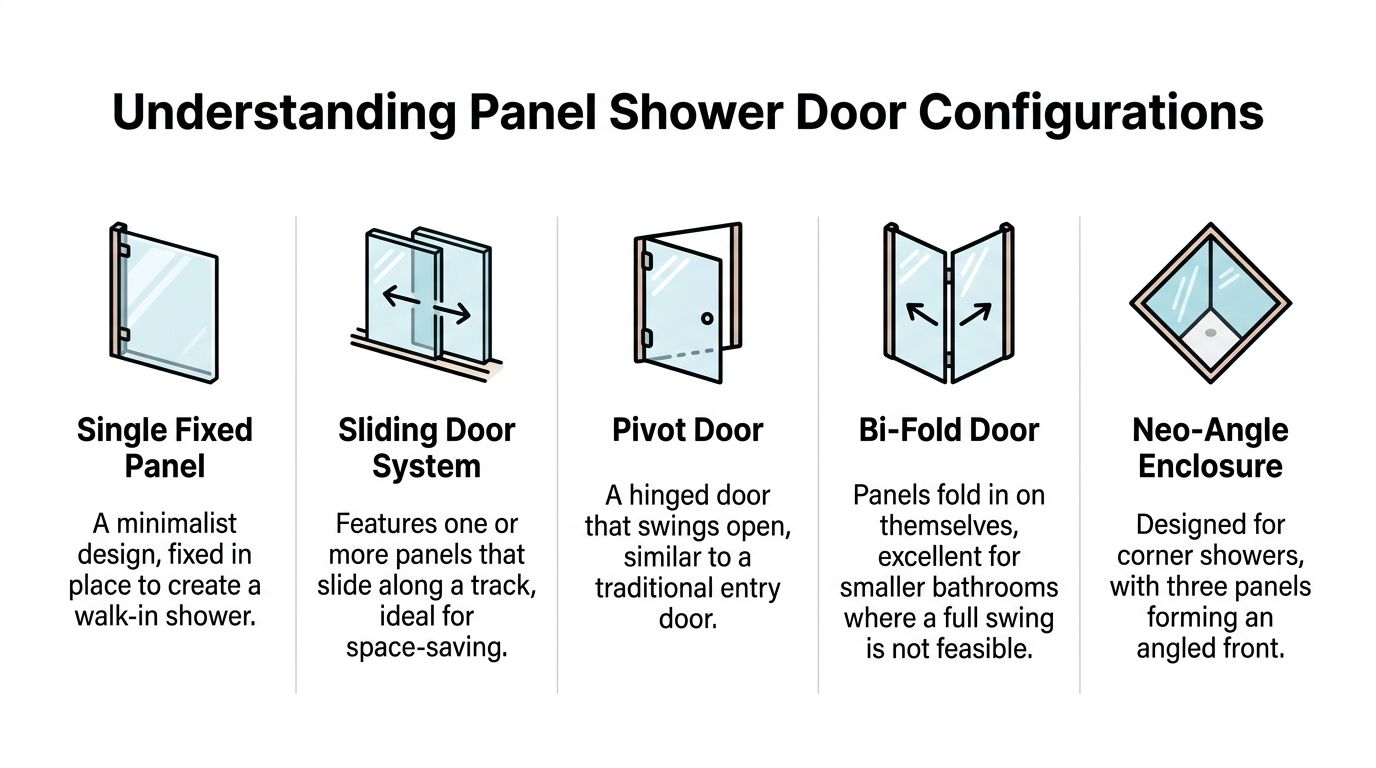
The main layouts homeowners choose
Think of a single fixed panel like a picture window for the shower. It stays in place and creates a walk-in opening. This style works well when the shower is deep enough to contain spray without needing a full door.
An inline panel and door is closer to a front entry with a sidelight. One piece of glass stays fixed, and the door swings from the wall or from another panel. This is a practical choice for wider openings. If you want to see how that style is commonly built, these inline door panels show the basic concept well.
A sliding system uses moving panels on a track. It’s useful when there isn’t enough floor space for a door swing, such as in tighter bathrooms.
A pivot door acts more like a traditional door. It gives a wide opening and a clean look, but you need clear space in front of it.
A neo-angle enclosure fits corner showers. It usually uses multiple panels to create an angled entry, which helps make a corner footprint more usable.
Standard sizing matters more than people expect
Most fixed glass shower panels fall into a practical standard range of 22 to 36 inches wide and 72 to 78 inches tall, and a typical 24-inch-wide panel in 3/8-inch tempered glass weighs about 65 lbs (glass shower door dimensions and measurement guide).
That matters for two reasons. First, the glass has to look balanced in the room. Second, the hardware and wall structure have to carry that weight safely.
Here’s a simple way to think about common configurations:
| Configuration | Best for | Main advantage | Main caution |
|---|---|---|---|
| Single fixed panel | Walk-in showers | Minimal visual clutter | Needs enough depth to control splash |
| Inline panel and door | Wider openings | Elegant and easy to enter | Requires accurate swing clearance |
| Sliding system | Tight bathrooms | Saves floor space | More hardware to keep clean |
| Pivot door | Larger baths | Wide opening and clean movement | Needs clear swing space |
| Neo-angle enclosure | Corner showers | Uses awkward corners well | More angles mean more measurement precision |
What works in Southwest Florida
In this region, I’d rather see a configuration chosen around real use than trend photos. A beautiful layout that splashes water onto the floor every morning becomes annoying fast. The same goes for a swinging door that clips a vanity or crowds the toilet.
Practical rule: Start with the opening, the curb, and the clear floor space. Style comes after the layout works.
For many homes, the best answer is simpler than expected. A fixed panel for a clean walk-in shower. Or an inline door and panel setup for a larger opening that needs better water control. Good design usually feels obvious once the room is measured correctly.
Frameless vs Framed The Defining Choice
If you’re deciding between framed and frameless, the best long-term choice for most updated Southwest Florida bathrooms is frameless.
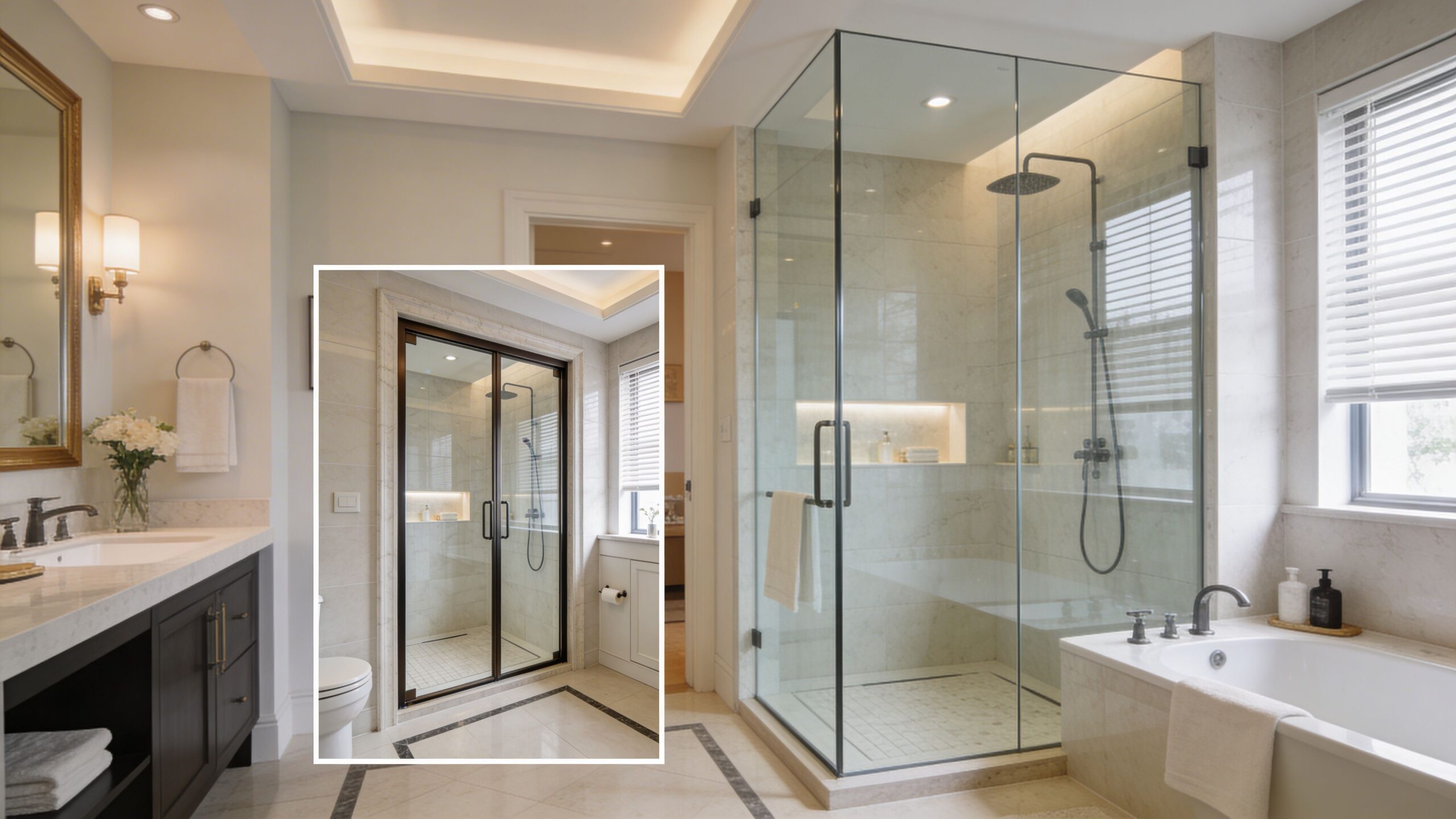
Framed doors still have a place in some projects, especially where budget or retrofit limitations lead the decision. But when a homeowner wants a bathroom to feel current, open, and easier to maintain, frameless panel shower doors usually win.
Why frameless changed the market
Frameless shower doors were introduced in 1970, and they changed both the look and upkeep of the modern shower. By removing metal framing, they can reduce mold and mildew buildup by up to 50% compared to framed versions, and they now account for over 70% of premium installations in markets like Southwest Florida (brief shower door history).
That shift makes sense when you live in a humid place. Framed enclosures create channels, seals, and corners where soap residue and moisture settle. Frameless systems strip away much of that clutter.
What framed doors still do well
Framed doors can make sense when:
- The opening is challenging and needs a more forgiving system
- The project is a retrofit over an older base that isn’t ideal for a frameless layout
- Budget control matters most and design is secondary
That said, framed systems ask you to accept more visual weight and more places for grime to collect.
Why homeowners usually prefer frameless after seeing both
Frameless glass makes the tile the star. If you paid for large-format porcelain, marble, textured tile, or custom niches, hiding that work behind heavy metal borders doesn’t make much sense.
It also changes the scale of the room. Small bathrooms feel less boxed in because the enclosure doesn’t stop the eye at every edge.
For a closer look at how modern frameless systems operate and feel in a finished bath, this video is useful:
The trade-off that matters
Frameless isn’t forgiving. It asks more from the measurements, the substrate, and the installer. That’s the trade-off. You get a cleaner, more refined result, but only if the opening is measured and built correctly.
A framed unit can hide small irregularities. Frameless glass doesn’t hide anything. It exposes them.
If the walls are off, the curb is pitched wrong, or the hardware isn’t matched to the glass, a frameless door won’t quietly cover the mistake.
That’s why the choice between framed and frameless isn’t just about appearance. It’s about whether the bathroom is ready for precision.
Choosing Your Glass and Hardware
Once the layout is set, the details start to shape the final result. Panel shower doors transition from merely functional to perfectly fitted.
Clear glass or ultra-clear glass
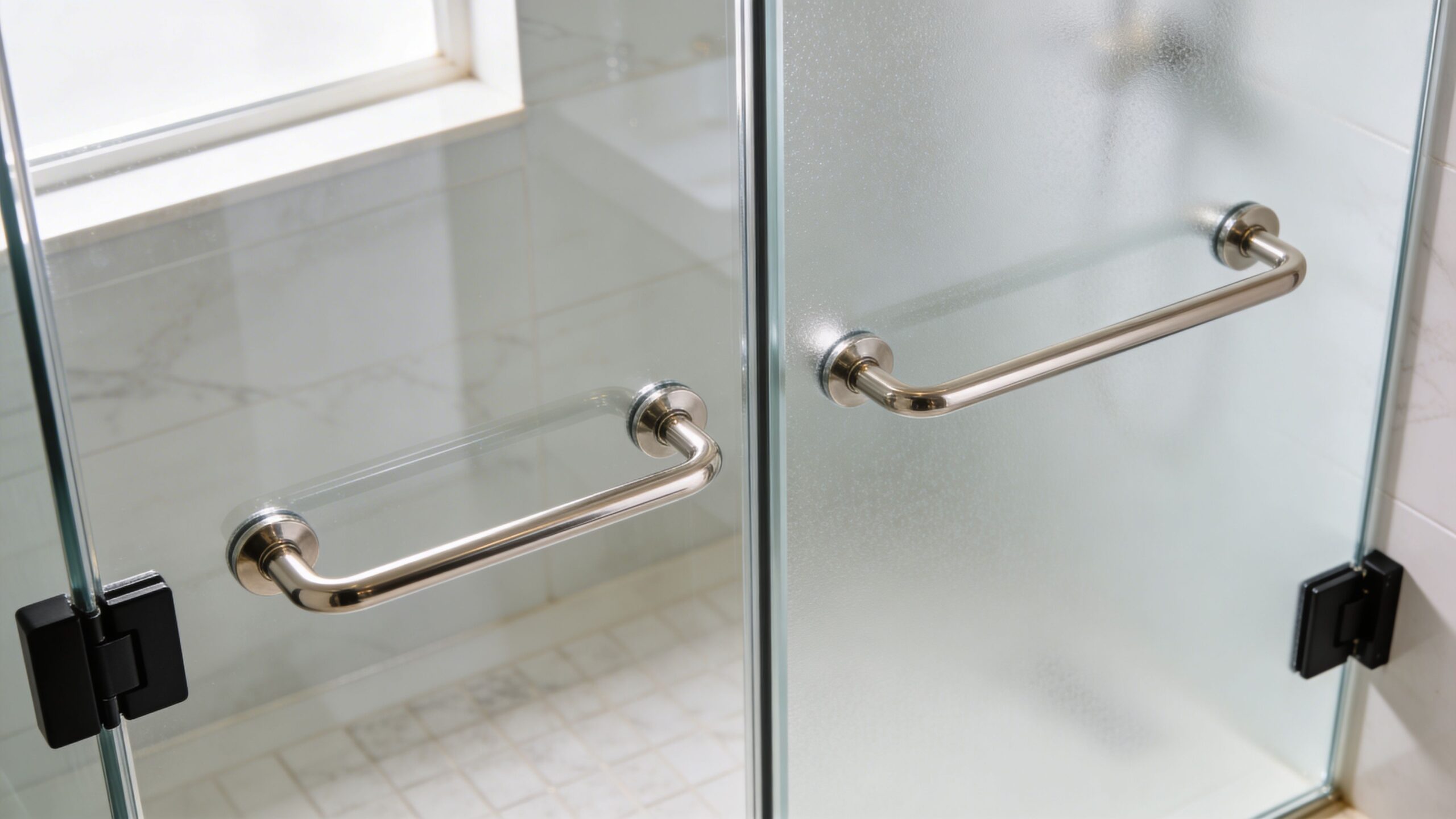
Standard clear glass is what most homeowners recognize. It’s clean, durable, and works well in many bathrooms. But it often carries a faint green cast, especially at the edges or against white tile.
Ultra-clear, low-iron glass removes much of that tint. If you spent time choosing warm stone, bright white tile, soft beige porcelain, or detailed mosaic work, the difference is noticeable. These examples of ultra-clear glass show why designers often prefer it when the shower finish itself is a feature.
Here’s the practical comparison:
| Glass option | Best use | What you’ll notice |
|---|---|---|
| Standard clear | Most everyday remodels | Slight green edge tint in some lighting |
| Ultra-clear low-iron | High-end tile and bright finishes | Truer color and a lighter, cleaner look |
If the tile is doing the heavy design work, ultra-clear glass is usually worth serious consideration. If the bathroom is more utility-focused, standard clear often performs just fine.
Hardware finish is not just a style choice
In Southwest Florida, hardware has to survive more than steam from the shower. It also deals with humid air and coastal exposure.
Good hardware should feel solid in the hand and look consistent with the rest of the bath. Common finish directions include brushed nickel, chrome, and matte black. The best choice usually depends on the plumbing trim, lighting, and overall design language in the room.
What works and what doesn’t
- Brushed nickel is forgiving. It hides fingerprints well and fits many bathroom styles.
- Chrome looks crisp and bright, especially in cleaner, contemporary baths.
- Matte black creates contrast and works well when the room has black fixtures or a modern profile.
What doesn’t work is choosing hardware only by color. A finish can look perfect on day one and disappoint later if the hardware isn’t suited for the environment.
For coastal homes, I always tell homeowners to ask not only how the hardware looks, but how it will age. Hinge quality, fastening method, and finish durability matter more than the showroom sample.
The Secret to a Perfect Fit Measurement and Installation
A frameless shower door doesn’t succeed because the glass is attractive. It succeeds because the measurements, hardware loads, wall support, and installation details all agree with each other.
That’s why this part of the project is not optional. It’s the part that determines whether the door swings properly, seals properly, and stays reliable.
Glass thickness and hinge limits
For frameless doors, 3/8-inch and 1/2-inch tempered glass are the industry standards for structural integrity. Hardware also has hard limits. A two-hinge setup on 3/8-inch glass can support a door up to 28 inches wide and 80 lbs, while 1/2-inch glass can reduce panel deflection by up to 40% but needs heavier hardware and precise wall support (tempered glass shower door panel specifications).
That’s not a technical footnote. It directly affects what can be built.
If a homeowner wants a wider, heavier door because it “looks nicer,” the wall structure has to support that decision. The hinges have to match it. The backing in the wall has to be there. Otherwise, the door may look clean at first and create problems later.
Why field measurement matters so much
A shower opening can look square and still be off enough to matter. Tile thickness varies. Curbs can drift. Walls can lean. Corners can be tight at the bottom and open at the top.
Frameless glass doesn’t bend to hide those conditions. It has to be templated around them.
A reliable installation process usually includes:
- Opening review to check wall condition, curb pitch, tile layout, and swing clearance
- Exact measurement of width, height, plumb, level, and any deviation in the opening
- Hardware planning so the hinge type, handle placement, and fixed panel support all work together
- Fabrication based on the actual opening, not just nominal dimensions
- Installation with proper anchoring, alignment, and seal details
For homeowners exploring ideas before measurement, this tool to design your shower door is a good way to think through configuration and finish choices. But the final call always has to come from field conditions.
Where installations usually go wrong
Most shower door failures aren’t caused by the glass itself. They come from decisions made before the glass arrives.
Common mistakes include:
- Ignoring wall backing behind a heavy hinge location
- Using a panel width that pushes hardware beyond its limits
- Assuming tile installers left a perfectly square opening
- Rushing the seal and alignment work at the curb and wall
The cleaner the design, the less room there is for sloppy measuring.
A perfect-looking frameless enclosure is always the result of invisible discipline. Good installers spend more time checking than clients typically expect. That’s exactly how it should be.
Keeping Your Shower Glass Crystal Clear in Florida
A lot of homeowners hesitate on glass because they assume it’s hard to keep clean. In Southwest Florida, that concern is fair. But the primary issue isn’t glass itself. It’s unprotected glass in a humid, mineral-heavy environment.
What Florida water does to shower glass
In humid coastal climates like ours, 70% of unprotected glass shower doors show visible etching from hard water within two years, and local water averages 180 ppm hardness. A protective treatment such as Diamond-Fusion can reduce cleaning needs by up to 90% and helps prevent the permanent haze homeowners often notice later (glass shower door problems and solutions).
That haze isn’t just dirt sitting on the surface. Over time, minerals can bond to the glass and leave damage that ordinary cleaning won’t fully reverse.
What actually works
A coated glass surface gives minerals and soap residue less to grab onto. Water sheets and releases more easily, which means less aggressive scrubbing and less risk of long-term dullness.
The habits that help most are simple:
- Use a squeegee regularly so minerals don’t sit and dry on the glass
- Wipe hardware and edges because corners collect residue first
- Use non-abrasive cleaners instead of harsh compounds that can damage surfaces
- Start with a coating rather than waiting until the glass already looks tired
What doesn’t work
Homeowners often try to fix etched or hazy glass after the fact with stronger chemicals, rough pads, or random online advice. That usually leads to frustration and, sometimes, more surface damage.
If glass already has stubborn mineral buildup, guidance on professional hard water stain removal can help you understand the difference between removable deposits and true etching. And for day-to-day upkeep after installation, this page on shower door maintenance covers the kind of routine care that protects the finish.
Clean glass is mostly about prevention. Once hard water sits long enough, you’re no longer doing maintenance. You’re trying to undo damage.
For Florida homes, coating the glass at the beginning is one of the smartest decisions in the whole project. It protects the look you paid for and saves work later.
Your Southwest Florida Shower Door Project FAQ
Can panel shower doors be added to an existing shower?
Yes, often they can. Many homeowners want to upgrade an existing tiled shower or replace an older enclosure without rebuilding the whole bathroom.
The catch is fit. In Southwest Florida, the median home build year is 1985, and older homes often have walls that are out of square by 1/4-inch or more, which can cause leaks or installation problems without expert laser templating (common shower door questions).
Are older homes harder to retrofit?
Usually, yes. The challenge isn’t age by itself. The challenge is what time and previous remodels have done to the opening.
Tile may not be plumb. The curb may not be level. The base may not be perfectly straight. A frameless panel shower door can still work, but the installer has to measure the actual conditions rather than rely on standard assumptions.
What should happen during an in-home consultation?
A good consultation should feel methodical, not rushed. The installer should check:
- Wall condition and likely anchor points
- Opening dimensions at multiple locations
- Curb and floor alignment
- Door swing and room clearance
- Glass and hardware preferences based on use and maintenance goals
If the conversation stays only on style and never gets into structure, that’s a warning sign.
Is a fixed panel or a door better?
It depends on splash control, opening width, and how the shower is used. Fixed panels look clean and open. Hinged or pivoting doors provide stronger water containment and a more enclosed feel.
The best choice is the one that fits the room and daily routine, not the one that looks best in a single photo.
Do coastal homes need special hardware consideration?
Yes. Humidity and salt exposure are hard on finishes. Hardware should be selected with durability in mind, and homeowners should expect regular wipe-downs as part of normal care.
How long should a quality installation last?
A properly designed and installed shower door should provide long service, but longevity depends on the opening, the hardware, the coating, and how the glass is maintained. The details at the beginning of the job determine how trouble-free it feels later.
If you’re ready to upgrade your bathroom with expertly measured, professionally installed panel shower doors, AmeriGlass Industries serves Naples and Southwest Florida with frameless shower enclosures, ultra-clear glass options, and protective coatings built for long-term performance in a coastal climate.