
By midafternoon in Southwest Florida, you can feel the problem before you see it. The AC is running. The thermostat says one thing. The room by the glass says another. Sun pours through the windows, the floor feels warmer near the sliders, and the sofa you paid good money for sits in the same harsh light day after day.
That's where a lot of homeowners start asking about low-E glass benefits. They're not usually chasing a technical upgrade for its own sake. They want a cooler room, less fading, less glare, and a house that doesn't feel like it's fighting the outdoors every afternoon.
Low-E glass helps with exactly those problems. If you've heard the term and wondered whether it's just another builder buzzword, it isn't. It's one of the most practical glass upgrades you can make in a hot, sunny, humid climate like Naples, Fort Myers, and the rest of Southwest Florida.
Your Home Is Working Harder Than It Needs To
Standard glass doesn't do much to manage solar heat. It lets daylight in, which is great, but it also lets in the kind of heat that makes your air conditioner chase comfort all day. In Southwest Florida, that means your home can look bright and beautiful while still feeling uncomfortable near large windows and doors.
That's why homeowners often notice the same three frustrations at once. Rooms feel hotter than the thermostat suggests. Furnishings start to fade. Utility bills stay stubbornly high during long cooling seasons.
What low-E glass is solving
Low-E stands for low emissivity. In plain English, it means the glass has a nearly invisible coating designed to control heat transfer. It works like sunscreen for your home, only more intelligently. It doesn't just darken the room. It filters how energy moves through the glass.
If you've been trying to save on home electricity for Palm Beach, the same logic applies on the Gulf Coast. When windows and glass doors let too much heat in, your HVAC system has to compensate.
Practical rule: If one room always feels warmer than the rest and it has a lot of glass, the glass is often part of the problem.
Homeowners also get confused because clear glass looks harmless. If you can see through it clearly, it's easy to assume it's performing well. But visibility and thermal performance aren't the same thing.
Why this matters in a Florida home
In colder parts of the country, people talk about windows in terms of drafts and winter comfort. Here, the daily issue is usually solar heat and sun exposure. That's why low-E glass is such a useful upgrade in this region. It helps the house resist the heat load coming through the glass instead of asking your AC to solve everything after the fact.
A lot of design-focused homeowners want comfort without giving up that open, airy look. That's where glass selection becomes part of the feel of the whole house. If you like polished interiors and bright spaces, you'll appreciate how glass can make a home feel luxurious without turning those same features into heat traps.
Here's the simple version:
- Sunlight isn't the only thing entering the room. Heat comes with it.
- Your AC pays for that mistake. It has to remove heat that better glass could have reduced.
- Your interiors pay too. Fabrics, flooring, and finishes all sit in that same exposure.
Low-E glass is popular because it addresses all three at once.
How Low-E Glass Actually Works
The science sounds complicated until you picture a stainless steel thermos. A thermos doesn't create hot or cold on its own. It slows down heat movement so the temperature inside stays more stable. Low-E glass works on a similar idea.
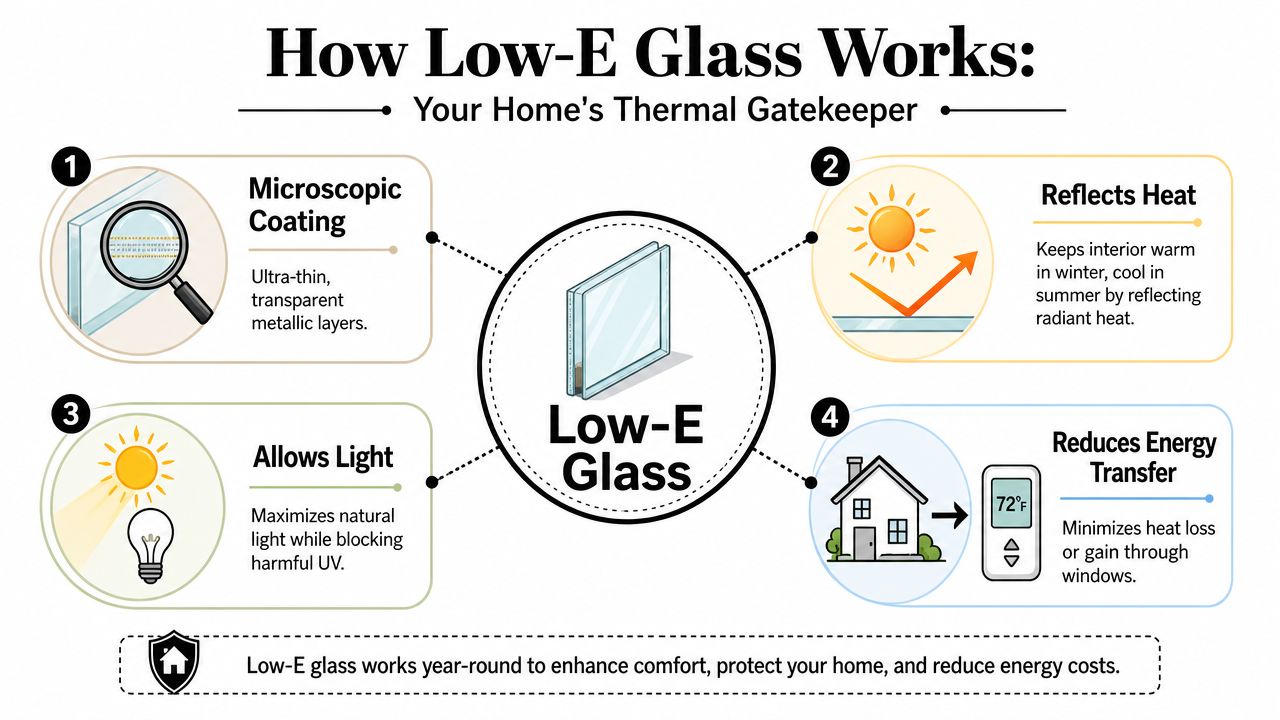
The glass has a microscopic metallic oxide coating. That coating changes how the glass handles radiant heat. According to Saint-Gobain Glass, low-E glass reduces heat transfer by using that coating to reflect infrared radiation, and it can reflect up to 99% of infrared energy while still permitting visible light transmission.
Think in terms of heat, not just glass
When considering “window glass,” transparency often comes to mind. The more useful way to think about it is energy flow.
Visible light is what helps a room feel open and bright. Infrared energy is the heat you don't want building up inside. Low-E coatings are designed to let light pass while managing that heat much more intelligently than plain glass does.
That's why low-E glass doesn't just “block the sun.” It acts more like a filter.
What it does in daily life
In hot weather, the coating reflects unwanted radiant heat so less of it moves into the room. In cooler weather, the same basic principle helps keep indoor heat from escaping as quickly. Florida homeowners care most about the first part, but the larger point is temperature stability.
A simple way to picture it:
- Sun hits the glass
- The low-E coating filters the energy
- More visible light stays useful
- More heat gets reflected instead of dumped indoors
Low-E glass works best when you stop thinking of it as “fancier clear glass” and start thinking of it as a thermal control layer.
That's the core of the low e glass benefits conversation. It isn't magic, and it isn't just tint. It's a targeted coating doing a very specific job.
The Measurable Low E Glass Benefits
By midafternoon in Southwest Florida, some rooms start sending a clear message. The AC is running, but the space near the big windows still feels warmer, the sofa fabric catches harsh sun, and the thermostat seems to creep back on again. Low-E glass helps with those everyday problems in ways you can feel and see.
Lower cooling demand
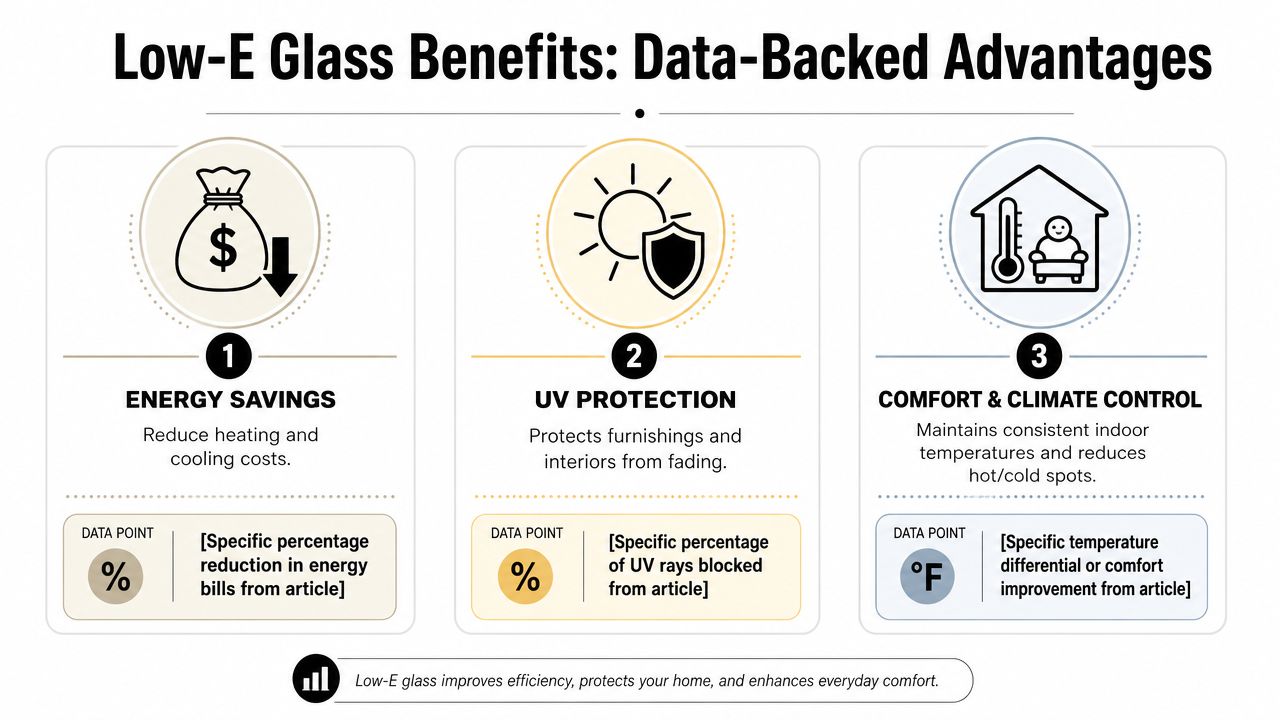
The biggest benefit for Florida homes is simple. Less solar heat gets indoors through the glass, so your air conditioner has less heat to remove.
The U.S. Department of Energy explains that low-E coatings help reduce the amount of infrared and ultraviolet light that passes through glass without cutting off the visible light you want indoors. In real life, that means rooms can stay brighter without acting like heat traps. For a Southwest Florida homeowner, that often shows up as fewer hot spots near windows and less strain on the AC during the hottest part of the day, as explained in the Department of Energy's overview of energy-efficient window attachments and glazing.
If you want a broader homeowner-friendly look at residential energy-efficient windows, it helps to compare products with your climate in mind instead of treating all window upgrades the same.
Better UV protection for interiors
Sunlight does more than brighten a room. Over time, it can bleach fabric, dull wood tones, and age finishes faster than many homeowners expect.
According to Berkeley Lab's low-E windows overview, low-E glass can block 70 to 80% of ultraviolet radiation compared to only 25% for clear glass. That matters in homes with wide sliders, tall entry glass, sunlit bathrooms, and open living areas where daylight hits the same surfaces every afternoon.
You see the benefit in places like:
- Wood floors that keep their color longer
- Rugs and upholstery that fade more slowly
- Cabinet finishes and artwork that get more protection from harsh daylight
That protection can matter even more when homeowners want a bright, refined look indoors. If you like the clean appearance of ultra-clear interior glass options, pairing clarity with better solar control can make a lot of sense in sunny Florida spaces.
A more comfortable room near the glass
Comfort is usually the first thing people notice.
Low-E glass helps cut the hot-glass effect that can make a chair by the window feel less usable than the rest of the room. It can also soften glare, which matters in spaces where you watch TV, work from home, or want to enjoy daylight without squinting. Glass works a lot like a sunscreen for the house. The goal is not to darken everything down. The goal is to filter the part of the sun that causes the most trouble.
That same comfort benefit can extend beyond exterior windows. In Southwest Florida, low-E glass can also make sense in certain custom interior applications, including glass used near strong natural light, such as shower enclosures placed beside large bathroom windows. For homeowners already investing in custom glass, it is worth considering whether the space gets enough sun exposure for low-E to add value there too.
This video gives a helpful visual overview of the idea in action:
The benefits are practical. Lower cooling demand, slower fading indoors, and rooms that stay more usable throughout a hot Florida afternoon.
Decoding Low-E Performance Metrics
A product label can look a lot like a nutrition label. The numbers are useful, but only if you know what they mean for daily life in a Southwest Florida home.
For this climate, I tell homeowners to focus on three ratings first: U-value, Solar Heat Gain Coefficient, and Visible Light Transmittance. If those sound technical, that is normal. Here is the plain-English version.
What each metric tells you
U-value tells you how easily heat moves through the glass. Lower numbers mean the glass does a better job slowing heat transfer. The National Fenestration Rating Council explains window performance labels using this exact rating system, and it is one of the clearest ways to compare one unit to another.
In practical terms, U-value matters when you want indoor temperatures to stay steadier and your AC to cycle less often.
Solar Heat Gain Coefficient, usually shortened to SHGC, measures how much of the sun's heat gets through the glass. This is a big one in Southwest Florida. If your home has broad sliders, west-facing glass, or rooms that heat up by midafternoon, SHGC often deserves your attention before almost anything else.
A lower SHGC usually means less solar heat entering the room. Glass works a bit like a filter on a camera lens. Some products let in plenty of light while screening out more of the heat that makes a room feel harder to cool.
Visible Light Transmittance, or VLT, tells you how much daylight passes through. Higher VLT means a brighter view. Lower VLT can reduce brightness, which may help in harsh sun but can also change the feel of the room.
That balance matters. Homeowners in our area usually want natural light without turning the family room into a greenhouse.
Performance Metrics Standard vs. Low-E Glass
| Metric | Standard Double-Pane Glass | Low-E Double-Pane Glass (Warm Climate) |
|---|---|---|
| U-value | Higher heat transfer through the glass | Lower heat transfer for better insulation |
| SHGC | Often allows more solar heat indoors | Lower SHGC helps limit heat gain |
| VLT | Can be bright, but with less solar control | Can preserve daylight while improving heat control |
What to ask for: Ask your glass professional to point to the SHGC and VLT numbers on the label and explain how those two ratings will affect that specific room.
One point trips up a lot of homeowners. Clearer-looking glass is not automatically better at blocking heat. Appearance and performance are related, but they are not the same thing. If you care about both, it helps to see how ultra-clear glass options fit into the full glass package.
The room should guide the numbers you choose. A west-facing wall of sliders, a shaded guest bath, and a bright bathroom with a custom shower enclosure beside a large window may all call for different priorities. That is why these labels matter. They turn a vague sales pitch into a clearer decision based on sun exposure, comfort, and how you use the space.
Choosing the Right Glass for Southwest Florida
Southwest Florida isn't a generic climate. The light is stronger, the cooling season is longer, and large openings are common in coastal homes. That changes what “good glass” means.
In this region, the goal usually isn't to make the room darker. It's to keep as much usable daylight as possible while cutting down the heat that drives up AC use.
Why selective coatings matter here
Spectrally selective low-E coatings prove especially useful. According to Clayton Glass, spectrally selective coatings can reduce electric space-cooling requirements by more than 40%, but certain low-E specifications can also reduce natural light entry by 25 to 85% depending on the unit.
That tradeoff matters in Florida. Homeowners often hear “blocks heat” and assume “good.” But if the product also makes the room feel flat or too dim, it may not be the right fit for the space.
A Florida-first way to choose
Here's how I'd think about it as a local glass educator:
For large sun-exposed openings
Prioritize strong solar control. Sliders, oversized windows, and glass facing intense afternoon sun need serious heat management.For spaces where brightness matters
Look closely at visible light performance, not just energy language. Kitchens, living rooms, and offices often need a better daylight balance.For coastal homes
Ask how low-E can work with impact-resistant glass. Many homeowners want hurricane protection and energy performance in the same assembly.
In Southwest Florida, “best glass” usually means the unit that rejects heat aggressively without making your home feel shut in.
Orientation matters too. East and west exposures are often tougher than people expect because the sun hits at harsher angles. A bathroom with filtered morning light and a great room with broad afternoon exposure won't behave the same way, even in the same house.
The best low e glass benefits show up when the glass is chosen for the room, not just pulled from a standard option list.
Beyond Windows Creative Uses for Low-E Glass
Most homeowners first hear about low-E in windows and sliding doors. That's the obvious application, but it's not the only one. Once you understand that the coating helps manage heat, glare, UV exposure, and comfort, you start seeing where else it can help.
In custom homes, specialty glass often sits in places that get direct sun, humidity, or both. That opens the door to some smart interior uses.
Shower enclosures and steamy bathrooms
A sunny bathroom can become a strange microclimate. Heat builds up, steam lingers, and glass surfaces show every spot and streak. Low-E glass can help reduce condensation and improve comfort in these settings, which is one reason people exploring upgraded bath spaces often start comparing premium glass options.
This kind of application is easiest to picture when you see it in a finished setting:
For homeowners interested in design options beyond standard clear panels, it helps to browse different mirrors and specialty glass styles to see how performance and appearance can work together.
Wine enclosures and sun-exposed interiors
Wine storage is another strong example. If a glass wine enclosure sits in a bright part of the home, UV protection and heat control become more than convenience issues. They're part of protecting what's inside.
The same logic can apply to:
- Interior partitions that separate temperature-sensitive spaces
- Glass railings on bright stairwells or balconies
- Custom glass features in rooms where sun exposure is part of the design
Where homeowners get surprised
People often assume low-E is only for exterior windows because that's where the energy conversation usually happens. But specialty glass inside the home can also benefit when the goal is preserving finishes, improving comfort near sunlit glass, or controlling moisture and glare.
That's especially relevant in Southwest Florida homes with open plans, strong daylight, and bathrooms designed like spa spaces rather than simple utility rooms.
Installation Investment and Long-Term Care
Low-E glass is an upgrade, so it's fair to ask about cost before getting excited about the benefits. The bigger question, though, isn't just “What does it cost?” It's “What am I getting for that added investment over time?”
According to AIS Glass, the initial investment is approximately $350 to $850 per installation, and that cost is often considered worthwhile because of long-term energy savings and protection for interior materials. The same source notes protection from up to 78% of harmful UV rays.
What makes the investment make sense
The return isn't usually one dramatic moment. It's a collection of smaller wins that keep adding up:
- Lower cooling strain in sun-heavy rooms
- Less fading on flooring, fabrics, and furniture
- Better daily comfort near windows and glass doors
- A more premium feel in the spaces where glass matters most
That's why homeowners who choose low-E often talk about the house feeling better, not just performing better on paper.
Questions to ask before you buy
The installer matters almost as much as the glass itself. Ask direct questions.
Which low-E product are you specifying for my exposure?
“Low-E” alone isn't enough. South-facing, west-facing, shaded, and interior applications may call for different solutions.How will this affect room brightness?
You want an honest answer about light levels, not just a promise of efficiency.What warranty applies to the glass unit and installation?
Get clear on what is covered and for how long.How should I clean and maintain it?
Modern low-E glass is durable, but good care still matters.
For bathroom applications especially, homeowners often overlook maintenance until after installation. If that's part of your project, a basic guide to shower door maintenance helps you protect clarity and hardware over time.
Clean with products approved for specialty glass and avoid abrasive habits that can shorten the life of beautiful finishes.
Good glass should stay easy to live with. That's part of the value.
Common Questions About Low-E Glass
Homeowners usually have two concerns once they understand the basics. First, “Will it make my house too dark?” Second, “Is that story about reflections melting siding real?” Both are fair questions.
Can low-E glass make a room feel darker
Sometimes it can reduce the amount of natural light entering a space, depending on the product. That doesn't mean all low-E glass will make your room gloomy. It means product selection matters.
The right choice depends on where the glass is going, how much sun that side of the home receives, and whether your priority is maximum daylight, aggressive solar control, or a middle ground. That's why homeowners shouldn't buy based on the words “low-E” alone.
Can reflections from low-E glass damage nearby siding
Yes, this phenomenon is real in some situations. According to InterNACHI, low-E glass reflections can become hot enough to melt and distort vinyl siding up to 20 feet away.
That sounds alarming, but context matters. It's a risk tied to specific site conditions, reflection angles, neighboring structures, and glass placement. In dense neighborhoods, especially where houses sit close together, this is worth discussing before installation.
How professionals reduce the risk
A good installer should evaluate more than the glass size. They should also think about:
- Orientation and reflection paths
- Distance to adjacent homes
- Nearby vinyl surfaces
- Whether a different specification would better suit the site
Ask about reflection risk before fabrication, not after a neighbor notices warped siding.
Is low-E worth considering for interior projects too
Yes, especially when the project involves sun, humidity, or valuable interior finishes. Shower enclosures, wine rooms, and specialty glass features can benefit when the goal is better comfort, cleaner light, and added protection from UV exposure.
If you still have project-specific questions, a dedicated glass FAQ resource can help you sort out practical concerns before choosing a product.
Low e glass benefits are real, but the best outcomes come from matching the glass to the climate, the room, and the way the home lives.
If you're planning a glass upgrade in Naples, Fort Myers, Bonita Springs, or nearby areas, AmeriGlass Industries can help you choose the right solution for your space. Whether you're considering frameless shower doors, custom mirrors, glass railings, partitions, or specialty glass for a luxury home, their team brings the local experience needed to match performance, appearance, and precise installation.