

If you've started collecting wine, you know it's about more than just buying a bottle. You're investing in its future flavor, value, and the experience it will one day provide. The secret to protecting that investment isn't complicated, but it is specific. It all comes down to five golden rules: a cool temperature, steady humidity, darkness, stillness, and laying the bottle on its side.
Your kitchen counter or a standard refrigerator just won't do. I've seen too many good bottles ruined by temperature swings and dry air in just a matter of months.
Getting the Environment Just Right
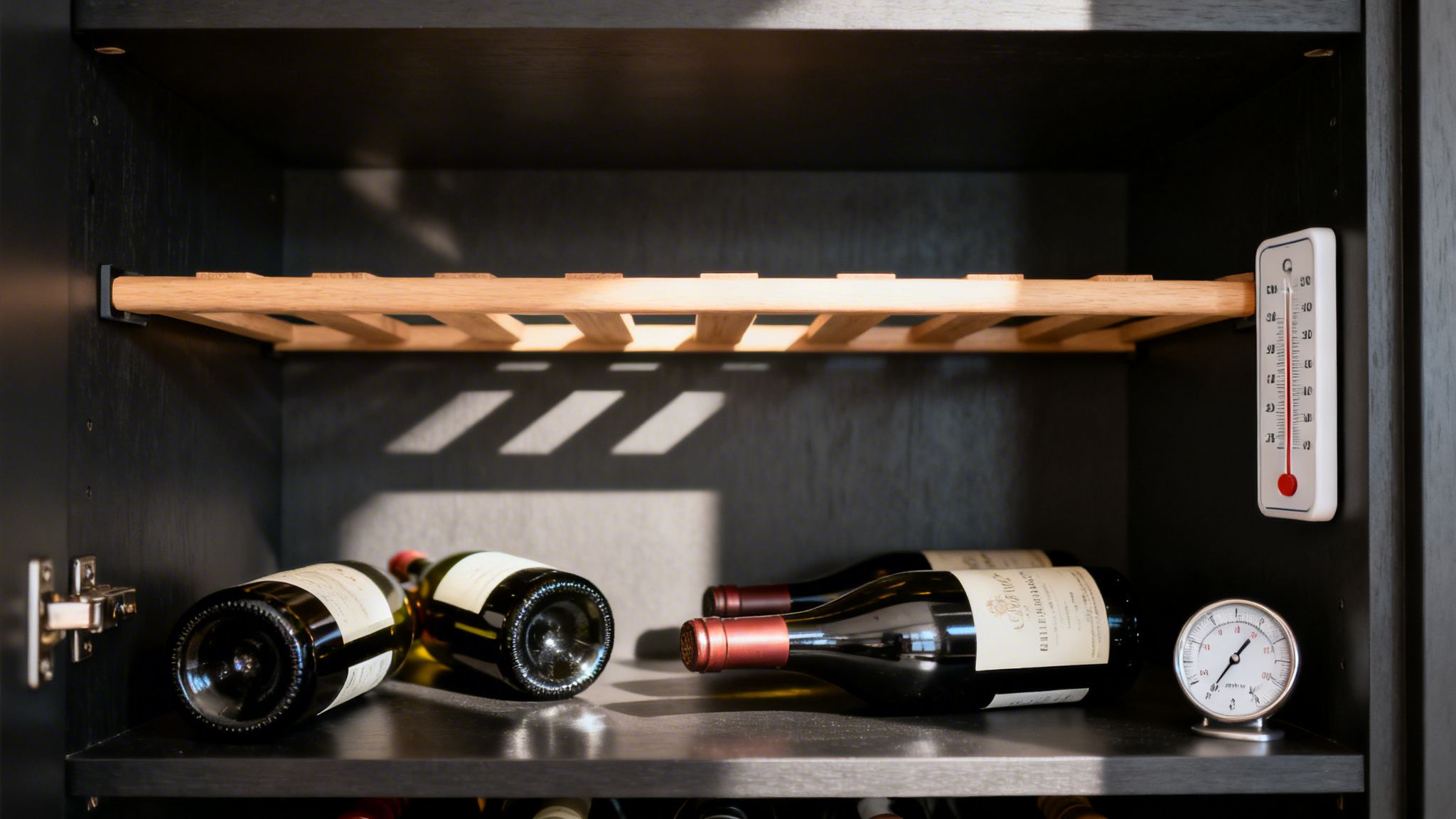
Learning how to properly store wine at home is about creating a sanctuary where it can mature gracefully. Think of wine as a living thing—because it is. It's full of delicate organic compounds that react strongly to their environment. When those conditions are wrong, the compounds break down, leaving you with a "cooked," oxidized, and frankly, disappointing wine when you finally pop the cork.
Whether you have three bottles or three hundred, the science is the same. Your goal is to shield your wine from its four sworn enemies: heat, light, vibration, and oxygen. Getting this right means a bottle you open next week will taste perfectly fresh, while one you save for a decade develops those beautiful, complex notes that collectors live for.
The 5 Golden Rules of Wine Storage
To really nail down proper storage, let's look at the "why" behind each rule. These aren't just polite suggestions; they are the bedrock of preserving every single bottle in your collection.
The table below breaks down the five essential factors for creating the perfect wine storage environment. Think of these as the non-negotiables for keeping your collection safe and sound.
| Factor | Ideal Condition | Why It Matters |
|---|---|---|
| Temperature | A steady 55°F (13°C) | Heat is wine's #1 enemy. It rapidly accelerates aging, creating "cooked" or stewed flavors. Consistency is key. |
| Humidity | 50-70% | Prevents corks from drying out, shrinking, and letting in oxygen, which leads to spoilage (oxidation). |
| Light | Complete darkness | UV rays from sunlight or even household bulbs can degrade the compounds that give wine its aroma and flavor. |
| Vibration | Total stillness | Constant movement, even from an appliance, disturbs sediment and can negatively alter a wine's texture and taste. |
| Orientation | Horizontal (on its side) | Keeps the wine in constant contact with the cork, ensuring it stays moist and maintains a tight seal. |
Getting these five things right is truly the foundation of any successful wine storage strategy, whether you're using a simple rack or a custom-built cellar.
The most critical rule? Stick to a stable 55°F (13°C). Industry experts agree that even a 10°F swing can speed up the aging process by up to four times, which can push corks out or let damaging oxygen seep in. For anyone living in a warm climate like Naples, this means your regular kitchen fridge is out. Its low 20-30% humidity will dry out a cork in as little as two to three months.
Your Kitchen Is a Danger Zone for Wine
That decorative wine rack on your kitchen counter may look nice, but it's one of the worst places you could possibly store wine. Think about it: the kitchen has constant temperature spikes from the oven and stove, bright light, and vibrations from the refrigerator, dishwasher, and microwave. It's a battlefield for a delicate bottle.
Even your main refrigerator is a poor substitute for proper storage, especially for more than a few days. While it's cold, it’s also designed to have very low humidity, which is great for produce but terrible for corks. The constant hum and vibration from the motor also subtly agitate the wine over time, harming its structure.
For serious collectors who want to display their collection without compromising its integrity, there are far better options. Modern enclosures built with specialized materials like ultra-clear, UV-protective glass offer a stunning and perfectly safe way to showcase your bottles.
Why Temperature Is The One Thing You Can’t Get Wrong
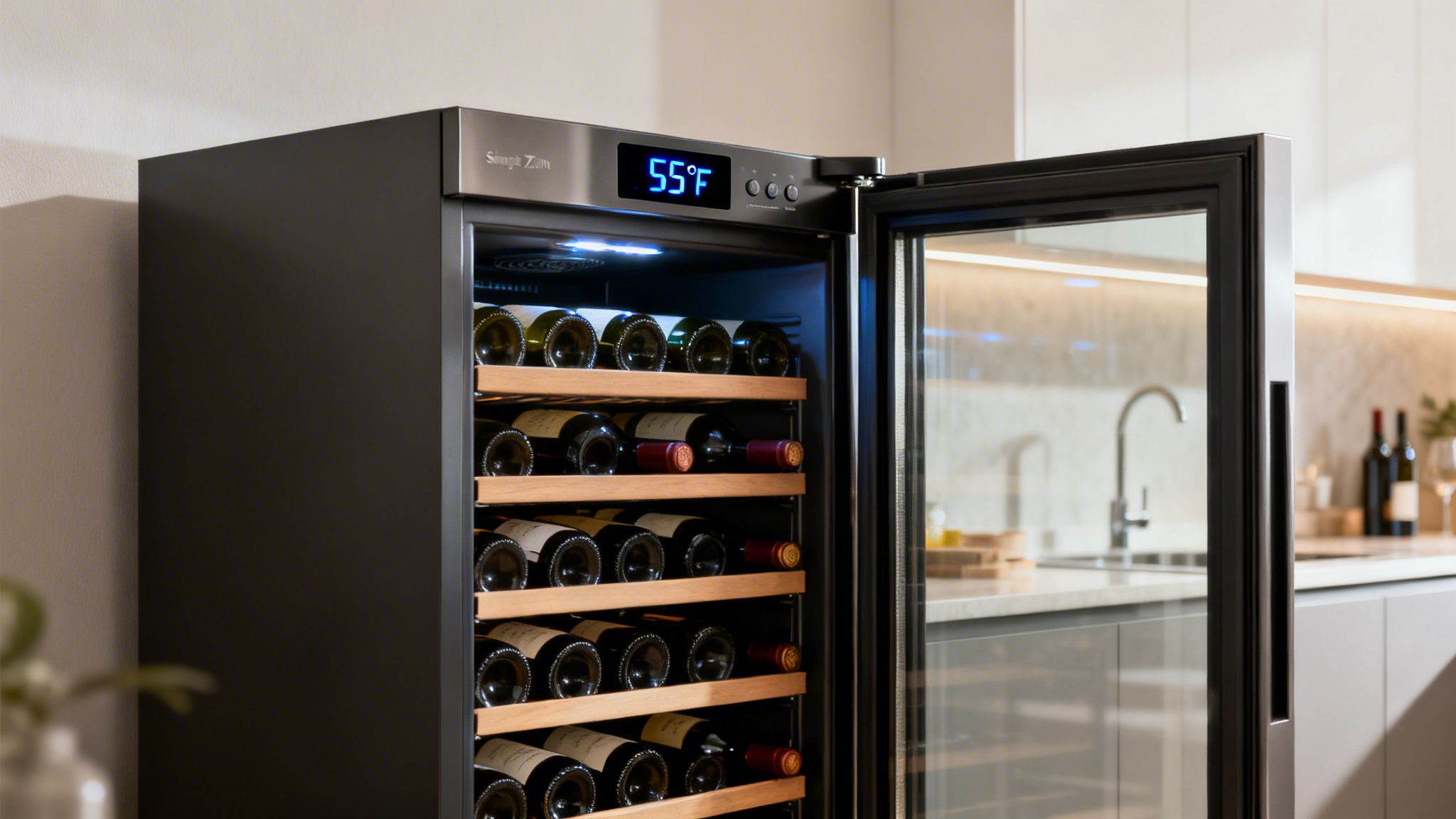
If there's one piece of advice I could give every wine lover, it's this: temperature is king. But it’s not just about keeping wine cool—it's about keeping it stable. Wild temperature swings are the single fastest way to destroy a beautiful bottle of wine, long before you ever get a chance to open it.
Think about what happens inside the bottle. When the air around it warms up, the wine expands. When it cools down, the wine contracts. This constant push-and-pull on the cork slowly but surely breaks its seal, letting in tiny, destructive puffs of oxygen. That’s how a vibrant, promising wine turns tired and flat.
Finding The Magic Number
For anyone serious about aging wine, whether for a year or a decade, the magic number is 55°F (13°C). This is the gold-standard cellar temperature that lets a wine mature slowly and gracefully, developing all those wonderful, complex notes we look for.
Now, is that the only temperature that works? Not exactly. You have some wiggle room. Any stable temperature between 45°F (7°C) and 65°F (18°C) is generally considered safe.
Just know that the warmer you get, the faster the wine will age. This can be fine for a bottle you plan on opening in the next year or two, but it’s a critical detail for that special-occasion bottle you’re saving. The science is pretty clear on this: for every 18°F (10°C) rise in storage temperature, a wine’s aging process speeds up by about 50%. Your prized twenty-year Bordeaux could be toast in less than five.
The real takeaway here is that consistency beats the perfect number. A wine held at a steady 65°F will be in much better shape than one that yo-yos between 50°F and 70°F every day.
Places in Your Home That Will Ruin Your Wine
Knowing the right temperature is only half the battle. You also need to know which spots in your home are secret wine killers. This is especially true here in Southwest Florida, where heat and humidity are a constant challenge.
Stay away from these common danger zones:
- The Kitchen Fridge: Your everyday refrigerator is a terrible place for wine. It's too cold (usually under 40°F) and the lack of humidity will dry out corks, guaranteeing oxidation.
- The Garage or Attic: These are the absolute worst offenders. A Florida garage in August can easily hit temperatures that will literally cook your wine in a few hours, leaving it tasting flat and stewed.
- On Top of the Refrigerator: It seems convenient, but the coils on your fridge constantly vent warm air, creating a hot spot that’s murder on a bottle of wine.
- Next to a Sunny Window: Direct sunlight is a double-whammy. The heat spikes the temperature, while UV rays actively break down the delicate compounds that give wine its flavor and aroma.
Protecting your collection from these threats from day one is the smartest move you can make. For those who want both impeccable climate control and a striking display, looking into custom-built wine storage products is the ultimate solution. These enclosures are engineered to create the perfect environment, all while transforming your wine collection into a showpiece.
The Importance of Humidity, Light, and Stillness
Getting the temperature right is a great start, but it's only part of the story. If you really want to protect your wine collection, you have to master the other three critical factors: humidity, light, and stillness. Think of these as the finer details that separate a casual enthusiast from a serious collector.
Ignoring them is like buying a sports car and putting cheap tires on it—you’re just not going to get the performance you paid for. Let’s break down why each of these is a non-negotiable for anyone serious about aging wine properly.
Why Humidity Is the Cork’s Best Friend
This is the one most people forget, and it's a costly mistake. For any bottle sealed with a natural cork, the right humidity is everything. You're aiming for a relative humidity between 60% and 70%. That’s the magic number that keeps the cork perfectly moist and plump, maintaining a tight seal against the glass.
What happens when it's too dry? The cork starts to dry out from the top, turning brittle and shrinking. It might only be a tiny change, but it’s enough to break that airtight seal. Once that happens, oxygen—wine's mortal enemy—creeps in and oxidation begins. Your beautiful, aging wine starts to spoil.
This isn't a small problem; it's a catastrophic failure point. I’ve seen it happen time and again. A humidity level of 60-70% is the unsung hero that keeps corks swollen enough to block 95% of air from getting in. Let the humidity drop below 50%, and a cork can shrink by 10-20% in just three months. That can easily ruin a quarter of your collection in a single year—a classic flaw when people just use a kitchen rack.
Now, you don't want to go overboard, either. Humidity creeping above 80% invites mold and mildew to the party. While it won't spoil the wine inside, it will destroy your labels and can give your whole storage space a musty funk.
Getting this balance right is key. Understanding the role of humidifiers and dehumidifiers is a great first step to creating that perfect microclimate for your bottles.
Shield Your Wine from the Light
Ever notice how red wine almost always comes in dark green or brown bottles? That’s not a style choice; it’s a suit of armor. Light, especially the UV rays in sunlight, is incredibly destructive to wine.
Prolonged exposure causes a condition wine pros call "light-strike." It creates some truly nasty aromas, often described as smelling like wet cardboard or boiled cabbage. UV rays literally excite and break down the delicate compounds in the wine, changing its flavor and aroma profile for the worse. And it's not just sunlight—strong indoor lighting, especially fluorescent bulbs, can do the same damage over time.
Your wine’s ideal home is in the dark.
- Keep it away from windows. Never store wine where sunlight can hit it, even if the bottles are in a rack.
- The kitchen is a danger zone. The constant, bright lights make it one of the worst places for long-term storage.
- Find a dark, quiet spot. A cool interior closet, a basement, or a dedicated wine cabinet with a solid or UV-protected door is what you need.
If you love the idea of displaying your collection, you don't have to hide it away entirely. You can have the best of both worlds with specialty glass that provides both UV protection and crystal clarity—perfect for building a custom cellar or enclosure that’s as beautiful as it is functional.
Let Your Wine Rest in Peace
The final piece of the puzzle is stillness. It sounds a little strange, but your wine needs to rest undisturbed. Constant vibration, even subtle shaking, can be surprisingly damaging over time.
Think about the sources of vibration in your home: the hum of a refrigerator, the rumble of a washing machine, or even a powerful stereo system. These micro-vibrations constantly agitate the wine. In older reds, this keeps the fine sediment from settling naturally at the bottom, which can make for a gritty, unpleasant texture when you finally pour a glass.
Some experts also argue that the constant movement speeds up the chemical reactions in the wine, forcing it to mature too quickly and lose its delicate complexity. A bumpy car ride home from the store won’t hurt a bottle, but years of persistent vibration absolutely will.
The fix is simple: find a spot for your collection that's quiet, stable, and away from the daily thrum of household appliances. Let your wine sleep.
Finding Your Ideal Home Storage Solution
Knowing the "why" behind proper wine storage is crucial, but the "how" is where the cork meets the bottle. You don't need a limestone cave beneath your house to keep your wine happy. The right setup really just depends on the size of your collection, what you’re willing to spend, and how long you plan on aging those special bottles.
Let’s walk through the options, from clever and inexpensive tricks to seriously impressive systems.
This quick visual guide breaks down the core environmental factors. Think of it as a cheat sheet for scouting the perfect spot in your home.
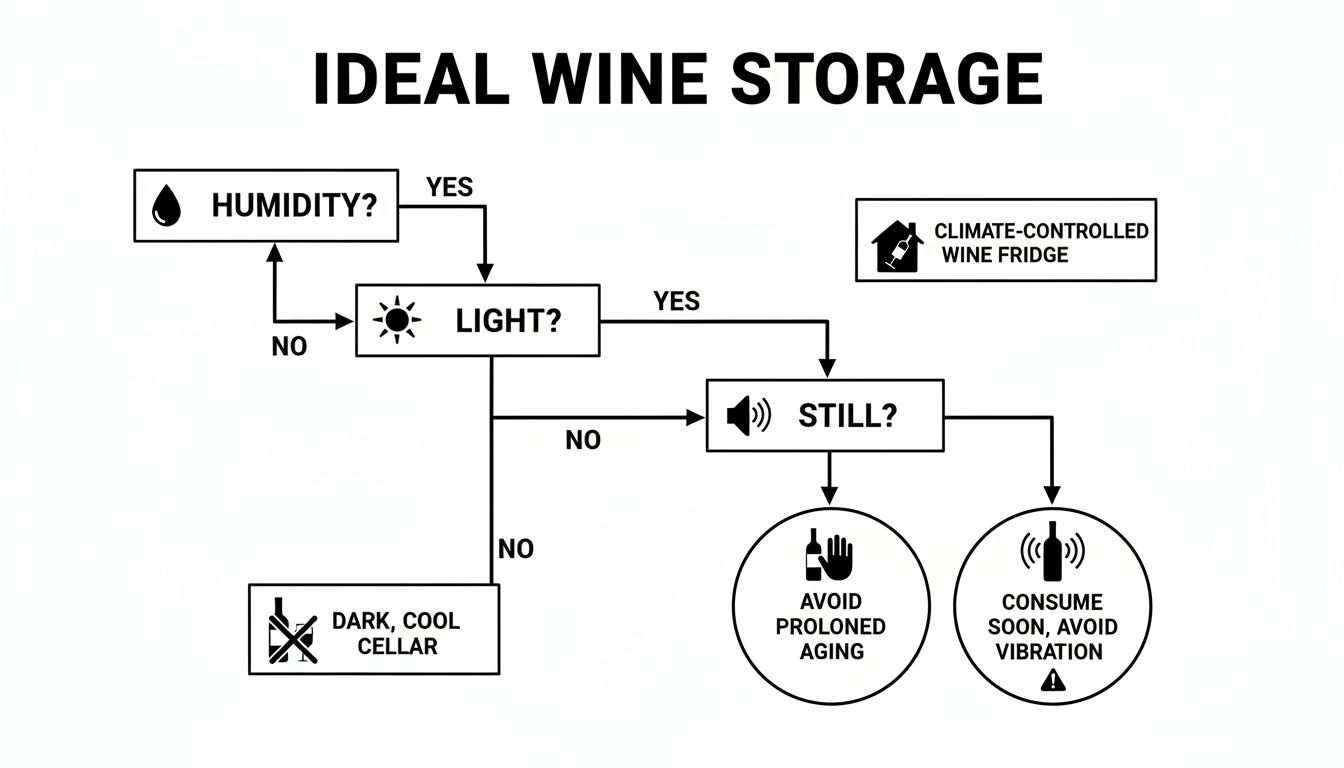
As you can see, the goal is a trifecta of success: stable humidity, darkness, and stillness. Nail those three, and you're well on your way to a perfectly preserved bottle.
Starting Simple with Smart DIY Solutions
If you're just dipping your toes into collecting—maybe you have a dozen or two bottles you plan to drink within the year—there's no need to overcomplicate things. Your mission is to find the coolest, darkest, and most stable corner of your home.
Often, this is an interior closet on the lowest floor, away from heat-soaking exterior walls. I've seen fantastic makeshift cellars in the back of a pantry or a forgotten closet under the stairs. A north-facing closet on a concrete slab is even better; that slab acts as a natural insulator against temperature swings.
Once you’ve found your spot, a couple of small upgrades will make a world of difference:
- Get a basic wine rack. Laying bottles on their side is non-negotiable for anything with a cork. A simple wood or metal rack keeps the corks moist and prevents them from drying out, which is far better than a cardboard box that can get musty.
- Buy a digital thermometer/hygrometer. This is your best friend. For just a few bucks, this little gadget lets you keep a close eye on the environment, making sure it stays below 65°F and ideally above 50% humidity.
This approach is the perfect starting point. It's a massive improvement over the kitchen counter without breaking the bank.
Graduating to a Dedicated Wine Cooler
Once your collection starts to grow, or you find yourself buying wines you want to age for a few years, it's time to level up. A dedicated wine cooler (or wine fridge) is an appliance built specifically to create a perfect little pocket of wine-loving stability. It gives you precise control that no closet can match.
As you start shopping, you’ll find two main styles:
- Single-Zone Coolers: These maintain one steady temperature throughout. They’re great if you're focused on long-term aging for all your bottles or if you mainly drink reds.
- Dual-Zone Coolers: These are a game-changer. They give you two separate, independently controlled temperature zones. This means you can keep your reds aging at a perfect 55°F while chilling your whites and rosés to a ready-to-serve 45°F in the other.
To help you decide, let's compare the most common home storage methods.
Comparing Home Wine Storage Options
Choosing the right storage involves balancing your collection's needs with your budget and space. This table breaks down the pros and cons of everything from a simple rack to a dedicated cooler, giving you a clear picture of what might work best for you.
| Storage Method | Best For | Cost Estimate | Pros | Cons |
|---|---|---|---|---|
| DIY Closet/Pantry Rack | Small collections (<30 bottles) for short-term storage (under 1 year). | $25 – $150 | Inexpensive and easy to set up. Uses existing space. | Lacks active temperature and humidity control. Vulnerable to seasonal fluctuations. |
| Single-Zone Wine Cooler | Growing collections (30-100 bottles) and long-term aging of one wine type (e.g., reds). | $300 – $1,500 | Precise temperature control. Protects from light and vibration. Compact. | Limited flexibility for serving different wine types at their ideal temperatures. |
| Dual-Zone Wine Cooler | Serious enthusiasts with mixed collections of reds and whites. | $600 – $3,000+ | Stores different wines at their optimal aging or serving temperatures. High convenience. | More expensive and consumes more energy than single-zone units. |
Ultimately, the right choice is the one that best protects your investment and fits your lifestyle. A wine cooler is often the sweet spot for most collectors, offering professional-level protection without major construction.
A quality wine cooler is more than just a cold box; it’s an insurance policy for your collection. Prioritize models with UV-protected glass doors and a vibration-dampening compressor to keep the motor’s hum from ruining your wine’s delicate structure.
Once you have your storage dialed in, keeping track of everything becomes the next challenge. A good inventory system, like a Wine Spirits Collection Inventory, is a lifesaver. It helps you know what you have, where it is, and when it’s at its peak, so you never let a great bottle go past its prime.
For many, a wine cooler is the perfect long-term solution. But what happens when your collection outgrows even the largest cooler? When you're curating hundreds of bottles or investing in high-value vintages, it might be time to think about a more permanent and integrated feature. Learning about custom glass wine enclosures can show you how to transform that impressive collection into a stunning, perfectly preserved centerpiece of your home.
When to Upgrade to a Custom Wine Cellar
For a lot of us, a good wine cooler feels like the finish line for home storage. It’s reliable, it protects our bottles, and it gives us peace of mind. But if you’re truly passionate about collecting, there comes a day when even the biggest cooler starts to feel a bit tight. That’s when the dream of something more—something truly special—starts to creep in.
This is the point where you begin thinking about a dedicated wine cellar or a striking glass enclosure. It’s more than just a need for extra shelf space. It’s a sign that your collection has evolved from a casual hobby into a curated asset, something you’re proud of and want to integrate beautifully into your home. Recognizing when you've hit that turning point is the first step toward building a storage solution that lives up to your passion.
Your Collection Has Outgrown Its Home
The most obvious sign is usually the one staring you right in the face: you're out of room. You bought the cooler to protect your wine, but now you’re stashing “overflow” bottles in a dark closet or a corner of the pantry—completely defeating the purpose.
When you find yourself playing a constant game of bottle Tetris every time you bring home a new find, it’s time for a change. This isn't just an inconvenience; it’s a risk to the wine you’ve worked so hard to collect. In my experience, a collection of 150 bottles or more is often the magic number where the benefits of a real cellar become impossible to ignore.
At that scale, you’re not just storing wine anymore. You’re managing an inventory. A custom cellar makes that job infinitely easier and safer.
You Are Investing in High-Value Wines
The other big push toward an upgrade is the price tag on your bottles. As you start acquiring investment-grade wines—think first-growth Bordeaux, Grand Cru Burgundy, or rare Napa Cabs—your tolerance for risk drops to zero. A single one of those bottles can easily be worth more than the fridge it’s sitting in.
When you're dealing with bottles of that caliber, "good enough" storage is a recipe for heartbreak. You need flawless, unwavering protection that a consumer-grade cooler just can't guarantee.
A professionally built cellar offers a level of security and precision that’s on a whole other level. These systems use commercial-grade cooling units, airtight seals, and sophisticated humidity controls to create a perfect, stable environment. It's about giving your most prized assets true archival conditions, ensuring they not only survive but thrive, maximizing their value and guaranteeing they’ll be perfect when that special occasion arrives.
You Want to Make a Statement
Let’s be honest, a wine collection tells a story—about your travels, your tastes, and your passions. Hiding hundreds of beautiful bottles away in a dark closet or a boring black box just feels wrong. A custom wine cellar or a modern glass enclosure turns that collection into the stunning centerpiece it deserves to be.
It becomes a piece of functional art, instantly elevating the look and feel of your home. Picture a floor-to-ceiling glass wall showcasing your collection, all perfectly organized and lit with soft, UV-safe lighting. It’s a guaranteed conversation starter and an incredible focal point when you entertain. This is how you move your collection from a hidden hobby to a celebrated feature of your home.
Benefits of a Professionally Designed System
Going for a custom cellar is about creating the ultimate environment for your wine, something a standalone appliance could never achieve. The advantages are huge:
- Perfect Climate Control: A dedicated cellar uses a specialized cooling system to hold a rock-solid temperature, ideally 55°F (13°C), with almost no fluctuation.
- Optimal Humidity Management: These systems actively manage humidity to keep it in that sweet spot of 60-70%, which keeps corks from drying out but prevents mold from forming on your labels.
- Total Darkness and UV Protection: Custom designs use UV-blocking glass and solid doors to completely shield your wine from light damage, protecting its delicate flavors.
- Vibration Isolation: Cellars are built for stillness. By isolating the space from footsteps, appliances, and other household vibrations, you let the wine rest peacefully, which is critical for graceful aging.
On top of all that, a well-designed cellar can seriously boost your home’s resale value, especially for luxury buyers and fellow wine lovers. If you're curious about how high-end glass installations can completely transform a room, you can learn more about making your home feel luxurious with custom glass. A wine cellar is the pinnacle of this concept, blending sophisticated design with a deep appreciation for the art of collecting. It’s the final step in your journey—graduating from simply protecting your wine to truly celebrating it.
Your Top Wine Storage Questions, Answered
Once you get the fundamentals down, you'll still run into those little "what if" scenarios. It's only natural. Let's tackle some of the most common questions I hear from fellow wine lovers so you can store your bottles with complete peace of mind.
Ever bring a bottle home from a trip, open it right away, and find it tastes… flat? You're not imagining things. It's called "bottle shock," and it’s a temporary condition caused by all the sloshing and vibration from the journey. Just give the bottle a little time to recover. A few days to a week resting quietly on its side in a cool, dark spot is all it needs to get its groove back.
Can I Store Red and White Wine Together?
Yes, absolutely. This is probably the number one question I get, and the answer is simple. While we serve reds and whites at very different temperatures, they age beautifully at the exact same one.
That magic number for long-term storage is 55°F (13°C). It’s the sweet spot for everything from a big, bold Cabernet to a crisp, delicate Sauvignon Blanc. You can worry about chilling the whites or letting the reds breathe an hour before you uncork them. Until then, they can happily live together in the same cooler or cellar space.
What if I Only Have Screw Cap Bottles?
The wine world has come to appreciate the reliability of screw caps, and they do change one rule of the game: you don't have to store them on their side to keep a cork moist. So, technically, you can stand them up without hurting the wine.
But here’s a tip from experience: most people still store them horizontally. Why? It’s simply a much more space-efficient way to organize your collection. Laying every bottle down, regardless of the closure, creates a uniform system that’s far easier to manage.
Remember, the most important rules—cool temperature, darkness, and stillness—apply just as much to screw cap wines. The cap prevents oxidation, but it won't protect the wine from being cooked by heat or damaged by light.
How Long Can I Keep Wine in a Regular Fridge?
Think of your kitchen refrigerator as a short-term parking spot, not a long-term home. A few days is fine. A week is pushing it.
There are two big issues with using a regular fridge for wine:
- It’s too cold. Most kitchen fridges are set below 40°F. This is great for keeping lettuce crisp but far too cold for wine, potentially stunting its aging process.
- It’s way too dry. The air inside a fridge has very low humidity. Over time, this will dry out a natural cork, allowing oxygen to seep in and spoil your wine.
If you plan on holding onto a bottle for more than a month, it deserves a better place to rest.
What Are Those Crystals at the Bottom of My Bottle?
Found some little crystals clinging to the cork or sitting at the bottom of a chilled white? Don't pour it out! Those are affectionately known as "wine diamonds," or tartrates. They are a totally harmless, natural byproduct that forms when a wine gets cold.
They might look a bit like glass, but they're tasteless and don't impact the wine's quality one bit. In fact, some winemakers see them as a sign of a high-quality, minimally processed wine. Just pour the wine carefully, leaving the little "diamonds" behind in the bottle.
Ready to stop worrying about your collection and start showing it off in a perfectly controlled environment? AmeriGlass Industries designs and installs stunning custom glass wine enclosures that offer the ultimate protection and aesthetic appeal for your home in Naples or Southwest Florida. Protect your investment and transform your collection into a work of art by visiting AmeriGlass Industries online to schedule your free consultation.