
If your shower glass looked spotless when it was installed but now seems cloudy no matter how often you wipe it, you’re dealing with a problem almost every Southwest Florida homeowner runs into. The glass isn’t “getting old.” It’s collecting a stubborn mix of soap residue, hard water minerals, humidity, and cleaning damage.
That matters because the typical methods of combating soap scum are flawed. They scrub harder, try harsher sprays, and still end up with dull glass. The better approach is to stop buildup before it bonds to the surface.
Knowing how to prevent soap scum on shower glass comes down to three levels of defense. First, remove water before it dries. Second, clean in a way that protects the glass instead of wearing it down. Third, if you want the closest thing to a permanently spotless shower, start with professional-grade protection and the right glass.
Understanding Why Your Shower Glass Gets Cloudy
You finish a shower, the glass looks clear, and by the next day it already has a dull film again. In Southwest Florida, that usually means two things are working together. Hard water is drying on the surface, and high humidity is slowing evaporation just enough to leave more residue behind.
Cloudiness starts small. A thin layer of water stays on the glass after each shower. As that water dries, it leaves behind soap ingredients, body oils, and mineral deposits. Repeat that cycle for a few days, and the film gets harder, chalkier, and more difficult to remove.
What homeowners call soap scum is rarely just soap. It is a layered deposit. Part of it is the waxy residue from bar soap and body wash. Part of it is mineral scale from the water supply. Once those materials dry together, they cling to the glass and make routine wiping much less effective.
The glass itself matters too. New glass can look perfectly smooth, but under magnification it has slight texture. If the surface gets scratched by abrasive pads or harsh cleaners, buildup gets even more places to hold on. That is one reason I tell homeowners to protect the surface early instead of trying to restore it later with stronger chemistry. A non-ammoniated glass cleaner is a safer choice for routine care than aggressive products that can leave the glass looking worse over time.
Southwest Florida bathrooms make the problem more stubborn for a second reason. Moisture hangs in the room longer. That extended damp period gives minerals and soap residue more contact time with the glass before everything fully dries. Frameless enclosures also show every spot, streak, and etched patch, so buildup becomes visible sooner than it did on older textured or framed doors.
Here is the trade-off homeowners need to understand. Once buildup has bonded to the glass, cleaning becomes a restoration job, not simple maintenance. If the surface has already been etched, no spray bottle will bring back that factory-fresh clarity. Good daily habits help, but long-term results depend on keeping the glass surface in good condition and choosing the right products from the start. That is the same approach we recommend in our shower door maintenance guide for Florida homeowners.
The goal is not to keep fighting the same haze every weekend. The goal is to stop minerals and soap residue from setting up on the glass in the first place.
Your Daily Defense Against Soap Scum
Step out of the shower in Southwest Florida, and the glass can already be starting to haze before the room cools down. Hard water dries fast on the surface, humidity lingers, and that film gets a head start if the glass stays wet.
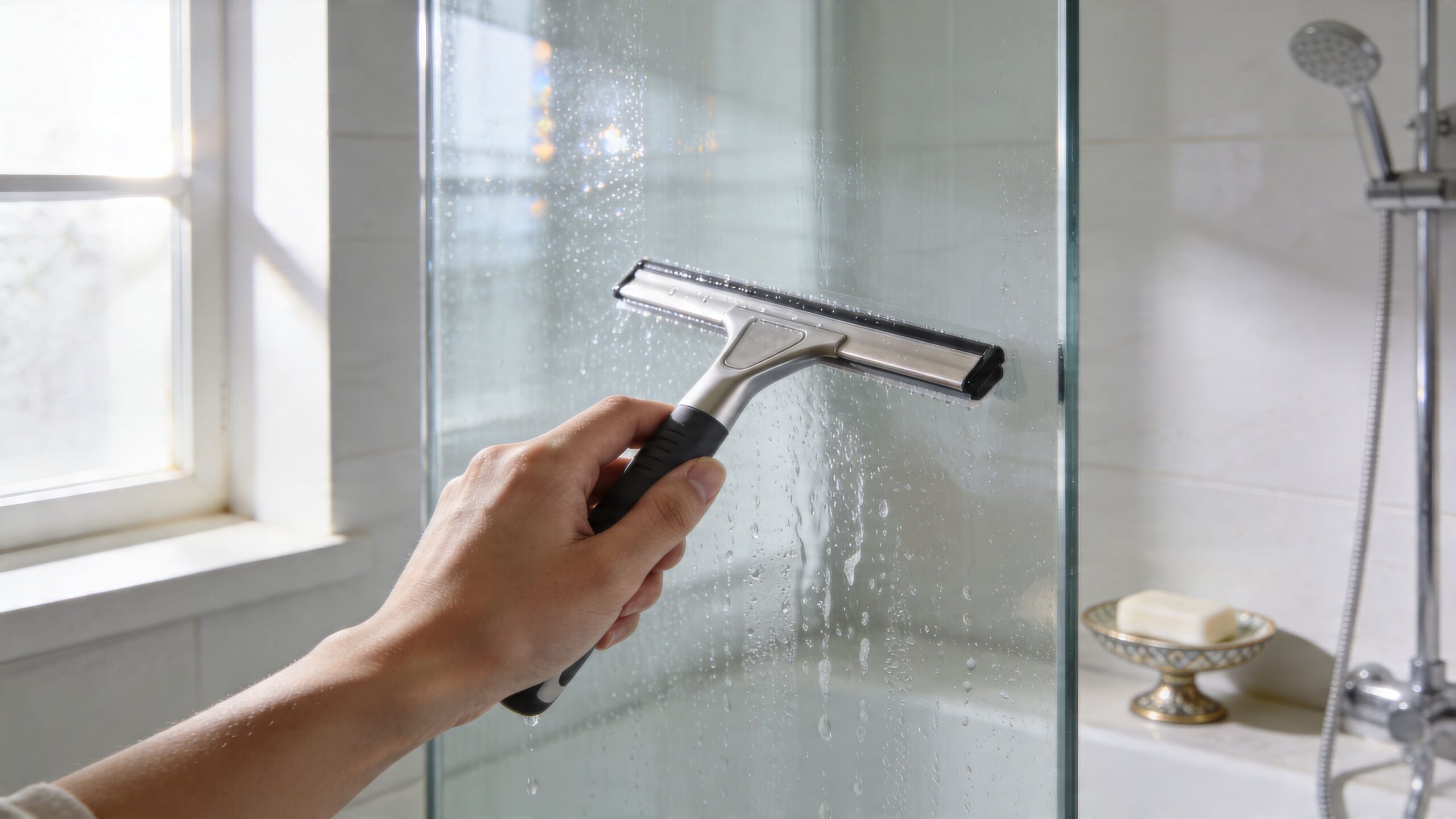
Use a silicone squeegee every time
If you want one daily habit that gives the best return, this is it. Hotels rely on squeegees for the same reason glass pros do. They remove the water before minerals and soap residue can dry into a visible film. Industry guidance collected in hotel shower door cleaning practices also points to daily squeegeeing, ventilation, and lower-residue products as the routines that cut cleanup time and slow buildup.
Technique matters more than force.
- Start at the top edge.
- Pull straight down with light, even pressure.
- Wipe the blade after every pass or two.
- Finish the fixed panel, not just the door.
Done right, the whole job takes about a minute. On coated glass, that minute protects the coating. On uncoated glass, it buys time before minerals start bonding to the surface.
Vent the room long enough to dry the enclosure
A fan helps, but only if it runs long enough. Leave it on after the shower so moisture can clear instead of settling back onto the glass, metal, and seals.
In Florida bathrooms, I also tell homeowners to crack the door or open the enclosure if the layout allows it. Trapped humidity is part of the problem. Air movement shortens the time water sits on the glass, and less contact time usually means less spotting.
Change the products that leave residue behind
Some showers get dirty faster because of what is used inside them. Bar soaps and heavy body products often leave more film than liquid wash, especially on clear frameless glass where every streak shows.
Keep a microfiber cloth nearby for quick touch-ups, and use a cleaner made for routine glass care, not a harsh formula meant to cut neglected buildup. If you are comparing options, this guide to non-ammoniated glass cleaner is a good reference, especially if your enclosure has protective treatments or specialty finishes.
Daily care has limits, and that is the trade-off. Squeegeeing and ventilation slow soap scum. They do not change the surface of the glass itself. If you want a system that holds up better in hard water, pair these habits with the maintenance steps in this shower door maintenance checklist for Florida homeowners.
A Weekly Maintenance Plan for Lasting Clarity
Weekly maintenance is where a clear shower either stays easy or starts turning into a restoration job. In Southwest Florida, hard water and humidity shorten the window. Miss a week or two, and light film can start bonding to the glass instead of wiping off cleanly.
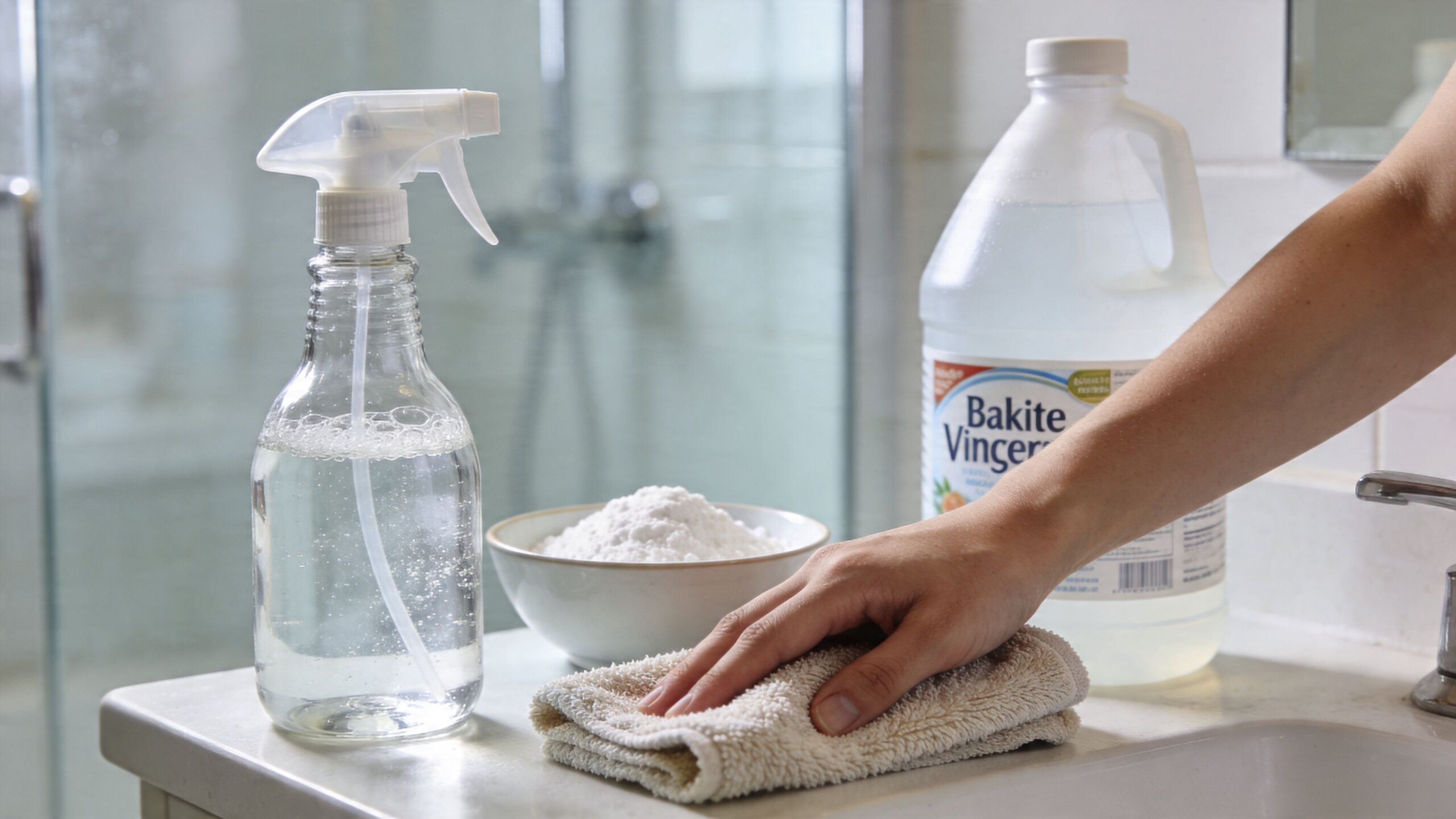
A simple weekly routine that’s safe for glass
For routine buildup, keep the process mild and consistent. A basic mix of white vinegar and water can loosen fresh mineral film before it hardens into a cloudy layer. Spray the glass, give it a short dwell time, wipe with microfiber or a non-abrasive sponge, then rinse and dry the panel completely.
The trade-off is simple. Mild cleaners are safer for the glass and any existing surface treatment, but they only work well on fresh residue. If the glass still looks dull after a proper cleaning, or it feels rough to the touch, you are usually dealing with bonded minerals or etching, not just soap scum.
Use this sequence once a week:
- Start with dry debris removal: Wipe away dust, hair, and grit first so nothing drags across the glass.
- Apply cleaner across the full panel: Edge-to-edge coverage matters more than chasing visible spots.
- Wipe with microfiber: Soft materials clean well without putting fine scratches into the surface.
- Rinse thoroughly: Leftover cleaner can dry into its own haze.
- Dry the glass fully: A final microfiber pass or squeegee keeps new spots from forming as the panel air-dries.
What not to use on shower glass
I see more long-term damage from aggressive cleaning than from neglect. Powder cleansers, scrub pads, and harsh acidic products can leave fine scratches or dull the surface. Once that happens, mineral deposits grab faster and the glass loses that crisp, clear look.
This matters even more on frameless enclosures, where every mark shows. The same rule applies to fixed splash guards and stationary glass panels. If it is decorative glass in a wet area, treat it like a finish surface, not like tile.
The shower glass that stays clearest over time is usually the glass that gets cleaned gently and consistently.
Temporary hydrophobic sprays can help, but prep decides the result
Consumer water-repellent sprays can improve beading for a while. They are a short-term maintenance product, not a permanent answer.
Application guides for these products consistently emphasize surface preparation. If residue, soap film, or minerals are still on the glass, the spray goes over contamination instead of bonding evenly to the panel. That is one of the main reasons homeowners get streaking, patchy water beading, or disappointing durability.
That’s also why I tell clients not to judge these products too quickly. The product may be fine. The glass often was not clean enough before application.
This walkthrough gives a visual overview of a typical cleaning process and can help you judge whether your glass is ready for a temporary treatment:
Weekly maintenance is about protecting the surface
Good weekly care should not require heavy scrubbing. If you need repeated passes, stronger chemistry, or a lot of force just to get partial improvement, the glass is telling you something. At that point, maintenance alone is no longer the best tool.
That is usually the line between ordinary cleaning and a more permanent solution. In this climate, the homeowners who spend the least time fighting soap scum are usually the ones who stop relying on DIY cleaning alone and start protecting the glass itself.
The Ultimate Solution Pro Coatings and Advanced Glass
A shower can look clean on Monday and start hazing over again by Friday in Southwest Florida. Hard water dries on the glass fast, humidity slows evaporation, and any weak spot in the surface gets exposed quickly. Homeowners who want a shower that stays clear with less work usually need more than better cleaning habits. They need better glass protection.
What a professional coating actually does
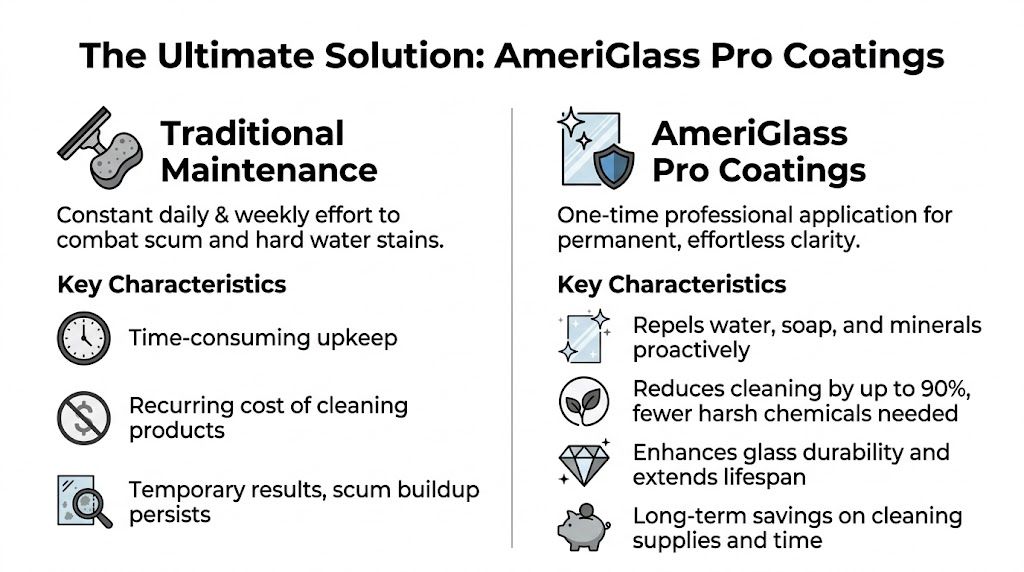
A professional hydrophobic coating changes how the glass surface handles water, soap residue, body oils, and mineral deposits. Instead of letting that mix spread out and dry tight to the panel, the coating helps water release more cleanly so buildup has less to grab onto.
That matters because prevention always beats restoration. Once minerals and soap film sit long enough, routine cleaning gets harder, stronger products become tempting, and the risk of scratching or dulling the glass goes up.
As noted earlier, manufacturers of professional-grade coatings report major reductions in soap scum adhesion, limescale buildup, and cleaning time when the product is applied correctly and maintained with the right cleaners. In practice, the biggest benefit is simple. The glass stays easier to wipe down, and residue is less likely to bond aggressively to the surface.
Why coatings matter more in Southwest Florida
This climate is rough on shower glass. Hard water leaves mineral spotting. Warm, damp air keeps surfaces wet longer. Bathrooms with limited airflow make the problem worse.
I see the same pattern all the time. Homeowners scrub harder, switch products, and spend more time chasing haze that keeps coming back because the surface itself is still unprotected. A coating does not make the shower maintenance-free, but it changes the workload. Cleaning shifts from stain removal to light upkeep.
Comparing the long-term options
Here’s the practical trade-off:
| Approach | What it does well | Where it falls short |
|---|---|---|
| Daily squeegee and ventilation | Low cost, immediate improvement, easy habit to build | Results depend on consistency |
| Weekly manual cleaning | Removes fresh film before it hardens | Does not change how glass collects residue |
| DIY hydrophobic sprays | Helps with short-term water beading | Shorter life, uneven results if prep is imperfect |
| Professional coating | Creates a longer-lasting protective barrier and reduces bonding of soap and minerals | Higher upfront cost |
| Specialized glass | Builds resistance into the glass itself | Best selected during a new install or replacement |
The cheapest option upfront is rarely the lowest-maintenance option over time.
Built-in protection with advanced glass
For new shower projects, the best setup often starts before installation. Some specialty glass products are manufactured with a smoother, more resistant surface that helps reduce staining and soap scum adhesion from day one. That built-in protection is attractive in a coastal Florida home where moisture exposure is constant and owners want less dependence on chemical cleaning.
Material choice also affects how clean the enclosure looks even when it is spotless. Standard glass can carry a green cast that hides some residue but also dulls the overall appearance. Low-iron glass looks brighter, clearer, and more refined, which is why many homeowners pair it with protective treatment from the start. If you are comparing materials for a remodel, review the benefits of ultra-clear shower glass before you finalize the enclosure.
What works best in the real world
For an existing shower, professional coating is usually the most practical permanent upgrade if the glass is still in good enough condition to treat. For a new shower, better results usually come from combining quality glass selection with protection applied at the beginning.
Harsh chemical cleaning is the expensive path in disguise. It takes more labor, has to be repeated, and can shorten the life of the finish you are trying to preserve.
The cleanest showers over the long run usually have two things in common. A protected surface, and a maintenance routine gentle enough to keep that protection intact.
When to Call the Professionals at AmeriGlass
There are two points where professional help makes sense. The first is when your current shower glass already looks dull, rough, or permanently spotted. The second is when you’re planning a new enclosure and want to avoid this problem from day one.
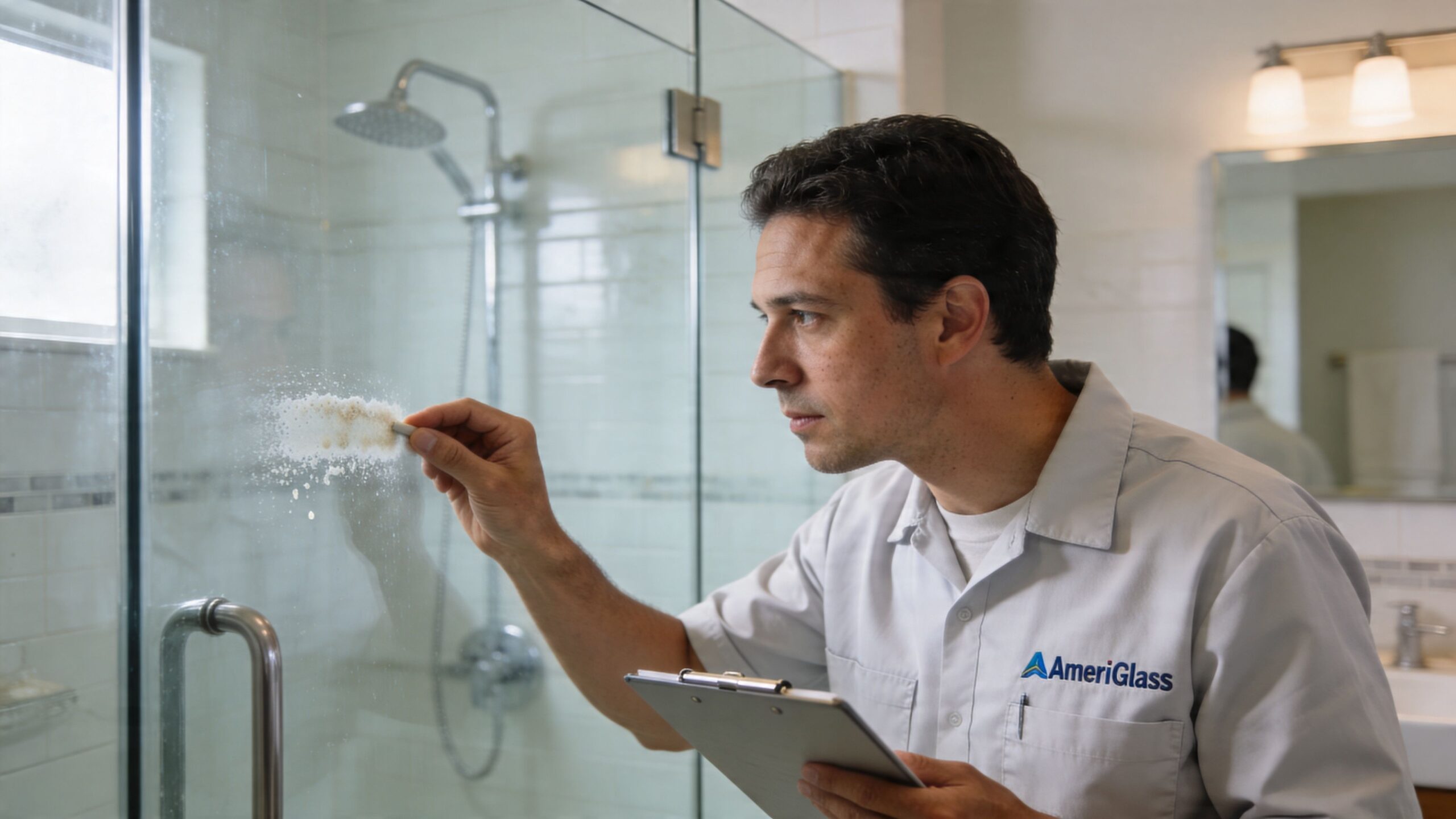
Existing shower doors that need restoration and protection
If the glass has residue that won’t come off with normal cleaning, a pro can tell the difference between removable buildup and permanent etching. That matters because the next step depends on the surface condition. Some glass can be deep-cleaned and protected. Some is already damaged enough that replacement makes more sense.
Professional treatment is also the better move when you’ve tried DIY water repellents and got inconsistent results. Surface prep, compatibility, and application quality all matter more than is generally expected.
New frameless showers that should be protected from the start
The best time to prevent soap scum is before the first shower. On a new project, you can choose better glass, pair it with the right coating, and make sure the enclosure is measured and installed correctly so water stays where it should.
That’s especially important with frameless systems, where alignment, hardware placement, and clean sealing details affect both appearance and maintenance. If you’re planning a new enclosure or want a professional opinion on an existing one, the simplest next step is to request a glass project quote.
Frequently Asked Shower Glass Questions
Will a water softener completely eliminate soap scum
No. It can reduce the mineral side of the problem, which helps, but it won’t stop body oils, soap residue, and humidity from leaving film on the glass. Think of a softener as a helpful support, not a complete solution.
Can a protective coating be applied to old shower glass
Sometimes, yes. If the issue is buildup sitting on the surface, the glass may be a good candidate after proper restoration. If the glass is etched, scratched, or hazed from harsh cleaners, a coating can protect what remains but it usually won’t reverse physical damage already in the surface.
How should I clean coated shower glass
Keep it simple. Use soft microfiber cloths, gentle cleaning methods, and avoid abrasive pads or harsh chemicals. The goal is to clean the residue without stripping or scratching the treated surface.
Clean coated glass like a finished surface, not like a stained tile floor.
Are DIY repellents the same as professional coatings
No. DIY products can be useful as temporary maintenance boosters, especially when the glass is thoroughly cleaned first. Professional systems are designed for longer-term performance and stronger surface bonding.
Is low-iron glass harder to maintain
It doesn't cause it, but it does make residue more visible because the glass is so clear. That’s why pairing premium glass with protective treatment is smart. You preserve the cleaner look that made you choose it in the first place.
What if my shower still looks cloudy after cleaning
That usually points to one of three issues:
- Bonded mineral deposits: The residue has hardened beyond routine cleaning.
- Etching: Past use of harsh or abrasive cleaners has altered the glass surface.
- Failed maintenance cycle: Water keeps drying on the glass faster than you’re removing it.
If you’re trying to troubleshoot a specific issue with shower glass, coatings, hardware care, or installation details, a good place to start is this set of shower glass FAQs.
If you’re tired of fighting cloudy shower glass, AmeriGlass Industries can help you take the permanent route. Whether you’re upgrading an existing shower or planning a new frameless enclosure in Naples, Fort Myers, or the surrounding Southwest Florida area, their team can guide you toward the right glass, the right protection, and a cleaner look that lasts.