
Installing a shower door in 2026 costs about $958 on average, and most projects land between $530 and $1,389. If you're pricing a custom frameless enclosure, expect it to often start at $1,300 and go much higher.
That number surprises a lot of homeowners because they assume a shower door quote is mostly about the glass. It isn't. In Southwest Florida, the actual cost is determined by fit, hardware, labor, and how well the enclosure will hold up in a hot, humid bathroom over time.
A cheap quote can look fine on day one and still become the expensive option later. If the door is out of level, the sweep doesn't seal, or the glass starts showing hard water staining that never really comes off, you end up paying twice. That's why the best way to think about how much to install shower door isn't just upfront price. It's total cost of ownership.
Understanding the Average Shower Door Installation Cost
The national benchmark gives you a useful starting point, but only if you understand what sits inside that number. According to Angi's 2026 shower door cost data, the average cost to install a shower door in the United States is $958, with most homeowners spending $530 to $1,389. The same source notes that custom frameless projects frequently range from $1,300 to over $2,500.
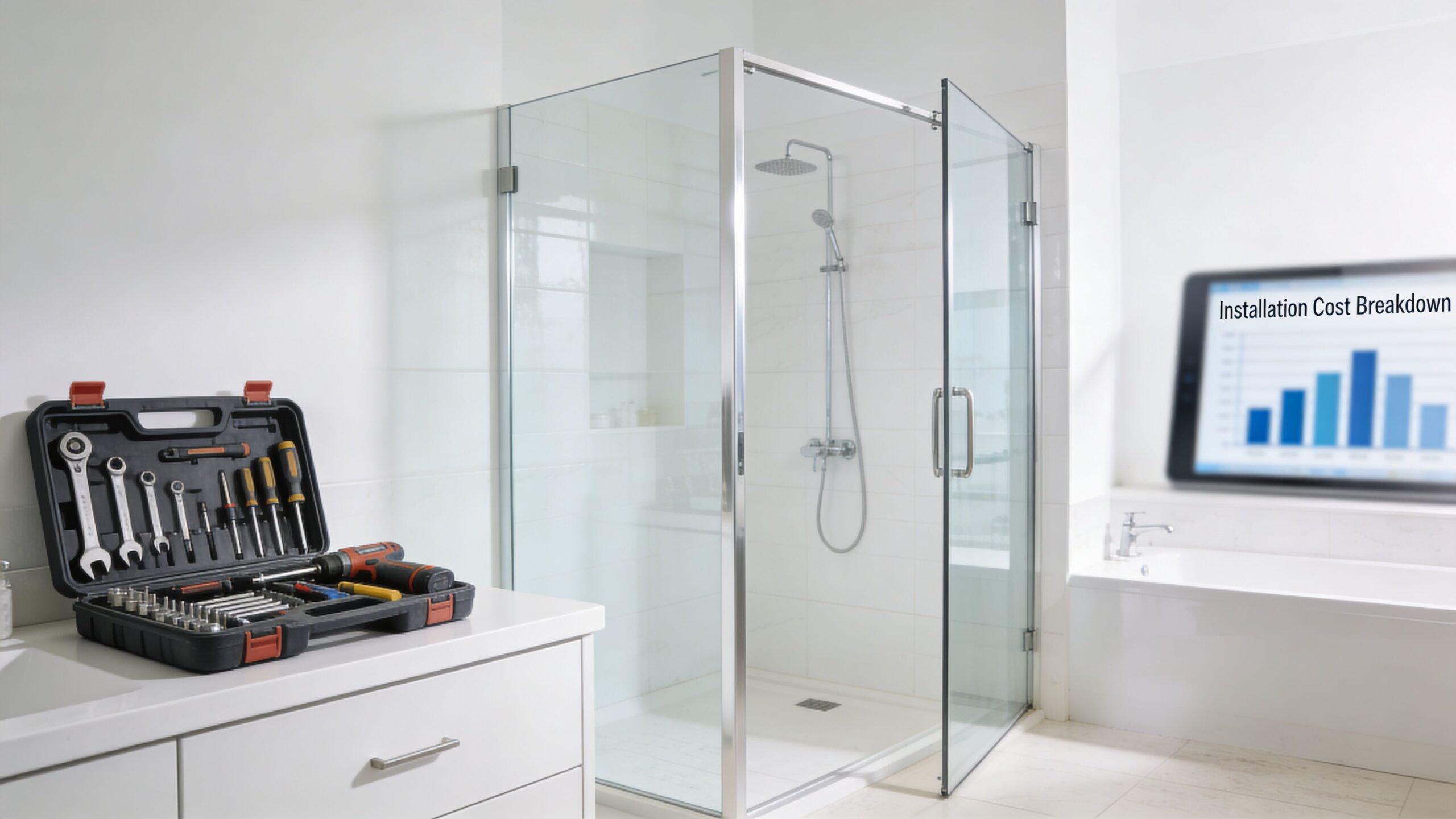
That average works like a car sticker price. It tells you the market, not your exact build. A basic framed door in a standard opening is one thing. A frameless enclosure with custom measurements, thicker glass, and upgraded hardware is something else entirely.
The three parts inside the quote
Most shower door pricing comes from three core components:
- Door type: Framed, semi-frameless, and frameless all live in different price brackets because they use different construction methods.
- Materials: Glass thickness, hardware finish, hinge quality, and any protective coating all affect cost.
- Labor: Precise measurement, fabrication coordination, and final installation matter more than people expect.
In practical terms, the glass is only one part of the story. The installer has to work with real walls, real tile, and real floors. Bathrooms are rarely perfectly square, especially in remodels. That means the quote has to account for adjustment, alignment, and sealing.
Practical rule: The number on the estimate should reflect how much precision the opening requires, not just how large the glass panel looks.
Why one price never fits every bathroom
In Southwest Florida, climate changes the long-term picture. Humidity, frequent use, and mineral-heavy water put more stress on seals, finishes, and exposed glass. Two doors can look similar in a photo and perform very differently after a few years.
That’s why a reliable quote should explain what you're buying, not just what you're paying. If it doesn't separate product, hardware, and installation work, it's hard to know whether you're comparing equal jobs.
A Clear Cost Comparison of Shower Door Types
The fastest way to narrow your budget is to decide where your project fits on the framed-to-frameless scale. Industry pricing from HOROW's 2025 to 2026 installation guide puts framed doors at $400 to $1,100, semi-frameless at $500 to $1,550, and frameless at $600 to $1,900 for standard sizes. That same breakdown notes that frameless carries a 50% to 100% premium because of material cost and installation complexity.
Shower door installation cost by type
| Door Type | Average Installed Cost | Key Features | Maintenance Level |
|---|---|---|---|
| Framed | $400 to $1,100 | Full metal frame, thinner glass, practical fit for standard openings | Moderate to higher, because metal edges and tracks collect buildup |
| Semi-frameless | $500 to $1,550 | Reduced metal, cleaner look, middle-ground price | Moderate |
| Frameless | $600 to $1,900 for standard sizes | Minimal hardware, thicker glass, open visual feel | Lower on frame cleaning, but glass care still matters |
Framed doors are the workhorses. They make sense when budget comes first, especially in guest baths or straightforward replacements. They also hide slight irregularities better because the frame does more of the forgiving work.
Semi-frameless sits in the middle. It gives you a cleaner look without jumping all the way into full custom frameless pricing. For many homeowners, it's the compromise option that keeps the bathroom looking updated while controlling cost.
Where frameless earns its premium
Frameless doors are often envisioned in a modern bath. They open up the room visually, show off tile, and avoid the boxed-in look that heavier framing can create. They're also less forgiving. Without a frame to mask inconsistencies, the glass, hinges, and wall conditions all have to work together.
If you're still comparing styles, it helps to review a few layout options before asking for bids. A visual planning page like design your shower door makes it easier to decide whether you want a swing door, inline panel, corner enclosure, or bypass setup.
A framed door usually wins on upfront budget. A frameless door usually wins on appearance and long-term bathroom impact.
The right answer depends on the room. In a secondary bath, framed may be the smart choice. In a primary suite with good tile work and a strong design budget, frameless often delivers more satisfaction every single day.
What Drives the Price of a Frameless Shower Door
Frameless pricing doesn't come from trend alone. It comes from engineering.
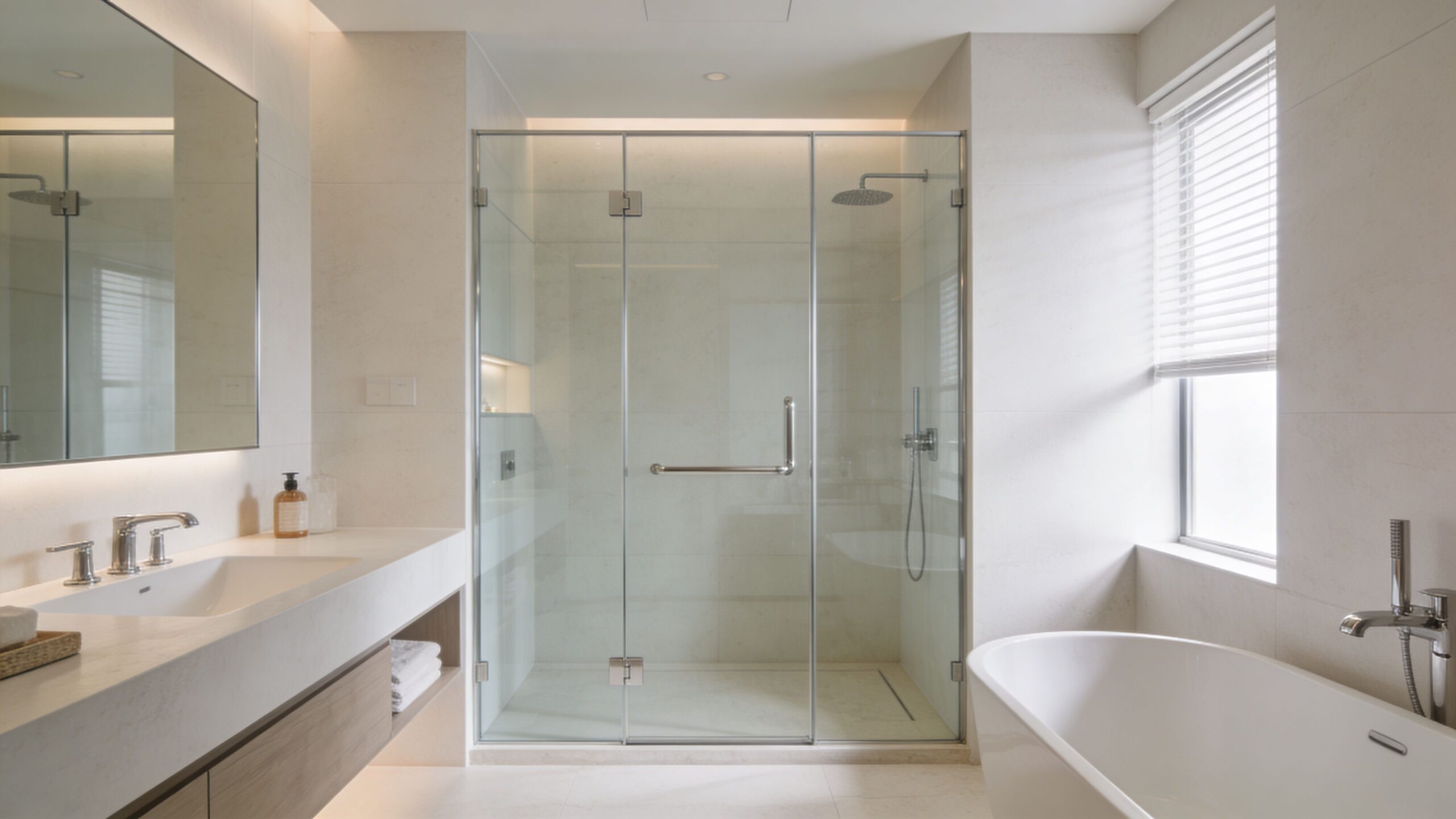
According to This Old House's frameless shower glass cost guide, frameless doors require 3/8-inch to 1/2-inch tempered glass to meet safety standards and prevent sagging. That added thickness can increase panel weight by 30% to 50%, which is why frameless systems need heavy-duty stainless steel hardware and professional leveling to achieve a watertight seal.
Thicker glass changes everything
Once you remove the metal frame, the glass has to do more structural work. Thicker tempered glass resists flex better, but it also places more load on hinges, clips, and anchoring points. That changes installation from simple assembly to precision fitting.
A frameless panel doesn't give the installer much room to hide mistakes. If the wall is out of plumb or the tile bows slightly, the measurements have to account for it before fabrication. That's why a proper site measure matters so much more on frameless work than on a framed replacement.
For homeowners comparing door styles, frameless bypass shower doors are a useful example of how design choice affects hardware, clearance, and daily function. A bypass layout solves one problem, swing space, but introduces others like track design and panel overlap.
Hardware isn't decorative trim
In a quality frameless enclosure, the hardware is structural. Hinges carry weight. Clamps hold alignment. Handles and support pieces have to work in a wet, humid environment without corroding or loosening prematurely.
That matters in coastal bathrooms. Southwest Florida air and moisture are hard on lower-grade finishes. When installers use better stainless components and take time to level correctly, the door operates better and stays adjusted longer.
If you want to see what that category looks like in practice, frameless shower doors in Fort Myers Beach show the type of clean, minimal installations that depend on accurate measuring and stronger hardware.
A short walkthrough helps illustrate why frameless work has less margin for error:
The price jump on frameless isn't about paying for less metal. It's about paying for thicker glass, stronger hardware, and tighter tolerances.
Hidden Costs and Factors That Influence Your Final Quote
Most price frustration comes from one assumption. Homeowners think the basic door price is the whole job.
It rarely is. Homewyse's shower door installation cost breakdown identifies project complexity as a major driver, including wall notching at $200 to $500, old door removal at $150 to $400, and neo-angle enclosures requiring 25% to 40% more labor than a standard door.
Conditions behind the tile matter
A shower opening can look simple and still be tricky. Tile may be slightly uneven. Walls may lean. A curb may not pitch correctly. If the installer has to correct for those conditions, the quote needs to reflect that reality.
The most common cost adders usually fall into a few buckets:
- Existing door removal: Taking out an old enclosure cleanly takes time, especially when old caulk, screws, and damaged channels are involved.
- Wall prep or notching: Tile or substrate sometimes has to be adjusted to make hardware sit properly.
- Complex layout: Corner entries and angled openings create more measurement and installation work than a standard opening.
Why the cheap estimate can become the expensive one
A low bid often assumes ideal conditions. Once the crew gets on site and finds crooked walls or a failing old enclosure, the price changes, or the work gets rushed. Neither outcome is good.
In Southwest Florida, sealing details matter more than many people realize. Moisture doesn't forgive lazy silicone work or poor sweep alignment. If water starts escaping at the curb or jamb, you're not just dealing with annoyance. You're dealing with repeated wetting in a climate where bathrooms already fight humidity every day.
Ask one direct question before approving a quote: what site conditions could change this number once installation starts?
A good estimate should spell out what is included and what isn't. It should also explain whether the quote assumes a clean opening, existing tile in good condition, and no hidden correction work. If you're already planning the project, a simple maintenance guide like shower door maintenance tips can also help you see which installation details affect long-term upkeep.
The Long-Term Value of Upgrades and Customizations
The cheapest enclosure to buy isn't always the cheapest enclosure to own. In Southwest Florida, that's especially true when hard water and humidity start leaving their mark on the glass.
Protective coatings are one of the few upgrades that directly affect long-term maintenance. According to Wellfor's 2025 shower door cost breakdown, coatings like Diamond-Fusion can add $200 to $400 upfront, reduce maintenance needs by up to 90%, and save $500 to $1,000 in cleaning supplies and effort over a 10+ year lifespan.
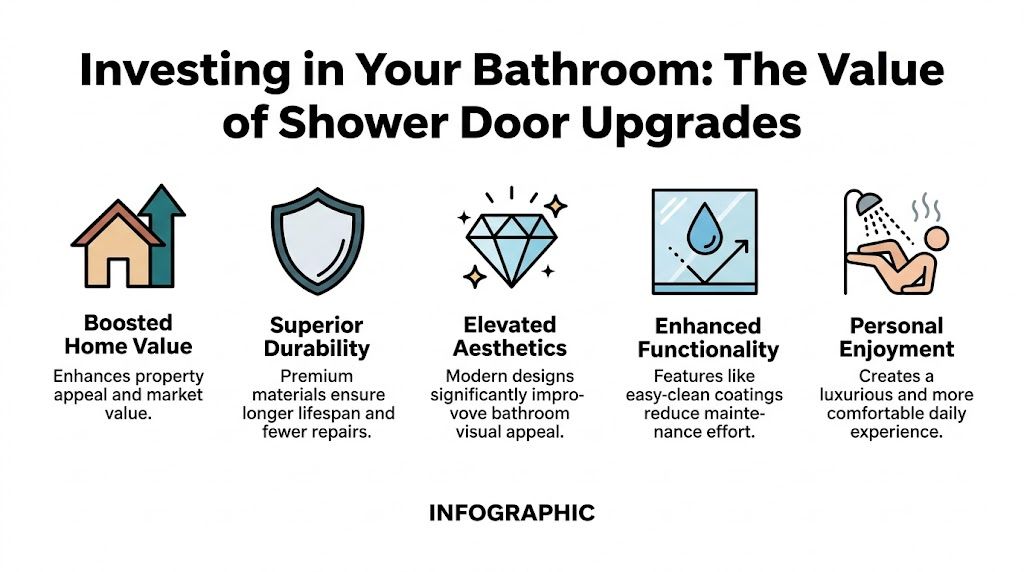
Upgrades that earn their keep
Some add-ons are about looks. Others change ownership cost in a real way.
- Protective coating: This is the one upgrade I’d call practical before decorative. It helps resist spotting and soap scum buildup, which matters a lot in Florida water conditions.
- Better hardware finishes: Premium finishes can hold up better in wet, coastal air and keep the enclosure looking consistent with the rest of the bathroom.
- Custom glass choices: Ultra-clear or specialty glass doesn't lower maintenance, but it can dramatically improve the final appearance if you've invested in quality tile and lighting.
Value isn't only measured at installation
If you're remodeling a primary bath, the enclosure affects how the whole room feels. A clean frameless setup with the right coating and hardware can make the tile, fixtures, and layout read as one finished design rather than a collection of separate parts.
For broader inspiration, these luxury bathroom remodel ideas are useful because they show how glass choices support the larger design, not just the shower opening itself.
Better materials don't just preserve the enclosure. They preserve the look of the entire bathroom.
That's the trade-off. You can spend less now and clean more later, or spend more upfront and make daily ownership easier.
DIY vs Professional Installation The Real Bottom Line
DIY looks tempting because labor is visible on the quote. The risk isn't.
A shower door can appear straightforward right up to the point where the panel doesn't sit true, the hinge binds, or the sweep misses the curb by just enough to leak every day. Frameless work is especially unforgiving because there isn't a frame covering slight measurement or alignment mistakes.
Where DIY goes wrong
Most failed installs follow the same pattern. The opening is measured as if the walls are perfectly straight. The hardware gets mounted to finished tile without enough allowance for small irregularities. Then the door closes, but not cleanly. Water escapes. The seal wears unevenly. The owner starts tweaking screws instead of solving the root issue.
The actual cost shows up later:
- Glass damage: If a panel chips or breaks during handling, replacement can erase any labor savings immediately.
- Water intrusion: A persistent leak can stain grout, affect trim, and create recurring bathroom moisture problems.
- Poor operation: A door that drags, swings incorrectly, or won't stay aligned turns a daily-use fixture into a daily irritation.
What professional installation actually buys
A licensed, insured installer isn't just there to set glass in place. The installer verifies the opening, chooses the correct hardware strategy, aligns the system, and seals it so the enclosure performs as intended.
That matters more in humid climates because tiny failures don't stay tiny. A little leak used every morning becomes a maintenance issue you keep paying for in time, cleanup, and frustration.
If you're deciding between DIY and pro, treat the labor line as risk management. A professional install protects the glass, the surrounding bathroom, and your time.
How AmeriGlass Ensures an Accurate and Transparent Estimate
The best estimates start before the first piece of hardware is ordered. The process should begin with an on-site visit, careful measurement, and a real conversation about how the shower will be used.
At AmeriGlass, that means measuring the actual opening, checking wall conditions, reviewing door swing or bypass clearance, and identifying anything that could affect fit or final cost. If an old enclosure has to come out, if the opening calls for custom fabrication, or if a coating makes sense for long-term maintenance, those details belong in the quote from the start.
What a clean estimate should include
A solid estimate is itemized, readable, and specific. It should separate the enclosure, hardware, installation, and any added work so you know exactly what you're approving.
Homeowners and contractors who want that level of clarity can start with an AmeriGlass quote request. The point isn't just to get a number. It's to get a number that matches the actual job.
Frequently Asked Questions About Shower Door Installation
How long does the process take
The timeline depends on whether the project is standard or custom. The key step is accurate field measurement. After that, fabrication and scheduling determine the completion date. A professional installer should give you a clear timeline after measuring the opening and confirming hardware and glass selections.
Will a new frameless shower door help resale value
A well-designed frameless enclosure can improve how buyers perceive the bathroom, especially in primary suites and updated homes. It won't matter as much if the surrounding finishes feel dated, but in a polished bathroom it usually adds visual appeal and helps the room feel more current.
What kind of warranty should I expect
Ask about both workmanship and materials. Glass, hardware, and coatings may carry different coverage, and the installer should explain those differences in writing. A warranty is only useful if you understand what it covers and how service is handled.
Where can I find more answers before requesting a quote
If you still have practical questions about measurements, glass options, maintenance, or installation logistics, review the AmeriGlass FAQ page before scheduling your project.
If you're planning a shower door project in Naples, Fort Myers, Bonita Springs, or nearby Southwest Florida communities, AmeriGlass Industries offers the kind of precise measuring, clear estimating, and professional installation that prevents costly surprises later. Reach out for a quote if you want a shower enclosure that fits correctly, seals properly, and keeps its value long after installation day.
Want a real quote? AmeriGlass Industries measures for free and installs frameless shower doors across Naples, Fort Myers, Bonita Springs and Cape Coral. Call (239) 426-6884 for a free in-home estimate.