

You're probably standing in a bathroom that feels smaller than it should. The tile may be good. The layout may be fine. But an old framed enclosure, cloudy glass, and metal tracks full of residue can make the whole room feel dated.
That's why frameless shower installations have become one of the most effective bathroom upgrades in Naples and across Southwest Florida. When they're done well, they open the room, sharpen the lines, and let the stone, tile, and light do the work. When they're done poorly, they become a maintenance headache with leaks, loose hardware, and glass that never quite looks clean again.
In this climate, details matter. Humidity hangs in the air. Hard water leaves its mark. Salt air reaches farther inland than many homeowners expect. A frameless shower isn't just a design choice here. It's a glass, hardware, measurement, and maintenance system that has to be built for Florida.
The Unmistakable Allure of Frameless Shower Design
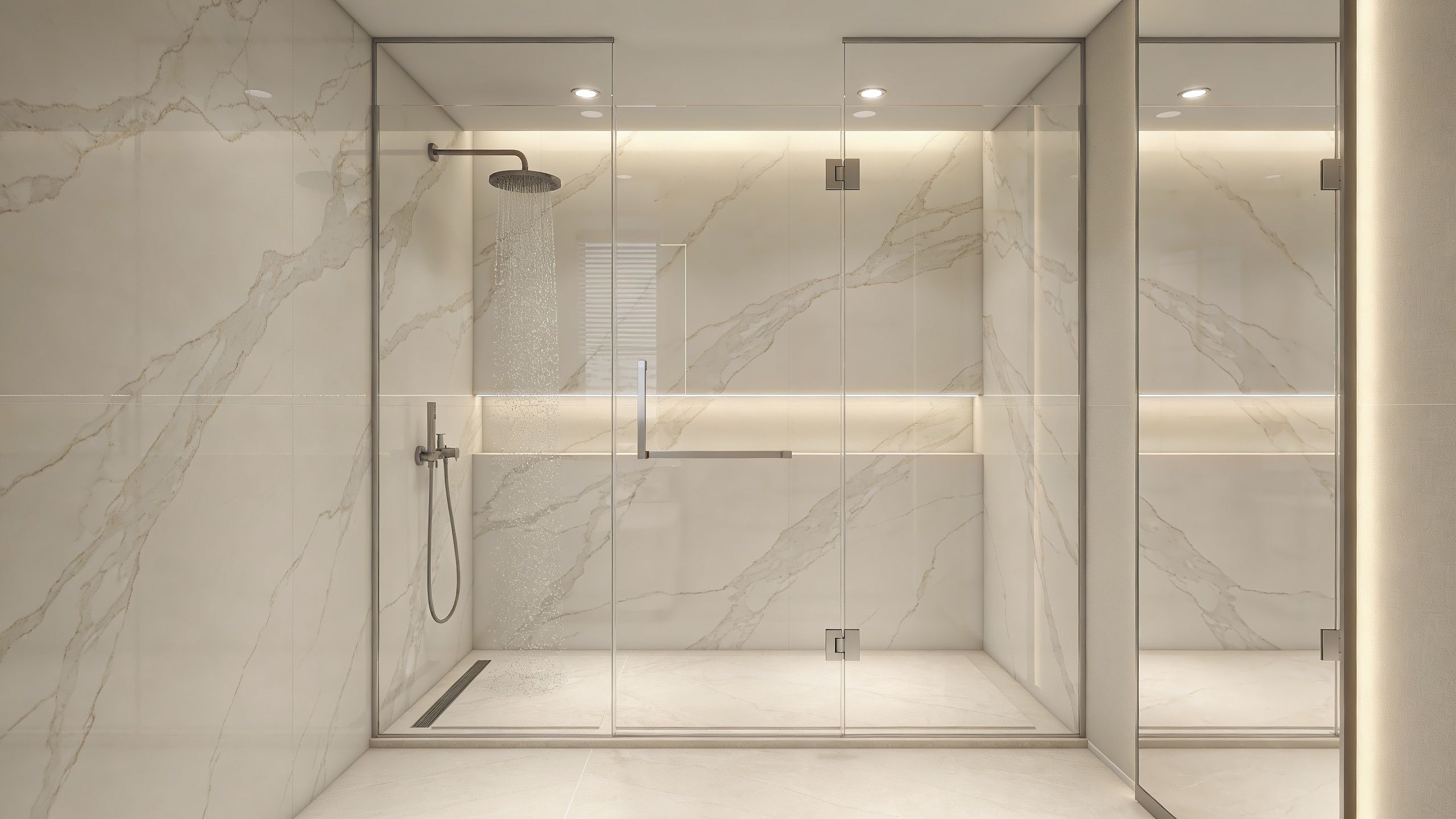
A framed shower enclosure puts your eye on the frame. A frameless enclosure puts your eye on the room.
That difference sounds simple, but it changes everything. Light moves farther. Tile patterns read cleanly from wall to wall. Small bathrooms feel less boxed in. Larger bathrooms feel more architectural. Instead of seeing a shower as a separate compartment, you read the whole room as one finished space.
Why homeowners keep choosing frameless
The appeal isn't limited to high-end custom homes. It reflects a broader shift in how people want bathrooms to look and function. The global frameless shower door market was valued at US$5.12 billion in 2024 and is projected to reach US$9.80 billion by 2033, growing at a CAGR of 7.4%, according to IMARC's frameless shower door market analysis. That tells you homeowners are moving toward minimalist design and easier-to-maintain spaces, not away from them.
In practice, I see four reasons frameless wins:
- More visual space: Glass without heavy perimeter metal keeps the room from feeling segmented.
- Better light flow: Natural and artificial light both travel farther across the bathroom.
- Tile stays visible: If you paid for quality stone, slab, or detailed tile work, frameless glass lets it stay the focal point.
- Cleaner day-to-day use: You don't have the same kind of metal tracks and corners that collect grime.
That last point matters more in Southwest Florida than many buyers realize. Moisture doesn't need much help here. Any design that reduces places for mildew, residue, and trapped water is a practical upgrade, not just a visual one.
Frameless glass doesn't hide mediocre work. That's exactly why great bathrooms benefit from it.
Luxury that also works hard
A good frameless enclosure gives a bathroom the calm, open feel people usually associate with a spa or a well-designed hotel suite. It can also make a primary bath feel more expensive without changing the room's footprint.
That's part of why homeowners who are updating for personal enjoyment and homeowners preparing for resale both tend to land on the same choice. They want something that looks current now and still looks intentional years from now. If you're considering other ways glass can improve a home's finish level, luxury glass features throughout the home show how much visual weight transparent materials can carry.
The strongest frameless shower installations do two things at once. They disappear visually, and they perform mechanically. If either half is missing, the result won't feel luxurious for long.
Decoding Your Glass and Hardware Options
Most homeowners start by choosing a shape or door style. The better starting point is the system itself. Glass thickness, hardware material, finish, and clarity all affect how the enclosure feels on day one and how it holds up on the coast.
Glass thickness is not a cosmetic choice
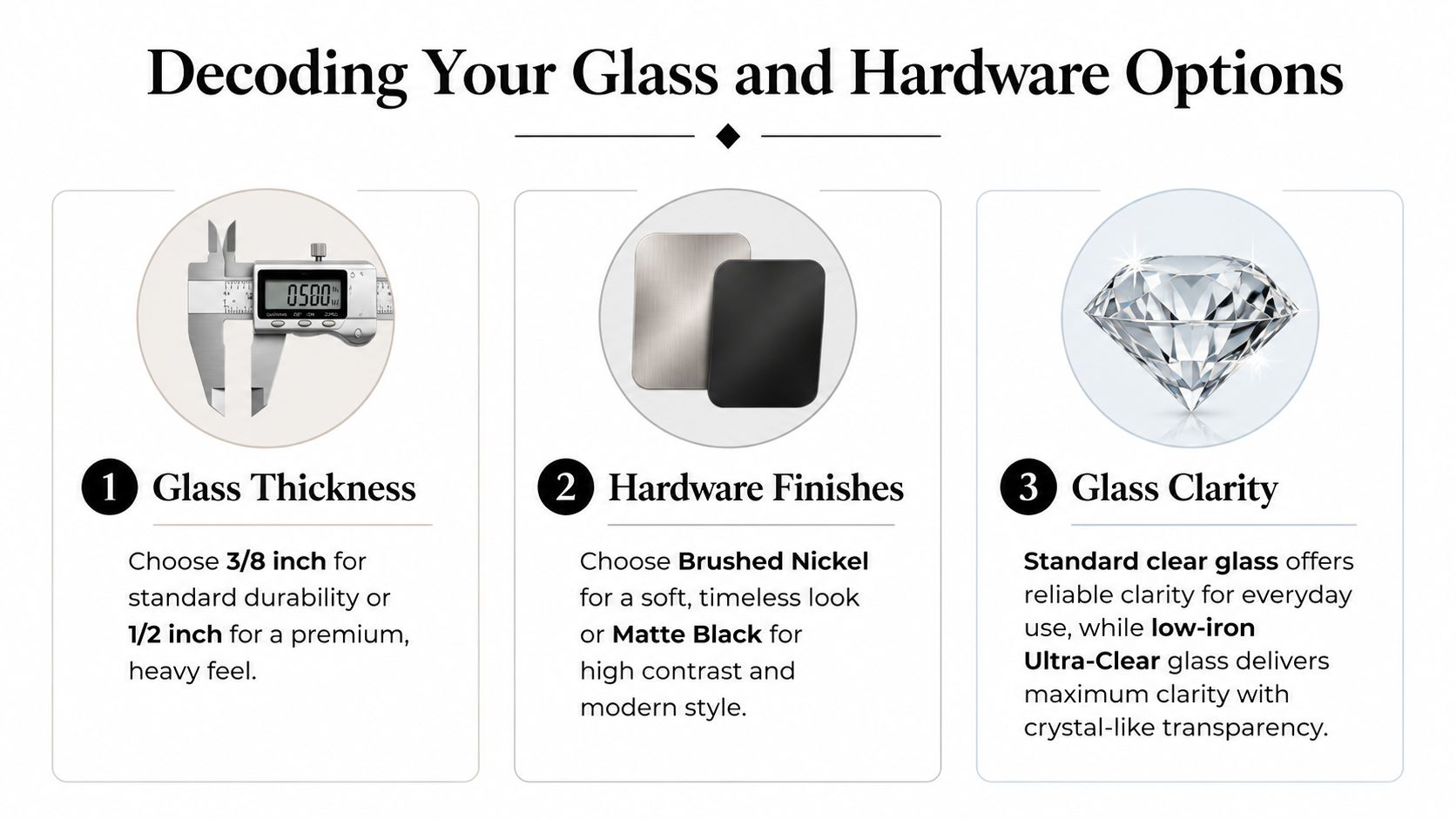
With framed units, the metal frame carries much of the structure. In frameless work, the glass carries the load. That's why thickness matters so much. Industry standards specify a minimum of 3/8-inch (10mm) glass for frameless enclosures, with 1/2-inch (12mm) preferred for high-quality installations, as explained in this guide to code requirements for frameless enclosures.
Here's the practical difference:
| Option | What it feels like | Best fit |
|---|---|---|
| 3/8-inch glass | Lighter, serviceable, cleaner visual profile | Simpler layouts and smaller openings |
| 1/2-inch glass | Heavier, more substantial, more rigid | Premium projects and larger panels |
In luxury bathrooms, 1/2-inch glass usually gives the result clients expect. The panel feels planted, not flimsy. The door swing feels deliberate. The enclosure has visual weight without needing bulky metal.
Standard clear versus ultra-clear
Standard clear tempered glass isn't perfectly colorless. Along the edge, you'll often notice a green cast. On many tile selections, that won't matter. On white marble-look tile, pale limestone tones, and crisp designer finishes, it can change the look more than people expect.
Low-iron glass reduces that green tint and presents tile colors more faithfully. If the bathroom design leans bright, clean, and tonal, ultra-clear shower glass options are often worth serious consideration.
A simple way to think about it is this: standard clear glass is like looking through a very clean bottle. Ultra-clear glass is closer to looking through open air.
Hardware that survives the coast
Naples, Bonita Springs, and the surrounding coast demand better hardware choices. Finish alone isn't enough. You want hardware made for moisture exposure and a setting where salt air can accelerate corrosion.
A few practical rules help:
- Choose corrosion-resistant materials: Stainless steel and well-made coated brass tend to perform better than cheaper plated parts.
- Match finish to the room and the maintenance habits: Matte black looks sharp but shows deposits differently than brushed finishes.
- Ask about the full hardware set: Hinges, clamps, handles, fasteners, and anchors all matter. One weak component can shorten the life of the whole enclosure.
If you've ever looked at modern glass wall office systems, you've seen the same principle at work. Minimal glass designs only look refined when the hardware is precise, restrained, and built to carry its load cleanly.
Practical rule: In coastal Florida, never choose hardware on appearance alone. The finish you like has to be backed by material quality that can handle moisture and salt exposure.
The Professional Installation Process Unveiled
The clean look of frameless glass hides a demanding installation process. Homeowners often see the final panel and polished hardware. What they don't see is the measuring, templating, checking, and adjustment that makes the final result look effortless.
The measurement stage makes or breaks the job
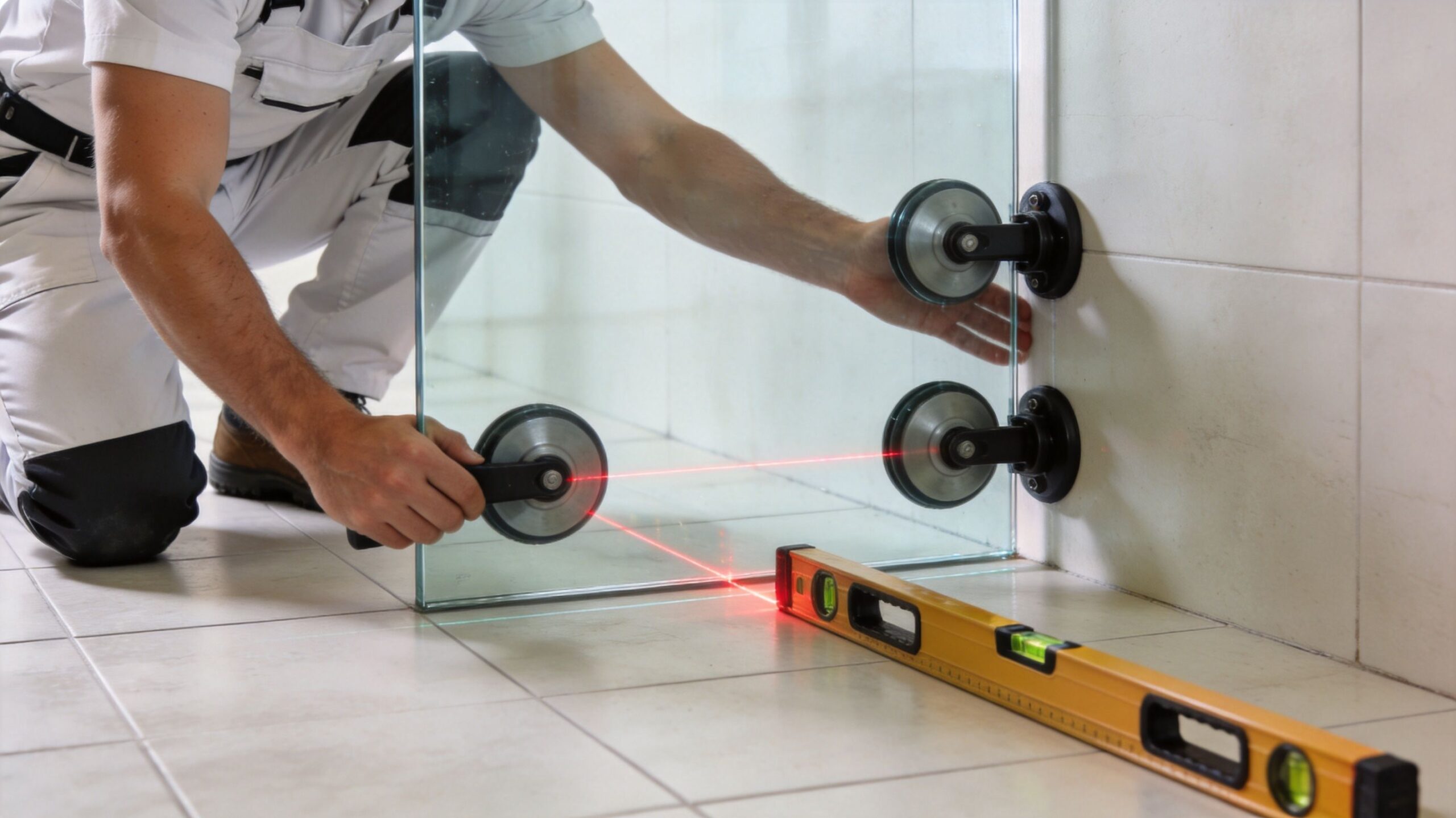
No experienced installer trusts a shower opening at first glance. Walls move. Curbs aren't always square. Tile setters can deliver beautiful work that still varies slightly across the opening. In older Florida homes, those small differences are common.
That's why pros measure at three distinct heights to the nearest 1/16-inch, and they verify wall plumb because openings can deviate 1/4 to 3/8 inch over 72 inches, as outlined in this frameless shower measurement guide. Those aren't trivial tolerances. They directly affect door gaps, hinge performance, and water containment.
A proper site measure usually includes:
- Curb, middle, and top measurements to capture width changes through the opening.
- Plumb checks on both walls with a level.
- Review of tile conditions around hinges, clips, and anchor points.
- Clearance planning so the door swings cleanly and doesn't fight nearby vanities, toilets, or towel bars.
Fabrication and prep
After field measurements are confirmed, the glass is manufactured to match the specific opening rather than a standard size. Custom frameless shower installations differ from off-the-shelf kits at this stage. Fixed panels, notches, hinge cutouts, handle placements, and edge finishing must all correspond to the actual room.
Before installation day, the site should be ready. Tile should be complete. Curing should be complete. The enclosure area should be clean and accessible. Good installers don't want to build around unfinished conditions because unfinished conditions create future problems.
For readers who want a visual sense of how a glass panel is handled and aligned in the field, this walkthrough is useful:
Setting glass without forcing it
This is the step homeowners should care about most. Glass should never be forced to compensate for a bad measurement. A panel that has to be muscled into place is already telling you something is wrong.
Installers set fixed panels, align hinges or mounting hardware, hang the door, then fine-tune reveals and swing. Silicone is used where the design calls for it, but silicone is not a substitute for proper fit.
If a frameless door binds, drifts, or rubs on day one, the problem usually started long before the panel reached the bathroom.
Final adjustment is where craftsmanship shows. Door gaps need to look even. The handle should land naturally in the hand. The enclosure should read straight, quiet, and balanced against the tile lines around it.
Budgeting Your Frameless Shower Project in Southwest Florida
Frameless shower installations sit in the premium tier of bathroom upgrades. That doesn't mean every project becomes extravagant, but it does mean the final number depends on choices that aren't obvious from across the room.
The best budget conversations start with realistic market context. In the U.S., frameless shower door installations average US$1,400, with most homeowners investing between US$1,000 and US$2,500. The doors themselves can range from US$300 to US$3,000, while framed alternatives typically fall between US$190 and US$500, according to U.S. shower glass door market data from PS Market Research. That same analysis notes that frameless products hold the dominant category share in the market, despite the premium pricing.
What moves the price up or down
Two bathrooms can both be called “frameless showers” and still land at very different price points. The variables that usually matter most are:
- Size of the enclosure: More glass usually means more cost.
- Door and panel configuration: A simple inline door is different from a return panel or custom corner layout.
- Glass choice: Standard clear and low-iron glass don't price the same.
- Glass thickness: Heavier premium glass changes fabrication, handling, and hardware needs.
- Hardware package: Hinges, clamps, handles, and finish quality affect both look and budget.
- Site complexity: Out-of-plumb walls, unusual tile conditions, and access constraints can complicate the work.
Local planning mindset
In Southwest Florida, I tell homeowners to budget for the room they have, not the one they wish they had. High-rise condos may bring elevator, access, and scheduling restrictions. Older homes may have walls or curbs that need more careful planning. Renovation projects often reveal hidden unevenness that a framed enclosure might disguise but frameless glass won't.
That's also why quote shopping can go sideways. A lower number may reflect thinner glass, lighter hardware, less field verification, or a less customized approach to fit. If you want an accurate starting point based on your opening, tile, and design priorities, requesting a custom shower quote is the only useful way to compare options.
A simple budget lens
Think of the investment in three layers:
| Budget layer | What you're paying for |
|---|---|
| Base system | Glass, door, standard hardware, installation |
| Design upgrades | Premium finish choices, low-iron glass, custom handle selections |
| Complexity factors | Multi-panel layouts, difficult openings, special cuts, coordination challenges |
A frameless enclosure costs more because it asks more from every component. Better measurements, thicker glass, stronger hardware, and cleaner execution all show up in the final number.
Protecting Your Investment with Modern Coatings and Maintenance
The test of a frameless shower starts after installation day. In Southwest Florida, the glass has to keep looking clean through humidity, regular use, and whatever your water leaves behind.
That's where many articles fail homeowners. Expert analysis points to a clear gap in guidance on long-term maintenance costs and durability in humid climates, including the cost-benefit of protective coatings like Diamond-Fusion, as noted in this discussion of shower enclosure planning gaps. That gap matters because owners don't just buy a shower. They live with it.
What coatings actually do
A protective coating is valuable because it changes the maintenance routine, not because it makes the glass maintenance-free. Water still hits the panel. Soap still lands on the surface. But treated glass tends to release residue more easily and resists buildup better than untreated glass.
In a Florida bath, that means less aggressive scrubbing and a better chance of preserving clear, polished-looking glass over time.
A smart maintenance plan usually includes:
- Daily habits: Squeegee after use if you want the glass to stay sharp longer.
- Gentle cleaning: Use non-abrasive cleaners and soft cloths, not harsh pads.
- Hardware attention: Wipe hinges and handles dry when possible, especially in coastal homes.
- Periodic inspection: Watch seals, sweeps, and caulk lines for wear before small issues become expensive ones.
Hard water changes the conversation
A lot of homeowners blame humidity for everything. Often, hard water is doing just as much damage to the look of the glass. Mineral spotting can make a premium enclosure seem older than it is.
If you're dealing with persistent buildup throughout the home, hard water treatment guidance from Praz Pure Water, Inc. is worth reviewing because shower glass rarely suffers alone. Faucets, fixtures, and other bath surfaces usually show the same pattern.
Clean glass is easier to keep clean than neglected glass is to restore.
For owners who want a long-lasting routine, frameless shower maintenance practices can help set expectations. The main point is simple. A protective coating can be a smart upfront decision in this climate, especially if you value clarity and don't want glass care to become a weekly battle.
How to Select a Qualified Naples Shower Glass Installer
A beautiful frameless enclosure starts with design, but it succeeds or fails with the installer. You're hiring someone to work with heavy tempered glass, finished tile, waterproofed surfaces, and very tight tolerances. That isn't a job for guesswork.
What to verify before you hire
A qualified Naples-area installer should be easy to evaluate if you ask the right questions.
- Licensing and insurance: Ask for proof, not reassurance.
- Custom measurement process: They should measure on site themselves. Don't hire a company that wants to order glass from homeowner measurements.
- Portfolio quality: Look for finished projects that resemble your bathroom in style and complexity.
- Hardware and glass options: A real specialist can explain the trade-offs, not just show a catalog.
- Communication: You should know who measures, who installs, and who answers if something needs adjustment.
One of the strongest signals is whether the company talks comfortably about fit, plumb, door swing, anchoring, and maintenance. Installers who only talk about style usually haven't spent enough time solving the hard problems.
Red flags that deserve caution
Some warning signs show up early:
| Red flag | Why it matters |
|---|---|
| Vague pricing without site review | Frameless work depends on the actual opening |
| No discussion of wall conditions | They may not be accounting for real-world fit issues |
| Overpromising on “no maintenance” | Every shower needs care |
| Thin details on hardware quality | Coastal performance depends on material choice |
A reliable installer doesn't rush past the inconvenient parts of the conversation. They bring them up first.
A homeowner pre-installation checklist
Before the installation crew arrives, make sure the jobsite is ready:
- Tile and stone are complete: Final surfaces should already be installed and finished.
- The shower base or curb is finished: Glass can't be fit accurately to a moving target.
- The area is cleared: Remove rugs, décor, and fragile items from the path and work zone.
- Access is arranged: Gated communities, condo rules, parking, and elevator access should be handled in advance.
If you want to understand a company's background, service area, and approach to glass work in Southwest Florida, reviewing the installer's company profile and experience is a sensible step before scheduling.
Frequently Asked Questions for Florida Homeowners
Can a frameless door be installed on a fiberglass tub or shower pan
Sometimes, but it depends on rigidity, anchoring conditions, and layout. Frameless systems need stable mounting points and clean alignment. If the base flexes or the wall conditions are weak, the design may need to change. In many of those situations, a lighter or differently configured enclosure is the better answer.
Do frameless showers leak more than framed showers
A properly designed frameless enclosure should control water well, but it does so differently than a framed unit. Frameless systems rely on precise panel placement, door gaps, sweeps, seals, curb slope, and thoughtful showerhead placement. They are less forgiving of poor planning. If the opening, spray direction, or drainage conditions are wrong, the enclosure will reveal those mistakes quickly.
Are neo-angle and corner showers harder to get right
Yes. Corner layouts ask more of the measurement process and more of the glass fabricator. Angles, return panels, and tighter bathroom footprints all increase the need for precision. They can look excellent, but they aren't the place to cut corners on field measuring or hardware quality.
What about high-rise condos in Naples
High-rises often add logistics rather than design problems. Elevator scheduling, building access, parking, protective coverings, work-hour restrictions, and approval rules can all affect the install day. The best approach is to confirm building requirements before fabrication and installation are booked.
Do frameless shower installations work for commercial properties
Yes, when the design, code requirements, and usage expectations are handled correctly. Hotels, fitness facilities, multifamily properties, and upscale rentals often want the same clean aesthetic homeowners do. Commercial work demands tighter coordination, clearer maintenance planning, and more attention to repeatable durability.
Is a frameless shower always the right choice
No. It's the right choice when the room, substrate, budget, and maintenance expectations all line up. Some bathrooms are better served by semi-frameless or alternative configurations, especially when wall conditions, splash risk, or user needs point in another direction. The best installer doesn't force frameless into every opening. They match the enclosure to the space.
What should a Florida homeowner care about most
Not trends. Fit, hardware quality, water management, and long-term maintenance. In this climate, the enclosure has to look refined and survive daily exposure to moisture. The homeowners who stay happiest with their shower are usually the ones who made those decisions early instead of treating them as afterthoughts.
If you want a frameless shower that's measured correctly, built for Southwest Florida conditions, and installed by a licensed and insured local team, AmeriGlass Industries is a strong place to start. They serve Naples and the surrounding region with custom shower enclosures, premium glass options, protective coatings, and the kind of precise field measurement that luxury bathrooms require.