

A frameless shower door usually starts as one of the best-looking features in the bathroom. Then one morning you notice a small puddle on the tile, hear a scraping sound when the door swings, or feel the handle shift in your hand. In Naples, where bathrooms see constant humidity and plenty of salt in the air, those small changes matter.
Most frameless shower door problems don't begin with a dramatic failure. They begin with a seal that stops sitting right, a hinge that loosens a little, or hardware that starts reacting to moisture. Some issues are simple homeowner fixes. Others are the early signs of a problem that can spread to glass, tile, or even the subfloor if it's ignored.
That Puddle on Your Floor Is a Warning Sign
The call usually starts the same way. A homeowner says the shower door looked fine for years, then water started showing up outside the enclosure. Sometimes it's a thin line of water near the curb. Sometimes it's a puddle that keeps coming back even after fresh caulk.
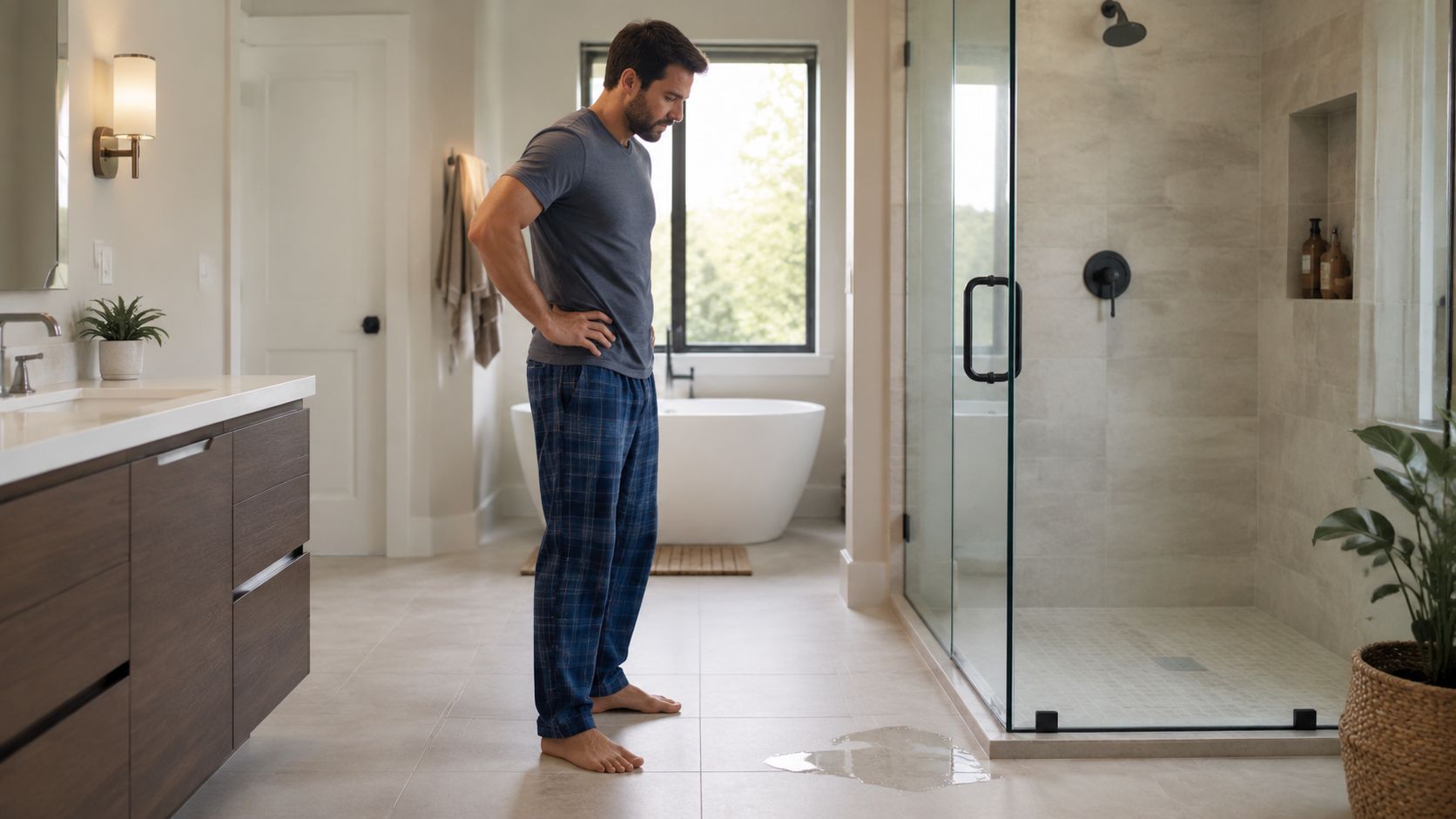
That frustration is understandable. Frameless doors are supposed to feel clean, simple, and solid. When they leak, drag, or stop closing cleanly, homeowners often assume the whole enclosure was poorly made. Sometimes the fix is minor. Sometimes that puddle is the first visible clue that the door is out of alignment or the sweep no longer makes proper contact with the sill.
What homeowners usually notice first
In real homes around Southwest Florida, the first symptom is rarely technical. It's practical.
- Water where it shouldn't be: A damp bath mat, wet grout line, or recurring drip near the outer edge of the curb.
- A rough sound: The door may rub slightly as it opens, or the hinge may squeak after months of mineral buildup.
- A change in the gap: You look at the bottom of the glass and realize the spacing doesn't look even anymore.
- Movement in the hardware: The handle, hinge cover, or panel clips feel less firm than they used to.
Sometimes the source isn't even the shower door itself. If you're trying to separate enclosure issues from plumbing issues, a basic guide on repairing a leaky shower can help you rule out drain-related leaks before you focus on the glass and hardware.
A frameless shower door should feel precise. When it stops feeling precise, something has changed.
Homeowners with open-style layouts often notice splash patterns near the fixed panel first. In those cases, even a small accessory like a fixed splash guard option can make a meaningful difference when the main issue is water direction rather than structural failure.
Diagnosing Your Frameless Shower Door Issues
A frameless enclosure doesn't have many parts, but each part carries a lot of responsibility. The glass has to stay stable. The hinges have to hold weight without sagging. The seals have to control water without adding too much drag. When one part slips, other symptoms usually follow.
According to industry maintenance data, over 60% of frameless shower door failures are caused by misalignment and sagging hinges, and that misalignment correlates to a 45% increase in water leakage incidents. In Southwest Florida's humid conditions, hinge corrosion increases by 35% compared to dry regions. That combination is why a "small" door problem in Naples often turns into a leak problem too.
Common Frameless Door Problems At a Glance
| Problem | Likely Cause | Next Step |
|---|---|---|
| Leak at bottom edge | Worn sweep, poor sill contact, or door sag | Check sweep condition and look for uneven bottom gaps |
| Door sagging | Loose screws, hinge wear, or panel movement | Inspect hinge tightness and door alignment |
| Scraping or hard closing | Misaligned pivot point, sag, or buildup | Open and close slowly to find where it rubs |
| Chips or cracks | Impact, installation stress, or glass contact | Stop using the door and call a pro |
| Rust or stiff hardware | Humidity, corrosion, or mineral deposits | Clean hardware and inspect for damage |
| Seal failure | Aging vinyl, compression, or poor fit | Replace worn seal or sweep |
| Cloudy edges and buildup | Hard water, soap residue, mineral deposits | Clean gently and inspect moving parts |
If you want a quick reference on configuration questions before you start troubleshooting, these frameless shower door FAQs are useful for understanding how different door styles behave.
Leaks are often a symptom, not the root cause
Homeowners naturally focus on the water. The bigger issue is usually why the water found a path out.
A bottom sweep can wear out on its own, but a leaking door often points back to alignment. If the door sags even slightly, the sweep stops "kissing" the sill evenly. One side seals. The other side lets water out. In practice, that means replacing the sweep without correcting the alignment may only give a short-term result.
Sagging usually starts at the hardware
Sagging is one of the most common frameless shower door problems because the door is heavy and used constantly. A hinge can loosen gradually. Corrosion can reduce hardware integrity. Soap scum and calcium deposits can also interfere with proper hinge movement and screw seating.
When hinge screws loosen, the door's center of gravity can shift enough to create visible sag. Once that happens, the top edge, latch side, and bottom sweep all stop working in sync.
Chips and cracks are not cosmetic issues
Historical analysis shows that 38% of frameless shower door replacements are due to visible glass damage, including chips and cracks. Even a small chip along an edge matters because that's where stress concentrates.
A chipped tempered panel isn't something to monitor casually. It needs professional evaluation right away, especially if the door is already dragging or contacting another panel.
Seals and sweeps wear faster than people expect
Another common issue is simple material wear. Fifty percent of water leakage issues stem from worn-out seals and sweeps, and 65% of these failures occur within 3 years if sweeps aren't properly maintained. In Naples, moisture, heat, and cleaning chemicals can all shorten the useful life of vinyl components.
Hard-water staining can trigger mechanical problems too
Hard-water staining isn't just a cosmetic annoyance. Mineral deposits collect around hinge plates, under sweeps, and near pivot points. Over time, that buildup changes how the door moves and how tightly hardware seats against the glass.
Practical rule: If the problem seems to be "just a leak," always check whether the door is still hanging square before you replace any seal.
Safe DIY Checks and Temporary Solutions
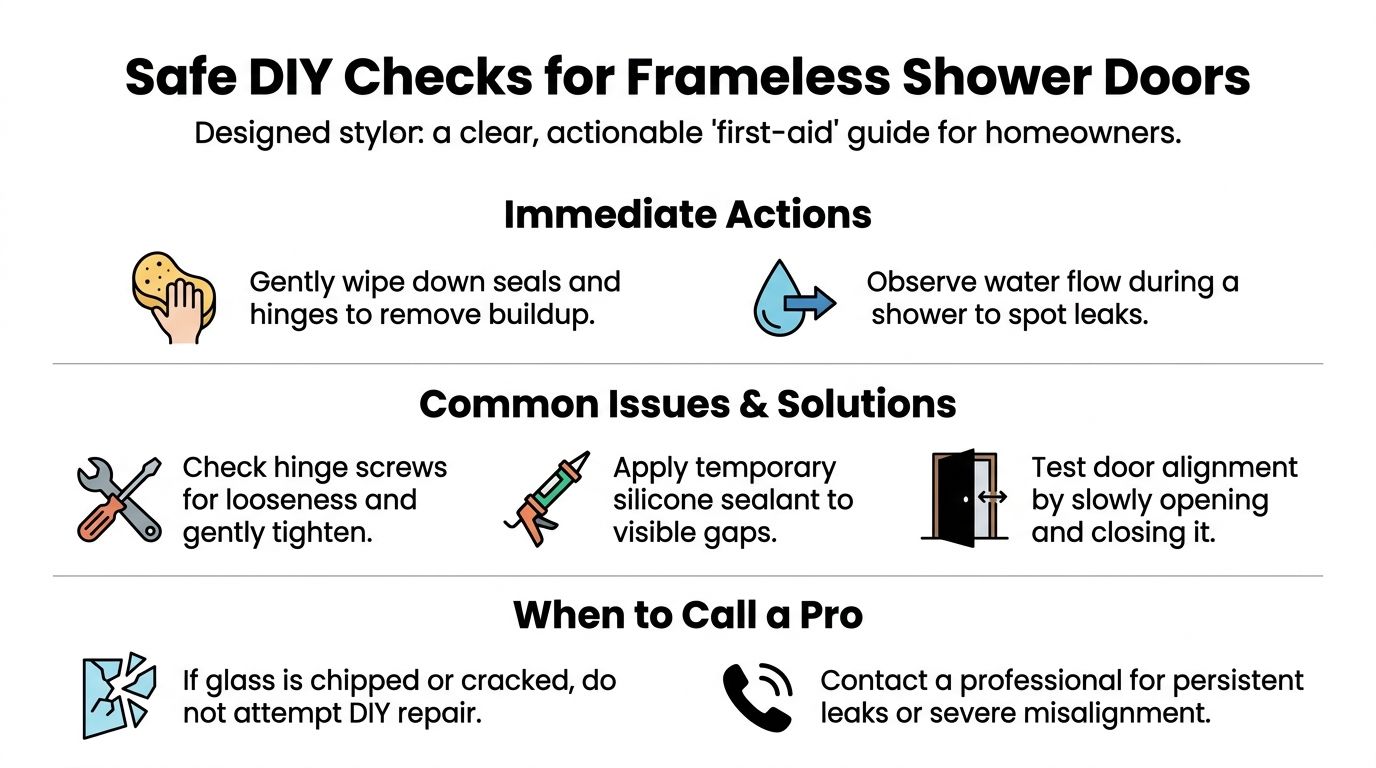
Some homeowner checks are worth doing. They can help you spot a loose screw, dirty seal, or obvious alignment issue before it becomes expensive. The key is staying on the safe side. Frameless glass isn't the place for force, guesswork, or improvised adjustments.
For a broader maintenance baseline, this guide to shower door maintenance is a good place to compare what you're seeing at home with normal care tasks.
Start with the simplest checks
A sound first-aid routine is better than an aggressive repair attempt.
Check visible screws carefully
Use a screwdriver, not a drill. Tighten loose hinge or handle screws gently. Stop as soon as you feel resistance. Overtightening can create stress at the glass connection points.Clean the hinge area
A primary technical failure is the loss of hinge tensile integrity. The practical fix often starts with tightening loose screws, cleaning the hinge with a pH-neutral solution to remove mineral deposits, and applying a silicone-based lubricant to help the hardware move smoothly.Inspect the bottom sweep by hand
Look for curling, flattening, brittleness, or gaps where the sweep no longer contacts the sill evenly.Open and close the door slowly
Watch the reveal around the door. If the gap changes noticeably from top to bottom, the door may be sagging.
Use temporary fixes only where they're safe
Some steps can buy you time while you arrange service.
- Wipe down seals and glass edges: This removes soap film that can stop a sweep from sitting flat.
- Use silicone lubricant on moving hardware: Stick to silicone-based products intended for wet environments.
- Apply temporary sealant only to a clear non-structural gap: This can reduce minor splash escape, but it won't fix sagging or anchor failure.
- Keep the showerhead aimed away from the door seam: That's a simple way to reduce leakage until the root cause is fixed.
If you're sorting out whether the water issue is from the shower enclosure or a nearby tub or drain assembly, this article on DIY leaky bathtub drain repair can help you eliminate another common source.
Here's a useful visual reference for what a safe inspection looks like:
What not to do
These are the mistakes that turn a service call into a replacement job.
- Don't loosen major hinge plates with the door unsupported
- Don't try to file glass edges or modify tempered glass
- Don't force the stationary panel back into place by hand
- Don't use harsh cleaners on seals or hardware finishes
If the glass is chipped, cracked, or contacting another panel, stop there. A DIY fix is no longer the safe option.
Repair or Replace Weighing Your Options
Once you've checked the easy things, the next question is practical. Is this a repair job, or is it time to replace components or the whole enclosure?
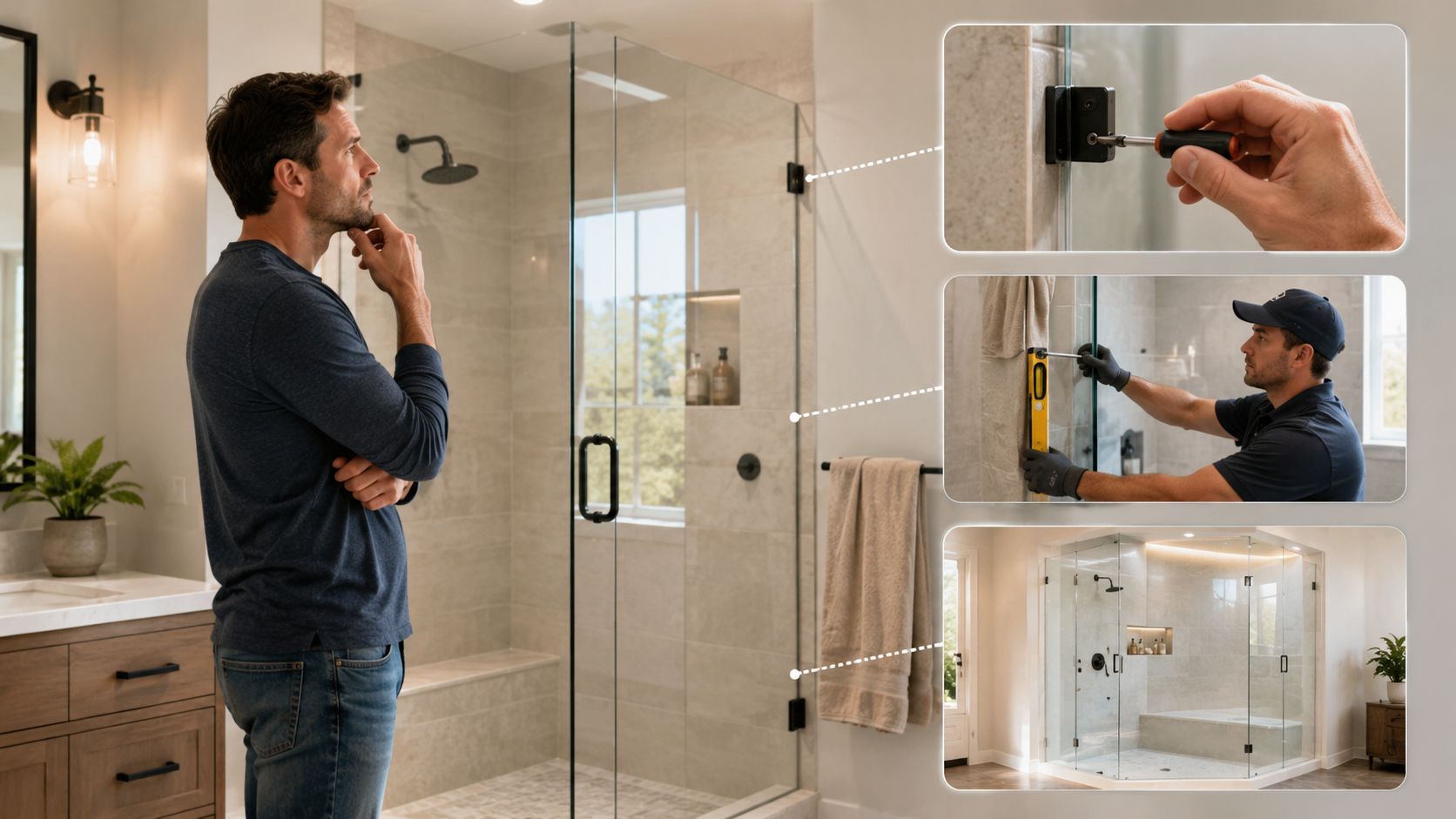
The answer usually depends on which part has failed. Hardware and seals are repair territory. Damaged glass, recurring sag tied to structural movement, or repeated leak history often push the decision toward replacement.
When repair makes sense
Professional repair is usually the better choice when the glass is intact and the issue is isolated.
- Minor realignment: Best when the door is slightly off, but the hinges and anchoring are still sound.
- Seal or sweep replacement: A good option when water escapes but the door remains square.
- Hardware service: Appropriate for loose screws, early corrosion, squeaks, or mineral buildup.
A lot of homeowners try fresh caulk first. That's understandable, and this piece on Home Project Services' caulking tips is useful if you want to understand where caulk helps and where it doesn't. What caulk won't do is correct a door that's no longer aligned.
When replacement is the smarter call
Some failures don't reward repeated patchwork.
Historical analysis reveals that 38% of frameless shower door replacements are due to visible glass damage. It also shows that 50% of water leakage issues stem from worn-out seals and sweeps, with 65% of those failures occurring within 3 years if they're not properly maintained. That pattern matters because it separates a routine wear item from a system that keeps having the same problem.
If you're considering a new setup, a custom shower door design path helps homeowners think through layout, swing, glass type, and hardware choices before they commit.
A simple decision filter
Ask these three questions:
Is the glass sound?
If yes, repair may be possible. If no, replacement is usually the safer route.Is the issue isolated?
One worn sweep is different from sagging, scraping, and leakage happening together.Has the same problem come back before?
Repeated service on the same symptom often means the root cause was never addressed.
When a DIY Fix Is Not an Option
There are times when homeowner maintenance stops being helpful and starts becoming risky. Frameless glass looks simple, but the loads involved are not simple. Once the problem reaches the anchoring, the stationary panel, or the glass itself, the safe move is professional repair.
Red flags you shouldn't ignore
Some signs are undeniable.
- Any chip or crack in the glass
- A door that drops visibly when opened
- Metal pulling away from tile or wall
- A fixed panel that no longer feels rigid
- Persistent leaking after sweep replacement and cleaning
- Grinding, binding, or glass-to-glass contact
These are the situations where tightening a screw can create false confidence. The symptom may ease for a day or two, but the underlying support may still be failing.
Coastal homes have a hidden problem many guides miss
In Southwest Florida, wall conditions matter more than many homeowners realize. A 2025 structural engineering report found that 65% of sagging door complaints in coastal regions like Southwest Florida stem from hidden wall anchor failure in porous substrates, not simple hinge misalignment, and that issue requires professional re-anchoring rather than basic tightening, as discussed in this structural engineering video reference.
That's important in Naples because porous block, moisture exposure, and salt air create a different service environment than a dry inland bathroom. The door may appear to sag at the hinge, but the actual failure point can be behind the tile where the anchor has lost grip.
Homeowners often tighten the visible hardware and assume the problem is fixed. If the wall anchor has failed, the door is still moving where you can't see it.
Stationary panel movement is another professional-only issue
Industry benchmarks show that when a stationary panel's mounting points aren't secured with a minimum embedment depth of 1.5 inches into the substrate, the panel can sag enough over time to pull the whole door system out of alignment. That's not a cosmetic adjustment. That's a structural correction.
If your enclosure includes a fixed panel and the door suddenly starts binding, don't focus only on the hinges. The panel may be deflecting under load, which changes the pivot geometry of the entire assembly.
For homeowners dealing with older builds or coastal construction conditions, a professional inspection from a team experienced with frameless shower door installation in Fort Myers Florida can help identify whether the problem is at the door, the panel, or the wall anchoring behind them.
Proactive Maintenance to Prevent Future Problems
The best way to handle frameless shower door problems is to catch them before they become repair work. In a Southwest Florida bathroom, the main enemies are moisture, salt exposure, soap residue, and mineral buildup. A short routine done consistently works better than occasional deep cleaning after something starts leaking.
A practical maintenance rhythm
A good routine doesn't need special equipment. It needs consistency.
- After showers: Squeegee the glass and wipe water off the bottom edge and hinges.
- Monthly: Check screws for looseness, inspect the sweep, and look at the gap under the closed door.
- Periodically: Clean hinges and seals with a pH-neutral cleaner, then use a silicone-based lubricant where appropriate.
- Seasonally: Look closely at fixed panel stability, especially if the bathroom is in a humid area with poor ventilation.
Watch for the early structural signs
Maintenance isn't just cleaning. It's observation.
Industry benchmarks show that when a stationary panel's mounting points lack a minimum embedment depth of 1.5 inches, the panel can sag 4 to 6 mm over 12 months, which leads to door misalignment. The useful takeaway for a homeowner is simple. During routine cleaning, notice whether the panel still feels firm and whether the door gap looks the same from month to month.
Protective coatings help, but they don't replace maintenance
Protective glass coatings can make day-to-day care easier. In practice, they help water sheet off more cleanly, reduce how aggressively mineral deposits stick, and make routine wiping less of a chore. That's especially useful in Naples homes where hard water and humidity combine to leave haze on untreated glass.
A product like Diamond-Fusion adds value when it's paired with proper maintenance habits. It doesn't prevent structural issues, and it won't save a worn sweep or a loose anchor. What it does well is preserve clarity and reduce the amount of scrubbing that can wear finishes and seals over time.
Keep the glass clean, but pay equal attention to what holds the glass in place. The hardware tells you a lot before the enclosure actually fails.
Understanding Your Warranty and Safety Standards
A frameless shower door is not just a decorative panel. It's a heavy moving glass assembly mounted to finished surfaces inside a wet environment. That matters for both safety and warranty coverage.
DIY repair can create warranty problems
Many homeowners don't realize that major DIY adjustments can create two issues at once. The first is safety. The second is paperwork. If someone loosens structural hardware, alters support points, or replaces parts with mismatched components, the installer or manufacturer may not stand behind the system afterward.
That becomes even more important in custom bathrooms. For non-standard angle framing such as 135° corners, common in some Southwest Florida homes, DIY installation failures increase by 40% due to incorrect load-bearing calculations, which is exactly the kind of risk that professional installation and warranty protection are meant to reduce, as discussed in this Houzz discussion about non-standard shower angles.
Safety standards matter most when the layout gets complicated
Tempered safety glass, precise measuring, proper anchoring, and accurate hardware placement are what make a frameless enclosure feel effortless in daily use. Homeowners usually only notice those details when something goes wrong. Installers think about them from the start.
That's why the best long-term result usually comes from a simple division of labor. Homeowners can handle routine cleaning, visual inspections, and early maintenance. Structural corrections, glass damage, anchor issues, and custom-angle work belong in professional hands.
If your shower door leaks, drags, sags, or just doesn't feel right anymore, AmeriGlass Industries can help you sort out whether it needs a simple repair, a hardware correction, or a full replacement. Homeowners in Naples and across Southwest Florida trust the team for precise measuring, careful installation, and practical guidance that protects both the look of the bathroom and the safety of the enclosure.