

You're probably looking at bathroom photos, saving clean all-glass inspiration, and trying to make sure your new shower feels open instead of busy. That's the right instinct. A frameless enclosure can completely change how a bathroom in Naples feels, especially when the room needs more light, less visual weight, and fewer metal lines.
What most homeowners don't realize is that the look depends on a small group of parts doing a very big job. Frameless shower door hinges carry the glass, control the swing, influence water containment, and determine whether the door still lines up properly years later. In Southwest Florida, they also have to deal with humidity, salt exposure, and cleaning habits that can shorten hardware life if the wrong material or setup is chosen.
Your Guide to a Flawless Frameless Shower
A frameless shower looks simple when it's finished. That simplicity is deceptive.
The category itself has been around for a long time. Frameless shower doors became a recognizable market category in 1970, when frameless glass enclosures entered the market without metal or rubber framing, creating clearer sightlines and a more modern look, according to this history of glass shower doors. The visual goal hasn't changed much since then. Homeowners still want the same thing: more glass, less hardware, and a bathroom that feels cleaner.
The difference between a shower that keeps that look and one that starts to frustrate you usually comes down to the hinges. A door can look perfectly installed on day one and still become a problem later if the hinge type, material, or load rating was a bad match for the opening.
What homeowners notice first
Customers don't call a glass specialist because they're excited about hinge engineering. They call because they want to avoid these problems:
- A door that drifts and no longer closes where it should
- Uneven gaps that spoil the symmetry of the enclosure
- Water on the bathroom floor because the sweep and strike side no longer line up
- Corroded hardware that makes a newer remodel look older than it is
Practical rule: If the hinge decision is treated like a finish choice instead of a structural choice, the enclosure usually pays for it later.
In Naples homes, I also see another issue. Homeowners put serious money into tile, fixtures, and glass clarity, then underestimate the environment those hinges live in. Salt in the air, persistent moisture, and aggressive cleaning all work against hardware over time.
That's also why routine care matters after installation. If mineral buildup is already part of your maintenance routine elsewhere in the house, this guide on how to remove hard water stains from windows is useful background because many of the same deposit habits show up on shower glass and around hardware.
A flawless frameless shower doesn't happen because the glass is thick or the finish is trendy. It happens because the hinges were chosen for the actual conditions in the room, not just the photo on the estimate.
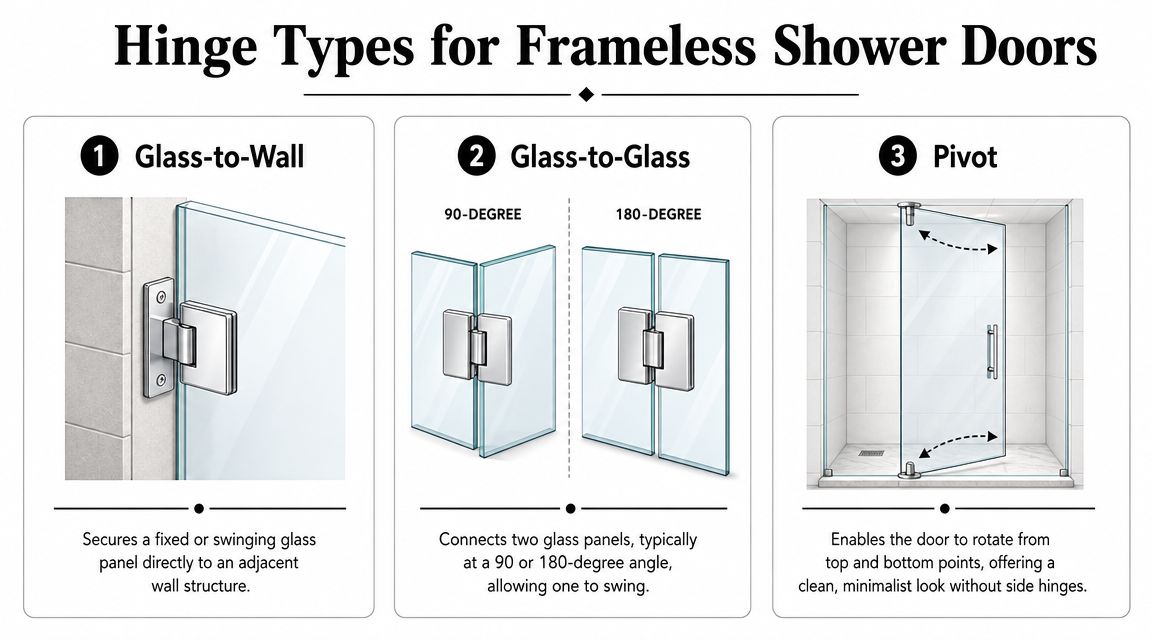
Hinge Types Glass-to-Wall Glass-to-Glass and Pivot
The right hinge starts with the layout. Two showers can look similar in photos and require very different hardware once you account for walls, fixed panels, and swing clearance.
Here's a simple visual comparison of the three main formats:
Glass-to-wall hinges
This is the setup most homeowners picture first. The door mounts directly to a finished wall or structural jamb.
It works well when the wall is the logical anchor point and you want the enclosure to feel visually quiet. In many bathrooms, this is the most straightforward path to a clean look and fewer visible connections between glass pieces.
A basic frameless door-only setup uses one glass panel, two or three hinges, a handle, and a plastic bottom sweep, and quality shower-door hinges are engineered to self-close and center within 20 degrees of the closed position, as noted in this frameless shower door FAQ. That self-centering action is one of the details homeowners appreciate without always realizing what causes it. The door feels settled instead of loose.
Glass-to-glass hinges
These hinges attach the swinging door to a fixed panel rather than to a wall. They're useful when the design calls for a clean glass-forward look, especially in larger custom enclosures or certain corner layouts.
If you're planning a right-angle enclosure, this style often comes into play. Homeowners comparing layouts for 90 degree shower doors usually end up deciding between wall-mounted hardware and glass-to-glass hardware based on the exact opening, not just style preference.
Glass-to-glass hinges can look elegant, but they place more importance on precision. The fixed panel isn't just decorative. It becomes part of the structural logic of the enclosure.
Pivot hinges
Pivot systems work differently. Instead of side-mounted hinges, the door rotates from top and bottom pivot points.
This can solve a specific problem. If the opening is tight or the design calls for a different swing feel, a pivot setup may fit better than traditional side hinges. It also changes the visual profile of the door because the hardware isn't concentrated on one vertical edge.
For homeowners, the practical question is simple: what does the room allow?
Frameless hinge type comparison
| Hinge Type | Primary Use | Typical Swing | Best For |
|---|---|---|---|
| Glass-to-Wall | Door mounts directly to wall | Side-hinged swing | Standard openings with a suitable wall anchor |
| Glass-to-Glass | Door mounts to adjacent fixed panel | Side-hinged swing | Corner and custom all-glass layouts |
| Pivot | Door rotates from top and bottom points | Pivoting swing | Tight clearances or minimalist pivot designs |
The hinge that looks cleanest on paper isn't always the one that will function best in the room you actually have.
Why Hinge Materials Matter in Southwest Florida
In Naples, hardware selection isn't a cosmetic footnote. It's part of whether the enclosure stays safe, clean-looking, and reliable.
A lot of national content treats hinge finish and hinge material like the same decision. They're not. Finish is what you see. Material is what has to survive the environment behind that finish.
What holds up near the coast
Frameless shower hinges are commonly made in 304 or 316 stainless steel for corrosion resistance, and 316 stainless is preferred in harsher, salt-air settings, according to this overview of frameless glass door hinges. That same source notes that these systems are often designed for 8–10 mm glass, which is a typical range for frameless assemblies.
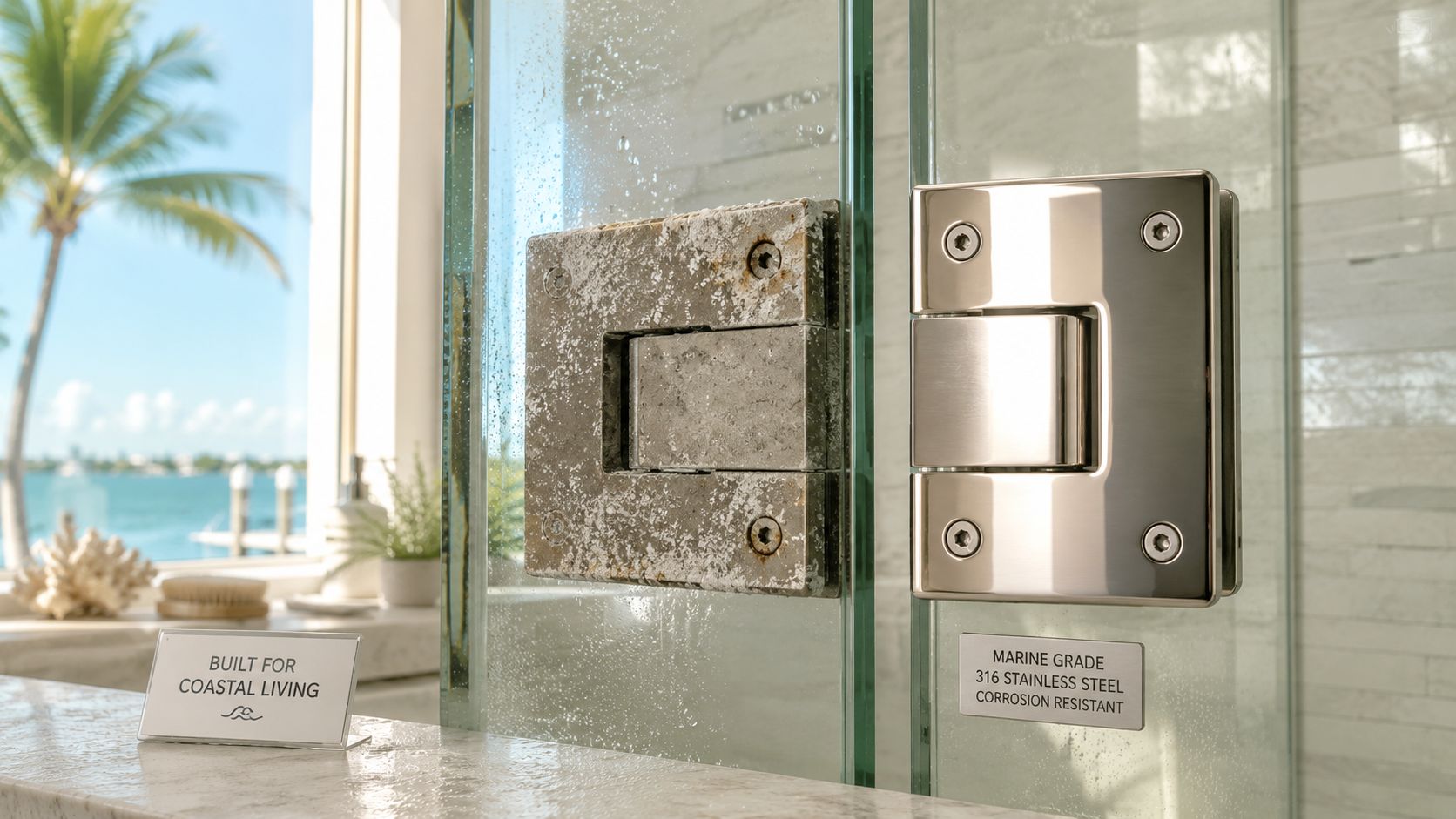
For Southwest Florida homes, that preference matters. Salt exposure isn't limited to beachfront property. Air movement carries chlorides farther inland than many homeowners expect, and bathrooms already stay damp longer than most interior rooms.
If you're also comparing glass clarity and hardware pairing, ultra-clear glass options tend to make hinge quality even more visible because there's less color in the glass to visually soften lower-grade hardware.
Why 316 stainless usually makes more sense here
A lower-grade hinge can still look fine when it's new. The trouble starts later.
Corrosion doesn't always announce itself with dramatic rust right away. In this climate, it often begins as surface deterioration, pitting, finish breakdown, or a hinge that no longer looks crisp next to the glass and tile. Once that starts, the enclosure loses the precise, upscale look that frameless designs rely on.
Here's the practical trade-off:
- 304 stainless can be appropriate in many interior environments.
- 316 stainless is generally the smarter call where salt air, chlorides, and persistent moisture are part of normal life.
- Cheaper hardware may save money upfront, but it often creates a replacement problem instead of a long-term solution.
A frameless shower hinge in Southwest Florida isn't living in a showroom. It's living in warm moisture, cleaning residue, and coastal air every day.
This is the one place in the article where I'll mention a local provider directly. AmeriGlass Industries installs custom frameless enclosures in Southwest Florida, and hardware selection is part of that process because the local environment changes what makes sense materially.
Material choice isn't an upgrade line on a quote. In this region, it's part of responsible specification.
Matching Hinges to Your Glass Weight and Door Size
A frameless shower door is a large piece of tempered glass with very little visual support. The hinges carry that load every time the door opens, closes, settles, and rests.
That's why hinge capacity should never be guessed.
What the ratings actually tell you
There's a wide range between light-duty and heavy-duty hardware. Light-duty brass hinges may be rated at 50 lb (22.7 kg) for a 2-hinge door, while heavy-duty stainless-steel systems are commonly specified for doors up to 150 lb with 2 hinges or 260 lb with 3 hinges, according to this hinge rating reference from CRL.
Those numbers matter because homeowners often compare hinges by finish, shape, or price before they compare them by capacity. Capacity is what determines whether the door remains aligned over time.
What goes wrong when hinges are underspecified
When the hardware isn't sized correctly for the door, several things usually happen together:
- The door begins to sag and the reveal changes
- The strike side drifts so the sweep and seals stop lining up properly
- The hinges wear faster because they're managing stress they weren't meant to carry
- The enclosure starts leaking even though the problem appears to be “just adjustment”
If your layout includes an in-line configuration, inline door panels can look simple, but they still need hinge selection that matches the actual weight and swing behavior of the door panel involved.
The real-world decision
Homeowners usually ask whether they can “just use two hinges.” Sometimes yes. Sometimes that decision creates the service call that comes later.
A heavier door, a wider door, or a door designed around a particular glass look can require a sturdier hinge package. That may mean moving from light-duty to heavy-duty hardware, or increasing the hinge count so the load is distributed properly.
If a frameless door feels heavy in your hand, the hinge system feels that load all day, every day.
This is one of the biggest differences between custom specification and off-the-shelf thinking. Custom work accounts for the actual glass panel being fabricated, not a generic idea of a shower door.
The Professional Difference in Hinge Installation
A lot of homeowners assume hinge performance depends mostly on the hinge itself. In practice, installation geometry decides whether even good hardware performs well.
That's where DIY expectations usually collide with reality.
Walls are rarely as straight as they look
Authoritative guidance notes that wall-mount hinges can work on walls that are “out of plumb” but must be straight, and that glass-to-glass hinges have a hard limit of a 5° pivot pin, according to this technical guidance published by Glass Magazine. That's a small detail with big consequences.
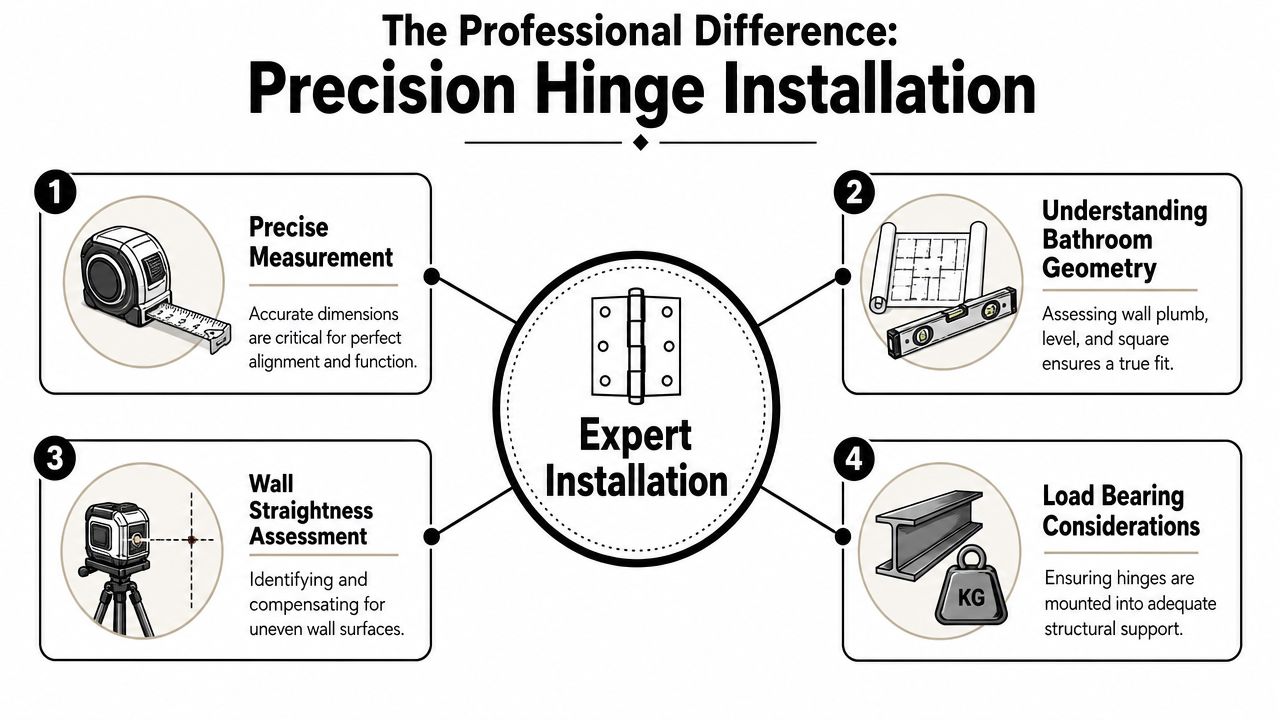
A wall can be finished with beautiful tile and still be unsuitable for a standard hinge placement if the surface wanders, bows, or twists. Homeowners often see “close enough.” Glass hardware often doesn't.
That's why a shower door adjustment can't fix every problem. If the opening geometry was wrong from the start, adjustment only chases the symptom.
Why templates and field skill are different things
A homeowner doing light carpentry might be familiar with a door hinge template for sale for wood doors. That kind of jig can be useful in the right context, but frameless shower work is different because the installer is dealing with finished tile, tempered glass tolerances, wall condition, swing path, and wet-area performance all at once.
Professional installers also have to account for where the weight transfers, how the hinge pocket interacts with the glass fabrication, and whether the mounted surface is suitable for that hinge style.
Where professionals save the project
Here's where experience matters most:
- Measurement before fabrication. Glass doesn't get trimmed on site when the opening turns out to be imperfect.
- Geometry review. The wall, curb, adjacent panel, and swing path all have to agree.
- Support evaluation. Hinges need proper mounting conditions, not just a spot that seems convenient.
- Layout judgment. Sometimes the right answer is changing hinge type, not forcing the first idea to work.
For homeowners comparing professional service options, frameless shower door installation in Fort Myers Florida is the kind of project category where these details show up clearly. The clean finished look depends on hidden decisions made before the glass ever arrives.
Good frameless work often looks effortless because the difficult decisions were handled before installation day.
Keeping Your Shower Door Perfectly Aligned
Once the enclosure is installed correctly, maintenance is mostly about observation and restraint. The biggest mistakes usually come from overcorrecting small issues or ignoring early warning signs until they become larger ones.
What normal upkeep looks like
Start with gentle cleaning. Use a soft cloth and avoid abrasive products or harsh chemicals that can damage the hinge finish. In Southwest Florida, this matters because residue from moisture and cleaning products tends to stay on hardware longer than homeowners expect.
Then pay attention to how the door behaves. The early signs of trouble are usually simple:
- The gap changes from top to bottom
- The door no longer closes with the same feel
- The sweep starts dragging
- You notice small leaks where the enclosure used to stay dry
None of those automatically mean the hinges have failed. They do mean the door should be evaluated before someone starts tightening screws aggressively.
When adjustment is reasonable
Minor settling can happen. A careful correction may restore alignment when the underlying installation and hardware selection were sound.
But repeated hinge corrections usually point to something deeper. As noted in this hinge adjustment guide, frequent adjustments can be a symptom of problems like door weight exceeding hardware capacity or initial mismeasurement, which suggests the door may need professional reassessment instead of another tweak.
When to stop adjusting and call for service
A good rule is to separate one-time refinement from recurring drift.
- A small, occasional correction may be part of ordinary maintenance.
- A door that keeps moving out of position is telling you the root issue hasn't been solved.
- Visible hardware wear, recurring leaks, or binding should prompt service, not experimentation.
If you're trying to protect the enclosure long term, shower door maintenance guidance is useful because care habits affect both glass appearance and hinge longevity.
Don't judge a hinge problem only by where the door sits today. Judge it by whether the door keeps returning to the same problem after correction.
That's the dividing line between maintenance and a structural or installation issue.
Final Checklist and Frequently Asked Questions
Choosing frameless shower door hinges gets easier when you stop treating them like a small accessory purchase. They're part structural hardware, part motion control, and part long-term maintenance decision.
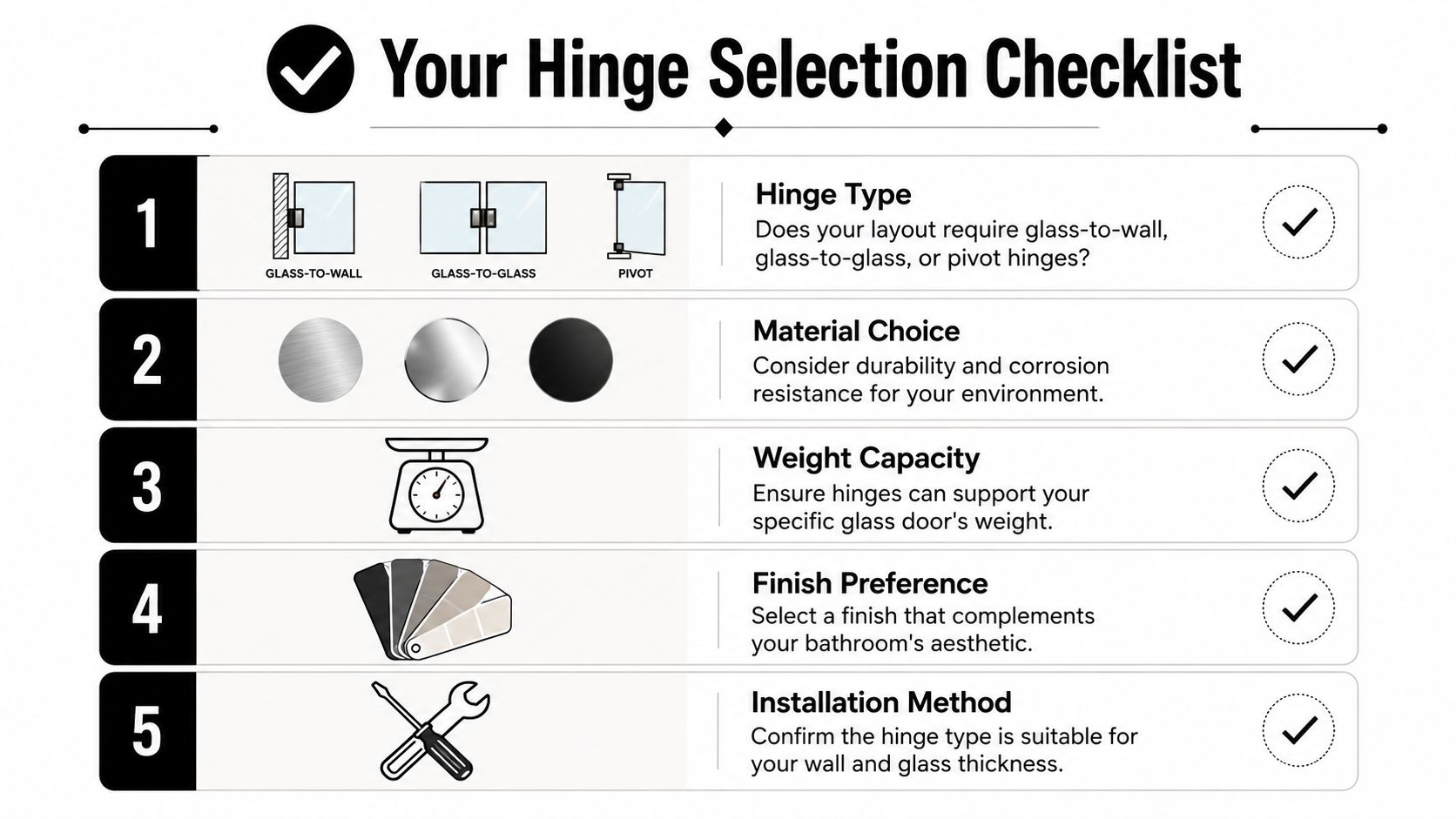
Use this checklist before approving a frameless shower enclosure:
Final selection checklist
- Layout match. Does the opening call for glass-to-wall, glass-to-glass, or pivot hardware?
- Coastal material choice. In Southwest Florida, is the hinge material appropriate for salt air and humidity?
- Load capacity. Has the hardware been selected for the actual glass door being installed, not a generic assumption?
- Finish coordination. Does the hinge finish work with the rest of the bathroom hardware without sacrificing durability?
- Installation quality. Has someone evaluated wall straightness, swing geometry, and mounting conditions before fabrication?
Frequently asked questions
What warranty should I expect on shower hinges?
Warranty terms vary by hardware manufacturer and installer. The smart move is to ask separately about the hardware warranty and the installation workmanship warranty so you know who is responsible for what.
Can a framed shower be replaced with a frameless one?
In many bathrooms, yes. The deciding factors are the opening dimensions, wall conditions, and whether the layout can support the hinge style and glass design you want.
Does glass coating change hinge care?
A protective coating can reduce how often the glass needs heavy cleaning, but it doesn't remove the need to care for the hardware properly. Hinges still need non-abrasive cleaning and regular visual inspection.
The best frameless shower doors look simple because the hard choices were made correctly: hinge type, hinge material, hinge capacity, and installation geometry. In Naples, those choices matter even more because the climate doesn't forgive bad hardware.
If you're planning a frameless shower and want the hinge, glass, and installation details evaluated for a Southwest Florida home, AmeriGlass Industries can help you compare layout options, hardware materials, and enclosure designs before fabrication starts.