
You’re probably standing in one of two bathrooms right now.
The first has a shower curtain that sticks to your leg, traps moisture, and makes the room feel darker than it is. The second has an old framed enclosure with metal channels that collect grime, look dated, and hide the tile you paid good money for. In Southwest Florida, both get old fast. Humidity hangs around, hard water leaves its mark, and anything with extra seams becomes a cleaning project.
Frameless rain glass shower doors solve that problem cleanly. They open up the room, soften visibility without turning the shower into a cave, and feel custom in a way framed units never do. That’s why homeowners keep coming back to them when they remodel. You get privacy, light, and a more architectural look all at once.
Your Bathroom Upgrade Starts with a Vision
A lot of homeowners start the same way. They’re not shopping for “glass.” They’re just tired of looking at a bathroom that feels older than the rest of the house.
Maybe the tile is decent, but the enclosure ruins it. Maybe the shower works fine, but the room still feels cramped. Maybe you cleaned the tracks again last weekend and decided you’re done.
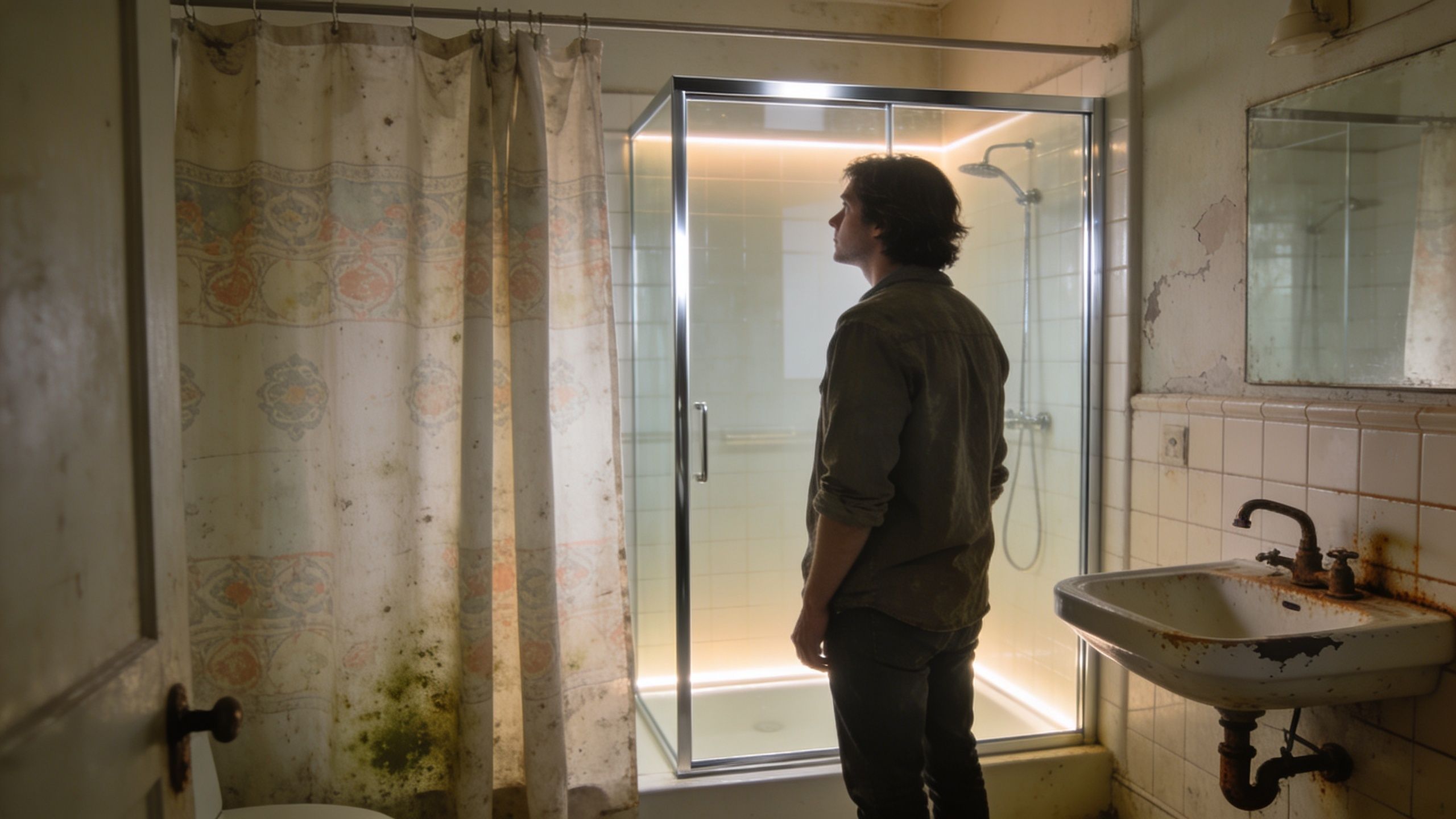
That’s usually the moment a frameless rain glass enclosure starts making sense. It doesn’t just replace an old door. It changes how the whole bathroom reads. More light gets through. The walls don’t feel chopped up. The tile becomes part of the design instead of something hidden behind aluminum.
Rain glass is especially smart for Southwest Florida homes. It gives you privacy without making the shower feel closed off. In a primary bath, that matters. In a guest bath, it matters even more. You don’t need full opacity. You need a surface that diffuses the view, still lets the room breathe, and holds its own against daily use.
A good remodel should feel better every morning, not just look better in listing photos. If you want that upscale, calm, hotel-like feel, glass does the heavy lifting. That’s why homeowners who want a more polished look often start with the shower before they touch anything else. If you’re weighing the broader visual impact, this look at how glass makes a home feel more luxurious is worth your time.
A framed enclosure says “utility.” A frameless rain glass enclosure says the bathroom was designed on purpose.
The right project starts with a clear picture of what you want the room to become. Not trendy. Not flashy. Just cleaner, brighter, and easier to live with in Florida.
The Anatomy of a Modern Frameless Shower
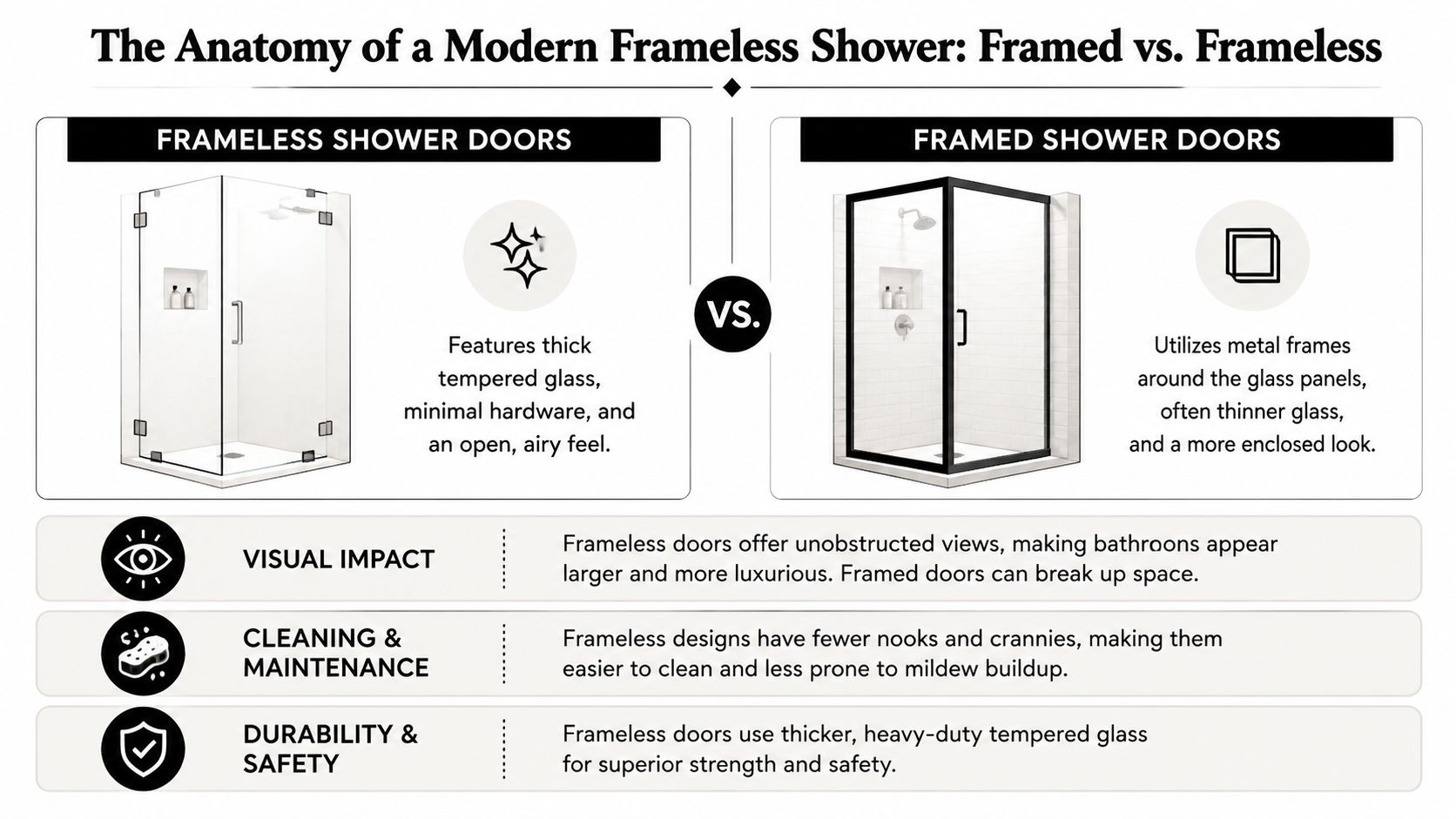
A frameless shower isn’t just a shower with less metal. It’s a different construction method.
Framed doors rely on metal around the perimeter to support thinner glass. Frameless doors rely on heavier tempered glass and carefully placed hardware. The effect is similar to an infinity pool. Your eye doesn’t stop at a bulky edge, so the space feels continuous.
That design shift has history behind it. Frameless shower enclosures entered the market in 1970, replacing metal and rubber framing with a cleaner look that also simplified cleaning, according to this history of glass shower doors. The same source notes that they now represent over 50% of premium shower enclosure preferences in new builds and remodels.
What frameless actually means
When I say frameless, I mean the glass is doing the visual work and most of the structural work. You’ll still have hardware. Hinges, clips, and handles don’t disappear. But they stay restrained.
That matters for three reasons:
- You see more tile: The enclosure doesn’t interrupt the design.
- You clean fewer crevices: Less framing means fewer places for mildew and residue to collect.
- The room feels larger: Sightlines stay open.
Rain glass adds another layer. It’s a textured privacy glass with a pattern that diffuses the view while still transmitting light. It’s one of the few options that gives you privacy without making the enclosure feel heavy.
Frameless vs semi-frameless vs framed
If you’re deciding between systems, keep it simple.
| Style | What it uses | What it looks like | Best for |
|---|---|---|---|
| Frameless | Thick tempered glass with minimal hardware | Open, sleek, custom | Homeowners who want the cleanest visual result |
| Semi-frameless | Some perimeter metal with less bulk than framed units | Updated but still defined | Budgets that want a middle ground |
| Framed | Metal framing around most edges | More segmented and enclosed | Utility-first bathrooms |
Framed units can still work. They’re just not the answer if your goal is a spacious, modern bathroom. The frame breaks up the room visually and creates more maintenance points. In Southwest Florida, those extra channels and seals don’t age gracefully.
Practical rule: If you spent money on tile, don’t hide it behind bulky framing.
There’s also a layout question. Some homeowners are deciding between a standard enclosed shower and a more open concept. If that’s where you are, this comparison from All Well Property Services on wet rooms gives helpful context on how open shower designs behave in real bathrooms.
Why homeowners choose rain glass
Clear glass is beautiful, but it’s not the right call for everyone. Rain glass earns its place because it solves a common problem. You want openness, but you don’t want to feel exposed.
That’s why frameless rain glass shower doors work so well in family homes, guest baths, and primary suites where privacy matters. You still get the light. You still get the open feel. You just lose the fishbowl effect.
If you’re narrowing styles and door configurations, use a proper custom planning approach instead of guessing from showroom photos. This guide to designing your shower door helps you think through opening type, fixed panels, and layout before you order anything.
Customizing Your Shower Glass and Hardware
The project now stops being generic and starts looking like your bathroom.
Most homeowners focus on the glass pattern first because rain glass is the headline feature. Fair enough. But the final look comes from the combination of glass type, hardware finish, handle style, and panel layout. Get those aligned and the shower looks intentional. Mix them carelessly and even expensive glass can look off.
Start with the right glass thickness
For frameless rain glass shower doors, 3/8-inch tempered glass is the industry standard for most installations, according to the NGA technical design guide. That same source notes this thickness provides rigidity and safety, offers strength four to five times that of annealed glass, and can reduce hinge stress by 25-30% compared to thinner glass.
That’s the sweet spot for most homes. It feels substantial, supports the hardware properly, and doesn’t push weight where it doesn’t need to go. In larger or taller designs, thicker glass may make sense, but 3/8-inch is the baseline I’d want to see on a true frameless install.
Standard clear vs ultra-clear
Rain glass affects privacy, but the base glass still affects color and brightness. This matters more than people think.
Standard clear glass often carries a subtle green cast, especially on the edges. Some homeowners don’t care. Others notice it immediately once it sits next to white tile, pale stone, or warm neutral finishes. Ultra-clear, also called low-iron glass, strips away much of that tint and gives the shower a cleaner, brighter look.
| Feature | Standard Clear Glass | Ultra-Clear (Low-Iron) Glass |
|---|---|---|
| Edge appearance | More visible green tint | Reduced green tint |
| Best use | Good general-purpose choice | Best for light tile and premium visual clarity |
| Color accuracy | Slightly altered by iron content | Cleaner, truer look |
| Overall feel | Solid and practical | Crisp and elevated |
If your bathroom has creamy tile, soft white walls, or warm coastal finishes, I’d lean ultra-clear. If the room is darker, more contrasted, or budget-sensitive, standard clear can still work beautifully beneath the rain pattern. For a closer look at the visual difference, review these options for ultra-clear glass.
If you’re building or remodeling a custom home, details like glass tone and hardware finish carry more weight than most homeowners expect. These glass door tips for custom homes offer a useful outside perspective.
Hardware finish changes the mood
Hardware is the jewelry of the enclosure. Small pieces. Huge effect.
I usually walk homeowners through four finish families:
- Matte black: Sharp, modern, graphic. Best when you want contrast against white or light tile.
- Brushed nickel: The safest all-around choice. It’s forgiving, understated, and works with most faucet finishes.
- Polished chrome: Bright and crisp. Best in bathrooms that already lean sleek and reflective.
- Oil-rubbed bronze: Warmer and more traditional. Works when the rest of the room already supports that tone.
Don’t choose hardware in isolation. Match it to the faucet, mirror frame, lighting, or cabinet pulls. You don’t need everything identical, but you do need everything to belong in the same conversation.
In Florida, material quality matters more than finish color
A pretty hinge that corrodes is still a bad hinge.
In Southwest Florida, I’d specify solid brass hardware over cheaper alternatives every time. Humidity punishes low-grade metal. If you’re a mile from the coast or nowhere near it, the bathroom still cycles through moisture daily. Cheap hardware pits, loosens, and disappoints.
That’s also why handle choice matters. A slim pull looks elegant, but it still has to feel sturdy in the hand. The shower door gets touched every day. This isn’t decorative trim. It’s working hardware.
My recommendation for most SWFL bathrooms
If you want a combination that stays current and ages well, start here:
- Rain glass in 3/8-inch tempered glass
- Ultra-clear base glass if your tile is light or high-end
- Solid brass hinges and clamps
- Brushed nickel or matte black, depending on the rest of the bath
- Minimal, clean handle profile
That formula is hard to regret. It gives you privacy, keeps the room bright, and avoids the overdesigned look that gets old in a few years.
Ensuring a Perfect Fit The AmeriGlass Installation Process
A frameless shower isn’t forgiving. That’s the first thing to understand.
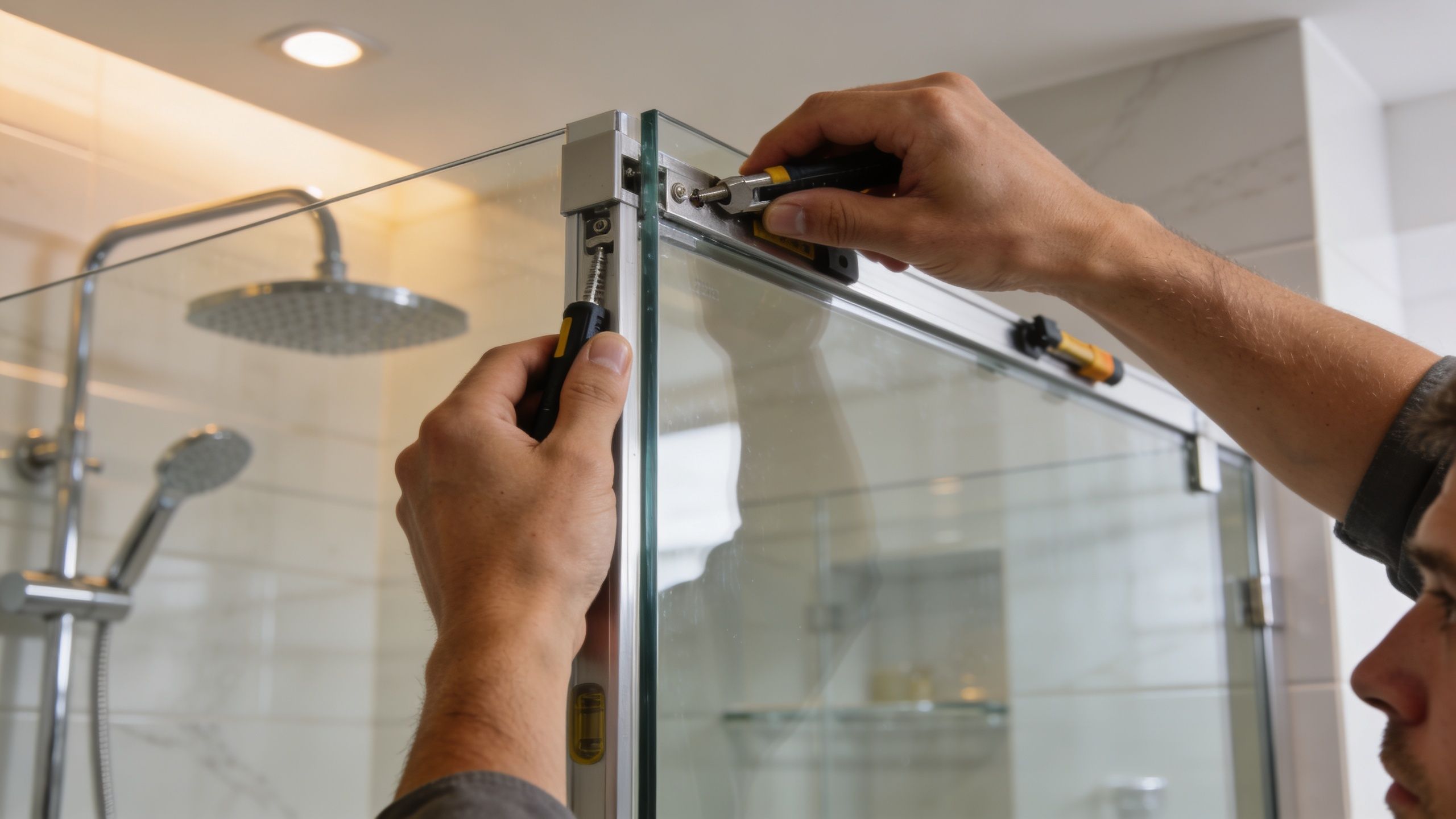
If a cabinet door is off a little, you notice it and move on. If a frameless glass panel is off, you get alignment issues, uneven gaps, stressed hardware, or water where it doesn’t belong. Precision isn’t a bonus on this kind of project. It’s the whole job.
Why measurement comes first
Homeowners often assume a shower opening is square because the tile looks square. It usually isn’t.
Corners drift. Curbs slope slightly. Walls lean. Those issues become more important with frameless glass because the hardware and panel edges don’t hide mistakes. According to GlassMan’s overview of neo-angle frameless enclosures, non-standard angles such as 120-degree corners or neo-angle layouts can increase labor costs by 20-50%, and professional measurement is critical because out-of-plumb walls increase deflection, stress, and leak risk.
That’s especially relevant in Southwest Florida homes with custom layouts, compact guest baths, or remodels layered over older conditions.
What a professional process should look like
A proper frameless shower installation follows a sequence. If someone wants to skip steps, walk away.
Initial consultation and estimate
You need to talk through layout, swing direction, hardware placement, and glass type before anyone orders anything.Field measurement after finishes are complete
Tile, curb, wall finish, and threshold details must be final. Measuring too early is how bad orders happen.Precision templating or laser measurement
This captures the actual dimensions, not the dimensions someone hopes are there.Custom fabrication
Glass gets cut, polished, and prepared for the exact opening and hardware package.Final installation by trained technicians
The team sets panels, aligns hinges, fits seals, and checks swing and closure.
A shower door should look effortless when it’s done. It never gets that way by accident.
What installation day feels like
A good installation day is calm, organized, and clean.
The crew should protect the work area, move deliberately, and communicate. You’ll hear tools. You’ll see adjustments. That’s normal. What you shouldn’t see is improvisation, rushed drilling, or confusion about where hardware belongs.
For homeowners who like to see how shower glass work comes together, this video gives helpful visual context:
Where custom projects get tricky
The hardest jobs aren’t always the biggest. They’re the ones with awkward conditions.
A few examples:
- Neo-angle enclosures: The angles have to be exact or the door won’t sit right.
- Low curbs or unusual returns: Water management gets more sensitive.
- Tight bathroom clearances: The door can’t collide with a vanity, toilet, or towel bar.
- Uneven walls: Hardware adjustment only goes so far. The glass still has to be fabricated to reality.
This is why DIY frameless installs usually disappoint. Heavy tempered glass doesn’t allow on-site “fixes” the way wood trim does. Once fabricated, the panel is the panel.
If you want the enclosure to feel custom, fit tightly, and operate smoothly, the work has to start with exact measuring and end with disciplined installation. That’s not glamorous. It is what makes the shower last.
Understanding Costs and Long-Term Value
Let’s be blunt. Frameless rain glass shower doors cost more than basic framed doors. They should.
You’re buying thicker tempered glass, stronger hardware, custom fabrication, and a tighter installation standard. If a quote seems suspiciously cheap, something in that chain is being cut down. Usually it’s glass quality, hardware quality, measurement quality, or installation care. None of those are the place to save.
What actually drives the price
The final number usually comes from a handful of variables, not one big mystery.
| Cost factor | Why it matters |
|---|---|
| Glass size | More glass means more material and heavier handling |
| Glass type | Ultra-clear upgrades the visual finish |
| Glass pattern | Rain glass changes the look and privacy level |
| Hardware finish | Premium finishes can affect package cost |
| Layout complexity | Corners, notches, and odd angles add fabrication and labor |
| Protective coating | Adds upfront cost but improves upkeep |
If your enclosure is a straight opening with a standard swing door, pricing is simpler. If you want a corner enclosure, unusual angles, or custom cutouts around tile details, expect the project to become more specialized.
Why homeowners keep choosing frameless anyway
The market has already answered this question. According to Glass Castle’s history of shower doors, frameless shower installations grew up to 60% in the U.S. residential sector from 2010 to 2020, driven in part by a 25% shift from bathtubs to walk-in showers, and frameless designs now dominate 65% of new luxury projects in markets like Southwest Florida.
That doesn’t happen because people enjoy spending more. It happens because the result looks better, feels better, and fits how people want bathrooms to function now.
Think in years, not in invoice shock
A framed enclosure often wins the initial price conversation. It rarely wins the long one.
More frame means more places for buildup, more visual clutter, and more components that can look tired faster. A well-designed frameless enclosure usually ages better because the look is simpler and the materials are doing less hiding. It’s not trying to disguise the shower. It’s trying to present it well.
The cheapest shower door is rarely the one you still like after years of Florida humidity, mineral spotting, and daily use.
The smart way to budget is this. Spend where the project becomes permanent. Glass thickness, hardware quality, fabrication accuracy, and coating protection affect how the enclosure performs every day. Fancy extras are optional. Core quality isn’t.
Maintenance and Protection for Florida's Climate
Southwest Florida is hard on shower glass, a detail most national guides skip.
The two main enemies are obvious once you’ve lived here. Hard water leaves mineral spotting, and humidity keeps moisture hanging around longer than it should. Rain glass helps visually because the texture diffuses some minor spotting, but don’t confuse that with protection. It doesn’t stop buildup. It just makes it less obvious at first glance.
Why I strongly recommend a protective coating
If you’re investing in frameless rain glass shower doors in Florida, add a coating. I wouldn’t treat that as optional.
According to this Home Depot category reference discussing protective coating trends, protective coatings like Diamond-Fusion can reduce cleaning time by up to 90%, can extend clarity and lifespan by 5-10 years, and may reduce long-term maintenance costs by 15-25%. In a hard-water market, those are meaningful gains.
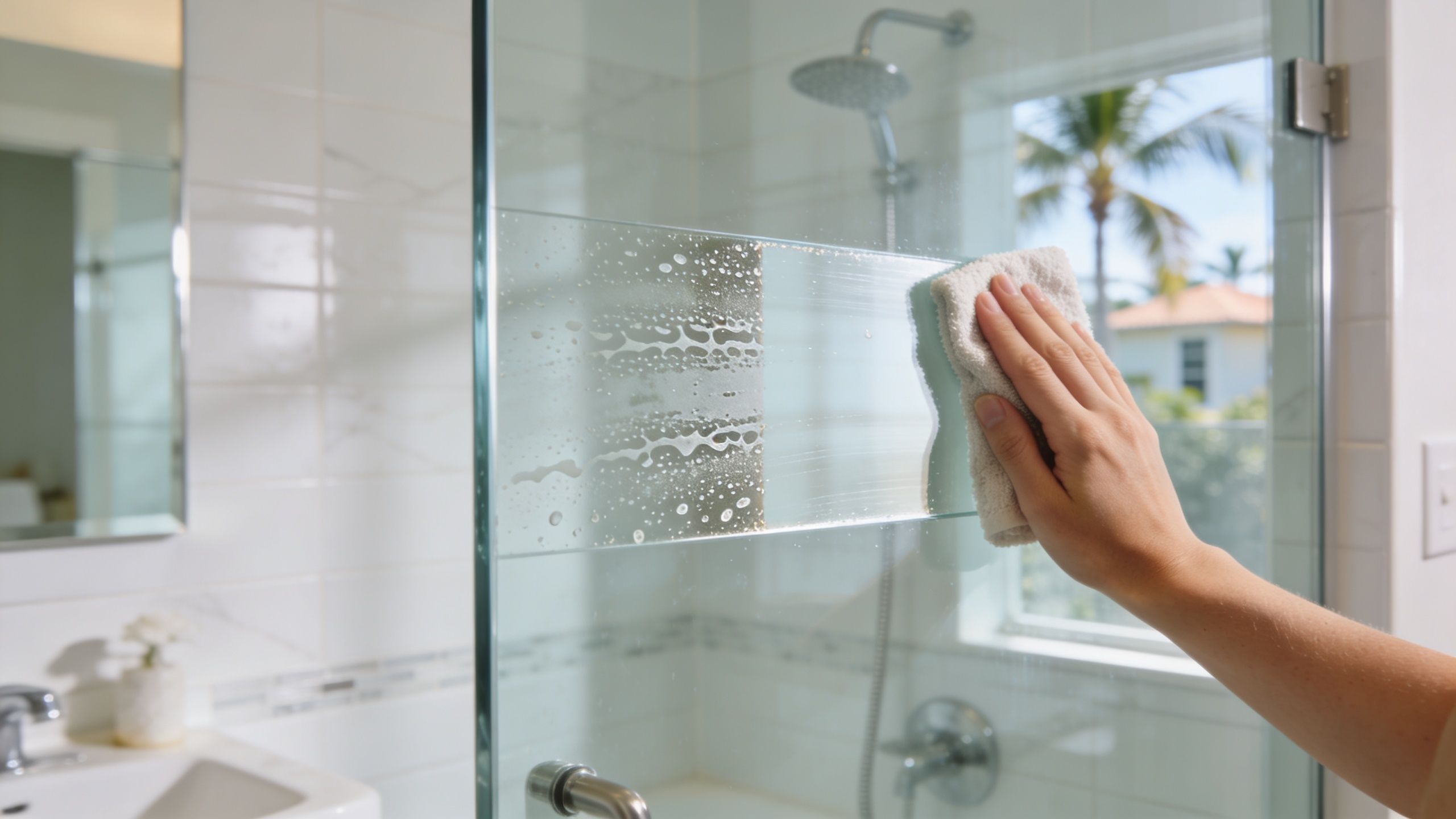
A coating works by helping water release from the glass more easily instead of sitting there and drying into residue. That doesn’t mean you’ll never clean the shower again. It means the glass stops fighting you.
What daily care should look like
You do not need an elaborate routine. You need a consistent one.
- Squeegee after use: A few seconds cuts down the water left behind.
- Use a microfiber cloth: It’s gentle and effective for touch-ups.
- Choose pH-neutral cleaners: Harsh chemicals can work against finishes and coatings.
- Keep air moving: Run the bath fan and don’t let steam linger all day.
- Wipe hardware too: Mineral residue doesn’t only settle on glass.
If you want a straightforward care routine, these tips on shower door maintenance are a good reference.
Rain glass still needs attention
Some homeowners assume textured glass means low maintenance by default. Not exactly.
Rain glass is more forgiving visually than fully clear glass, which is one reason people like it. But texture can still hold onto residue if you ignore it. The answer isn’t aggressive scrubbing. The answer is frequent, light cleaning instead of occasional heavy cleaning.
Florida doesn’t reward neglect. The shower you wipe down regularly will always look better than the one you “deep clean” once in a while.
My maintenance recommendation
If this were my own bathroom, I’d do three things from day one:
- Choose a protective coating
- Keep a squeegee in the shower
- Use the right cleaner, not the strongest cleaner
That approach protects the glass, saves effort, and keeps the enclosure looking custom instead of cloudy. In this climate, maintenance isn’t about perfection. It’s about preventing buildup from becoming permanent.
The AmeriGlass Difference Precision and Professionalism
A frameless enclosure only looks high-end if every decision under the surface was handled properly.
That means the glass has to be right. The hardware has to be right. The measurements have to be exact. The installation has to be disciplined. If one part slips, the whole project shows it. That’s why choosing the right local glass company matters more than choosing the prettiest hinge finish.
In Southwest Florida, local experience counts. Naples, Fort Myers, and Bonita Springs homes bring their own challenges. Coastal humidity, hard water, custom remodel conditions, and luxury design expectations all push the work beyond cookie-cutter shower packages. A company that handles frameless shower work every week will see issues before they turn into delays or bad fits.
Professionalism matters just as much as craftsmanship. Homeowners should expect licensed and insured installers, clean work on site, modern measurement methods, and clear communication from estimate to install day. That combination is what gives you a shower that looks effortless and performs the way it should.
There’s also a difference between a company that “offers shower doors” and one that specializes in custom glass. The specialist understands panel weight, hinge placement, wall conditions, glass options, hardware compatibility, and how to build around real bathrooms instead of idealized showroom openings.
The best frameless shower projects don’t feel improvised. They feel measured, fabricated, and installed by people who do this for a living.
If you want a frameless rain glass enclosure that suits Southwest Florida instead of fighting it, choose the team that treats precision as the product, not just part of the service.
Frequently Asked Questions About Frameless Doors
A few practical questions usually come up right before homeowners are ready to move forward. Here are the answers I give most often.
| Question | Answer |
|---|---|
| How long does a custom frameless shower project usually take? | It depends on measurement timing, fabrication, and the complexity of the enclosure. The key point is this: measurements should happen after tile and finished surfaces are complete. Rushing that step causes mistakes. |
| Are frameless rain glass shower doors waterproof? | They’re designed to contain water effectively, but no frameless shower works well without proper layout, gap management, and installation. Door swing, panel placement, curb design, and showerhead direction all matter. |
| Is rain glass dark or heavy-looking? | No. Rain glass preserves light while softening visibility. That’s exactly why it works so well in bathrooms that need privacy without losing openness. |
| Should I choose hinged or sliding? | If you have enough clearance, hinged frameless usually gives the cleanest look and easiest maintenance. If the bathroom is tight, sliding may solve the layout better. The room should make this decision, not trend photos. |
| Do I really need professional measurement? | Yes. Frameless glass has very little tolerance for bad field dimensions. Uneven walls, curbs, and angles need to be measured precisely before fabrication. |
| What should I ask about warranty and service? | Ask what’s covered on glass, hardware, and installation workmanship. Also ask who handles adjustments if alignment issues appear after installation. |
| Where can I find more detailed answers before requesting an estimate? | Review these AmeriGlass shower door FAQs for practical guidance on products, process, and service expectations. |
If you’re still deciding, focus on the fundamentals. Choose the right glass, insist on proper measurement, protect the surface for Florida conditions, and don’t let a bargain quote talk you into a mediocre install.
If you’re ready to upgrade your bathroom with expertly designed AmeriGlass Industries frameless rain glass shower doors, schedule a free estimate and get a custom solution built for Naples, Fort Myers, Bonita Springs, and the rest of Southwest Florida.