

Picture this: you’re relaxing on your lanai in Naples or your balcony in Fort Myers, looking out at that incredible Florida coastline with absolutely nothing in the way. That’s the magic of a frameless glass railing system. We get rid of the clunky balusters and thick frames, leaving you with nothing but pure, seamless glass.
Unlock Your View with Frameless Glass Railings
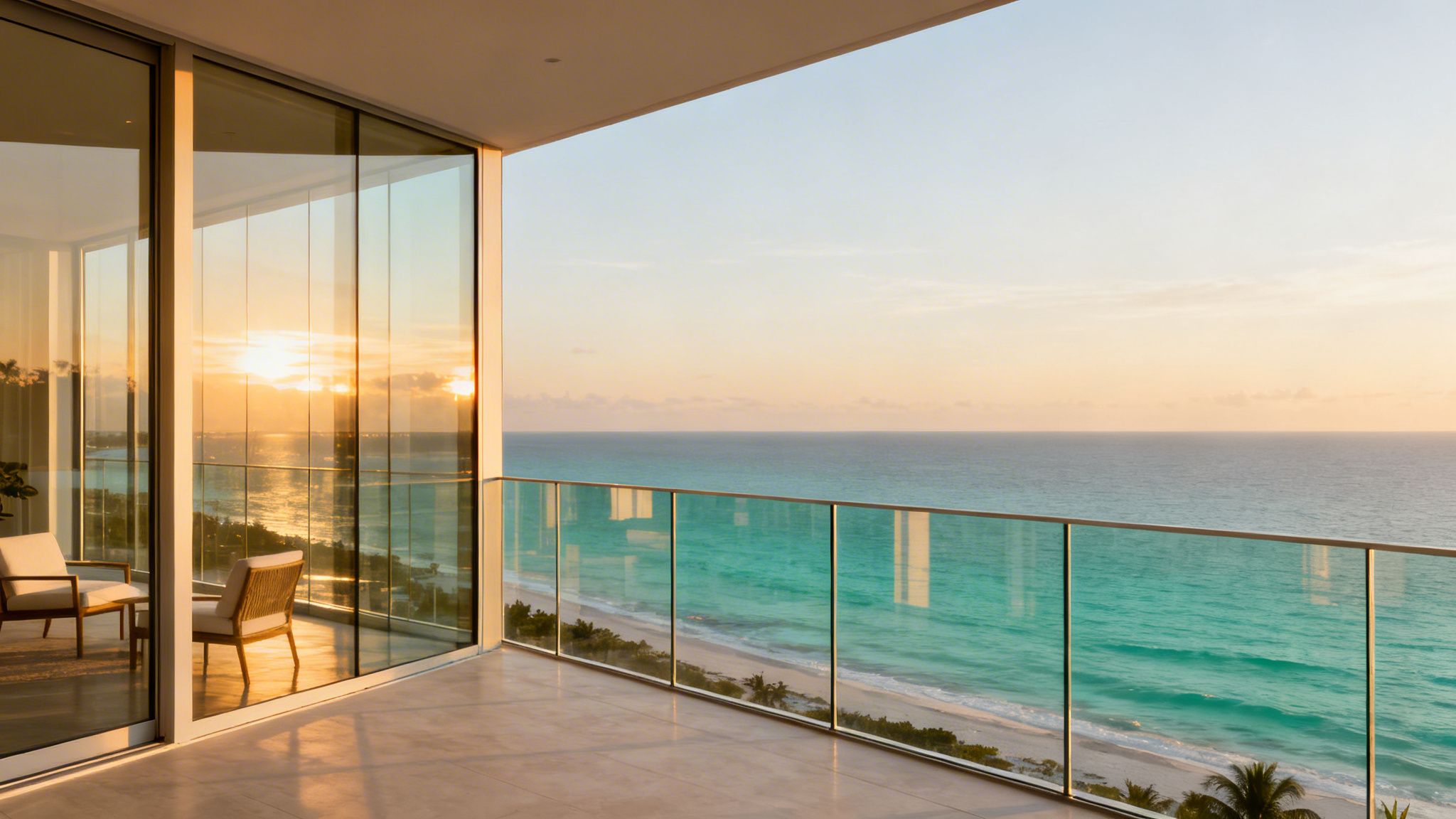
Choosing a frameless system isn't just a design upgrade; it's a genuine investment in your lifestyle and your property's value. It’s all about blurring the line between your indoor and outdoor spaces, creating a single, breathtaking panorama that traditional railings could never offer. For those of us here in Southwest Florida, it’s how you transform a beautiful home into a personal oasis where the view is the star of the show.
The Allure of an Unbroken Vista
Let's be honest, the main reason people choose frameless glass railing systems is for the view. They deliver uncompromising safety without demanding you sacrifice one inch of scenery. It's essentially an invisible shield. Whether you're in a high-rise in Bonita Springs or have a poolside patio on Marco Island, these systems protect the very million-dollar views that make our properties so special. That transparency also has a wonderful side effect: it makes your entire space feel bigger, brighter, and more connected to the stunning landscape around you.
This "less is more" approach has cemented frameless railings as a hallmark of modern architecture. They bring a clean, minimalist sophistication that works with almost any style, from coastal contemporary to classic Mediterranean. By eliminating all that visual noise, they let your home's design and the natural beauty of Florida shine. In fact, we've written before about how making your home feel luxurious often starts with smart, high-end glass installations like these.
Think of a frameless glass railing as an infinity edge for your balcony or pool deck. It creates a completely seamless transition from your living space to the world outside.
More Than Just a Pretty View
While the "wow" factor is undeniable, these systems bring some serious practical benefits that add real, lasting value to your home. That sleek, modern look is in high demand across the competitive Naples real estate market, giving your property a significant edge in curb appeal and resale potential.
But the advantages don't stop there. Here’s what else you can expect:
- A Flood of Natural Light: Those solid glass panels let the absolute maximum amount of sunlight pour onto your patio and into your home, making every space feel brighter and more welcoming.
- Unmatched Durability: We build these systems from thick, structural safety glass and use high-grade, corrosion-resistant hardware. They are specifically engineered to stand up to everything the Florida coast can throw at them—intense sun, salt spray, and relentless humidity.
- Low-Maintenance Lifestyle: Forget the endless cycle of painting, staining, or sealing that wood and metal railings demand. A simple cleaning is all glass needs. We can even add an optional protective coating that makes water and salt bead right off.
What Makes a Glass Railing System Truly Frameless
So, what really separates a “frameless” glass railing from any other? Think of it like an infinity pool for your lanai or a seamless storefront window. The structure seems to melt away, leaving nothing but a crystal-clear, protective barrier between you and your view. It’s an illusion, of course—one created by clever engineering, not a lack of support.
The secret lies in two key elements working together: incredibly strong, structural glass panels and discreet, minimalist hardware. Unlike traditional railings that get their strength from a whole network of vertical posts and a top cap, a truly frameless system puts the glass itself to work.
That's the big idea right there. The glass isn't just a fragile panel filling a gap; it is the structure.
The Two Pillars of Frameless Design
To pull off this breathtaking, open-air effect, every part of the system has to be both incredibly strong and visually quiet. It’s this combination that puts true frameless systems in a class of their own, far beyond their semi-frameless or framed cousins.
It all comes down to two things:
- Structural Glass: We're talking about heavy-duty tempered or laminated safety glass, typically a full 1/2 inch thick. This isn't your average window pane. It’s a robust material engineered to provide all the strength and impact resistance needed to act as a guardrail without any vertical posts.
- Minimalist Hardware: Instead of a bulky frame, the glass panels are secured right from the base or the side. We use small but powerful hardware like spigots, standoffs, or a completely hidden base shoe channel. The goal is for the mounting points to be so subtle they practically disappear.
This move toward minimalism isn't just about looks; it's a direct response to modern architectural trends. The huge demand for clean lines and wide-open living spaces has pushed this technology forward. In fact, the global frameless glass railing market was valued at around $2.853 billion in 2025 and is only expected to keep growing.
Key Takeaway: A "frameless" system isn't unsupported. On the contrary, its support is so well-engineered and discreet that it becomes virtually invisible, creating that stunning illusion of a floating wall of glass.
Is It Truly Frameless or Just Framed Differently?
This is a common point of confusion, and it’s a fair question. You'll see a lot of systems marketed as "glass railings," but not all of them deliver that pure, frameless look. The single biggest difference? The absence of vertical support posts between the glass panels.
A framed system has metal or wood posts every few feet, with glass panels set between them. A semi-frameless system might ditch the top and bottom rails but still relies on those vertical posts. A true frameless system, however, uses only the structural glass panels held securely by low-profile hardware at the base.
For Southwest Florida homeowners, this distinction is everything. Whether you’re gazing out at a Naples poolside or a waterfront sunset in Fort Myers, the whole point is to feel connected to the scenery, not look at it through a grid. When you're making a choice, the absence of vertical posts is the clearest sign you’re getting a genuinely frameless design. These core principles of clarity and minimalism also guide our other work, as you can see in our specialty glass and mirror styles.
Choosing The Right Frameless Mounting System
The glass gets all the attention, but the real secret to a stunning and sturdy frameless railing lies in how it’s mounted. The hardware is the unsung hero, doing the heavy lifting while creating that "barely there" look. Your choice of mounting system directly shapes the final aesthetic, so it's a decision you'll want to get right from the start.
For homeowners here in Southwest Florida, whether you're framing a lanai in Bonita Springs or designing a modern staircase in Naples, understanding these options is crucial. It lets you have a meaningful conversation with your installer and ensures the result is exactly what you envisioned. But first, let’s clear up what truly makes a system "frameless."
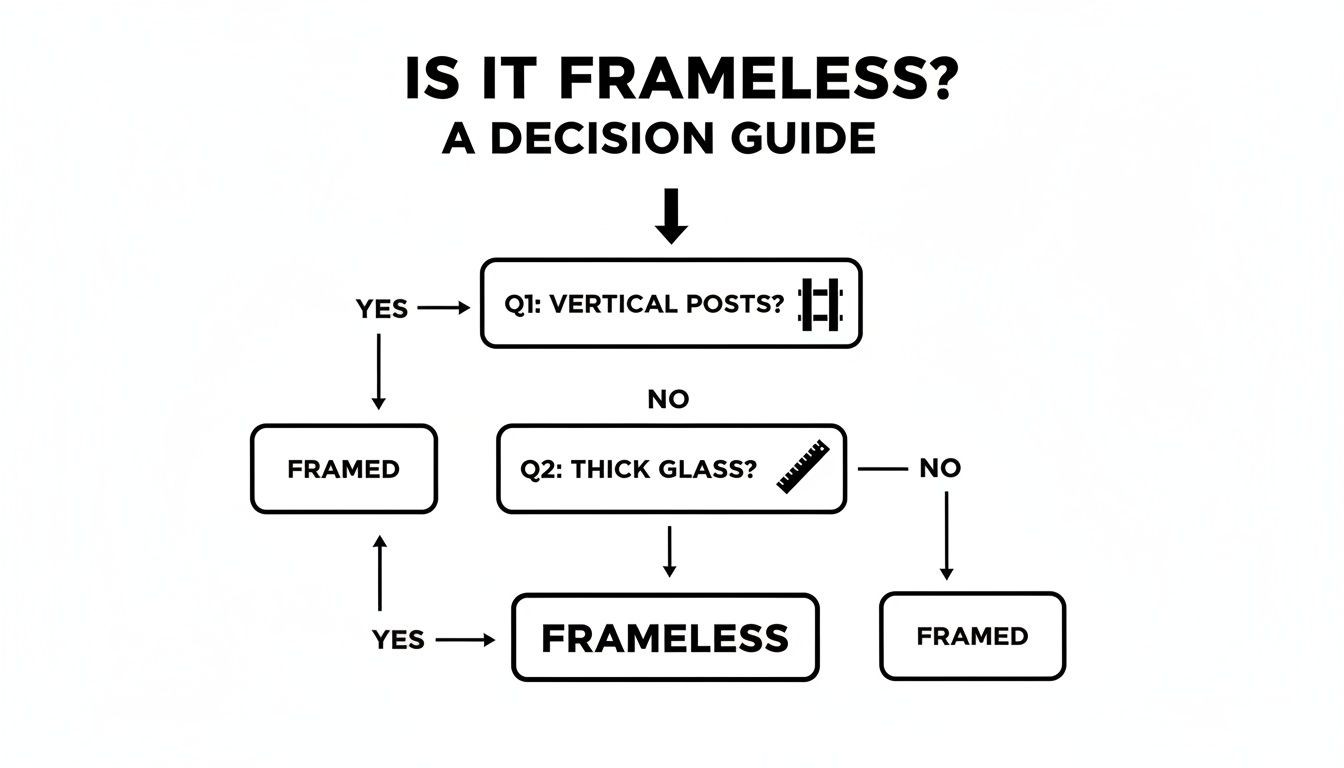
As you can see, a true frameless design relies entirely on the strength of the glass itself, eliminating the need for any vertical posts between the panels. The magic is in the mounting.
Each mounting style offers a distinct look and set of benefits. To help you compare them at a glance, we've put together this quick table.
Comparing Frameless Railing System Mounting Options
| System Type | Visual Profile | Installation Method | Best For |
|---|---|---|---|
| Base Shoe | A continuous, seamless line of glass emerging from the floor. The hardware is completely hidden. | Glass panels are set into a continuous aluminum channel that's bolted to the surface. | High-rise balconies, commercial spaces, and anywhere you want the most unobstructed view possible. |
| Spigots | Glass panels appear to "float" just above the floor, supported by small, discrete clamps. | Two or more steel clamps (spigots) are surface-mounted or core-drilled for each panel. | Pool enclosures, patios, and ground-level decks where drainage and easy cleaning are priorities. |
| Standoffs | Glass panels are mounted to the side of a structure, appearing to float beside it. | Round, puck-like fittings are bolted to the fascia of a deck, balcony, or stair stringer. | Staircases and balconies where maximizing usable floor space is essential; creates a high-end look. |
Now, let's dive a little deeper into what makes each of these systems unique.
The Continuous Line: Base Shoe System
Imagine a single, uninterrupted wall of glass rising directly from your floor or deck. That’s the powerful, ultra-clean look of a base shoe channel system. This method uses a continuous aluminum track that we bolt securely into the mounting surface. The glass panels slide into this channel and are locked in place with a specialized locking mechanism.
The entire track is then concealed with a decorative metal cover, which can be finished to match your other architectural hardware. The result is the purest frameless look you can achieve—the glass seems to grow right out of the floor with zero visible hardware at its base. It's no wonder this is the top choice for modern condos and waterfront properties aiming for maximum impact.
The Modern Minimalist: Spigot System
If you prefer a look that’s a bit lighter on its feet, spigot-mounted systems are a fantastic choice. Think of spigots as small, powerful stainless steel clamps that grip the bottom edge of each glass panel, lifting it just slightly off the ground.
Each panel is typically supported by two of these spigots, which are mounted directly onto the concrete or structural framing. This creates a small but intentional gap under the glass.
This subtle elevation isn't just for style—it’s incredibly practical. It allows water, leaves, and dirt to wash right through, making it a perfect, low-maintenance option for pool enclosures and patios in places like Fort Myers and Cape Coral.
Because the spigots themselves are so minimal, they keep the focus exactly where it belongs: on your crystal-clear view.
The Floating Glass: Standoff System
What if you want the glass completely off your deck’s surface? That’s where standoff-mounted systems truly shine. Standoffs, also known as "glass buttons," are sleek, puck-like cylinders of stainless steel that mount to the vertical face (the fascia) of a deck, balcony, or staircase.
Each panel is held securely by several of these standoffs, creating the illusion that the glass is floating in mid-air alongside the structure. This is an incredibly popular method for staircases and balconies because it opens up the floor completely, making the entire space feel larger.
This side-mounted approach is a game-changer for many Southwest Florida homes:
- Maximizes Floor Space: By moving the railing to the side, you get to use every last inch of your valuable patio or balcony.
- Creates a High-End Look: The appearance of floating glass is a sophisticated architectural detail that adds serious visual appeal.
- Simplifies Cleaning: With no hardware on the floor, sweeping or hosing down the surface is a breeze.
Making the right selection is a key part of your project's success. To see how these systems look with different hardware finishes and glass styles, take a look at our full gallery of custom glass products. Visualizing the options is the best way to see what speaks to you. Ultimately, the perfect system is a blend of your personal taste and your home's unique needs—a balance our experts at AmeriGlass Industries are here to help you find.
Understanding Glass Safety and Florida Building Codes
Here in Southwest Florida, we’re all about the views. But we also know our weather can be incredibly powerful. That's why the stunning, open look of a frameless glass railing has to be backed by serious strength and safety.
Following the Florida Building Code isn't just about checking boxes. It’s the peace of mind that comes from knowing your investment is built to protect your family and withstand the elements. Getting it right involves a solid understanding of glass types, local regulations, and even mastering the building permit process. A professionally installed system isn’t just beautiful—it’s absolutely secure.
The Big Question: Tempered or Laminated Glass?
The easiest way to get your head around the two main types of safety glass is to think about your car. Your side windows are tempered glass, and your front windshield is laminated glass.
Tempered Glass: This glass goes through a special heat-treatment process that makes it about four times stronger than regular glass. If it ever breaks, it crumbles into small, relatively harmless pebble-like pieces instead of jagged shards. It's a fantastic, safe choice for many railing applications.
Laminated Glass: Think of this as a "glass sandwich." It’s made of two pieces of glass with a tough, clear plastic interlayer (like PVB or SGP) bonded between them. If the glass cracks, the pieces stay stuck to that interlayer, keeping the barrier in one piece. This is exactly why your windshield spiders but doesn't collapse when hit by a rock.
For a high-rise balcony in Naples or a waterfront home in Fort Myers, building codes often demand laminated glass. Its ability to remain a barrier even after an impact is crucial for fall protection, especially during the high-wind events we see in our hurricane-prone region. It's a non-negotiable safety feature.
The demand for these safe, premium finishes is clear. The frameless glass balcony railing market is expected to climb from $0.29 billion in 2026 to $0.39 billion by 2035, driven by homeowners who refuse to compromise on safety or style.
Glass Thickness and Resisting Florida's Wind
Glass thickness isn't a one-size-fits-all deal. It's a precise calculation based on a few key factors, with your property's location and height being the most important. A ground-floor pool fence on Marco Island has entirely different engineering needs than a 15th-floor balcony railing overlooking the Gulf.
Florida’s building codes are famously strict about wind load—the amount of force that wind pushes and pulls on a structure. Your installer's job is to use glass thick enough to handle the specific wind pressures for your exact address and elevation.
- The Go-To Standard: For the majority of residential projects, 1/2-inch thick glass is the benchmark for frameless railings. It provides a solid, secure feel and meets code in most situations.
- For High-Wind Zones: On high-rise condos or homes directly on the coast, we often need to step up to thicker 3/4-inch glass or specialized laminated panels to meet hurricane impact-resistance codes.
These specs ensure your railing can handle the intense pressure from sustained winds during a major storm. An expert like AmeriGlass Industries will run the precise calculations to guarantee your system is perfectly engineered for your home's unique environment.
Shield Your Investment with a Protective Coating
That salty sea air is great for a day at the beach, but it's tough on almost every exterior surface, including glass. To keep your railing looking pristine and make cleaning effortless, we always recommend a professional-grade hydrophobic coating.
Think of it like Rain-X for your entire railing system. This invisible shield creates an ultra-smooth surface that forces water, salt, and minerals to bead up and roll right off instead of drying and leaving spots.
Why a Protective Coating is a Smart Move:
- Cuts Down Cleaning Time: Forget scrubbing. A simple rinse is usually all it takes to make the glass sparkle again.
- Stops Corrosion and Stains: It forms a barrier that protects the glass from etching caused by salt spray and hard water.
- Keeps Your View Crystal Clear: By preventing mineral buildup, the coating ensures your view remains as perfect as the day the railing was installed.
This is a small upfront addition that pays for itself over and over by preserving the beauty of your railing with almost no effort.
Customizing Your Glass Railing Design
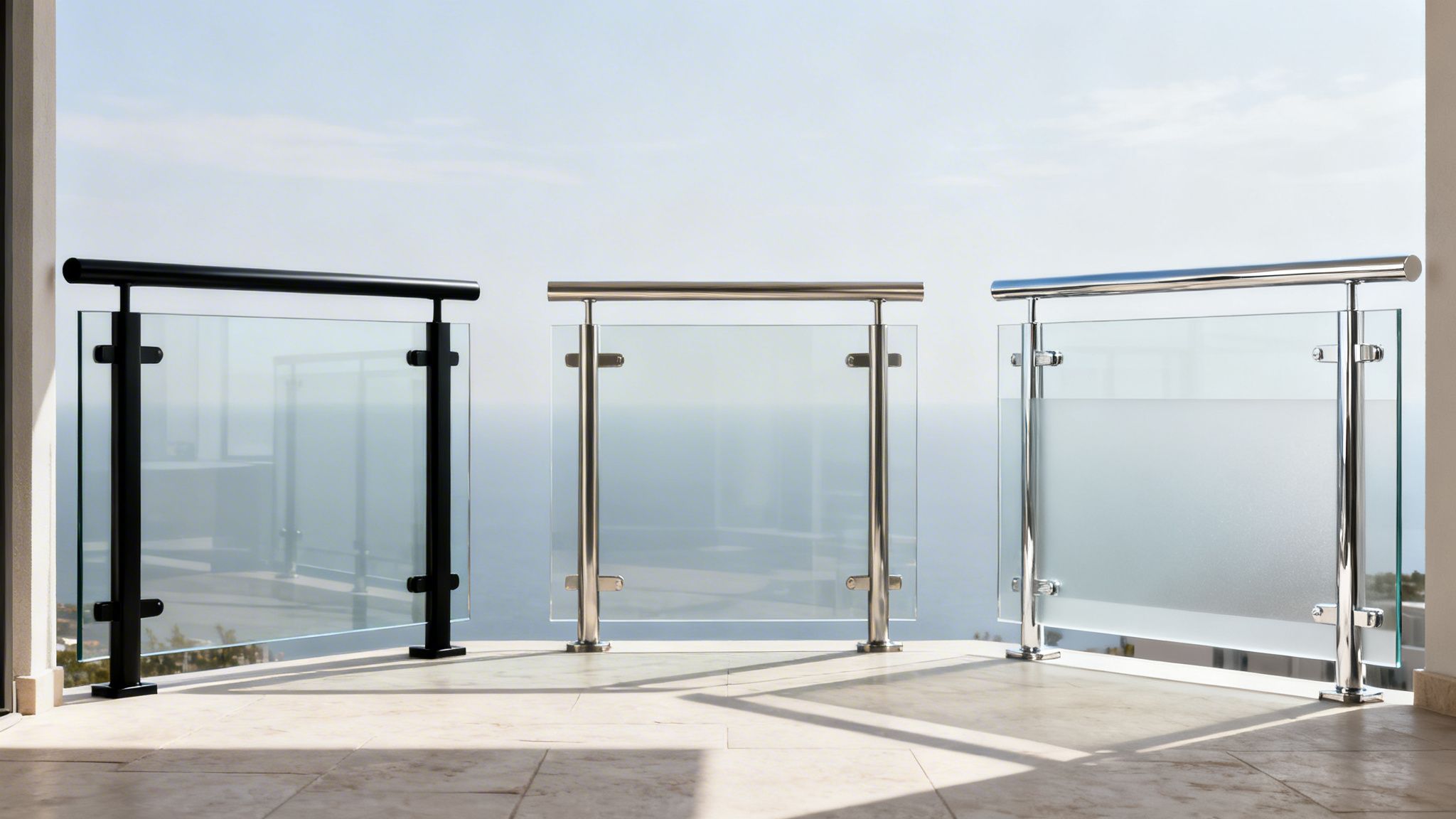
Once all the technical decisions about structure and safety are squared away, we get to the best part. This is where your vision truly comes to life, letting you infuse your personal style into every detail of your new glass railing system.
Think of the glass and hardware as the jewelry for your home. Just like the right watch or necklace completes an outfit, these elements are the finishing touches that elevate the entire design from functional to exceptional.
Choosing Your Hardware Finish
The hardware that secures your glass panels, though minimalist, plays a huge role in the final look. The finish you choose can make your railing either blend in quietly or pop as a bold architectural statement. Each one sets a distinct mood, giving you the power to coordinate with everything from your lanai furniture to your window frames.
Here are the most popular choices we see in Southwest Florida homes:
Brushed Stainless Steel: You can't go wrong with this timeless classic. Its soft, satin texture is fantastic at hiding fingerprints and water spots—a huge plus in our coastal climate. It offers a clean, sophisticated look that works with just about any design.
Polished Stainless Steel (Chrome): For a bit of sparkle, polished chrome brings a bright, mirror-like shine that reflects the beautiful Florida sun. It creates a feeling of high-end luxury, making it a show-stopping accent for modern and contemporary spaces.
Matte Black: Incredibly popular right now, and for good reason. A matte black finish creates a sharp, dramatic contrast against the clear glass, framing your view with modern confidence. It's the perfect way to introduce a touch of industrial-chic or simply add a bold, elegant line to your architecture.
When you coordinate these finishes across your property, the result is a cohesive, professionally designed feel. Imagine matching matte black spigots with black window trim—it instantly makes your entire outdoor living area feel thoughtful and complete.
Selecting the Perfect Glass Type
The type of glass you select for your railing has a direct impact on transparency, privacy, and how you experience your view. It really comes down to a choice between standard clarity and absolute, crystal-clear perfection.
The two main options are standard clear glass and low-iron glass.
The best way to understand the difference is to imagine this: standard glass is like looking through a good, clean window. Low-iron glass is like the window isn't even there. It’s a subtle but powerful difference, especially when you’re watching a vibrant Gulf sunset.
That distinction comes from the small amount of iron that’s naturally present in sand, the main ingredient in glass. In standard glass, this iron content creates a faint green hue, which is most obvious when you look at the panel’s edge. While it’s perfectly functional, it can slightly tint the colors of your view.
For those who want the purest, most unobstructed visual experience, low-iron glass is the undeniable premium choice. This glass goes through an extra process to remove the majority of the iron, resulting in breathtaking clarity with zero color distortion. If this piques your interest, we have a complete guide exploring the benefits of ultra-clear glass for your home.
Adding Privacy with Frosted or Tinted Glass
Sometimes you want the sleek, modern aesthetic of glass without putting everything on full display. For areas where privacy is key—like a balcony facing the street, a secluded hot tub, or stairs near a bathroom—frosted or tinted glass is the perfect solution.
Frosted (Acid-Etched) Glass: This option gives you a smooth, translucent surface that beautifully obscures the view while letting plenty of natural light pour through. You get total privacy without making the space feel dark or boxed in.
Tinted Glass: By adding color like bronze or gray into the glass itself, you can cut down on glare and add a layer of privacy. Tinted panels also serve as a powerful design tool, allowing you to complement your home’s color scheme for a truly custom look.
In the end, customizing your glass railing is all about making it your own. From the hardware that anchors it to the glass that frames your world, every detail works together to create something that perfectly reflects the way you live.
Finding a Trusted Glass Railing Installer in SWFL
Let's be frank: even the most stunning, perfectly engineered glass railing is worthless if it's installed incorrectly. The margin for error here is practically zero. A tiny miscalculation in the angle or a poorly secured mount can compromise the entire system, turning a beautiful feature into a serious safety hazard.
That’s why choosing your installer is, without a doubt, the most critical decision you’ll make. Here in Southwest Florida, where we face everything from corrosive salt air to hurricane-force winds, that choice becomes even more crucial. You don't just need a contractor; you need a specialist who lives and breathes glass engineering and understands our demanding local building codes inside and out.
How to Spot a True Pro: Your Vetting Checklist
Finding a real professional means asking the tough questions—the kind that go way beyond a simple price tag. Think of it like an interview. A top-tier installer will not only expect this level of scrutiny but will have clear, confident answers ready to go.
Use this checklist to vet any potential installer in the Naples, Fort Myers, or Bonita Springs area:
- Are they properly licensed and insured? Ask for their state license number and for a certificate of insurance showing both general liability and worker's compensation. This isn't just a formality; it’s what protects you from any liability if an accident happens on your property.
- Do they really know our local codes? Ask them how they ensure compliance with the Florida Building Code, especially the specific wind load and impact requirements for your exact address. They should be able to discuss these regulations without hesitation.
- Can you see their local work? A great installer will be proud to show you a portfolio of their completed frameless glass projects right here in SWFL. Look for homes in demanding coastal environments like Marco Island or Naples to see how their work holds up.
This initial screening will quickly separate the seasoned experts from the rest. A professional company won't make you hunt for this information.
Expert Insight: The real difference between a standard job and an expert installation comes down to the measurements. A premier company won't just show up with a tape measure. They use precision digital measuring tools to capture every angle, ensuring each glass panel is fabricated for a perfect, seamless fit.
Look for the Hallmarks of True Craftsmanship
Once you’ve covered the basics, it’s time to look for the details that separate the good from the great. A company’s true character shows in its process, its communication, and its absolute commitment to a flawless result. This is where you’ll see their dedication to craftsmanship shine through.
Here are the final qualifications to look for:
- Transparent, Detailed Quotes: Do they give you a line-item proposal that breaks down all the costs? This includes the glass type, hardware, labor, and everything in between. Vague estimates are often a red flag for hidden charges later.
- Clear Communication and Timelines: Ask for their project timeline and how they plan to keep you updated. A professional team respects your time and won’t leave you in the dark.
- A Clean and Respectful Worksite: How do they protect your home and property during the installation? A crew that values cleanliness is a crew that respects your space and takes pride in their work.
Finding an installer who checks all these boxes ensures your frameless glass railing systems are not only beautiful but are also built to last with unmatched professional skill. To see the standards our own licensed and insured team upholds, you can learn more about AmeriGlass Industries and our commitment to SWFL homeowners.
Common Questions We Hear About Frameless Glass Railings
Deciding on a major upgrade for your home always brings up a few questions. We get it. Over the years, we've helped countless Southwest Florida homeowners navigate this process, so we've put together answers to the questions we hear most often.
How Much Do Frameless Glass Railing Systems Cost in Florida?
Let's get right to it—the bottom line. The truth is, the cost for a premium system like this can really vary. Think of it like a custom-built piece of furniture; the final price depends on the specific materials and design you choose. Factors like the mounting hardware (spigots vs. a full channel), the thickness of the glass, and any special engineering for our local wind codes will all play a part.
As a ballpark, you can generally expect to invest somewhere between $175 and $400+ per linear foot installed. A winding staircase with custom-cut panels will naturally be at the higher end compared to a simple, straight run along a balcony. The only way to get a true number for your project is to have a specialist take a look.
Are Frameless Glass Railings Safe for Children and Pets?
Absolutely. This is probably the most important question we get, especially from young families. When installed correctly by a professional who lives and breathes the Florida Building Code, these systems are incredibly safe. They're built with tremendously strong tempered or laminated safety glass that’s engineered to handle serious force.
In fact, we’d argue they're even safer than traditional railings with spindles. The solid glass panel completely eliminates the gaps that little ones can try to squeeze through or use as a ladder. It creates a seamless, impenetrable barrier that offers unparalleled peace of mind.
How Do You Clean Glass Railings in a Coastal Climate?
With all the salt and sun we get here, this is a very practical concern. But you'll be happy to know that upkeep is far easier than most people imagine. For day-to-day cleaning, a simple mix of mild soap and water or your favorite glass cleaner is all it takes to wipe away smudges and keep the view pristine.
But here’s a pro tip for coastal living: ask about a hydrophobic protective coating. This is an invisible layer applied to the glass that works wonders by making the surface super slick. Water and salt spray just bead up and roll right off, which means fewer mineral spots and a whole lot less cleaning for you.
Ready to see what a frameless system would look like—and cost—for your own home? The experts at AmeriGlass Industries are here to help. We offer free, no-pressure estimates to give you a crystal-clear picture of the possibilities. Schedule your complimentary consultation today and let's start the conversation.