

TL;DR: In Southwest Florida, a custom wine cellar often starts in the mid five figures and climbs quickly once the design includes large glass panels, custom metalwork, upgraded lighting, and the mechanical work required to control heat and humidity. In Naples homes, a true luxury glass-enclosed cellar can move well beyond that range because the room has to do two jobs at once. It has to protect the collection, and it has to read as finished architecture from the surrounding living space.
You may be standing in your dining room or off your main entertaining area, looking at a wall, an under-stair void, or a spare room and seeing the right place for a cellar. The collection has outgrown casual storage. The goal now is a room that looks refined, holds temperature and humidity where they belong, and performs reliably in a coastal Florida house.
That is where costs separate fast.
A proposal reflects more than square footage or bottle count. It includes insulation strategy, vapor protection, refrigeration capacity, glass specification, door detailing, condensation control, electrical planning, and finish coordination. In a glass-forward design, those decisions matter even more because any weakness is easier to see and more expensive to correct after installation. Homeowners drawn to that clean, architectural look are usually responding to the same principles behind using glass to make a home feel more luxurious.
In Southwest Florida, humidity changes the build. Glass changes the detailing. Luxury expectations raise the finish standard. Those three factors shape custom wine cellar cost more than many homeowners expect at the start, and they are exactly where careful design and fabrication protect the investment over the long term.
Dreaming of a Wine Cellar? Let's Talk Budget
You’re standing in the dining room, looking at the wall that backs up to an under-stair space or a spare room, and the idea starts to feel concrete. A glass wine cellar there would look right in the house. It would also give the collection a proper home instead of scattering bottles across a pantry, bar cabinet, and overflow rack.
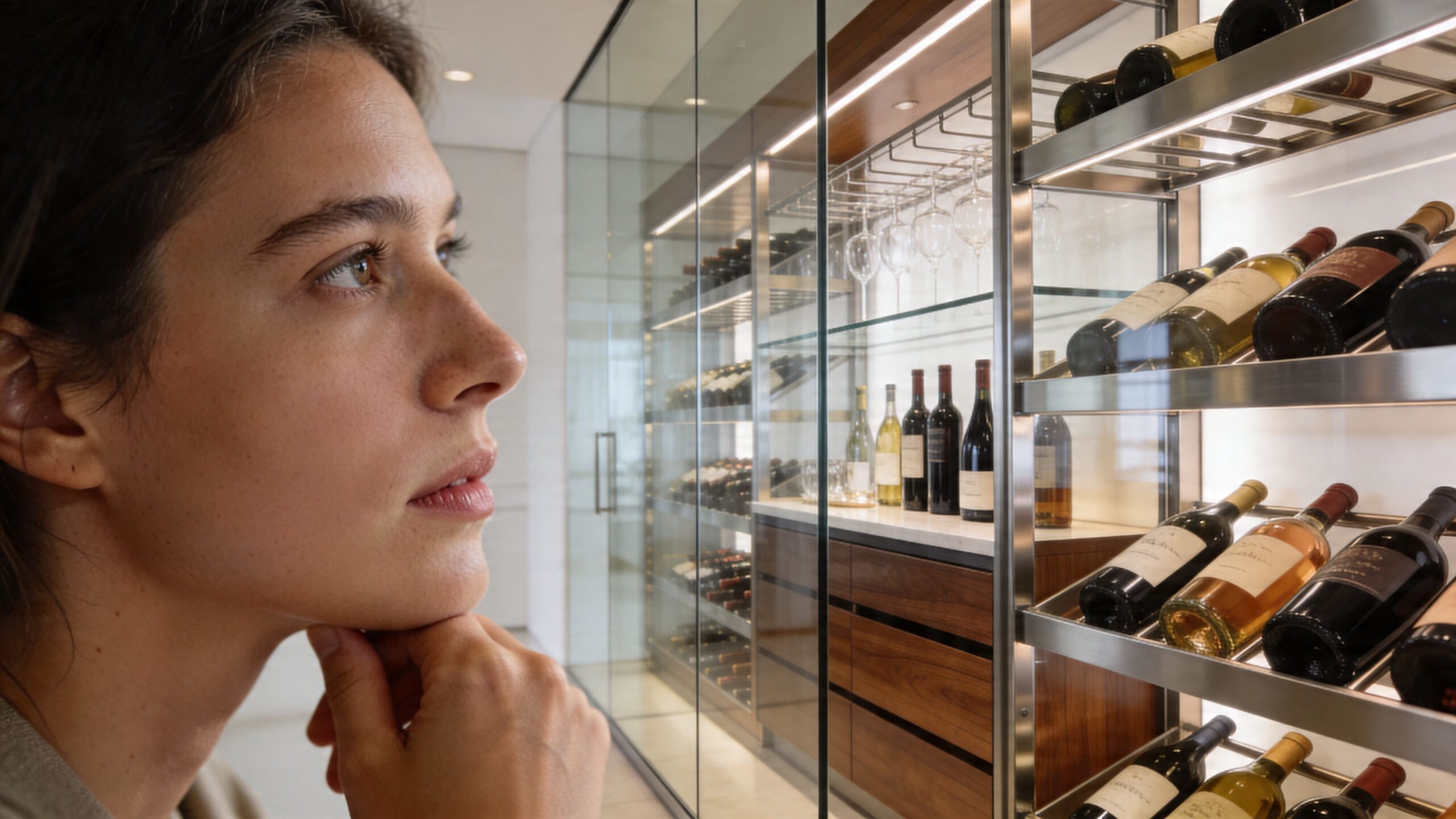
That first instinct is usually aesthetic. Homeowners in Naples want the cellar to feel integrated with the architecture, especially when it sits off a main entertaining space. Glass gets used so often for that reason. It keeps the room visually open and gives the collection presence. If that is the direction you are considering, it helps to see how glass can make a home feel more luxurious.
Budget questions start once the concept moves past the sketch stage.
The wide price range for custom wine cellars exists because these projects vary sharply in construction method, finish level, and climate demands. A simple enclosed storage room and a luxury glass-forward display cellar may occupy similar square footage, but they are built very differently. In Southwest Florida, that gap gets wider because humid air, warm surfaces, and condensation risk have to be addressed from the beginning, not patched later.
Homeowners often start by pricing the visible pieces first. Racking. Lighting. Custom glass. Door hardware. While visually important, these elements don't determine the cellar's performance in August.
Cost drivers are often behind the finished surfaces. Insulation strategy, vapor protection, refrigeration sizing, supply and return air planning, door seals, glass specification, and condensation control all affect whether the room holds stable conditions and stays clean-looking over time. In a coastal Florida home, those technical details are part of the finish quality because moisture problems show up quickly on glass, metal, adjacent flooring, and surrounding trim.
I tell clients the same thing early. A beautiful cellar that sweats, struggles to hold temperature, or forces repeated service calls is expensive in the wrong way.
That is why pricing for a luxury cellar should reflect long-term performance, not just the initial visual package. Good design choices can also support efficiency and material longevity, which is part of the broader conversation around designing a sustainable wine cellar. At AmeriGlass, we see the strongest results when enclosure design, glass detailing, and cooling coordination are handled as one system, especially in homes near the coast where humidity adds pressure to every weak point.
Deconstructing Your Custom Wine Cellar Cost
In Naples, two wine cellars can start with the same square footage and end with very different budgets. The gap usually comes from what the room has to do, not just how it has to look. A straightforward enclosed room with standard racking prices differently than a glass-forward showpiece that needs engineered glazing, tighter seals, cleaner detailing, and cooling that can hold steady through Florida humidity.
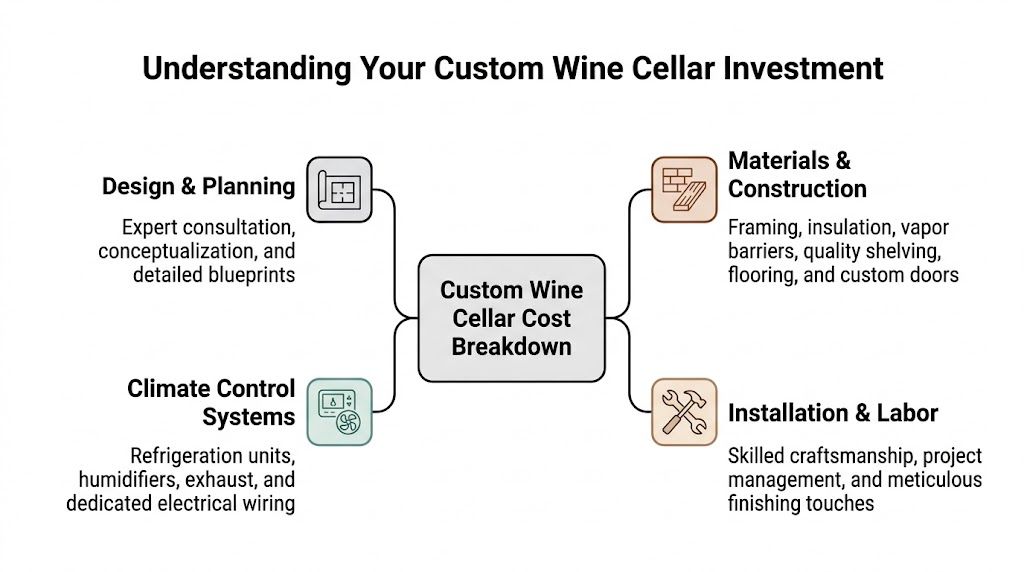
A useful benchmark is $300 to $600 per square foot, including construction, racking, cooling, and finishes. Using that range, a small remodel often begins around $40,000, while larger custom cellars can reach $100,000 to $200,000, as outlined by GTG Custom Home Builders' cost guide for home wine cellars.
If your plan centers on visibility and architecture, reviewing custom wine enclosures helps clarify why enclosure design changes both price and build sequence.
Design and planning
Cost control begins at this stage.
Design covers the room layout, bottle count, aisle clearances, presentation style, lighting, door swing, glass lines, and the cooling approach that supports all of it. In a luxury cellar, especially one with large glass panels, these decisions have to be coordinated early. If they are not, the project tends to pick up change orders later in framing, electrical, finish work, or refrigeration.
I have seen one design decision affect three or four trades at once. A clean all-glass corner, for example, may require upgraded glass, more exact floor tolerances, revised supply and return air locations, and better transition detailing where the enclosure meets adjacent finishes.
Materials and construction
This category covers the enclosure itself and the surfaces homeowners notice first. Framing, insulation, vapor control layers, glass assemblies, doors, racking, flooring, wall finishes, and trim all sit here.
Some selections change appearance and cost. Others determine whether the room performs properly in August. That distinction matters in Southwest Florida, where humid air finds weak points quickly. A less expensive rack material may be a valid aesthetic compromise. Cutting back on enclosure quality, door sealing, or glass specification usually creates a much more expensive problem later.
Glass-heavy cellars also demand tighter construction discipline than many homeowners expect. Small installation errors that might go unnoticed in a standard room can show up fast as condensation, failed seals, or visible alignment issues.
Climate control systems
Cooling costs are easy to underestimate because proposals often group several items under one line. Equipment is only part of the number. Humidity management, control placement, drain routing, electrical support, heat rejection planning, and final commissioning all affect how well the cellar holds conditions over time.
That is especially true in coastal Florida. A luxury glass enclosure places more pressure on the cooling strategy because the room has less margin for error. If the refrigeration plan does not match the enclosure performance, the system works harder, service issues increase, and the room can struggle to stay visually clean.
The principles behind designing a sustainable wine cellar are useful here because they focus attention on insulation, efficiency, and long-term operating value.
Practical rule: If a proposal says “cooling included” but does not explain enclosure assumptions, humidity control, and the connection between the system and the glass, it is not detailed enough.
Installation and labor
Labor is where good plans either come together cleanly or start to drift.
Custom cellar work depends on accurate field measurements, tight glass tolerances, careful sealing, clean trim integration, rack alignment, and system startup that confirms the room is performing as intended. In high-end projects, installation quality directly affects appearance, reliability, and maintenance.
A cellar budget is best understood as four linked investments rather than a single lump sum. If one category is trimmed too hard, the others usually cannot deliver the result you expected.
| Cost category | What it covers | Why it matters |
|---|---|---|
| Design and planning | Layout, engineering coordination, capacity planning | Reduces revisions and avoids conflicts between the enclosure, cooling, and finishes |
| Materials and construction | Framing, insulation, racks, glass, finishes | Sets the room’s durability, appearance, and resistance to moisture problems |
| Climate control systems | Cooling equipment, controls, electrical support | Protects the collection and keeps conditions stable |
| Installation and labor | Skilled fitting, sealing, commissioning, finish work | Determines how well the design performs in the real house |
Your Itemized Guide to Wine Cellar Expenses
A cellar proposal gets clearer once each cost stands on its own. That is usually the point where Naples homeowners see why two rooms with the same bottle capacity can land at very different price points. One may be a basic cooled storage room. The other may be a glass-forward installation built to stay stable through Southwest Florida humidity without fogging, sweating, or service issues.
The line items below matter because they affect each other. Glass changes cooling requirements. Cooling affects enclosure details. Racking affects lighting, access, and how much fabrication time the room needs. Good budgeting starts by treating the cellar as a system, not a shopping list.
Racking and bottle presentation
Racking sets both capacity and daily usability. It also has a strong influence on the finished look of the room.
National pricing references commonly place racking in a wide range, from straightforward systems to large custom installations. In practice, the price moves with presentation style more than homeowners expect. Label-forward metal displays, custom wood millwork, magnum storage, corner conditions, floating shelves, and integrated LEDs all add fabrication time and installation coordination.
I advise clients to decide early how they buy and serve wine. A collector who wants quick visual access to labels will need a different layout than someone storing cases for aging. That choice changes cost long before finishes are selected.
Insulation and vapor barrier work
This category stays out of sight once the room is finished, but it has a direct effect on performance.
In Southwest Florida, enclosure prep has to be done with discipline. Warm, humid air will find every weak transition around framing, electrical penetrations, duct paths, and glazing connections. If those areas are treated like ordinary interior construction, the cellar can struggle with condensation, unstable temperatures, and moisture damage behind finished surfaces.
A wine cellar fails from the outside in.
That is one reason well-built projects carry real labor cost. Crews are not just closing walls. They are building a controlled enclosure that has to hold up in a coastal climate.
Cooling equipment and system fit
Cooling equipment should be selected after the room’s size, glass percentage, insulation strategy, and use of the surrounding space are defined. That sequence matters. A quiet feature cellar off the main living area has different demands than a closed utility-style room, even if the cubic footage looks similar on paper.
Published cost guides show a wide spread for cooling equipment, including through-the-wall systems for smaller spaces and more advanced solutions for specialty rooms, as noted earlier. The trade-off is rarely just equipment price. Noise, service access, humidity behavior, control quality, and how the system interacts with glass all belong in the discussion.
For contractors and homeowners comparing bids, software tools used for takeoffs and coordination can help expose omissions. Even if you’re not estimating the job yourself, looking at how platforms like HVAC estimating software structure mechanical scope can help you ask better questions about what’s included.
Doors, enclosure glass, and the premium for transparency
Glass has the biggest ripple effect on a luxury cellar budget. It changes material cost, support requirements, hardware, seal details, and the cooling approach at the same time. That is especially true in Naples, where the visual appeal of a glass cellar has to be matched by a build that can handle heat and humidity for the long term.
Analysts at Wine Cellar Authority note that labor often makes up a large share of custom cellar cost, and all-glass walls can add a meaningful premium because they require tighter engineering and more careful installation. That aligns with what we see in the field. The cleaner the sightlines and the larger the glass panels, the less room there is for sloppy tolerances or generic detailing.
Glass specification matters too. If the goal is a cleaner view of the collection with less green cast, ultra-clear glass for wine cellar enclosures is often the right choice. It improves how labels, bottle color, and lighting read from the living space. It does not replace proper cooling or moisture control, but it does affect the final result in a way homeowners notice every day.
Finishes, lighting, and the details that shape the room
While enclosure and climate decisions are the primary budget drivers, lighting and finish choices are what turn a basic storage room into a luxury architectural feature.
The best results usually come from restraint and precision. Focused LED lighting, shelf illumination, flooring that handles the room’s environment, and well-resolved trim details add labor coordination and design value without making the space feel busy. In a glass-heavy cellar, too many finish moves can compete with the collection itself.
What works and what doesn’t
What works
- Performance-first shell design that treats the room as a controlled enclosure
- Racking planned around the collection and the way the homeowner uses it
- Glass selected with climate performance in mind so appearance and serviceability stay aligned
- Early coordination between trades so cooling, framing, lighting, and glazing fit together cleanly
What doesn’t
- Choosing the glass look first and addressing condensation later
- Assuming all cooling systems perform the same way
- Cutting labor too aggressively on a room that depends on precise sealing and installation
- Accepting vague allowances for major components like racking, doors, or climate control
Why Building a Wine Cellar in Florida Costs More
Southwest Florida changes the conversation because the outdoor environment is working against the cellar most of the year. Heat adds load. Humidity adds risk. When homeowners compare local proposals to generic online pricing, they often assume the difference is markup. Usually, it’s the climate.
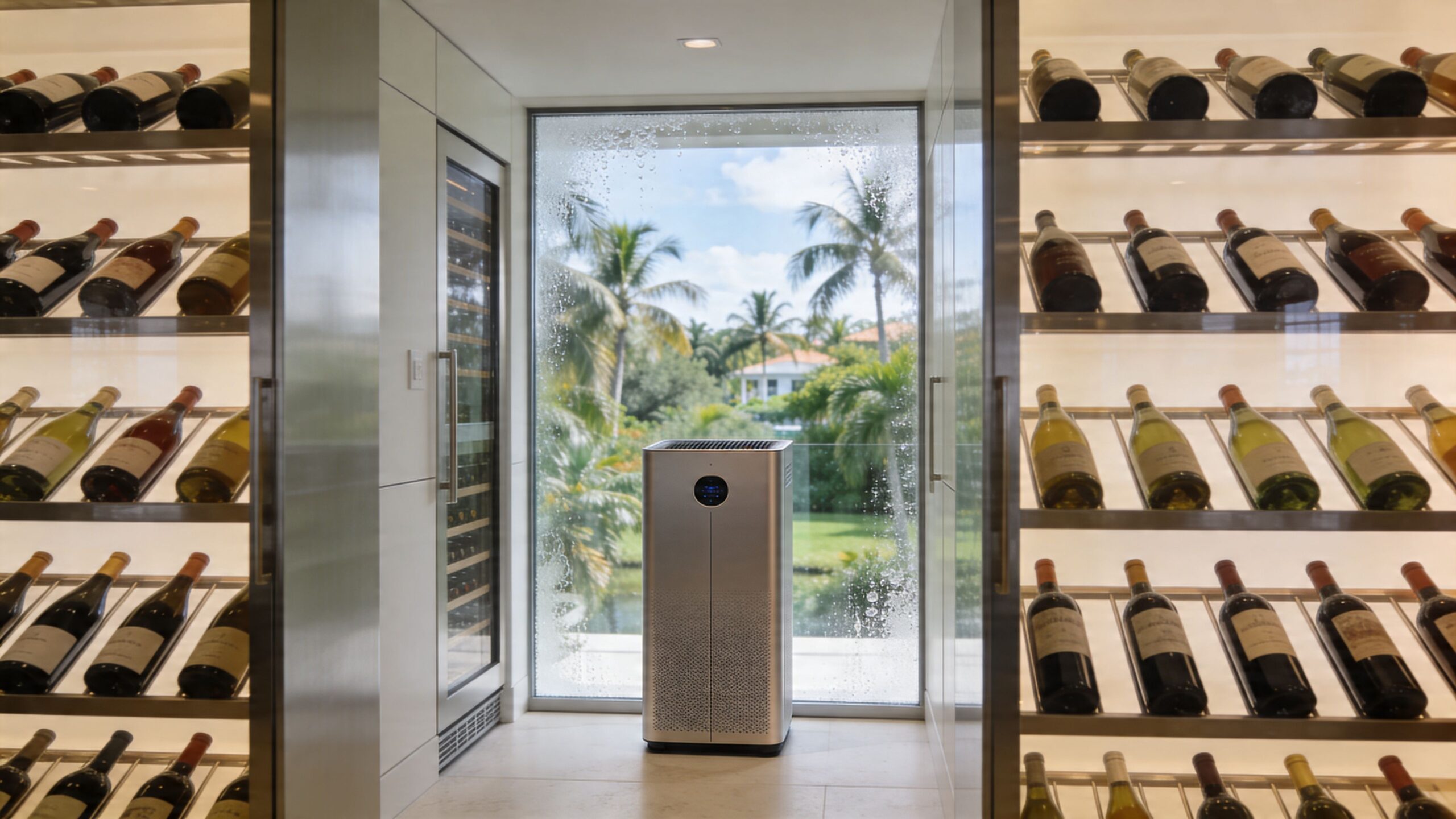
The problem is that most cost guides don’t isolate the premium for hot, humid regions. They often bundle climate control into broader project spending. Most online cost guides bundle climate control into roughly 30 to 37 percent of total spend, but they don’t specify the added premium for high-humidity regions like Southwest Florida. That leaves homeowners at risk of underestimating the need for specialized cooling systems and anti-condensation measures for glass enclosures, as noted by VintageView's wine cellar budget value guide.
Humidity is the real pressure point
In a dry climate, a glass enclosure is mostly a design and thermal question. In Naples, it’s also a moisture-management question. If the enclosure, seals, hardware transitions, and cooling approach aren’t aligned, you can end up with fogging, sweating surfaces, and maintenance problems that never fully go away.
That’s why glass-forward cellars here need more discipline in both design and installation. The room can’t merely be attractive. It has to resist condensation at edges, corners, and openings where failures typically start.
What a Florida cellar needs to do differently
A successful local cellar usually relies on a few principles working together:
- A tighter enclosure so humid air isn’t constantly infiltrating the room
- Better glass assemblies that help control temperature transfer and surface condensation
- A cooling strategy matched to the actual enclosure rather than a generic equipment package
- Careful installation at every joint because small misses show up quickly in this climate
In Southwest Florida, the most expensive cellar mistake isn’t overbuilding. It’s building a beautiful room that can’t stay dry.
Why the glass details matter so much
Homeowners often focus on whether they want frameless glass, steel framing, or minimal sightlines. Those are valid choices, but the more important question is whether the system has been detailed for this environment. Seal quality, insulated glazing, and condensation control measures can make the difference between a showcase room and an ongoing service issue.
This is also why local expertise matters more with wine enclosures than with many other luxury features. A detail that performs well in a mild market can become a weak point in coastal Florida.
Visualizing Your Investment Three Sample Budgets
The easiest way to make custom wine cellar cost feel real is to look at three common project types. These aren’t fixed bids. They’re practical planning frameworks based on the verified cost ranges above and the realities of building in Southwest Florida.
Small closet conversion
This is the right fit for the homeowner who wants dedicated storage without turning the cellar into a major architectural statement. It usually works best in a closet conversion or compact enclosed nook where the room can be controlled without large expanses of glass.
A project in this class tends to prioritize efficient racking, a clean enclosure, and dependable cooling over dramatic display features. It’s a good solution when the collection matters more than entertaining around the cellar.
Medium wine room
This is the category many Naples homeowners end up choosing. It’s large enough to feel intentional, polished, and integrated into the home, but not so ambitious that every element becomes custom engineering.
The room may include a glass feature wall or a strong viewing element, but it usually balances display with practical enclosure decisions. This is often where value is strongest because the room feels bespoke without crossing into gallery-scale complexity.
Large glass showcase
This is the statement project. It’s designed to be seen from primary living spaces and often becomes part of the home’s identity. Full-height glass, custom racking, feature lighting, and carefully coordinated climate control all work together.
This category carries the most design payoff, but it also has the smallest margin for error. The system has to be right behind the finishes, because the enclosure is always on display.
Sample Wine Cellar Budgets in Southwest Florida 2026 Estimates
| Feature | Small Closet Conversion | Medium Wine Room | Large Glass Showcase |
|---|---|---|---|
| Typical budget range | $25,000 to $60,000 | $30,000 to $80,000 | $80,000 to $220,000 |
| Best use case | Compact private storage | Entertaining plus collection storage | Signature architectural display |
| Likely enclosure style | Limited glass or enclosed closet | Partial glass feature wall or refined room enclosure | Glass-forward or all-glass enclosure |
| Racking scope | Efficient bottle storage with selective display | Custom racking with stronger presentation value | Fully customized display-driven racking |
| Climate approach | Straightforward system sized to a compact enclosure | More tailored system with better coordination across finishes and glass | High-performance climate planning with condensation control as a central design issue |
| Labor intensity | Moderate | High | Very high |
| Budget pressure points | Shell prep, cooling fit, door quality | Glass integration, finish carpentry, coordination | Glass engineering, climate detailing, custom fabrication |
How to choose the right tier
If you’re unsure where your project belongs, don’t start with bottle count alone. Start with how visible the cellar will be in daily life.
A private storage room can be simpler and still perform beautifully. A cellar that opens to the main living space has to satisfy preservation, architecture, and finish expectations at the same time. That shift is what usually moves a project from efficient to premium.
Here’s a simple way to look at it:
- Choose the small route if your priority is proper storage with a clean built-in appearance.
- Choose the middle route if you want a room that supports entertaining and feels integrated with the home.
- Choose the large showcase route if the cellar is meant to be a central visual feature and conversation piece.
Protecting Your Investment Long-Term ROI and Maintenance
A wine cellar in Naples has to do more than look beautiful on installation day. It has to stay dry at the glass lines, hold temperature without overworking the equipment, and keep its finish quality through long humid seasons. That is where long-term value is won or lost.
A well-built cellar protects the bottles, of course. It also protects the money spent on glass, millwork, refrigeration, and finish work by reducing the risk of condensation problems, door alignment issues, premature wear, and service calls that trace back to shortcuts in the enclosure.
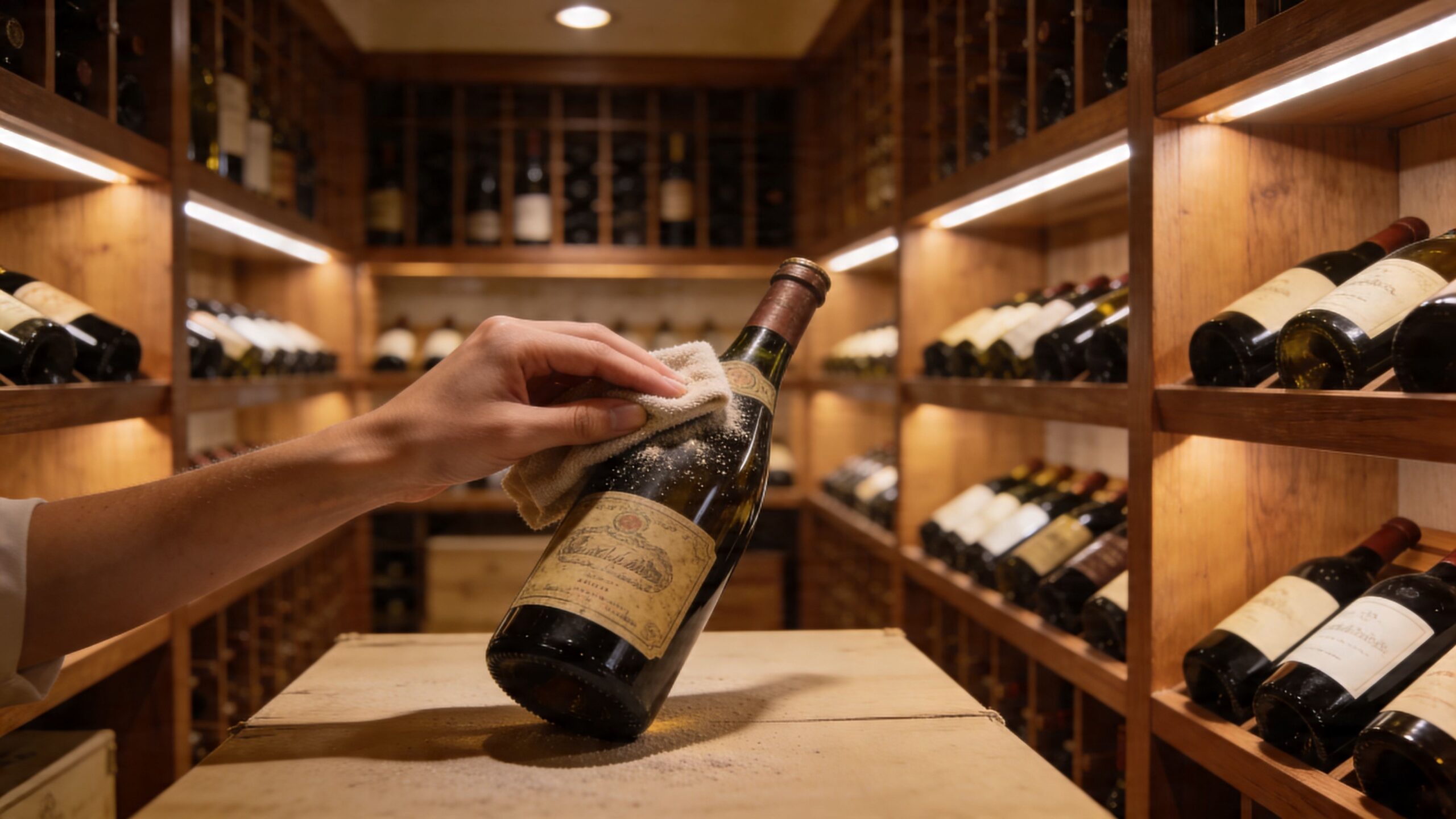
Upfront quality lowers long-term friction
In glass-forward wine rooms, the enclosure and the climate plan have to work together from the start. If the glass specification is too light, the seals are poorly detailed, or the cooling system is treated like an afterthought, the room may still look finished while developing problems.
I see this most often in Florida projects where appearance was priced first and performance was sorted out later. The result is usually familiar. Moisture at the edges. Clouding or fogging that owners did not expect. Hardware that needs adjustment. A system that runs harder than it should because the room was never tightened up.
Protective treatments such as hydrophobic coatings can help glass stay cleaner and easier to maintain in humid conditions, especially when the enclosure is a prominent visual feature in the home.
What ongoing maintenance actually includes
Good maintenance is not complicated. It is more important in Southwest Florida because humidity exposes weak points faster.
- Cooling system service helps the unit hold conditions consistently and catches drainage, airflow, or performance issues early.
- Glass cleaning and coating care preserve clarity on panels and doors that are handled often and seen every day.
- Seal and hardware checks help prevent small gasket, hinge, or latch issues from turning into moisture or alignment problems.
- Finish review matters in luxury cellars where wood, metal, and adjacent materials all react differently to the room’s operating conditions.
- Inventory upkeep becomes practical once the collection grows and regular rotation matters as much as presentation.
Homeowners usually do well with a simple service rhythm and a clear understanding of what to watch. For common questions about coatings, enclosure details, and care requirements, AmeriGlass has a helpful wine enclosure FAQ page.
Peace of mind as ROI
Ultimately, the return on investment is the peace of mind that comes from a cellar built correctly for the house, the collection, and the Florida climate.
That is why the cheapest proposal often becomes the most expensive version over time. In a luxury glass wine cellar, clear glass, stable conditions, and low-maintenance performance are part of the value you are paying for.
Your Next Steps to Building a Dream Cellar
A Naples homeowner often reaches this stage with a clear picture in mind. Floor-to-ceiling glass, a clean modern display, and a cellar that feels like part of the living space. The next decision is making sure that vision is priced and engineered correctly for a humid Southwest Florida home, so the room performs as well as it looks.
The best projects start with scope discipline. Decide early how prominent the cellar should be, how much of the enclosure will be glass, whether the room is built for daily access or long-term storage, and where the cellar sits in relation to exterior walls, sunlight, and nearby living areas. Those choices shape cost faster than finishes do.
What to bring to your first consultation
You do not need finished drawings to get useful guidance. A few practical details will make the first conversation far more productive:
- Photos of the space
- A rough bottle count, with room for future growth
- Style references you like, especially for frameless or glass-forward cellars
- Your tolerance for visible mechanical equipment, sound, and service access
- A working budget range, even if it is preliminary
From there, it becomes much easier to tell whether the right answer is a smaller conditioned enclosure, a dedicated wine room, or a fully custom showcase cellar.
Start with a site evaluation, not a finish selection
In this climate, glass, insulation, cooling, door detailing, and installation quality have to be planned together. I have seen attractive concepts become expensive corrections because the homeowner chose the look first and addressed the enclosure requirements later.
If you are ready to turn your concept into a project, the best next step is to request a professional site review and estimate from AmeriGlass. A measured consultation gives you a clear read on feasibility, likely cost drivers, and where it makes sense to spend more for long-term performance.
If you want a custom wine cellar that looks sharp and holds up properly in Southwest Florida humidity, AmeriGlass Industries can help you plan it with precision. Reach out for a no-obligation estimate and on-site measurement, and get clear guidance on glass options, enclosure design, and the cost of building it right.