

A lot of Naples homeowners start in the same place. The bathroom isn't exactly bad, but it feels crowded, dated, and heavier than the rest of the home. A bulky tub-shower combo pushes into the room, the shower curtain blocks light, and the tile work you paid for barely registers because the enclosure chops the space into pieces.
A corner shower glass enclosure solves that problem in a way few upgrades can. It gives back visual space, uses the corner instead of wasting it, and fits the cleaner coastal look that so many Southwest Florida homes are moving toward. In a market where bathrooms are expected to feel bright, open, and easy to maintain, the enclosure isn't just a functional choice. It sets the tone for the room.
Transform Your Bathroom with a Corner Shower Enclosure
In older guest baths and compact primary bathrooms, the usual issue isn't square footage alone. It's layout efficiency. The room may have enough space, but the wrong shower format steals it. A corner enclosure changes the traffic flow immediately. You step in, the sightlines open up, and the room starts to feel designed instead of filled.
That shift is one reason more homeowners are choosing glass shower upgrades. The global shower glass door market, which includes corner shower glass enclosures, was estimated at USD 13.7 billion in 2023 and is projected to reach USD 22.7 billion by 2030, reflecting growing demand for modern frameless designs and open-feel bathrooms, according to P&S Market Research on the shower glass door market.
Why corner layouts work so well in Naples homes
A corner enclosure makes sense when you want the bathroom to feel lighter without pushing into adjacent fixtures. In Southwest Florida, that matters because many homes combine practical footprints with upscale finishes. Owners want the room to read as luxurious, but they also want every inch to work.
Three reasons this layout keeps showing up in successful remodels:
- It uses dead corner space: Two existing walls do part of the work, which helps preserve the center of the room.
- It improves visual openness: Clear glass doesn't interrupt the tile, lighting, or view lines.
- It matches coastal design preferences: Minimal metal and expansive glass fit the airy look many Naples clients want.
For homeowners gathering inspiration beyond local projects, it can help to see how designers approach complete bath transformations in other markets. The project gallery on Adelaide kitchen and bathroom renovations shows how strong renovation work often starts with the same principle: remove visual bulk and let the room breathe.
A well-planned glass enclosure doesn't just replace a shower. It changes how the entire bathroom reads the moment you walk in.
If you're trying to create that polished, high-end look throughout the house, this overview of how a glass company can make your home feel luxurious connects the bathroom choice to a broader design strategy.
Frameless vs Semi-Framed and Neo-Angle vs Square
Most corner shower decisions come down to two separate choices. First, how much metal you want to see. Second, what shape makes the room function better. These aren't small details. They determine how the enclosure looks, how it cleans up, and how it feels to use every day.
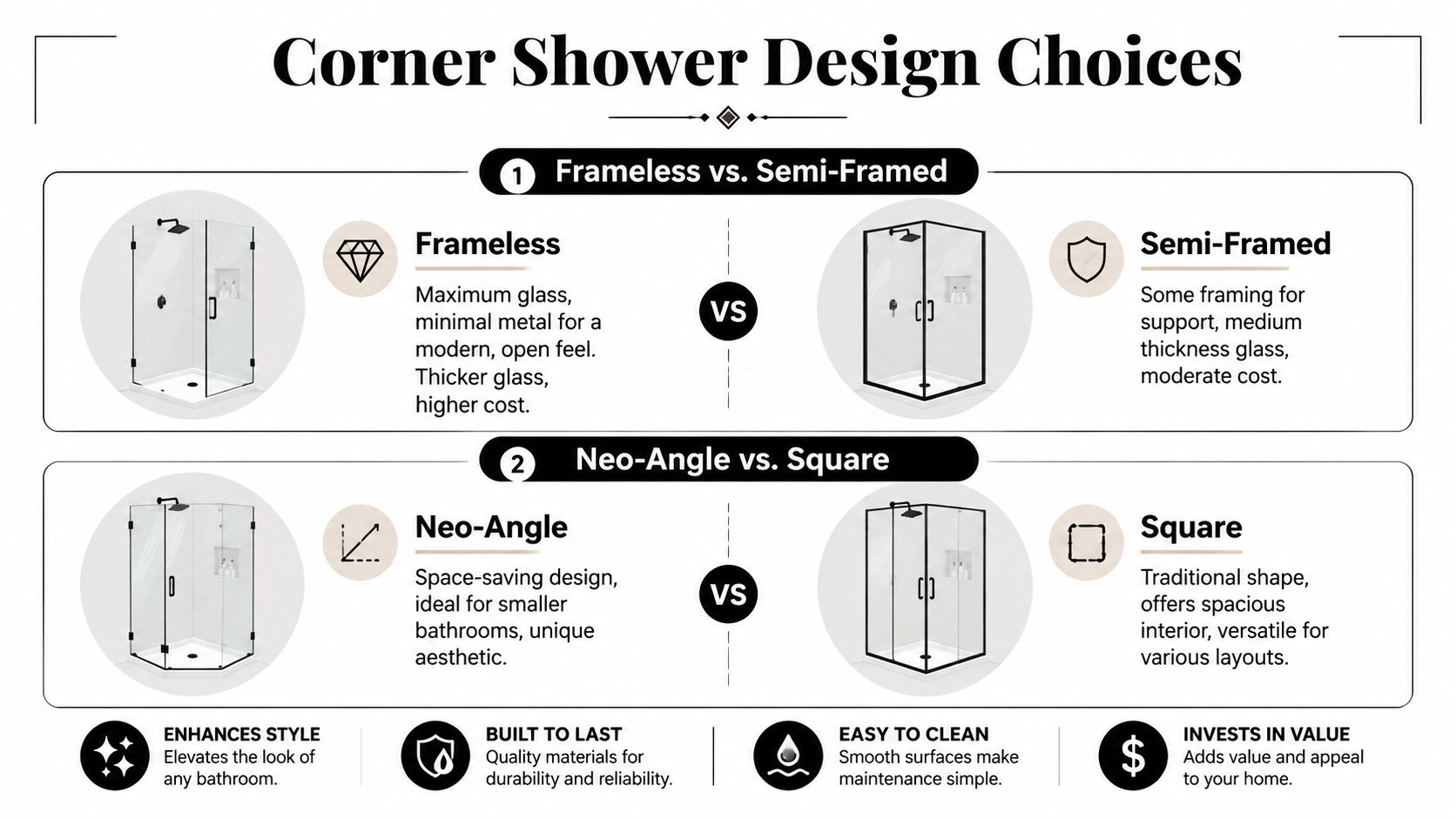
Frameless and semi-framed
A frameless corner shower glass enclosure puts the tile on display. The glass does the visual work, and the hardware stays restrained. In practice, frameless is the right call when the bathroom already has strong finishes and you don't want the enclosure to compete with them.
A semi-framed enclosure adds more visible metal around parts of the glass. That can work in bathrooms with more traditional styling or when the owner wants a bit more visual definition at the edges.
Here's the practical difference:
| Style | What works | What to watch |
|---|---|---|
| Frameless | Clean sightlines, easier visual flow, higher-end appearance | Requires tighter measuring, stronger hardware choices, and more disciplined installation |
| Semi-framed | More structured look, can fit transitional styles well | More metal to clean, less open appearance, can feel busier in smaller baths |
A lot of homeowners describe frameless as feeling like a gallery case for the tile. That's accurate. If you've invested in large-format porcelain, stone, or a custom niche, frameless lets those materials stay front and center. For broader inspiration on frameless shower solutions for your home, it helps to compare how different opening styles change the feel of the room.
Neo-angle and square
The second choice is shape. A neo-angle enclosure clips the front corner and creates an angled entry. A square corner enclosure keeps the geometry clean with a standard corner meeting and a simpler front profile.
These are different tools for different rooms.
- Neo-angle: Good for tighter bathrooms where door swing and circulation need help. The angled face softens the footprint.
- Square: Better when you want a straightforward, architectural look and have enough room for the enclosure to sit comfortably.
- Neo-angle visual effect: More dynamic and often more custom-looking.
- Square visual effect: More restrained, easier to pair with modern cabinetry and linear tile layouts.
Four common combinations
Not every combination makes equal sense in every home.
Neo-angle frameless fits bathrooms where space is limited but the finish level is high. It feels custom and light, though the geometry demands careful fabrication.
Neo-angle semi-framed can solve a layout problem, but it rarely delivers the same upscale feel. In a luxury coastal bath, the added metal often works against the openness the corner layout was meant to create.
Square frameless is usually the cleanest visual answer when the room allows it. The lines are simple, the enclosure disappears, and maintenance is straightforward because there are fewer metal interruptions.
Square semi-framed works when the bath leans more traditional or when the owner prefers a more outlined enclosure. It's serviceable, but it won't give the same floating effect as frameless glass.
Practical rule: If the bathroom is small, the wrong metal profile can make it feel smaller than the footprint actually is.
For homeowners comparing clipped-corner layouts specifically, this page on neo-angle shower doors is useful because it focuses on the geometry and entry pattern that make that style distinct.
Choosing the Right Glass and Hardware
A corner enclosure can look sharp on day one and still disappoint later if the glass spec or hardware finish was wrong. In Southwest Florida, these issues cause many projects to separate into two categories. Some still look crisp after years of use. Others show corrosion, haze, and worn hardware far too early.
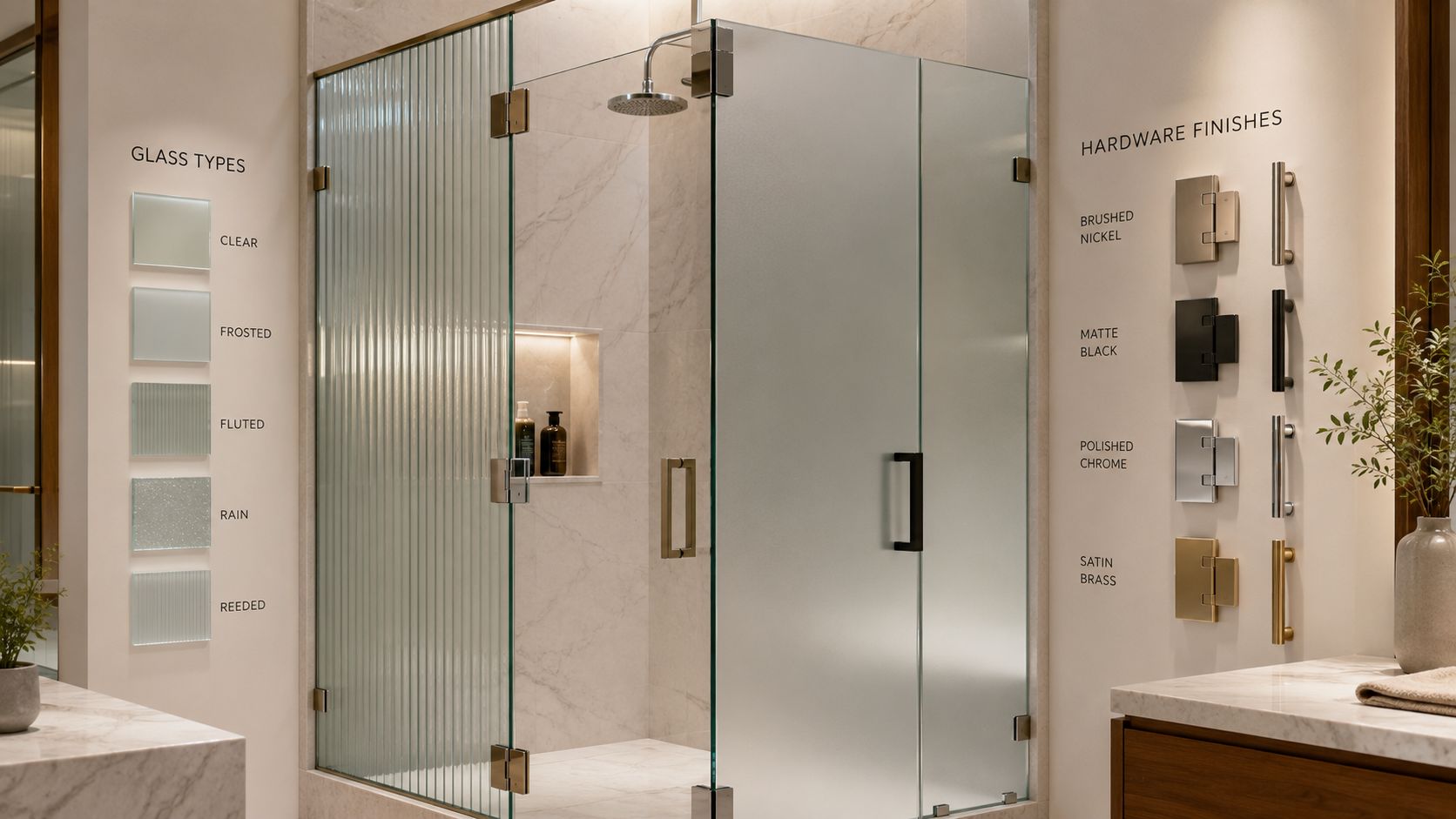
Glass thickness isn't only about appearance
For frameless corner enclosures, glass thickness is tied to structural limits, not just preference. According to Glass Magazine's guidance on safe frameless glass design, 3/8-inch tempered glass supports a maximum height of 84 inches under the stated support conditions, while 1/2-inch tempered glass extends that maximum height to 120 inches. The same source notes that for a panel with an unsupported corner, the width limit is 30 inches for 3/8-inch glass and 36 inches for 1/2-inch glass under the listed conditions.
That matters in real bathrooms. If you want a taller, more luxurious enclosure, or you're asking the glass to span more at a stress point, the thickness choice moves from aesthetic to structural.
From a practical standpoint:
- 3/8-inch glass works well for many standard frameless applications.
- 1/2-inch glass gives a heavier feel, supports taller designs, and often suits upscale custom work better.
- Unsupported corners need special respect because that area takes load differently than a simple flat panel.
Clear versus ultra-clear
Standard clear glass usually carries a subtle green cast, especially at the edges. In some bathrooms that's perfectly acceptable. In others, especially where the tile is white, pale gray, sand, or soft coastal blue, that tint can change the look more than homeowners expect.
That's why many clients compare standard glass to ultra-clear glass before making a final decision. The difference shows up most in bright bathrooms where color accuracy matters.
Hardware in coastal humidity
Local knowledge matters most, particularly in Florida's high-humidity coastal climate, where uncoated metal in humidity above 70% corrodes 3 to 5 times faster than in dry climates, according to Insight Glass on corner shower enclosures and coastal corrosion.
That single fact should change how hardware gets selected in Naples.
A handle or hinge can look fine in a showroom and still be the wrong choice for a home near the coast. Standard nickel or chrome finishes may be acceptable in some environments, but they need much more scrutiny here. Hardware metallurgy, finish quality, and protective treatments matter.
What to choose for long-term performance
When reviewing hardware with a homeowner, I'd keep the checklist simple:
- Prioritize corrosion resistance: In coastal humidity, hardware isn't a decorative afterthought.
- Match the finish to the room, but not at the expense of durability: Good-looking hardware that degrades early is the expensive option in the long run.
- Treat the door and panel system as one assembly: Hinges, clamps, handles, and anchoring points all need to work together.
If the goal is a corner shower glass enclosure that still feels refined after years of daily use, the right glass and the right hardware have to be specified together.
How to Size and Measure for a Perfect Fit
Most sizing mistakes happen before fabrication starts. A homeowner measures one wall, assumes the opposite wall matches, and orders the enclosure around a rectangle that doesn't exist. In many remodels, especially older homes, the walls aren't perfectly plumb and the corner isn't perfectly square. That's normal. It just means the measuring has to be exact.
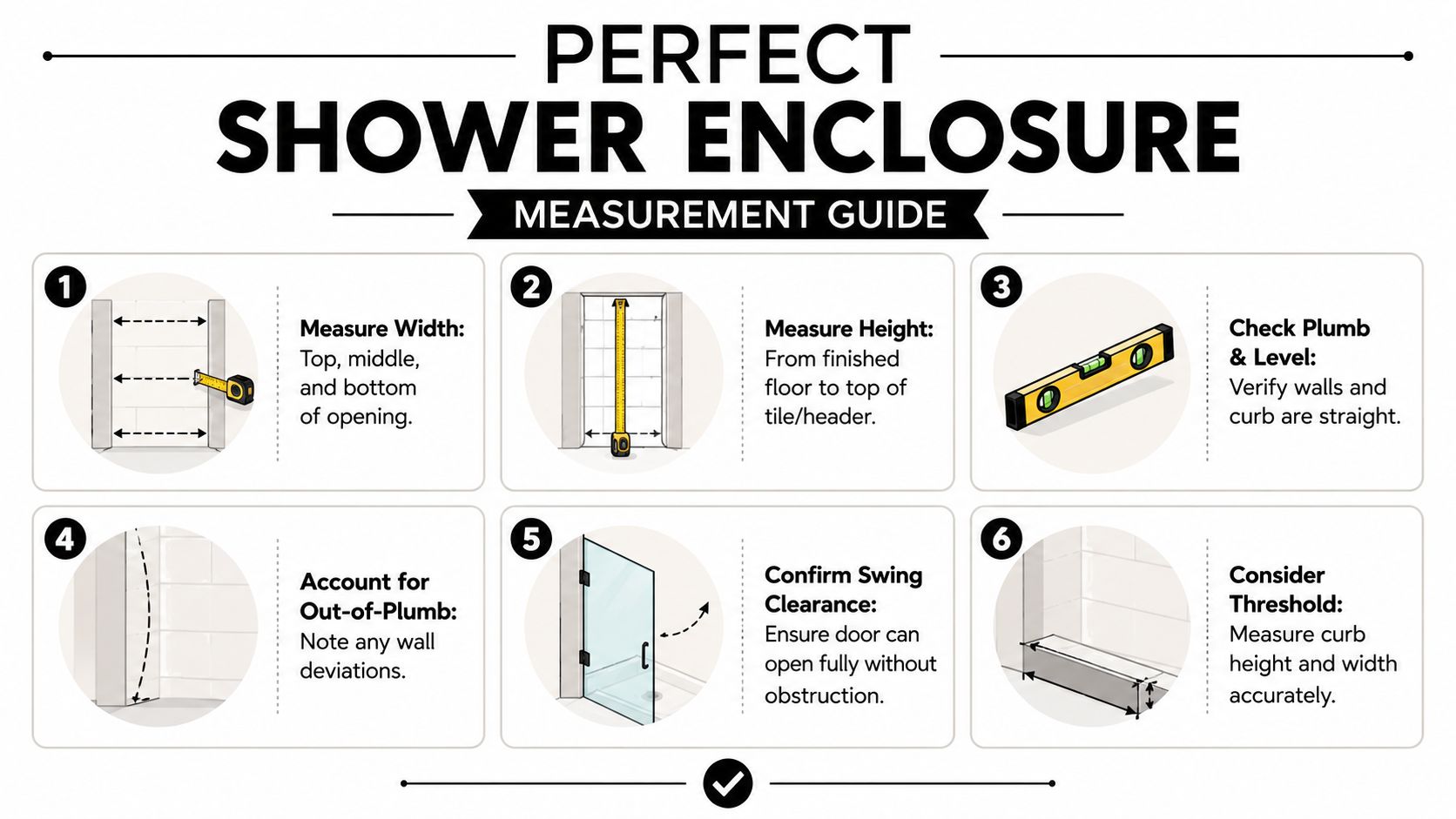
A useful visual guide helps clarify what needs to be checked before final fabrication.
Start with functional size, not just code minimum
For corner shower glass enclosures, the industry standard minimum comfortable size is 36" x 36", while the minimum IRC code size is 30" x 30", which is widely considered cramped in actual use. The same source notes a typical total installed cost range of $2,420 to $5,516, depending on glass, hardware, and height upgrades, as outlined in Sunny Shower's guide to neo-angle, square, and curved corner showers.
That's the distinction homeowners need to hear early. Code minimum and comfortable daily use are not the same thing.
What homeowners can measure themselves
A rough planning measurement is useful before calling for final templating. Focus on the basics:
- Wall-to-wall footprint: Check each side where the enclosure will sit.
- Height to the top termination point: Tile, header, or intended glass height.
- Obstructions: Vanities, toilets, windows, trim, and door swings.
- Curb or threshold dimensions: Width and usable landing area matter.
This walkthrough can help you visualize the process before a final site visit:
Why final measurement should be professional
Tape measures don't tell the full story when the tile bows slightly, the wall leans, or the curb falls off level. Those conditions affect how the door swings, how seals land, and whether the gaps stay consistent.
That's why a custom 90-degree shower door should be field measured with more than a basic width and height check. The final fabrication dimensions have to account for out-of-plumb conditions, real corner angle, hardware placement, and swing clearance.
If the corner is even slightly off and nobody catches it before fabrication, the enclosure may still install, but it won't behave like a custom unit should.
A proper fit starts long before the glass arrives on site.
Understanding the Cost of Your Corner Shower
When homeowners ask what a corner shower costs, the honest answer is that the enclosure price depends on what they're building. Two bathrooms can have the same footprint and end up with very different budgets because the material choices and installation demands aren't the same.
The useful way to think about cost is by category, not by one headline number.
What pushes the price up or down
Some decisions affect budget immediately.
| Cost driver | Lower-cost direction | Higher-cost direction |
|---|---|---|
| Frame style | Semi-framed | Frameless |
| Glass selection | Standard clear | Ultra-clear |
| Design complexity | Simple square layout | More custom geometry and specialty detailing |
| Hardware package | Basic finish options | Upgraded hardware and coastal-conscious selections |
| Height and customization | Standard sizing | Taller custom fabrication |
That's why one estimate can't tell the full story without context. The enclosure isn't just a box of glass. It's a custom assembly of tempered panels, hardware, field measurements, fabrication, transport, and installation.
Where homeowners make smart trade-offs
Not every upgrade carries equal value for every bathroom.
If the tile is the visual centerpiece, frameless glass usually earns its keep because it protects the open feel of the room. If the design palette is soft and light, ultra-clear glass may have more visual impact than an ornamental handle upgrade. If the home is close to the coast, better hardware protection often matters more than a cosmetic accessory choice.
A sound budget conversation usually comes down to priorities like these:
- Visual impact first: Spend where the eye notices it every day.
- Climate durability second: In Naples, finish performance matters.
- Precision installation always: Saving on fit is where expensive callbacks begin.
Why estimates need to be project-specific
A corner shower glass enclosure is custom work even when the layout appears straightforward. Wall conditions, tile thickness, curb shape, and door swing all affect fabrication and labor. One of the more practical examples is height. A taller enclosure can change both the glass specification and the hardware demands.
AmeriGlass Industries handles this type of project with field measurement, fabrication coordination, and installed shower systems for Southwest Florida homes. That's the kind of work where a free estimate is useful, not because it gives a generic number, but because it ties the quote to your actual bathroom.
A good estimate should explain what you're paying for. If it doesn't break down the design choices, it's not giving you enough information to make the right trade-offs.
The Professional Installation Process Revealed
Homeowners usually see the finished glass and the polished hardware. What they don't see is the margin for error behind a corner installation. With a frameless corner system, the fit has to be intentional from the first site visit through final adjustment. There isn't much room for improvisation once the glass is fabricated.
What happens before installation day
The process starts with an in-home review of the opening, the curb, the tile condition, and the room's clearance. In a proper custom job, measurements don't stop at width and height. The installer checks wall plumb, curb level, corner condition, hardware mounting points, and swing path.
Then the enclosure is fabricated to the actual opening, not to a guessed standard size. That distinction matters more in corner work than people realize, because two walls that look square can still drift enough to create trouble at the door edge.
For homeowners who want to understand what dedicated local installation looks like, this overview of frameless shower door installation in Naples Florida shows the level of care these jobs require.
The tolerance details that matter
According to Dulles Glass on 90-degree hinged shower engineering, a corner shower installation requires a 3/16-inch gap between the glass edge and the wall substrate, plus a 3/16-inch gap between the fixed panel and the moving door. The same guidance notes that vertical alignment must stay within 1/8-inch tolerances over the full height.
Those aren't minor details. They determine whether the door swings smoothly, clears properly, and avoids stress at the unsupported corner.
Field note: If the gaps are wrong, the enclosure may still look acceptable at first glance, but the door can bind, sag, or place unnecessary stress on the glass and hardware.
What skilled installers actually do on site
On installation day, the team sets hardware locations carefully, drills through finished surfaces with the correct approach, dry-fits components, and checks reveal lines before final tightening. The visual result should look calm and simple. The work behind it is anything but casual.
A strong install crew pays attention to:
- Level and plumb verification: The eye notices crooked glass immediately.
- Door movement: A custom enclosure should open with control, not drag or fight.
- Seal alignment: Water containment depends on clean, continuous contact points.
- Finish protection: Tile, fixtures, and adjacent surfaces need to leave the job undamaged.
Why installation quality shows up months later
The true measure of a corner shower glass enclosure isn't the first day. It's how the door feels after daily use. A rushed install may not fail immediately, but problems show up over time through sagging, misalignment, chipped finishes, or water escaping where it shouldn't.
That's why this part of the project deserves the same attention as the design and material selection. Good glass can't rescue poor installation. In corner applications, the installation is part of the product.
Long-Term Care and Choosing Your Local Expert
A new shower enclosure shouldn't become a high-maintenance feature. The goal is simple. Keep the glass clear, keep the hardware looking clean, and avoid the slow buildup that makes a custom enclosure feel older than it is.
Daily habits that actually help
Most long-term maintenance advice gets reduced to vague reminders. In practice, the routine should be short and realistic.
- Use a squeegee after showering: This reduces standing water on the glass.
- Wipe hardware periodically: Especially in coastal conditions, don't let residue sit on metal.
- Use non-abrasive cleaners: Harsh products can work against the finish or the glass surface.
- Watch the seals and sweeps: If something shifts, address it before water starts escaping.
Protective glass treatments can also make day-to-day care easier. They don't remove the need for cleaning, but they can reduce how aggressively buildup holds to the glass.
How to choose the right local installer
By the time you're comparing companies, the enclosure style is usually already decided. The bigger question is who can execute it properly in Southwest Florida conditions.
Here's the checklist I'd use:
- Local climate awareness: The installer should understand coastal humidity and how it affects hardware selection and maintenance.
- Modern portfolio: Ask to see actual frameless corner work, not only standard shower doors.
- Precise measurement process: If the company talks only about rough dimensions, that's a warning sign.
- Licensed and insured crews: This protects the homeowner and usually reflects a more disciplined operation.
- Clear communication on options: You should understand the trade-offs in glass, hardware, height, and finish choices before signing off.
For homeowners comparing broader walk-in approaches in other markets, All Well Property walk-in shower services offers another useful example of how professional shower planning centers on fit, access, and long-term usability rather than just appearance.
The right installer doesn't just sell a door. They account for the room, the climate, the hardware, the glass, and how all of it will perform together.
A corner shower glass enclosure should feel effortless once it's in place. Getting to that point takes careful choices. The right shape, the right glass, the right hardware, and the right installation discipline all matter. When those pieces line up, the bathroom looks larger, cleaner, and more refined, and it stays that way with far less frustration.
If you're planning a corner shower upgrade in Naples or anywhere in Southwest Florida, AmeriGlass Industries is a practical place to start. You can review shower enclosure options, compare glass choices, and request a free estimate based on your actual bathroom, not a generic template.