

By midafternoon in Southwest Florida, you can feel which commercial spaces are fighting their glass and which ones have it under control. A Naples storefront with west-facing windows starts baking its merchandise. A Fort Myers office has blinds half closed, lights on, and the AC running hard anyway. A Bonita Springs restaurant gets beautiful daylight at lunch and punishing glare by the late seating.
That's usually the moment property managers start looking at commercial window film installation seriously. Not because it sounds trendy, but because untreated glass creates the same three problems over and over in this market: heat, glare, and exposure. In coastal Florida, those issues don't stay cosmetic for long. They hit operating cost, tenant comfort, and how the property performs during storm season.
Your SW Florida Business Is Losing Money Through Its Windows
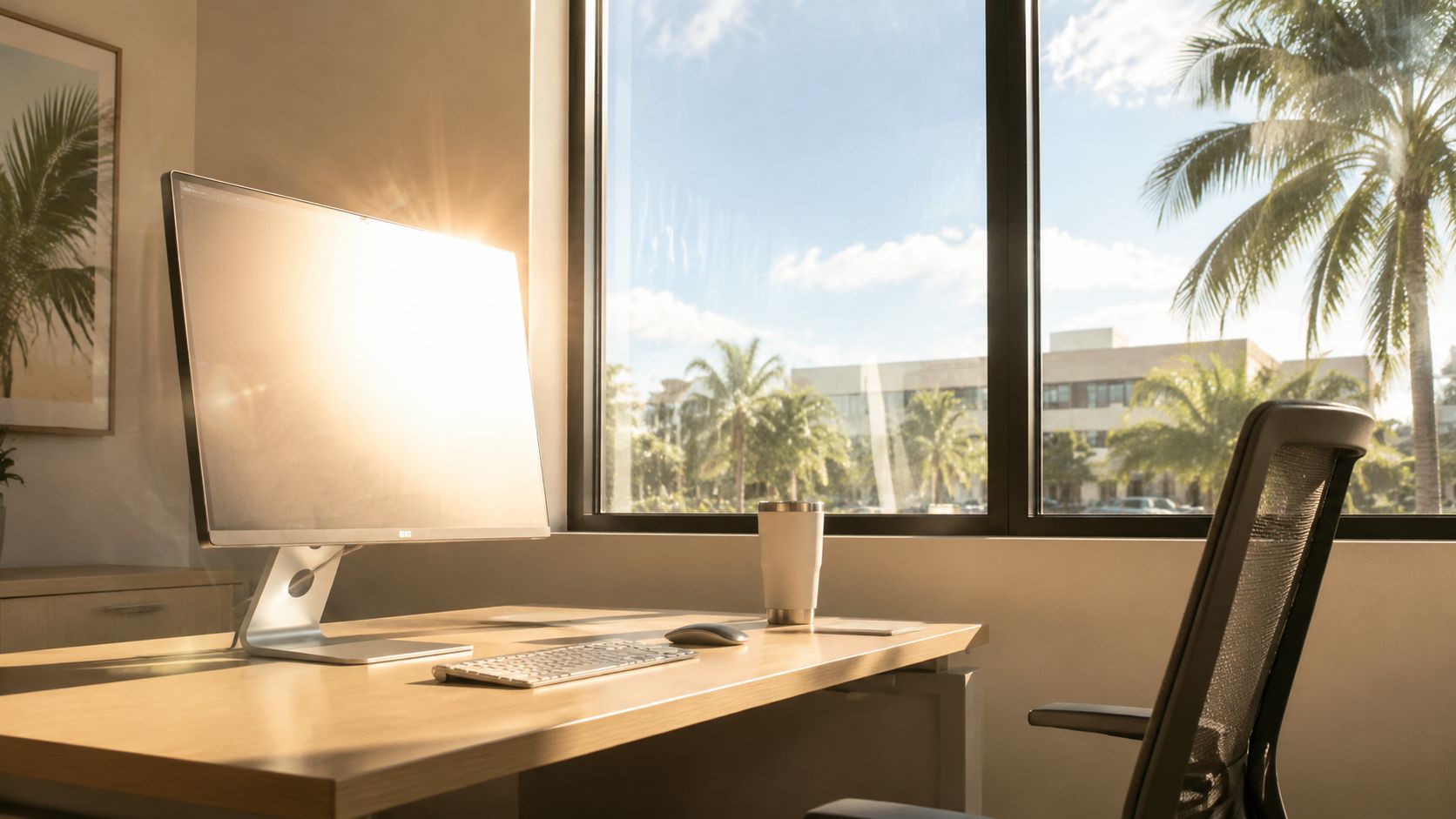
If your building has large glass areas, your windows may be one of the least efficient parts of the property. In Southwest Florida, that shows up fast. The lobby gets hot before the rest of the building. Employees start adjusting thermostats. Customers avoid the brightest seats. Flooring, displays, and furnishings near the glass start showing sun wear long before the rest of the interior does.
This isn't a niche retrofit anymore. The global window film market was valued at USD 12.9 billion in 2025 and is projected to reach USD 21.9 billion by 2033, with North America holding 32.1% of revenue share, according to Grand View Research's window films market analysis. That matters because it tells you commercial owners are treating film as a mainstream building-envelope upgrade, not a decorative afterthought.
What that looks like in Southwest Florida
In this region, the pressure points are predictable:
- South and west exposure: These elevations take the hardest solar load and usually create the first tenant complaints.
- Retail display damage: Strong daylight helps visibility, but direct sun can punish merchandise and interior finishes.
- Open office discomfort: People nearest the perimeter feel the heat and glare first, even when the thermostat reads fine.
- Storm-season concern: During hurricane season, many owners start thinking beyond comfort and ask how glass behaves under impact and breakage.
A lot of managers make the same early mistake. They price film by square foot before they understand where the building is losing performance. In many cases, it makes sense to unlock savings with an energy audit before deciding whether to cover every pane or target the worst elevations first.
Untreated glass in Southwest Florida rarely stays a comfort issue. It becomes an operations issue.
Commercial window film installation works best when you look at it the same way you'd look at HVAC balancing or envelope improvements. The goal isn't just darker glass. The goal is a more stable, usable, and defensible building.
Unpacking the Tangible Business Benefits of Window Film
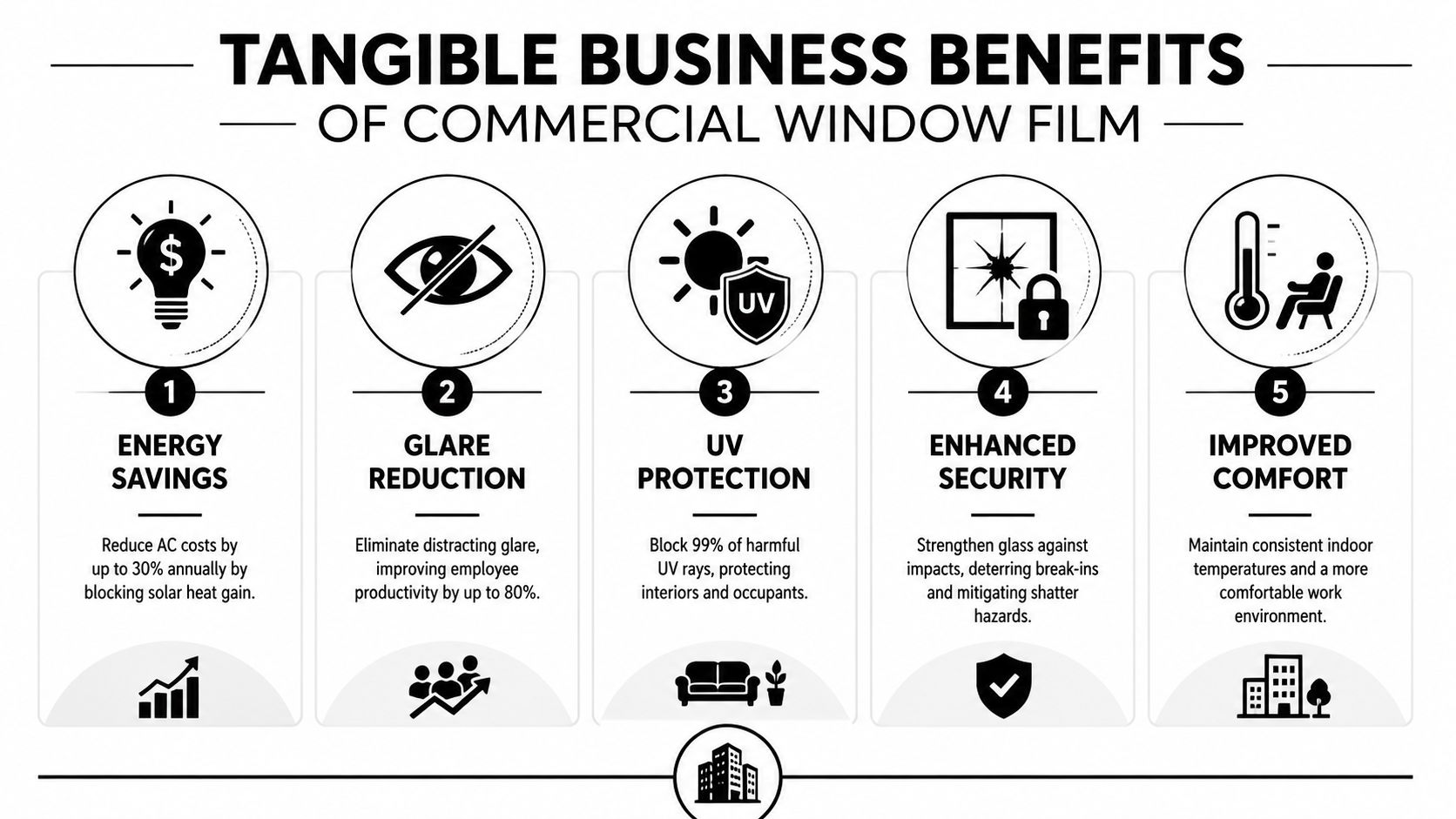
Most commercial owners start with one pain point, usually heat or glare. The reason film often makes sense is that it solves several problems at once. That changes the business case.
Lower cooling demand
In Southwest Florida, this is usually the first number that gets attention. One industry data source reports that commercial buildings saved an average of 15% on cooling costs after film installation, while modern films can reject up to 99.9% of UV rays and up to 97% of infrared energy, based on window tint industry statistics summarized here.
That doesn't mean every building gets the same return. A shaded medical office won't behave like a glass-heavy retail frontage. But when afternoon solar load is driving the AC, reducing heat gain at the glass is one of the cleanest retrofit moves available.
Better comfort for staff and customers
People don't describe the problem as solar heat gain. They say, “That side of the suite is always hotter,” or “No one wants to sit by those windows after lunch.”
Film helps even out those complaints by reducing the intensity coming through the glass. In offices, that often means fewer blinds shut all day. In restaurants and showrooms, it means the seating or display area near the windows stays usable longer.
Practical rule: If occupants are constantly adjusting blinds, moving away from perimeter desks, or complaining about one side of the building, the glass is already telling you where the problem is.
Protection against fading and sun damage
This matters more than many owners expect. In Southwest Florida, UV exposure is relentless. For retail, that can mean sun-faded packaging, apparel, signage, and floor displays. For offices, it's chairs, flooring, artwork, wall coverings, and millwork near the perimeter.
The value here isn't just preservation. It's avoiding early replacement of things you already paid for.
Added security when glass breaks
Security film isn't hurricane glass, and it shouldn't be sold that way. But it does serve a practical role. The same source notes that security films can delay forced entry by 2 to 6 minutes. In commercial settings, that delay matters. It can buy time for staff response, alarms, or police dispatch.
It also helps with shattered-glass containment. That's useful for storefronts, lobbies, schools, and offices where broken glass becomes a safety problem immediately.
Privacy and appearance without replacing glass
Some projects aren't about solar control at all. They're about making conference rooms private, screening back-of-house areas, or improving the look of interior glass. Decorative and privacy films handle those needs without the cost and disruption of replacing existing glazing.
For many property managers, that's the overlooked value of commercial window film installation. One project can address energy exposure, occupant comfort, interior protection, and selected security concerns at the same time.
Exploring Your Commercial Window Film Options
Not all film solves the same problem. The right recommendation depends on what the building needs most. If you pick film by appearance alone, you can spend money and still leave the underlying problem untouched.
Match the film to the problem
If your main issue is heat and glare, solar control film is usually the first place to look. This is the common answer for offices, restaurants, retail fronts, and common areas with heavy sun exposure.
If breakage, smash-and-grab risk, or glass containment is the concern, security and safety film belongs in the conversation. This is often used on storefronts, entry systems, sidelites, and other vulnerable glazing.
If the building needs visual screening, privacy or decorative film may be the better fit. Think conference rooms, interior partitions, waiting areas, treatment rooms, and tenant spaces where daylight matters but visibility needs to be controlled.
If you want solar performance with a lighter, less reflective appearance, spectrally selective film is often the better product class. It's useful when owners want heat reduction without making the building look heavily tinted.
Commercial Window Film Comparison
| Film Type | Primary Function | Best For | Key Feature |
|---|---|---|---|
| Solar control | Reduce heat and glare | Offices, retail, restaurants, glass-heavy common areas | Improves comfort at sun-exposed elevations |
| Security and safety | Hold broken glass together and slow entry | Storefronts, lobbies, schools, vulnerable access points | Strengthens post-break glass behavior |
| Privacy and decorative | Limit visibility or change appearance | Conference rooms, interior glass, medical and professional suites | Adds privacy without replacing glass |
| Spectrally selective | Manage solar load with a more subtle look | Premium commercial facades and tenant spaces | Balances visible light with solar performance |
What works and what doesn't
A full-building install isn't always the smartest first move. In many Southwest Florida properties, the worst heat load sits on selected exposures or tenant areas. Treating the problem zones first can make more sense than tinting every pane because it “looks complete.”
What also doesn't work is trying to make one film do every job perfectly. A decorative privacy product won't solve a west-facing heat problem. A basic solar film won't answer a security brief for vulnerable entry glass. Good specifications are specific.
For a broader view of product categories and fit, review the available commercial glass and film product options before pricing the job. It helps narrow the conversation to actual building needs instead of generic preferences.
The Professional Installation Process Explained
A clean-looking finish is only part of the job. The real test is whether the film bonds correctly, cures properly, and stays stable at the edges. That's why commercial window film installation is less about rolling film onto glass and more about process control.
The prep work that determines the result
The glass has to be cleaned to remove at least 99.9% of particulate matter before application. If dust, grease, or silicone residue stays on the surface, the pressure-sensitive adhesive can't make full contact with the glass. That weak boundary layer is what causes haze, edge lift, delamination, and callbacks.
For installers, this is the point where quality separates fast work from durable work. The process typically involves multi-stage cleaning, careful inspection under strong lighting, and confirming the glass is physically and chemically ready before the film is ever positioned.
The film doesn't fail first. The prep fails first.
On demanding security film work, the bond matters even more. High-performance films in the 4 to 8 mil range require adhesive bond strength above 150 psi to meet ASTM D3359 adhesion benchmarks. When crews skip proper prep, installation rejection rates can increase by 30% to 40%.
What happens on site
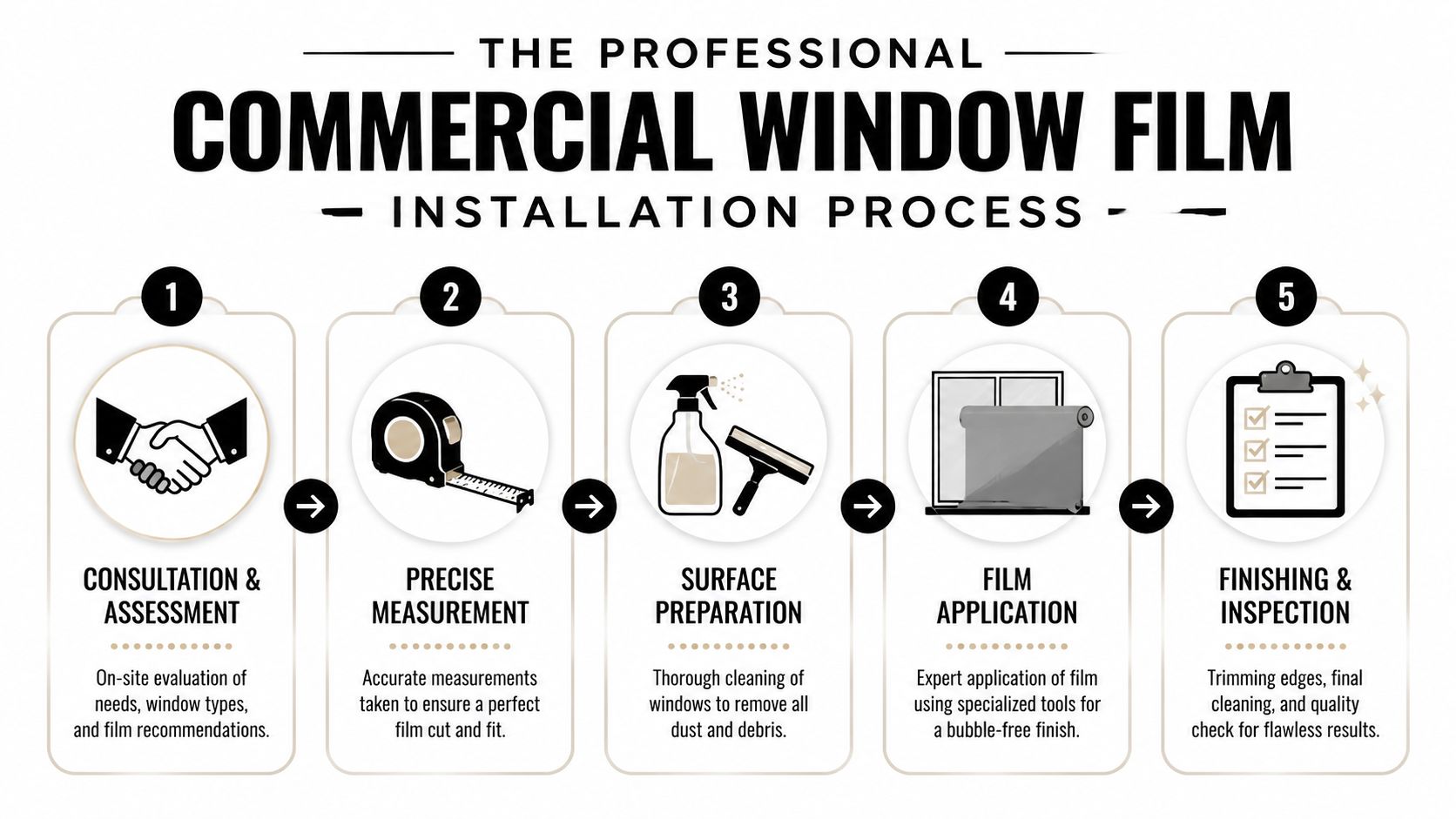
A professional installation usually follows a clear sequence:
Site assessment
The team reviews glass type, orientation, access, staging, and which elevations need the most attention.Precision measurement and cutting
A clean edge line begins with precision measurement and cutting. Poor measurement shows up later as visible gaps, over-trimming, or stress at the perimeter.Application and squeegee work
The film is wetted, positioned, and smoothed to remove moisture and air pockets. Technique matters here. So does tool choice.Edge finishing and inspection
If edge sealing is required, it needs to be consistent. Final inspection checks clarity, trimming, and whether the finish is clean enough to cure without defects.
A useful walkthrough of common questions after install is available in these commercial glass project FAQs.
Later in the process, curing and final checks matter just as much as placement. This short video gives a helpful visual reference for what a proper install workflow looks like:
Why professional staging matters in occupied buildings
On mid-sized buildings, professional teams typically complete standard commercial installations within 2 to 4 days, using staged workflows to reduce disruption. That matters in active offices, retail suites, clinics, and tenant-occupied spaces where access has to be coordinated and the property still has to function.
What doesn't work is treating a commercial install like a quick residential tint job. Larger panes, public-facing spaces, and warranty requirements leave much less room for error.
Budgeting for Window Film and Calculating Your ROI
Most owners ask the square-foot price first. That's understandable, but it's not enough to make a good decision. The key question is what you're buying over the life of the installation.
Installed cost ranges
Benchmark pricing for commercial projects typically puts solar control films at $7 to $12 per square foot installed, while premium security films range from $15 to $25+ per square foot installed. Those ranges shift with access, glass layout, edge detail, film technology, and how complex the building is to stage.
A property with large, straightforward panes is one thing. A storefront with segmented glass, tight operating hours, and high-finish visibility is another. Labor quality also changes the economics. A cheap install that lifts at the edges or fails inspection isn't cheaper.
What to include in the business case
A practical ROI review should look at more than purchase price:
- Energy performance: For some single-pane conditions, NFRC-rated energy savings can be up to 19 kWh/ft² when the correct product and installation standards are met.
- Interior preservation: Reduced UV exposure can lower wear on flooring, finishes, furniture, and display inventory.
- Operational usability: Spaces that were too hot or too bright become usable again, which matters in lease retention and customer experience.
- Security value: On selected openings, security film can improve glass behavior after breakage and support a broader risk plan.
Bottom line: Lifecycle value usually depends more on film selection and installer discipline than on finding the lowest bid.
Where owners miscalculate
The most common mistake is assuming every pane deserves the same treatment. It often makes more sense to focus on south- and west-facing glass, entry zones, or tenant complaint areas first. In Southwest Florida, those are usually the windows producing the hardest return if they're left untreated.
The second mistake is ignoring the process details that protect performance. Surface prep, trimming quality, curing conditions, and edge finishing all affect whether the installation delivers the expected value over time.
If you're budgeting a real project, get a commercial glass and film quote for your building based on site conditions, not just a rough square-foot estimate. That's where ROI starts becoming honest.
How to Choose the Right SW Florida Film Installer
The film matters. The installer matters just as much. In this trade, poor workmanship can make a good product look bad within months.
What to ask before you sign
A serious commercial installer should be able to answer a few basic questions without hesitation:
- Local experience: Have they worked on commercial properties in Naples, Fort Myers, Bonita Springs, and similar coastal conditions?
- Insurance and licensing: Are they properly insured for commercial work in Florida?
- Manufacturer alignment: Can they explain film compatibility, installation requirements, and warranty conditions clearly?
- Project control: Do they measure on site, discuss staging, and explain how they'll limit business disruption?
- Commercial references: Can they show recent work that looks like your property, not just generic examples?
Why the cheapest quote often fails
Low bids usually cut somewhere. Sometimes it's surface prep. Sometimes it's labor time, edge detail, or post-install inspection. Those shortcuts are exactly what show up later as bubbles, silvering, contamination, gaps at the frame, or warranty disputes.
That's especially important in Southwest Florida, where sun exposure is unforgiving and buildings stay under year-round environmental pressure. A weak install won't hide for long.
A good benchmark is whether the company approaches the job like a building-performance upgrade or like a commodity tint sale. You want the first one. For a sense of what established local trade professionalism looks like, review the company background and standards on the AmeriGlass Industries team page.
A clean proposal isn't enough. You want a crew that can explain why a film belongs on your specific glass and how they'll keep that install stable.
Long-Term Care Compliance and Warranty Protection
The job isn't finished when the film goes on the glass. The first year is where owners learn whether the install was handled correctly and whether the maintenance plan protects the warranty.
What to expect after installation
Building managers should expect a curing window. During that period, some moisture patterns or slight visual irregularities can appear while the film settles. That's normal. What isn't normal is obvious edge lift, poor trimming, trapped contamination, or visible gaps that suggest the film was measured or placed incorrectly.
That's why post-install quality control matters. Installation guides stress that improper measurement, trapped moisture, or poor trimming can lead to edge lifting and visible gaps, which can void warranty coverage, as noted in this professional window film installation guide.
Maintenance that protects the investment
Once the curing period has passed, maintenance should stay simple and gentle. Avoid aggressive scraping, harsh tools, and chemical habits that can damage the film surface or stress the edges. Cleaning staff should know the glass has film on it and treat it accordingly.
That matters more on commercial properties than many people realize. Janitorial routines can either protect the installation or shorten its useful life.
For managers comparing maintenance standards across glass surfaces, even outside Florida, it helps to understand how professional crews approach commercial cleaning. A practical example is this guide on Choosing Phoenix commercial window washing, which reinforces why process and tool choice matter on finished glass.
Compliance and documentation
Commercial properties should also confirm that the selected film fits the building's code and appearance requirements. Street-facing conditions, tenant expectations, association restrictions, and certain building standards can all affect what belongs on the glass.
Keep a project file with product details, warranty terms, maintenance guidance, and the final scope of work. That gives property managers a clear record if questions come up later during inspections, ownership transitions, or vendor changes.
For owners who manage multiple glass features across a property, it also helps to work with contractors familiar with adjacent specialty glass applications, such as frameless shower door installation in Fort Myers, Florida, where precision measurement and finish protection matter for different reasons but demand the same discipline.
If your building in Naples, Fort Myers, Bonita Springs, or the surrounding Southwest Florida market is fighting heat, glare, fading, or vulnerable glass, AmeriGlass Industries can help you evaluate the right commercial window film installation strategy for the property. Get a professional assessment, clear recommendations, and an installation plan built around performance, appearance, and long-term reliability.