
A realistic all-in budget for a standard single commercial glass door often lands around $3,000 to $8,000+, depending on the system, hardware, installation conditions, and code requirements. If you've been seeing door prices that look much lower, the gap usually comes from everything that gets added after the product page, and that's exactly why this range is so wide.
Most owners start in the same place. They search for commercial glass doors cost, find one site quoting a door slab, another showing a storefront package, and a third listing a base unit with no labor, no hardware, and no permit-related scope. Then the actual quote arrives and feels disconnected from what they saw online.
That disconnect is normal. A commercial glass entry isn't just a door. It's a code-compliant opening system with glazing, framing, hardware, labor, field measurements, and, in Southwest Florida, weather and wind-load considerations that can change the specification fast.
Beyond the Sticker Price Understanding Your True Investment
If you're budgeting a new storefront, office entry, or tenant improvement, the number that matters is the installed project cost, not the lowest published unit price. Many online pages list door-only pricing, but buyers usually need the final number with hardware, labor, and code compliance included.
One market guide puts installation alone for an exterior door at about $550 to $640 per door in a commercial context, which is why a simple product-page starting price can understate the true budget by a meaningful margin, especially when commercial-grade hardware and code compliance enter the job (27estore on commercial glass door cost). That gap is where most budget surprises happen.
A contractor looks at the whole opening. Is this a single swing door or part of a storefront? Does it need panic hardware, an ADA closer, access control, or impact-rated glazing? Is the existing frame usable, or does the opening need to be rebuilt? Those answers move the quote more than most first-time buyers expect.
Practical rule: If the quote doesn't clearly mention glass type, frame, hardware, and installation scope, you probably aren't looking at the real project price yet.
For owners comparing options, it helps to review actual service examples such as Wilcox Door Service for glass door solutions, because seeing how contractors package storefront and entry systems gives you a better sense of what belongs in a complete quote. It also helps to keep a shortlist of common project questions, and a basic commercial glass FAQ reference can make those conversations easier before you start requesting bids.
Decoding the Price Tag Typical Cost Ranges
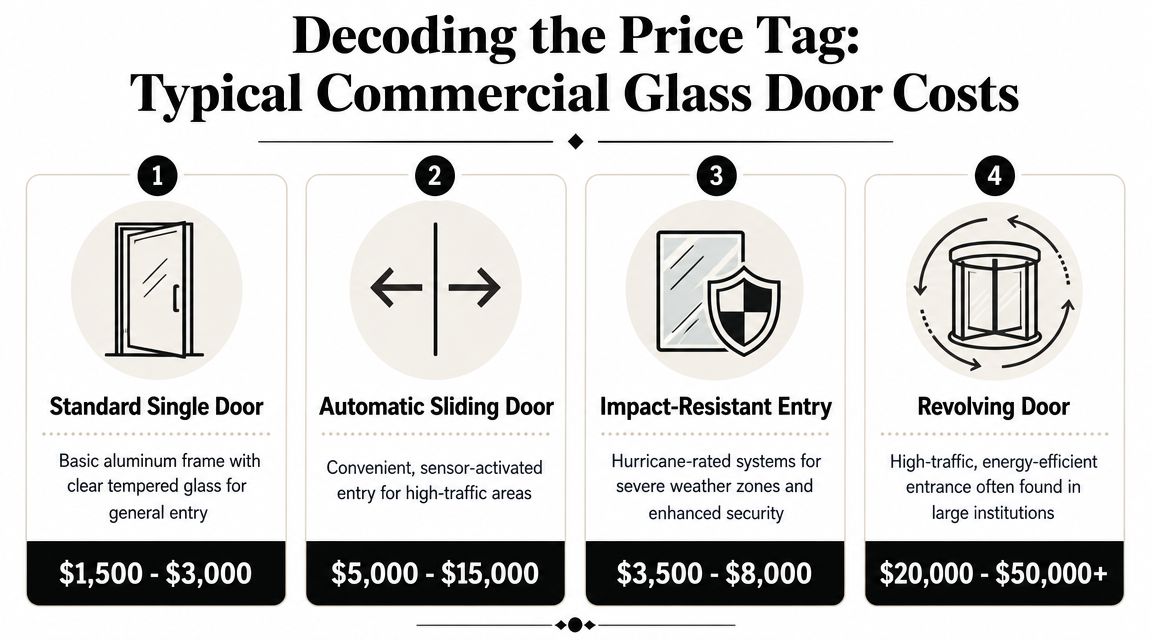
The cleanest way to price commercial glass doors cost is by system type, because a basic manual entry and a more complex storefront don't belong in the same budget bucket.
Commercial market benchmarks commonly place installed aluminum-and-glass storefront doors in the $1,200 to over $4,000 range, while automatic sliding doors can start at $3,000 and reach $8,000 or more (commercial door installation cost benchmarks). Those numbers are useful, but they only become practical when you match them to the kind of opening you're building.
Single doors versus larger entry systems
A straightforward aluminum-and-glass entry door usually sits in the lower commercial range when the opening is standard and the hardware package is simple. Once the project adds paired doors, larger framing, upgraded closers, panic devices, or electric strikes, it stops behaving like a basic door replacement and starts pricing more like a small entrance system.
That's why two quotes can both be correct and still look far apart. One contractor may be pricing a door in an existing prepared opening. Another may be pricing a full entry assembly with frame work, threshold details, and hardware coordination.
Where buyers often misread the numbers
These ranges make more sense if you think in tiers:
- Basic manual storefront entry: Usually the closest match to a small retail or office door with aluminum framing and standard commercial hardware.
- Paired entry systems: More expensive because they add width, more hardware points, and more field coordination.
- Automatic entries: Higher because the operator, controls, activation devices, and setup are part of the system, not an accessory.
- Architectural storefront assemblies: These can go beyond a simple door budget quickly once transoms, sidelites, or exposed framing details are involved.
If you're comparing options for a retail, office, or mixed-use project, looking at commercial glass product types and applications can help you sort what counts as a simple entry versus a full storefront system. That distinction matters because it changes the labor, hardware, and code path from the start.
The Anatomy of Your Estimate Key Cost Drivers
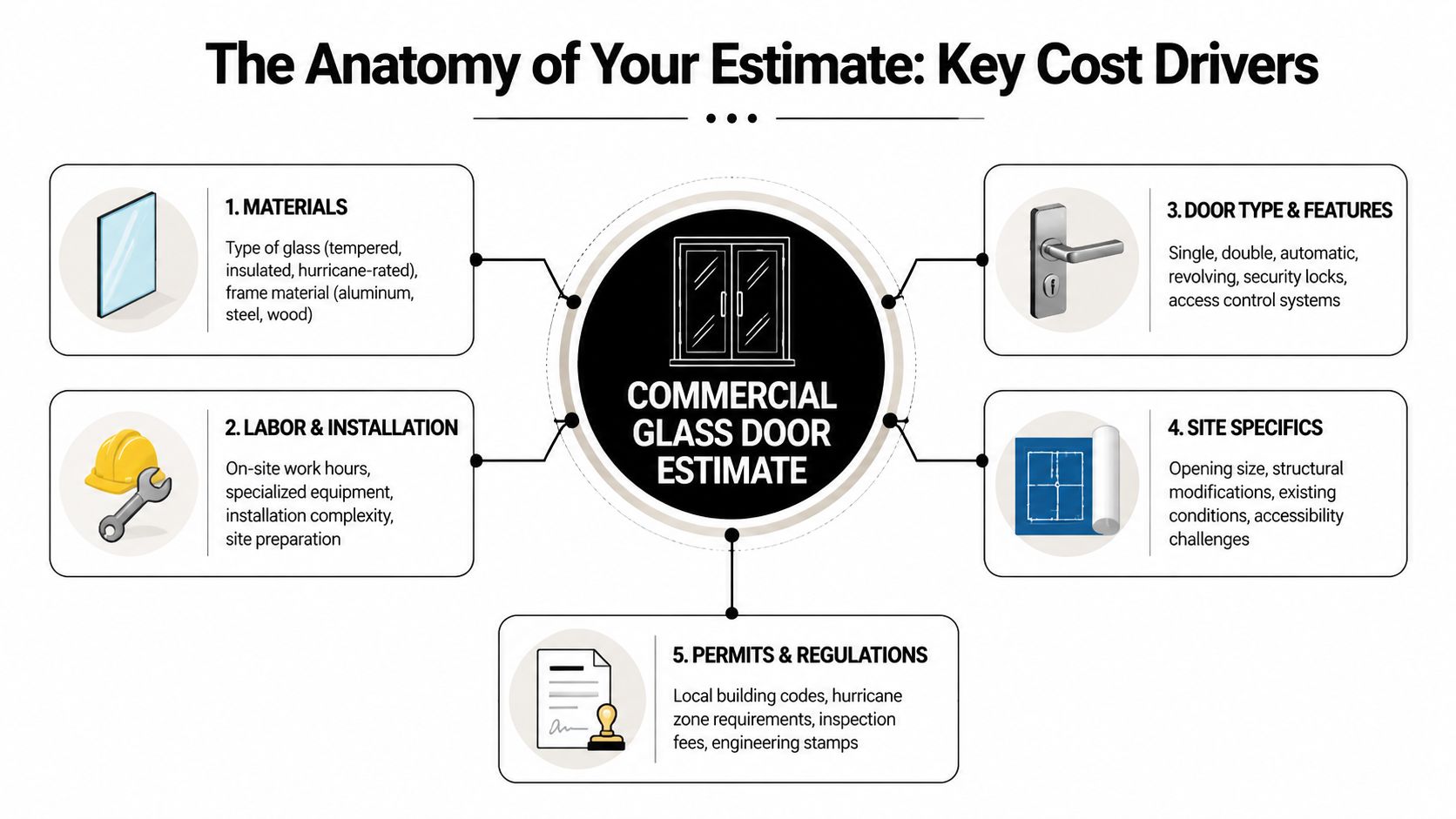
The number on a commercial glass door quote comes from five moving parts: glass, frame, hardware, labor, and site conditions. When owners feel like pricing is inconsistent, it's usually because one of those categories changed and wasn't obvious from the outside.
Glass selection changes the budget first
Glass is often the biggest material driver. One U.S. market guide lists standard clear glass at about $35 to $98 per square foot, tempered glass at about $63.70 to $127.40, laminated glass at about $72.80 to $145.60, low-E glass at about $54.60 to $109.20, and insulated glass units at about $91 to $182 per square foot (commercial glass door material pricing guide).
Those numbers explain why owners get sticker shock when a project moves from simple clear glazing to a performance-driven storefront. Tempered glass is common because it addresses safety requirements. Laminated glass adds another layer of protection and performance. Low-E glass helps with solar heat management. Insulated units add thermal performance, but they also add cost, weight, and handling considerations.
A simple way to think about it:
- Tempered glass is the standard safety step-up for many commercial entries.
- Laminated glass works like a sandwich. Multiple layers stay bonded together if broken, which matters for security and impact resistance.
- Low-E glass has a coating that helps manage heat gain.
- Insulated glass units act more like a sealed assembly than a single pane, and they usually belong in projects chasing better building-envelope performance.
The glass spec isn't a detail. It's often the line item that decides whether you're buying a basic entry or a high-performance opening.
For projects where clarity and appearance matter, owners sometimes compare standard glazing to ultra-clear glass options to decide whether the visual upgrade justifies the cost.
A short video can also help if you want to see how commercial door components come together in the field.
Frame and hardware can outrun the glass
Clients often focus on the pane and overlook the frame and hardware package. In practice, those line items can change the quote fast. Narrow-stile doors, heavier rails, upgraded closers, pull sets, panic bars, locksets, thresholds, door bottoms, and access-control prep all add cost.
Hardware is also where cheap decisions tend to backfire. A busy retail entrance needs hardware that can take repetitive use. A back office with limited traffic doesn't need the same setup. A medical, school, or assembly use may push you toward panic hardware or other code-driven components.
If you're trying to plan maintenance along with installation, it also helps to understand cleaning costs over the life of the entry. Property teams sometimes compare local service benchmarks like commercial window washing rates Phoenix to understand how larger glass surfaces affect ongoing operating budgets, even though installation and maintenance are separate scopes.
Labor and site conditions decide the final number
Labor isn't just "set door and leave." Commercial installation includes field verification, anchoring, shimming, alignment, sealants, hardware adjustment, and making sure the door closes, latches, and swings correctly under real jobsite conditions.
The site itself can add friction:
- Existing conditions: Old framing, out-of-square openings, and hidden damage create extra labor.
- Occupied spaces: Work in an active business usually takes more coordination.
- Access constraints: Tight corridors, upper floors, or limited delivery access increase handling time.
- Permit and inspection requirements: These don't always appear on early budget numbers, but they matter.
| Component | Standard Option | Premium Option | Cost Impact |
|---|---|---|---|
| Glass | Clear or tempered | Laminated, low-E, insulated | Low to high depending on spec |
| Frame | Basic aluminum storefront frame | Heavier architectural framing | Moderate to high |
| Hardware | Standard closer, lock, pull | Panic hardware, access control, operator prep | Moderate to high |
| Installation | Existing prepared opening | Complex retrofit or occupied-site install | Moderate to high |
| Compliance scope | Basic code review | Impact-rated or engineered system requirements | Moderate to high |
Southwest Florida Factors Impacting Your Project
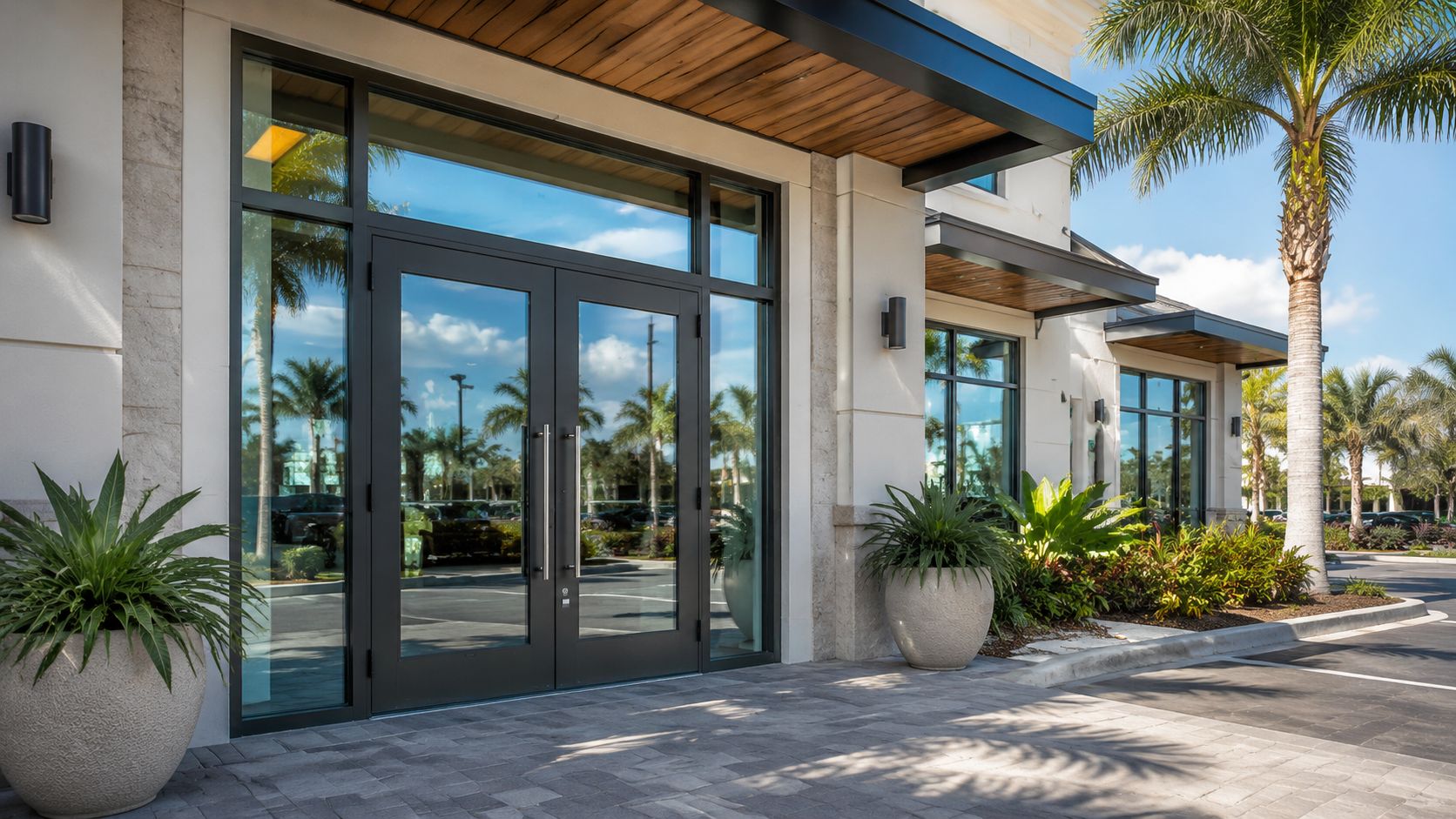
Southwest Florida changes the conversation because the climate is hard on buildings and local compliance isn't optional. A commercial entry in Naples, Fort Myers, or nearby coastal areas has to be thought of as an exterior system first and a design feature second.
Hurricane code isn't an upgrade
In this region, impact resistance, approved assemblies, and proper installation details can drive the job. If the opening needs hurricane-rated glazing and framing, the project won't price like a generic interior office door. That's one reason broad national averages can mislead Southwest Florida buyers.
The practical mistake is treating local code as an add-on. It isn't. If the product, frame, anchorage, and opening conditions don't line up with the required approval path, the project can stall at review, fail inspection, or cost more later when someone has to replace the wrong system.
Buy the opening for the building and location, not for the lowest online number.
Salt air, humidity, and sun exposure matter
Coastal conditions don't just affect glass. They affect hardware longevity, finish durability, sealants, and how often doors need adjustment. Stainless hardware, corrosion-resistant finishes, and the right glazing package usually cost more upfront, but they make sense when the entry sits in humidity and salt air year-round.
For businesses in Southwest Florida, energy performance matters too. Heat load, glare, and UV exposure can push owners toward low-E or insulated glazing when the opening gets a lot of sun. That's not the same decision as impact protection, but on some projects both specs show up together.
AmeriGlass Industries handles commercial glass work in this region, including custom glass systems and field-measured installations, which matters because local openings often need tighter coordination than an off-the-shelf package. Even a residential-focused page like their Naples installation work shows the kind of precision measuring and finish quality that glass projects in coastal markets demand.
From Blueprint to Reality Sample Project Scenarios
The fastest way to understand commercial glass doors cost is to compare two jobs that sound similar on paper but don't build the same way in the field.
Boutique retail entry
A small boutique tenant wants a clean glass front entry in a prepared opening. The owner chooses a narrow-stile single door with commercial hardware, but the project still has to meet local exterior requirements and work with the storefront around it.
A market benchmark puts a simple narrow-stile single commercial glass door at about $3,175 installed, which is a useful starting point for this kind of project when the scope stays controlled (storefront door pricing benchmarks). This is the kind of job where scope discipline matters. If the opening is already framed correctly, the hardware is standard, and no one changes the glass package late, the budget stays in a predictable lane.
What pushes it up? Better glazing, upgraded closers, panic hardware, access-control prep, or opening corrections. The owner may have started by thinking "one door," but a contractor is pricing a working commercial entrance that has to close properly, latch reliably, and meet the job requirements on inspection day.
Modern office entryway
Now take an office lobby with paired doors, a transom, cleaner architectural sightlines, and specialized hardware. The owner wants the entrance to feel more premium, and the building has heavier foot traffic.
That same benchmark source lists a double door starting around $5,735, and that makes sense because the system is doing more. There are more hardware points, more alignment work, more glazing area, and usually more expectation around appearance and fit.
The moment a project becomes a storefront assembly instead of a door swap, the budget usually changes category.
This second scenario also tends to attract late additions. Owners ask for upgraded pulls, concealed closers, electrified hardware, or a more refined finish after the design is already in motion. None of those are wrong choices. They just need to be priced before fabrication and installation, not after materials are ordered.
A good estimate should read like a story of the opening. What is being installed, how it's built, what hardware is included, and what assumptions the contractor is making about the site. If you can't follow that story, you can't compare bids fairly.
Budgeting for Value and Long-Term ROI
The cheapest commercial entry isn't usually the least expensive over time. It can become the most expensive one if the hardware wears out early, the glass doesn't match the climate, or the opening starts causing service calls because the original installation cut corners.
Where spending more usually makes sense
Some upgrades pay back in reliability, others in performance.
- Better hardware: High-cycle entrances need closers, pivots, locks, and exit devices built for repeated use.
- Performance glazing: Low-E or insulated glass can make more sense on sun-exposed entries where interior comfort matters.
- Impact-rated assemblies: In Southwest Florida, this isn't just storm thinking. It can also support security and reduce the risk of costly failure in severe weather.
- Corrosion-resistant components: Coastal conditions punish cheap finishes and low-grade metal fasteners.
What doesn't usually work
Owners get into trouble when they mix premium visual expectations with stripped-down specifications. A door can look clean in a rendering and still perform poorly if the hardware package is undersized or the glazing choice ignores heat, wind, or traffic.
Another weak move is accepting a vague allowance instead of a defined specification. If the quote says "glass door installed" with no clear callout for hardware set, glass type, frame details, and compliance assumptions, the final price can move later for reasons that were entirely predictable.
For budget planning, value comes from matching the system to the building. A quiet office interior opening doesn't need the same package as a beachfront retail entrance. The right specification isn't the one with the most upgrades. It's the one that fits the actual use, exposure, and maintenance expectations.
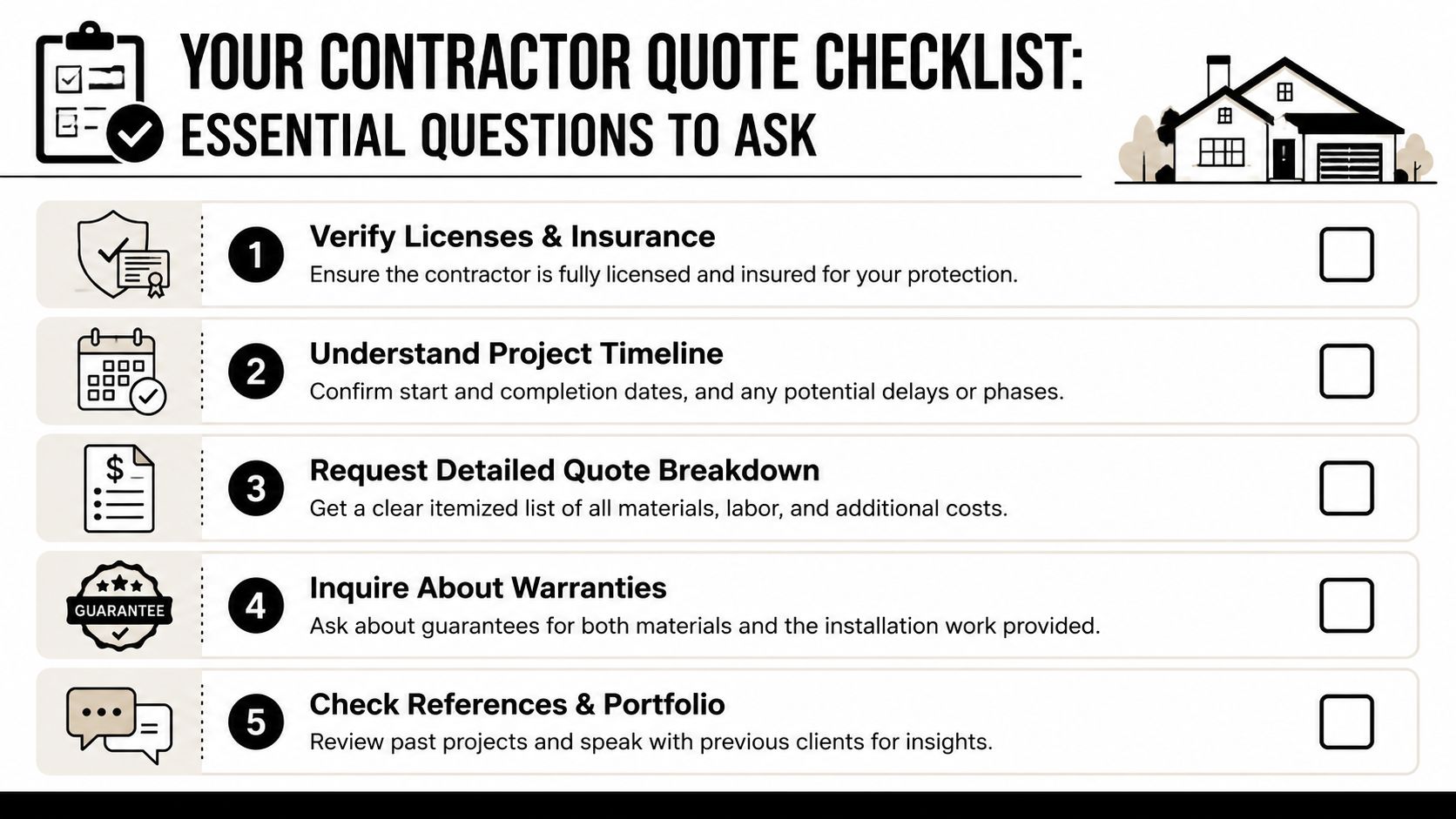
Your Contractor Quote Checklist Essential Questions to Ask
A strong quote should answer questions before you have to ask them. If it doesn't, ask anyway. That's how you avoid hidden scope, mismatched products, and change orders that should have been prevented at the estimating stage.
Questions that protect your budget
- Is this quote all-in? Ask whether glass, frame, hardware, labor, sealants, adjustments, and disposal are included.
- What exact glass is being quoted? You want the glazing type written clearly, not implied.
- Is the system approved for my opening and location? In Southwest Florida, this matters immediately.
- What hardware is included? Closers, locks, pulls, panic devices, thresholds, and access-control prep should be itemized.
- What assumptions are built into the labor scope? Existing frame reuse, opening condition, and after-hours work should be spelled out.
Questions that reveal how the contractor works
Some estimating platforms make line-item detail easier to understand, and tools like Exayard estimating tools for contractors show the kind of estimate structure that helps reduce confusion between scope and price. Even if your contractor uses a different system, the principle is the same. Clear estimates make better projects.
You should also ask about warranty coverage, licensing, insurance, schedule, lead times, and who handles final adjustment after installation. If you want a starting point before calling around, use a direct commercial glass quote request form so you can compare contractors with the same scope notes in hand.
A quote is only comparable when the scope is comparable.
If you're planning a storefront, office entry, or tenant improvement in Southwest Florida, AmeriGlass Industries can provide a project-specific estimate based on your opening, glass specification, hardware needs, and installation conditions. That's the only reliable way to turn broad commercial glass doors cost ranges into a budget you can build around.
Need a quote for your business? AmeriGlass Industries installs glass doors, storefronts and partitions through our commercial glass service across Naples, Fort Myers, Bonita Springs and Cape Coral. Call (239) 426-6884.