

For anyone who truly appreciates wine, proper storage is more than just a fancy feature—it's the only way to protect your investment. A climate-controlled wine cellar isn't just about chilling your bottles; it's about creating a perfectly stable sanctuary where each one can age gracefully, tasting exactly as the winemaker envisioned. It’s an active system that manages both temperature and humidity, shielding your collection from the elements that cause spoilage.
Here in Southwest Florida, with our relentless heat and humidity, this kind of protection is non-negotiable. It's the only real way to guarantee your wine’s preservation.
Why Your Wine Needs a Stable Environment
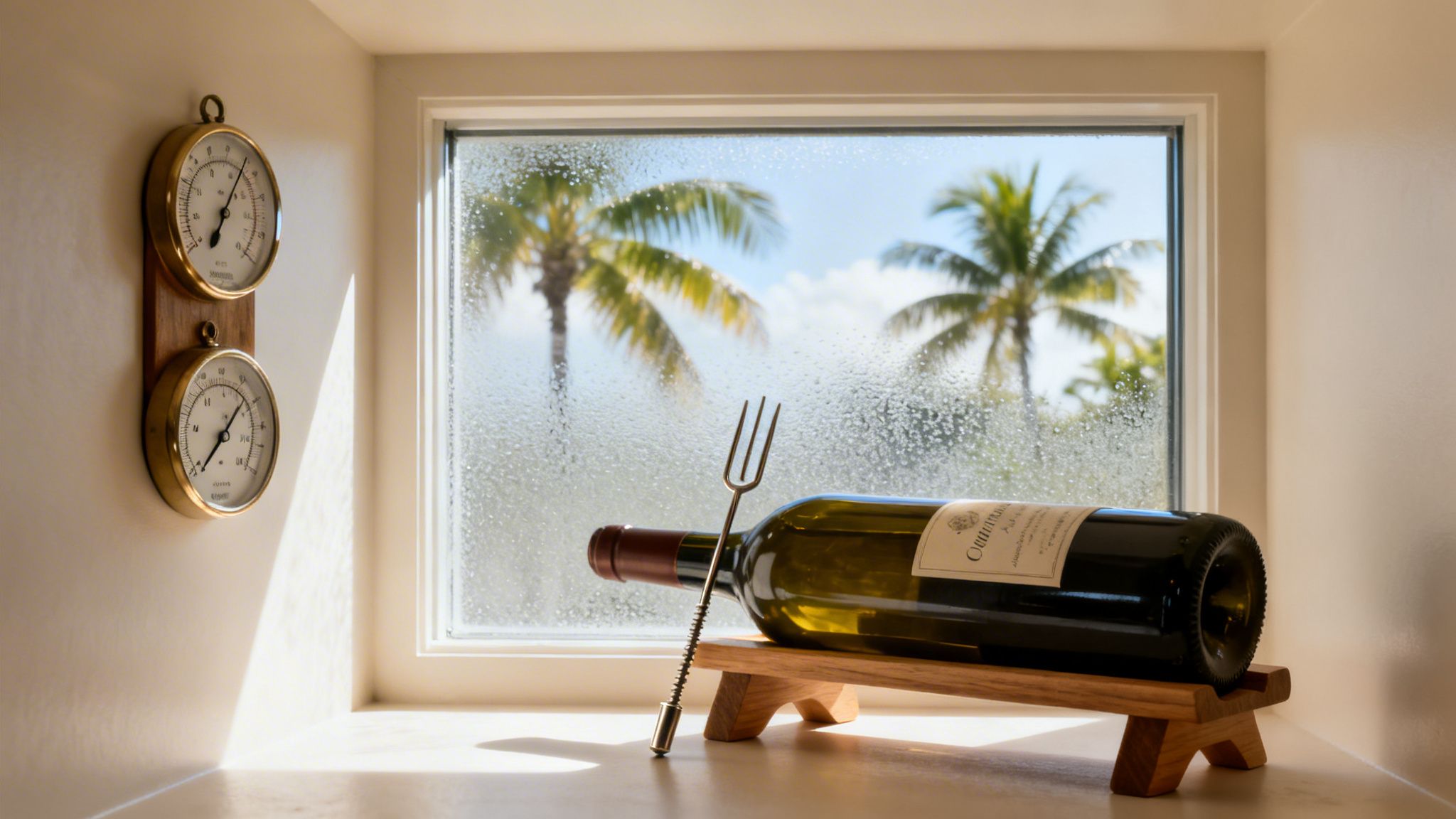
Think of your prized wine collection as a living thing. Inside every bottle, a slow, beautiful evolution is taking place. But like any delicate organism, it can only thrive under very specific conditions. Just a few degrees of a temperature swing or a dip in humidity can disrupt that evolution, permanently damaging the wine’s flavor, aroma, and potential.
This is especially critical in Southwest Florida. Our climate is beautiful for us, but it’s a hostile environment for wine. A standard room, or even a basic wine fridge, simply can't fight back against our ambient heat and moisture. This is where a true climate-controlled wine storage system becomes an absolute necessity.
The Enemies of Fine Wine
A fine wine cellar is like a perfectly tuned instrument. Temperature, humidity, light, and stability are the keys that must remain in perfect harmony. When even one of these elements is off, the instrument—your wine—suffers.
Here are the primary threats that a dedicated system neutralizes:
- Temperature Fluctuations: Heat is the fastest way to ruin wine. Even short-term exposure can "cook" a bottle, flattening its vibrant flavors into something dull and lifeless. Constant temperature swings also cause the wine to expand and contract, which can slowly push the cork out and break the seal, letting oxygen in to spoil the bottle.
- Improper Humidity: If the air gets too dry, corks will shrink, dry out, and crack, creating a pathway for oxygen to seep in and ruin the wine. On the other hand, if it’s too humid, you’re inviting mold and mildew to grow on your labels and corks, damaging the bottle's appearance and collector value.
- Light Exposure: UV rays, whether from direct sunlight or even bright indoor lighting, are incredibly damaging. They break down the delicate organic compounds that give wine its complex character, leading to off-flavors and premature aging.
- Vibrations: You might not notice them, but subtle, constant vibrations from appliances or foot traffic can be a real problem. They disturb the sediment in aging wines, disrupting the slow, magical chemical reactions that build depth and character over time.
Before you go any further, it's worth asking, do you need a climate controlled storage unit for your collection? If you're serious about your wine, the answer is almost always a resounding yes.
A dedicated climate-controlled system is the only way to be certain your wine ages exactly as it should. It removes all the guesswork, protecting the integrity, character, and financial value of every single bottle. It’s what transforms a simple storage space into a true preservation environment.
A Growing Market for Preservation
The desire for proper wine preservation isn't just a niche hobby; it’s a booming global market. In fact, the market for temperature-controlled wine cabinets hit an estimated USD 4.2 billion in 2024. This growth is being fueled by passionate collectors and the hospitality industry, where top-tier hotels and restaurants know that superior wine storage is a crucial part of their brand.
With a projected growth rate of 5.8% CAGR through 2032, it's clear that protecting wine is an enduring priority. For homeowners looking to bring this level of sophistication into their own space, understanding how a custom glass enclosure can elevate a room is a great place to start. You can learn more in our guide on how a glass company can make your home feel luxurious.
The Science of Preserving Your Collection
Every bottle of wine in your collection is a living thing. Inside, a slow, magical transformation is happening, turning simple grape juice into something truly extraordinary. But that magic is delicate, and it hinges entirely on controlling two critical factors: temperature and humidity.
Think of your wine as a time capsule. Stored correctly, it ages gracefully, developing deep, complex flavors over years or even decades. But if the environment is too warm, you’re basically hitting the fast-forward button. The subtle chemical reactions get rushed, "cooking" the wine and destroying all its nuance. What’s left is a flat, disappointing shadow of what it could have been.
Mastering Temperature Control
For anyone serious about wine, the industry gold standard is a rock-steady 55°F. This isn't some random number; it's the perfect sweet spot. At this temperature, wine evolves at an ideal, unhurried pace, allowing it to reach its absolute peak potential right on schedule.
But the exact temperature is only half the battle. Consistency is king. The wild temperature swings we see every day here in Southwest Florida are a collection's worst enemy. As the temperature fluctuates, the wine inside the bottle expands and contracts, pushing and pulling on the cork. Over time, this constant pressure weakens the seal.
A compromised cork is a death sentence for a fine wine. It allows tiny amounts of oxygen to seep into the bottle, causing oxidation—the very same process that turns a cut apple brown. Oxidation will quickly turn a valuable asset into a very expensive disappointment.
Imagine a passionate collector in Naples with a high-value portfolio. Storing those bottles in a standard air-conditioned room would be a disaster. The daily temperature cycles would inevitably cause corks to fail, oxidizing thousands of dollars of wine and wiping out years of careful curation. This is why proper climate controlled wine storage isn't a luxury; it's an absolute necessity.
The Critical Role of Humidity
While temperature sets the pace for aging, humidity acts as the gatekeeper—it protects the cork. A cork is natural wood, and just like the wood trim in a Florida home, it reacts to the moisture in the air. We aim for a humidity level between 60-70%.
This specific range serves one vital purpose: it keeps the cork from drying out.
- Dry Corks Shrink: In a low-humidity space, a cork slowly loses its internal moisture. It gets brittle and shrinks.
- Seals are Broken: A shrunken cork can no longer maintain a tight seal against the bottle's neck.
- Oxidation Begins: That tiny gap is all oxygen needs to get in and spoil the wine long before its time.
The industry has certainly taken note. By 2026, market forecasts show that an incredible 94% of custom wine cellar projects will include dedicated climate control systems. This trend isn't a fluke; it's a clear sign that collectors and builders understand that precise environmental control is non-negotiable. You can read more about these wine cellar market trends and see how the industry is evolving.
Ultimately, a professionally designed and installed system is your only real defense against these invisible threats. By creating a perfectly stable environment, you're not just protecting the liquid in the bottle. You’re safeguarding its history, its future potential, and its value. You can explore our modern glass solutions in this overview of custom wine enclosures.
Choosing the Right Cooling System and Insulation
So, you understand why your wine needs a perfectly stable environment. The next logical question is, how do you actually create one? The answer lies in the two core components of any true wine cellar: the cooling system and the insulation.
Think of it this way: the cooling unit is the heart of your cellar, pumping in consistently cool, conditioned air. But the insulation? That’s the fortress wall surrounding it, keeping that precious cool air in and the relentless Florida heat and humidity out. They have to work together perfectly.
Putting a powerful cooling system into a poorly sealed room is like trying to air-condition your backyard—it’s a losing battle. On the other hand, even the most perfectly insulated room won't stay at 55°F without a cooling unit designed for the job.
This simple decision tree can help you figure out if active climate control is the right move for your specific collection.
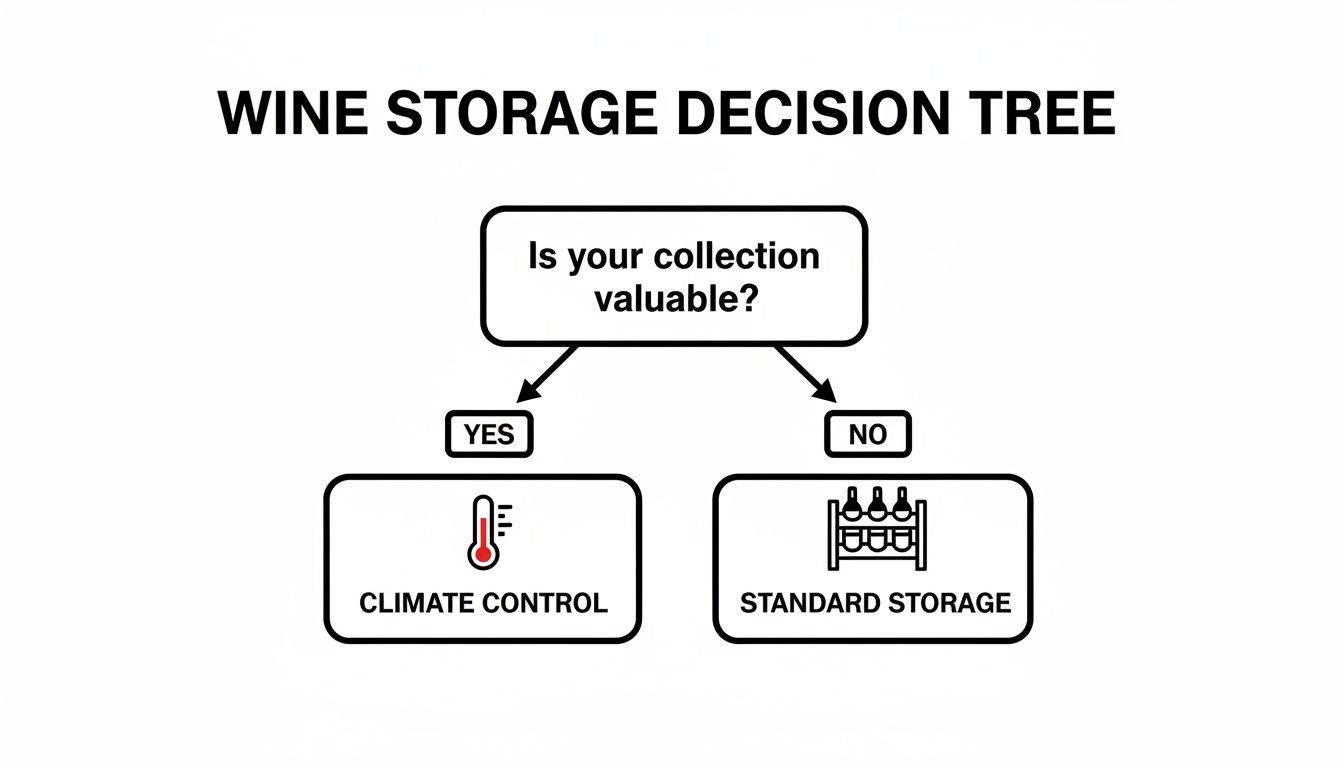
As you can see, if your collection holds any real value—sentimental or monetary—protecting it with an active climate control system is the only way to go.
Selecting Your Wine Cooling System
Wine cooling systems are highly specialized pieces of equipment, not just glorified air conditioners. They’re engineered to handle the specific demands of a wine cellar. The right unit for your Naples home will depend on the size of your collection, your home's unique layout, and of course, your personal aesthetic.
Generally, you’ll be choosing from three main types of systems:
- Self-Contained (Through-the-Wall) Units: These are the most straightforward option. The entire unit is housed in a single casing that installs through the wall, much like a window AC. The cold side faces into your cellar, while the hot side vents into an adjacent space. They're a solid, budget-friendly choice for smaller cellars and converted closets.
- Split Systems: A split system separates the two main components. The quiet evaporator (the part that gets cold) sits inside the cellar, while the condenser (the hotter, noisier part) is located somewhere else—like a utility room, the garage, or even outdoors. This is a fantastic solution for keeping your living areas peaceful and quiet.
- Ducted Systems: For the cleanest, most integrated look, nothing beats a ducted system. The entire cooling unit is hidden away remotely, delivering perfectly chilled air into your cellar through insulated ductwork, just like your home's central HVAC. All the mechanics are completely out of sight and out of mind.
The Unsung Hero: Vapor Barriers and Insulation
No matter how sophisticated your cooling unit is, it's all for nothing without a flawlessly sealed room. This is non-negotiable here in Southwest Florida, where humidity is always trying to sneak in. The secret to a perfect seal is combining high-quality insulation with a dedicated vapor barrier.
A vapor barrier is a sheet of non-permeable plastic installed on the "warm" side of your cellar walls (the side facing into your home). Its only job is to block water vapor from passing through the walls into the colder cellar, where it would immediately condense.
Without a complete, unbroken vapor barrier, moisture will get into your cellar. That condensation can destroy labels, encourage mold, and make your cooling unit run constantly, driving up energy bills and shortening its life.
The insulation itself is just as critical. For most of our custom projects, we strongly recommend closed-cell spray foam insulation. It's a fantastic material because it creates a single, solid barrier that acts as both insulation and a vapor barrier. It leaves absolutely no gaps for air or moisture to penetrate, ensuring your climate controlled wine storage runs as efficiently as possible for years to come.
A truly successful wine enclosure is a holistic system. From the cooling unit and insulation to the specialized glass and hardware, every single piece must work in concert to maintain that perfect environment. You can explore the beautiful and functional options available in our AmeriGlass Industries products catalog to see how it all comes together.
Designing a Modern Glass Wine Enclosure
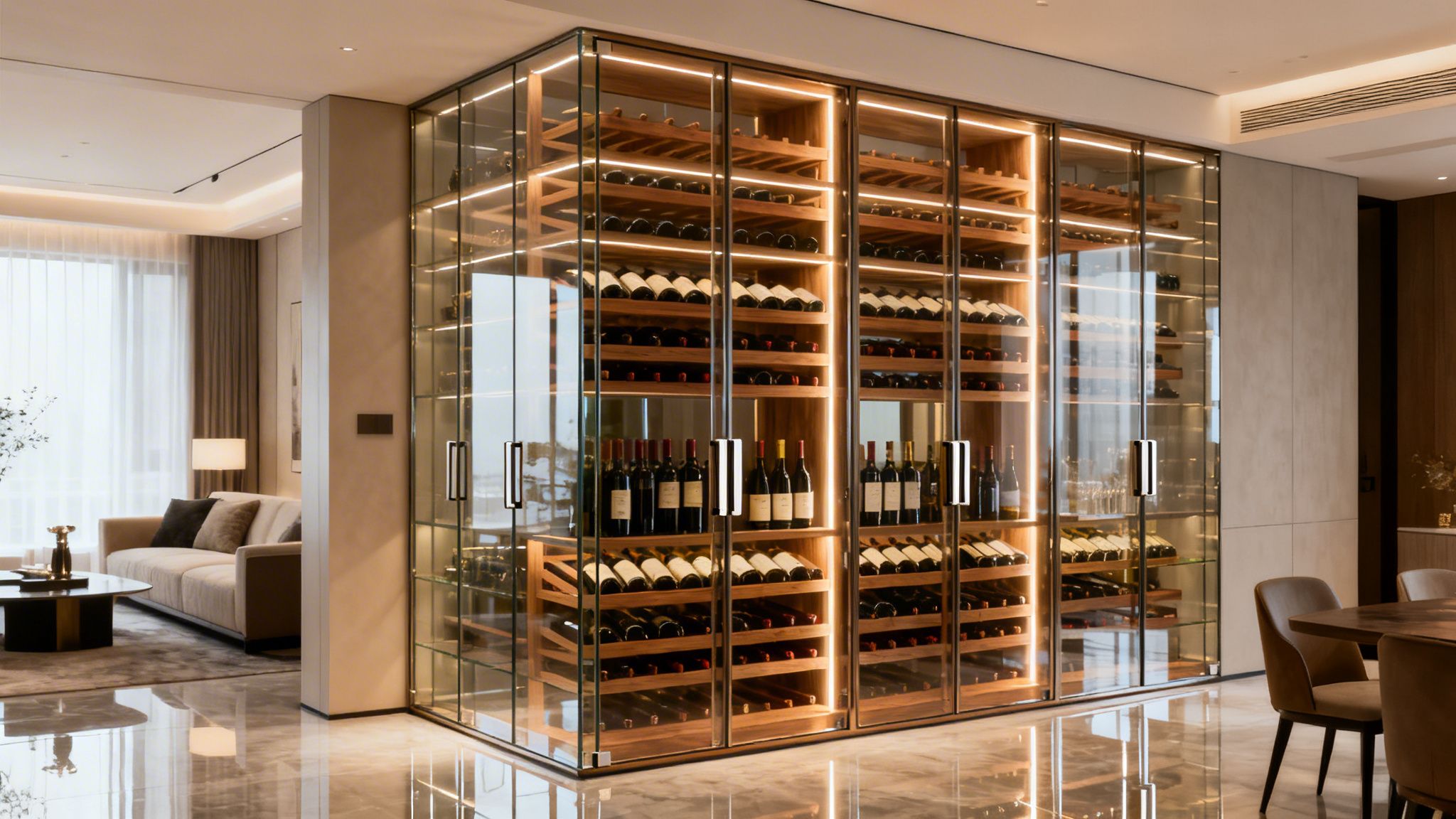
The days of hiding a prized wine collection in a dusty, forgotten basement are long gone. Today, wine storage has evolved into a stunning architectural feature, with modern glass enclosures turning your collection into a breathtaking focal point. Imagine your wine not just stored, but showcased as a living piece of art in your dining room, living area, or great room—all while being perfectly preserved.
A modern glass wine enclosure truly is the ultimate fusion of form and function. It delivers the precise environmental control your collection demands while offering a crystal-clear view that integrates beautifully with your home's design. This evolution reflects a real shift in how we see wine—it’s not just a beverage to be stored, but a passion to be celebrated and displayed.
Of course, the key to success is choosing the right materials that give you both flawless aesthetics and uncompromising performance.
Glass Selection: The Foundation of Beauty and Performance
The glass you choose is, without a doubt, the single most important design element of your enclosure. It’s what stands between your collection and the ambient environment of your home, and it’s what provides that "wow" factor. But not all glass is created equal, especially when it comes to the demands of a climate-controlled wine storage system.
For a visually stunning and thermally efficient enclosure, you have two main options:
- Ultra-Clear Glass: Standard glass has a subtle green tint from its iron content, which can slightly distort the true colors of your wine labels. For those who want absolute clarity, ultra-clear glass is an exceptional choice. It’s made with low iron to provide a completely transparent, colorless view that lets the rich hues of your bottles and labels shine through.
- Insulated Glass Units (IGUs): An IGU is essentially a glass sandwich—two panes of glass separated by a sealed space filled with air or gas. This design dramatically improves thermal performance, cutting down on heat transfer and preventing condensation. For any climate-controlled enclosure here in Southwest Florida, IGUs are the superior choice for energy efficiency, as they help your cooling system run less often.
Your choice of glass really comes down to a balance between visual purity and thermal efficiency. While a single pane of ultra-clear glass offers unmatched clarity, an IGU provides the robust insulation needed to keep your cooling costs down and maintain a perfectly stable environment.
Hardware That Marries Style and Seal
Hardware might seem like a small detail, but it plays a huge role in both the look and the functional integrity of your wine enclosure. The right hinges, handles, and framing system complete the aesthetic while ensuring an airtight seal—a non-negotiable for any climate-controlled space.
Frameless designs are incredibly popular for their clean, modern look, putting all the focus right on the wine. This approach relies on heavy-duty hinges and minimal framing to support the glass. The hardware you pick directly impacts the enclosure's ability to maintain its internal climate. High-quality hinges ensure the door closes securely every single time, while perimeter seals prevent critical air leakage. Handles shouldn’t just complement your home's decor; they should feel substantial and secure, reinforcing the quality of the entire installation.
To help you visualize these choices, here's a quick comparison of the key components you'll be selecting. Each option offers a different balance of style, functionality, and maintenance.
Glass and Hardware Options for Your Custom Enclosure
| Component | Option | Primary Benefit |
|---|---|---|
| Glass Type | Ultra-Clear Glass | Maximum clarity and true color representation for your wine labels. |
| Insulated Glass Unit (IGU) | Superior thermal insulation, preventing condensation and reducing energy costs. | |
| Enclosure Style | Frameless | A sleek, minimalist aesthetic that maximizes the view of your collection. |
| Framed | Offers a more traditional look and added structural definition to the enclosure. | |
| Hardware Finish | Matte Black, Brushed Nickel, etc. | Allows for seamless integration with your home's existing interior design and hardware. |
| Protective Coating | Diamond-Fusion Coating | Creates a low-maintenance, water- and oil-repellent surface that stays pristine. |
Ultimately, the goal is to select a combination that not only looks stunning but also performs flawlessly for years to come, protecting your valuable collection.
Keeping It Pristine: The Magic of Diamond-Fusion Coatings
A beautiful glass enclosure only stays beautiful if it’s clean. Fingerprints, dust, and smudges can quickly ruin the view of your prized collection. This is where a protective coating like Diamond-Fusion becomes an invaluable addition. This treatment creates an ultra-thin, invisible barrier on the glass surface that actively repels water, oil, and contaminants.
This makes cleaning incredibly simple—often just a quick wipe with a microfiber cloth is all you need. For anyone who wants to enjoy their wine feature without constant upkeep, a protective coating is a practical and highly effective solution. It ensures your glass remains pristine with minimal effort, preserving the stunning visual impact of your collection day in and day out.
Bringing Your Vision to Life with AmeriGlass
You’ve done the research. You understand what it takes to protect your wine collection from the Florida heat. Now comes the exciting part: turning that vision into a breathtaking feature in your home. This is where the blueprint becomes a reality, and it's the point where our team at AmeriGlass steps in to guide you. We’re not just glass installers; we’re artisans dedicated to creating a functional masterpiece for your collection.
It all starts with a simple conversation. We offer a no-cost, no-obligation consultation to hear your ideas, see your space, and talk through what’s possible. Whether you have a fully-formed design or just the spark of an idea, our job is to listen and share our expertise.
Your Partners in Precision and Craftsmanship
We’ve been fortunate to work with homeowners, builders, and interior designers all over Naples, Fort Myers, and Bonita Springs. Our licensed and insured technicians have decades of experience under their belts, and we know that a wine enclosure isn’t just glass and hardware—it’s a complete system. Every single component, from the invisible seal to the handle you touch every day, has to be perfect.
For a project of this sophistication, especially a modern glass showpiece, it’s also smart to work with the best. We frequently collaborate with top-tier Southwest Florida custom home builders to ensure our glasswork integrates perfectly into the home’s overall design and construction.
At AmeriGlass, precision is everything. We use advanced measuring technology to map your space down to the millimeter. This guarantees the airtight fit that is absolutely critical for climate stability. It’s this focus on the small details that ensures your cooling system works efficiently and your collection is truly protected.
This unwavering commitment to doing things the right way has built our reputation across Southwest Florida. We believe that creating a functional work of art requires both technical mastery and a deep respect for the craft.
A Process Built on Trust and Transparency
After we’ve captured the exact dimensions, we get to the fun part: the design. We'll walk you through selecting the right glass, hardware, and finishes that feel like a natural extension of your home's style. We believe in open, honest communication every step of the way, so you’ll always know what’s happening and feel confident in the process.
Here’s a look at how we work together:
- Initial Consultation: We’ll sit down and talk about your goals, personal style, and budget.
- Precision Measurement: Our technicians will visit your home to get the exact measurements needed for a perfect, custom fit.
- Detailed Proposal: You'll receive a clear, itemized estimate with no surprises or hidden fees.
- Expert Installation: Our team is professional, clean, and respectful of your space. We'll handle the installation with minimal disruption to your daily life.
We encourage you to look through our work and read what our clients have to say. You’ll quickly see the quality and professionalism that we bring to every single project. You can also learn more about the team behind the work and find out why AmeriGlass is a trusted name in the world of custom glass.
Your wine collection is personal; it tells a story. It deserves a home that’s not only secure and functional but also stunningly beautiful. Contact AmeriGlass today, and let's start building it together.
Common Questions About Wine Storage
Thinking about a custom wine enclosure for your home is an exciting step. But it's also a big one, and it's completely normal to have questions before you dive in. After years of helping clients across Southwest Florida, we've heard them all.
We've put together answers to the most common questions we get. Our goal is to give you the clear, straightforward information you need to feel confident about creating the perfect home for your wine collection.
Can I Just Use a Regular Refrigerator for My Wine?
We get this question all the time, and the answer is a firm "no"—at least, not if you care about aging your wine properly. A standard kitchen fridge might seem like a quick fix, but it’s actually one of the worst environments for fine wine. It's simply too cold, usually hovering below 40°F, which can cause the delicate compounds that give wine its flavor and aroma to separate and fall apart.
Even worse, your refrigerator is designed to strip out humidity. This dry air will shrink your corks, letting oxygen seep in and spoil your investment. Even a small "wine cooler" from an appliance store will struggle against the ambient heat of a Florida home, running constantly and failing to hold a truly stable temperature.
A purpose-built climate controlled wine storage system does one job and does it perfectly: it creates a stable, protected environment at 55°F and 60-70% humidity. It also uses vibration-dampening technology to protect the wine as it ages—something no standard appliance can do. For any serious collector, this is the only way to truly safeguard your wine.
What Does a Custom Glass Wine Enclosure Cost in Southwest Florida?
There’s no simple, one-size-fits-all price tag. The final cost of a custom glass wine enclosure really depends on your specific vision, the size of your collection, and the unique layout of your home.
Several key factors will shape the final investment:
- Size and Complexity: A simple glass front for a converted closet will naturally be different from a large, walk-in cellar with custom angles and entryways.
- Type of Glass: You might choose single-pane, ultra-clear glass for unmatched clarity or opt for insulated glass units (IGUs) for better thermal efficiency. IGUs cost more upfront but can help reduce energy costs over time.
- Hardware Selection: Your choice of hinges, handles, and framing systems—from minimalist to bold—plays a big role in the final look and price.
- Cooling System: The right cooling unit for your space (self-contained, split, or ducted) will vary in cost based on the room’s size and the complexity of the installation.
At AmeriGlass, we believe in total transparency. We’ll come to your home for a complimentary consultation to measure your space, discuss your ideas, and provide a detailed, no-obligation estimate. You’ll have all the facts needed to make the right decision for your budget.
What Is the Maintenance for a Glass Wine Cellar?
You’ll be happy to hear that modern glass wine cellars are surprisingly low-maintenance. We design them so you can spend your time enjoying your collection, not constantly cleaning.
We highly recommend our Diamond-Fusion protective coating for the glass. This treatment creates an invisible barrier that repels smudges and fingerprints, cutting your cleaning time by up to 90%.
The cooling unit, which is the heart of your cellar, needs a little TLC, much like your home's main air conditioner. This usually just means an annual check-up to clean the coils and ensure everything is running efficiently. We’ll walk you through the simple best practices to keep your system in top shape for years to come.
Do I Need a Special Permit for a Wine Cellar in Naples?
Whether you need a permit in cities like Naples, Fort Myers, or Bonita Springs really hinges on the scope of your project. Navigating local codes can seem like a headache, but it’s a crucial step we help you manage.
Here’s a general guide:
- Minor updates, like adding a new glass door to an existing, pre-conditioned closet, typically don't require a permit.
- Projects involving new electrical work, like running a dedicated circuit for a powerful cooling system, will almost always need a permit pulled by a licensed electrician.
- Structural changes, such as removing a wall to expand the cellar space, will also require a permit to ensure everything is up to code.
As part of our complete service, AmeriGlass works hand-in-hand with you and your contractor. With our deep experience in Southwest Florida, we know the local requirements and will help ensure your project is planned for compliance from day one, so everything moves forward smoothly.
Your wine collection is a passion. It deserves to be protected and displayed in an enclosure that’s every bit as impressive as the bottles inside. The team at AmeriGlass Industries is ready to help you design a custom glass cellar that’s both beautiful and perfectly functional.