

When you’re designing a new shower, it’s easy to focus on the big, beautiful glass panels or the elegant handle. But look down. That simple metal or polymer rail sitting on your shower curb—the bottom track for a shower door—is the unsung hero of the entire enclosure. It’s the foundational piece that guides the doors, stops every drop of water, and supports the whole structure. Getting this one component right is absolutely critical for a shower that works as good as it looks.
The Hidden Foundation Of A Flawless Shower
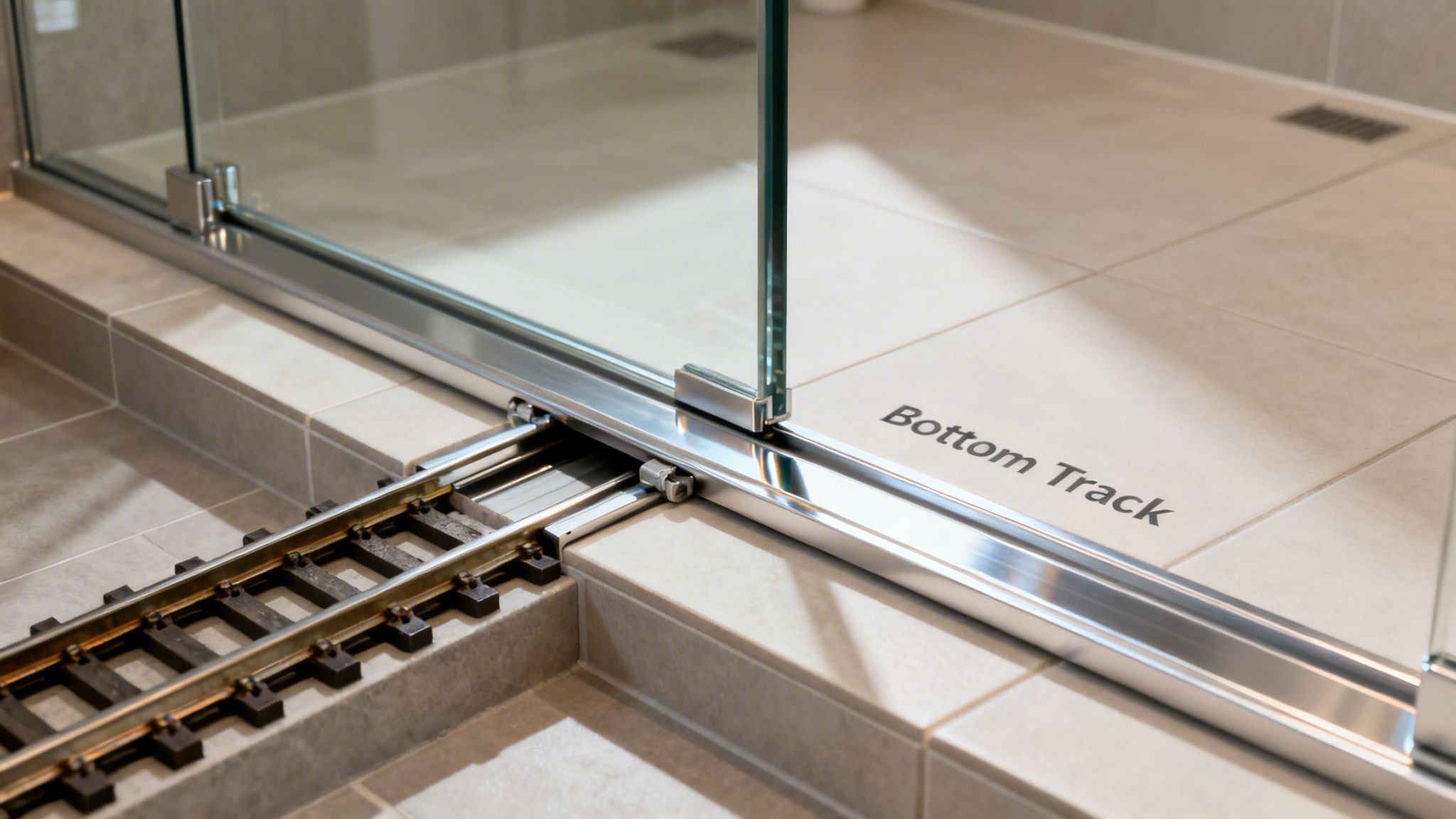
That bottom track is so much more than just a strip of metal. Think of it as the foundation for a house; if it's cracked, uneven, or poorly sealed, everything built on top of it will have problems. It’s the same with your shower. A cheap or badly installed track is a recipe for disaster, leading to everything from frustrating water leaks to sliding doors that grind, stick, and shudder.
In reality, this humble component has three non-negotiable jobs to do. If it fails at even one, your shower experience is compromised.
The table below breaks down exactly what a bottom track does and what happens when it's not up to the task.
| Function | Why It Matters for Your Shower | Consequences of a Poorly Chosen Track |
|---|---|---|
| Water Containment | Creates an impenetrable barrier that forces every drop of water back into the shower pan and down the drain where it belongs. | Puddles on the bathroom floor, water seeping into drywall, and the potential for costly mold, mildew, and rot damage over time. |
| Smooth Operation | For sliding doors, the track acts as a pristine, perfectly aligned rail, ensuring the door glides open and closed silently and effortlessly. | A door that rattles, scrapes, or gets stuck. This not only feels cheap but also causes premature wear on the rollers and the track itself. |
| Structural Support | It anchors the heavy glass panels, locking them in place and providing the rigid stability the entire shower enclosure needs to feel solid. | Wobbly panels, compromised seals, and an enclosure that feels flimsy and unsafe. In the worst cases, it can lead to glass failure. |
As you can see, choosing the right track—and installing it with precision—isn't just a minor detail. It's the key to long-term performance and durability.
The secret to a high-end shower experience starts at the very bottom. Neglecting the quality and installation of the track is like building a luxury car on a bent frame—it simply won't perform as intended.
This has become even more important as bathroom designs have evolved. The demand for clean, minimalist aesthetics is surging, especially here in Southwest Florida, a region at the forefront of the nation's $3,188.3 million shower glass door market. Frameless and semi-frameless designs, which are projected to capture over 40% of the global market, depend heavily on a perfectly installed bottom guide for stability and a seamless look.
For local experts like us at AmeriGlass Industries, this trend highlights why precision is everything. Poor alignment during installation is a massive issue, accounting for up to 30% of negative consumer reviews in the industry. You can dig deeper into the market trends in this comprehensive report. It all comes back to a simple truth: a flawless shower is built from the ground up.
Framed vs. Frameless Shower Door Tracks
Choosing between a framed and a frameless shower door is one of the biggest calls you’ll make for your bathroom remodel. It’s not just about looks; this decision completely changes the job of the bottom track for a shower door. These two styles come from two totally different design philosophies, each with its own way of handling water and providing support.
For years, framed doors were the only game in town. Think of them like a picture in a sturdy frame—the metal enclosure does all the work, providing the structure. In this setup, the bottom track is a prominent, hard-working component. It has deep channels that guide the glass and act as a dam, and it's a very visible part of the door's overall architecture.
The Framed Door Track System
With a framed system, the glass itself is usually thinner because the metal frame is doing all the heavy lifting. The bottom track is a functional workhorse, built for one main purpose: keeping water in the shower.
- Deep Channels: These tracks have noticeable grooves that the sliding panels sit in, which does a great job of preventing water from splashing onto your floor.
- Integrated Structure: The track is a critical part of the puzzle, connecting the vertical side jambs and giving the whole enclosure its rigidity.
- Practicality Over Polish: Let's be honest, while they work well, these tracks are a magnet for soap scum and water. They can be a real pain to keep clean compared to more modern options.
This traditional approach is time-tested, reliable, and usually friendlier on the wallet. But the visual weight of the frame and track can make a bathroom feel smaller and a bit dated. That’s why so many people are now leaning toward a cleaner, more minimalist solution.
The Frameless Track Approach
Frameless showers are all about chasing that minimalist, "floating glass" look. This modern aesthetic forced a complete reinvention of the bottom track. Instead of a bulky frame, these systems rely on heavy-duty tempered glass—often 3/8-inch or 1/2-inch thick—that supports its own weight.
With frameless doors, the whole point is to make the hardware practically disappear. The "track" stops being a track and becomes more of a discreet, high-performance seal, letting the beauty of the clear glass shine.
That doesn't mean we just ignore the bottom of the door. Far from it. Instead, we use incredibly subtle, precision-engineered parts to manage water without that old-school track. Some of the most common solutions include:
- Low-Profile U-Channels: These are sleek, minimal metal channels that we use to secure fixed glass panels to the shower curb. They have a tiny visual footprint.
- Clear Polycarbonate Sweeps: This is a clear vinyl seal attached to the very bottom of the door. It acts like a squeegee, creating an almost invisible barrier that wipes water back into the shower as you open and close it.
- Metal Water Dams: A very slim, low-profile metal strip is sealed directly to the curb. It’s just high enough to act as a dam, stopping any water from sneaking out from under the door.
This shift to minimalism makes professional expertise absolutely critical. A generic, off-the-shelf bottom track for a shower door just won’t cut it here. The hardware has to be specifically engineered to support heavy glass panels and create a perfect seal without a frame. Pulling off that floating-glass look without ending up with puddles on your floor is a science, and it demands the perfect fit that only professional measurement and installation can deliver.
2. Choosing the Right Bottom Track Material and Style
Think of the bottom track for a shower door as the foundation of your shower enclosure. It might seem like a minor detail, but getting it right is the difference between a stunning, leak-free shower and a constant source of frustration. Here in Southwest Florida, the wrong choice can lead to a corroded mess in no time, while the right one keeps your bathroom looking pristine for years.
Let's walk through the key decisions: the material and the style (or profile) of the track itself.
Key Materials for Shower Tracks
The material is your first line of defense against the relentless humidity and moisture of a bathroom. It’s all about durability and matching your bathroom's hardware.
- Anodized Aluminum: Honestly, this is our top recommendation for the Southwest Florida climate. The anodizing process creates a tough, non-porous shield over the aluminum that's incredibly resistant to corrosion from both water and the salt in our coastal air.
- Solid Brass: If you're going for a more traditional, high-end look, solid brass is a fantastic choice. It has a satisfying heft, it won't rust, and it develops a beautiful, natural patina over time. It’s a classic for a reason.
- Stainless Steel: For a clean, modern aesthetic, you can't go wrong with stainless steel. It offers excellent strength and fantastic resistance to rust and staining, making it a sleek and reliable option that pairs perfectly with contemporary fixtures.
This diagram helps visualize how different tracks work with the two main types of shower doors—framed and frameless.
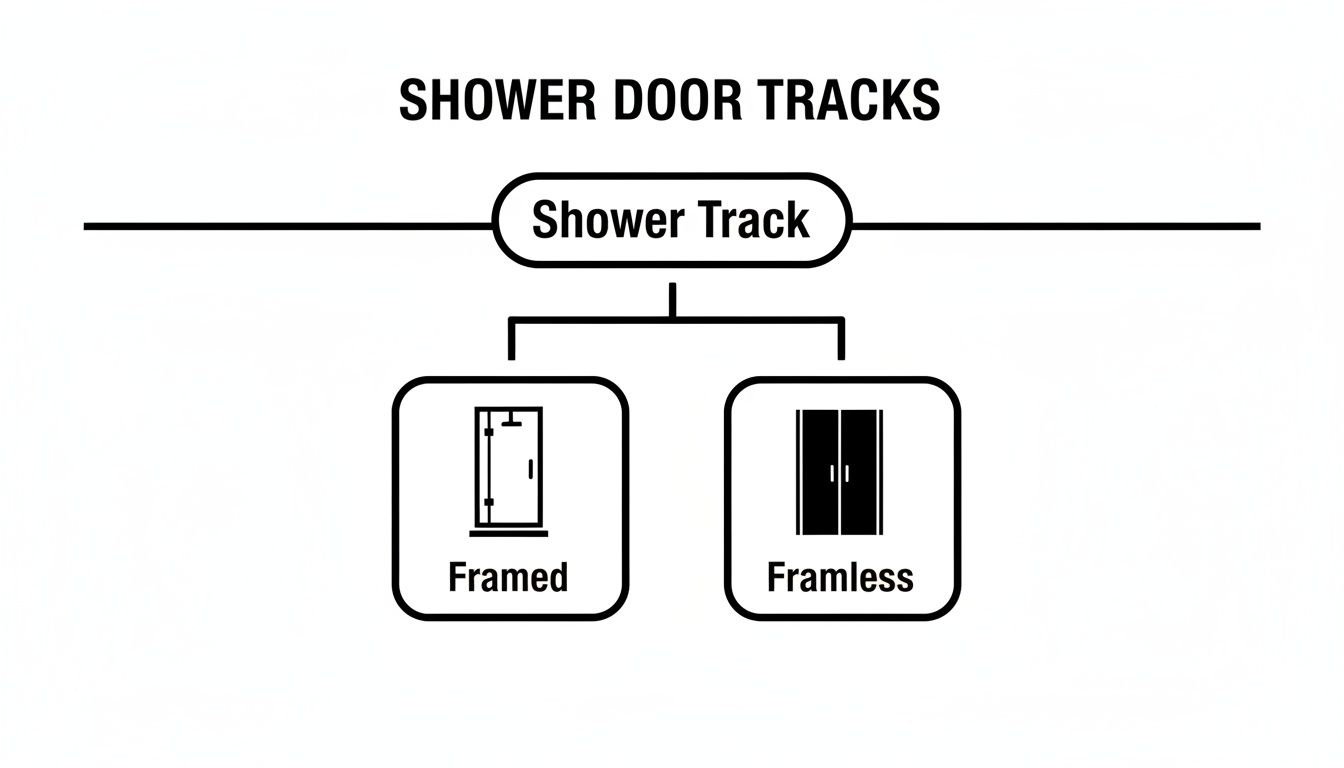
As you can see, framed doors have their tracks built right in. Frameless designs, on the other hand, use more subtle, minimalist solutions to keep water contained without interrupting that clean, all-glass look.
Popular Track Profiles and Styles
Once you've settled on a material, the next choice is the shape, or "profile," of the track. This is what actually does the work of keeping water inside the shower.
A track's profile is its strategy for managing water. A bulky U-channel contains splashes with brute force, while a slim water dam uses elegant, minimalist engineering to do the same job.
Here are the most common profiles we install:
- Standard U-Channel: The workhorse of shower tracks. It's primarily used to secure fixed glass panels, offering great support and excellent water containment. It's a bit more visible, but it's incredibly effective.
- L-Angle: A much more minimalist profile often used with frameless shower systems. It provides a very subtle lip to guide water back into the shower pan without the visual weight of a full channel.
- Water Dam: This is the most discreet option available. It's a very low-profile strip of metal that's sealed directly to the shower curb. It’s just high enough to block water from escaping, making it the perfect solution for modern, curbless, and ADA-compliant showers.
To help you decide, here’s a quick comparison of the most common options.
Comparing Shower Door Bottom Track Options
This table breaks down which track materials and profiles are best for different situations, helping you balance aesthetics, performance, and maintenance.
| Material or Profile | Ideal Application | Key Advantages | Potential Drawbacks |
|---|---|---|---|
| Anodized Aluminum | Humid climates (like SWFL); framed & semi-frameless doors | Excellent corrosion resistance, cost-effective, many finishes | Can be scratched or dented more easily than steel |
| Stainless Steel | Modern & contemporary bathrooms; frameless designs | Very strong, rust-proof, sleek modern appearance | Higher cost, can show water spots more readily |
| Solid Brass | Luxury & traditional bathrooms; high-end installations | Extremely durable, won't rust, classic appeal | Most expensive option, requires polishing to stay shiny |
| U-Channel | Securing fixed glass panels; framed doors | Maximum water containment, strong structural support | Bulky appearance, can be harder to clean inside |
| L-Angle | Frameless doors where a minimal look is desired | Discreet and clean, good water deflection | Offers less splash protection than a U-channel |
| Water Dam | Curbless & ADA-compliant showers; minimalist designs | Nearly invisible, perfect for a seamless look | Provides the least amount of splash containment |
Ultimately, the right choice combines your personal style with the practical needs of your shower design.
The trend toward these cleaner, more open designs is undeniable. The global shower door market is projected to hit an incredible $35,261.7 million by 2032, and the shift to frameless is a huge part of that. While framed doors once dominated 70% of the market, frameless models have surged to claim a 55% majority.
Why the change? A recent study found that 68% of luxury homeowners see seamless bottom track integration as a critical feature for boosting property value. When you want that perfect, high-end look, the details matter.
At AmeriGlass, we specialize in helping homeowners and contractors navigate these choices to find the perfect solution for any project. You can explore the wide variety of beautiful and durable shower door products we offer to see what's possible for your bathroom.
Mastering Your Shower Track Installation
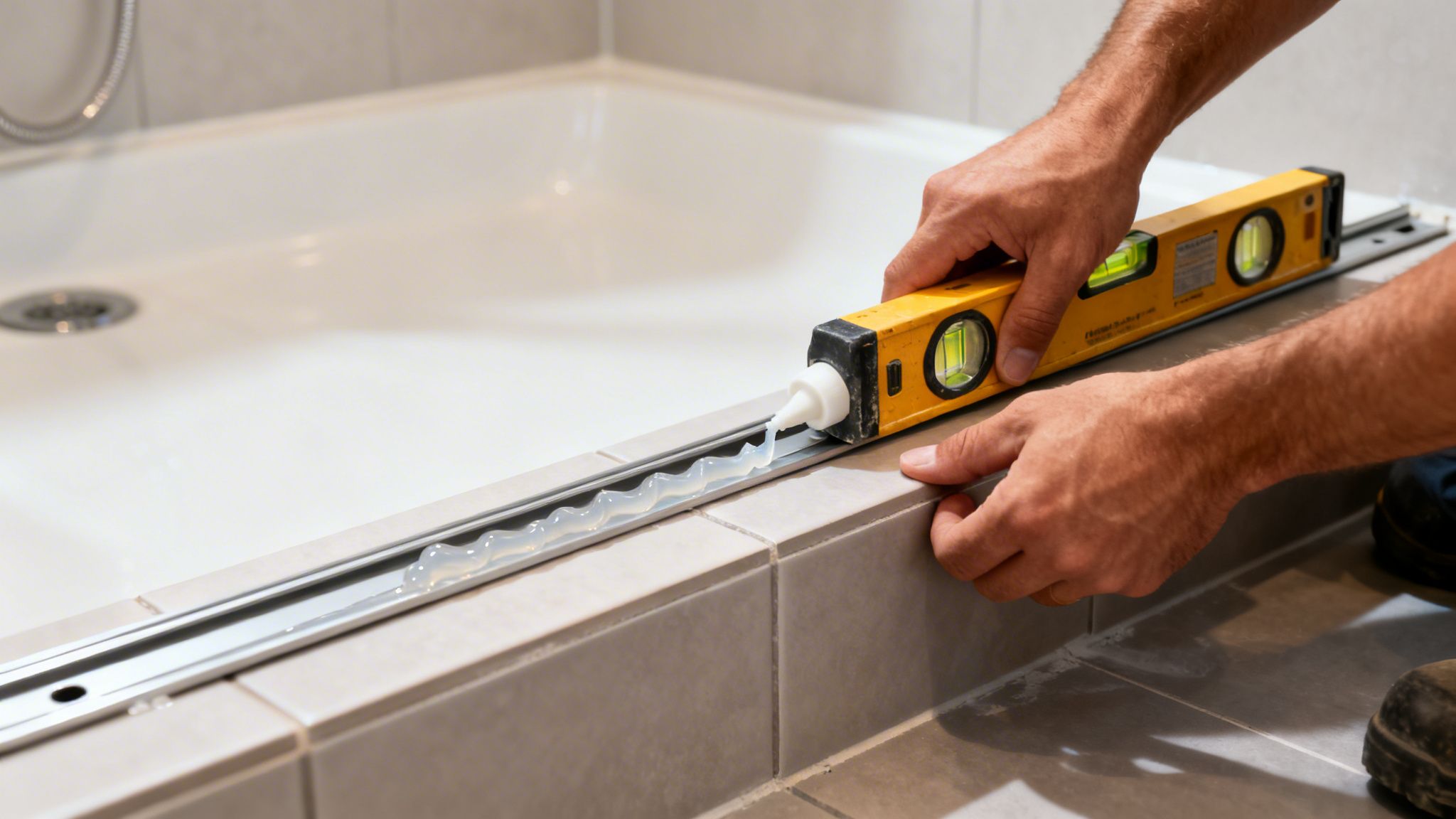
You can have the best bottom track for a shower door money can buy, but if it isn't installed with absolute precision, it's not going to perform. This is where the real craftsmanship comes in—turning a great product into a flawless, long-lasting shower enclosure. We're talking about a job where being off by just a few millimeters can create massive headaches down the line.
A proper installation isn't just about plopping a metal track on your shower curb. It’s a detailed process that demands a perfectly level surface, an expert hand with high-grade silicone, and perfect alignment with the rest of the shower structure. There's simply no room for error or guesswork.
The Anatomy Of A Professional Installation
When a licensed technician arrives, they’re not just bringing a caulk gun and some screws. They come equipped with specialized tools and a process honed over years of experience to get every detail right.
- Precision Leveling: We start by using digital levels to ensure the shower curb is perfectly flat. If the track isn't level, the door will constantly try to drift open or shut on its own.
- Expert Sealing: A pro applies a clean, continuous bead of 100% silicone sealant. This single step is crucial for creating a watertight barrier that stops water from seeping underneath, preventing hidden mold and costly water damage.
- Perfect Alignment: The track has to be set perfectly parallel to the wall and centered on the curb. Any misalignment will cause doors to drag, make noise, or put unnecessary strain on the rollers and hardware. The right fasteners and fittings are also critical for securing the track and ensuring it stays put.
This level of detail is especially important for the sleek frameless shower doors everyone wants today. It's a massive market—valued at $2.5 billion and projected to grow at 6% annually—but these beautiful doors are unforgiving of sloppy work. Here in Southwest Florida, we estimate that a staggering 40% of shower door failures are due to simple track misalignment. That makes professional installation an absolute must.
Avoiding Common DIY Disasters
Trying to save a few bucks by installing a bottom track yourself often ends up costing far more in the long run. We’ve seen it all, and amateur installations are notorious for creating problems that are a pain to fix.
An improperly sealed bottom track is a ticking time bomb. It may look fine on the surface, but underneath, it can be quietly funneling water into your subfloor and walls, leading to thousands in structural repairs.
Some of the most common DIY disasters we're called in to fix include:
- Leaks and Mold: Almost always caused by a poor sealing job or using the wrong caulk.
- Dragging Doors: The classic sign of an unlevel or misaligned track.
- Squeaking and Grinding: Happens when the door isn't sitting correctly in its guides.
- Wobbly Panels: A serious safety hazard resulting from improper anchoring.
When you invest in a professional installation, you're not just paying for labor; you're buying peace of mind. It’s the confidence that comes from knowing your beautiful new shower will work perfectly for years, without the frustrating issues that come from cutting corners. Our guide on frameless shower door installation in Naples dives deeper into what separates a truly professional job from the rest.
Keeping Your Shower Track Clean and Functional
Your beautiful new shower enclosure is finally installed, but don't close the book on it just yet. The secret to keeping that shower looking and working like new for years is all in the bottom track. It’s the unsung hero of your shower, but it’s also where soap scum, hard water minerals, and general gunk love to gather.
Letting that grime build up can lead to a sticky, noisy door, ugly discoloration, and even frustrating leaks. A little bit of consistent care is your best defense against bigger headaches down the road. Just a few minutes a week is all it takes to keep things pristine.
A Simple Maintenance Checklist
The best way to fix a problem is to prevent it from happening in the first place. Here’s a simple routine we recommend to all our clients to keep their shower tracks in perfect shape.
- Squeegee After Every Use: This is the single most important habit. A quick pass with a squeegee over the glass and track whisks away most of the water, stopping mineral spots and soap scum before they even start.
- Weekly Wipe-Down: Once a week, use a soft cloth and a pH-neutral cleaner to wipe the track clean. Stay away from abrasive scrubbers or harsh chemicals, which can easily scratch the metal finish.
- Go Deep When Needed: For any stubborn spots, an old toothbrush paired with a gentle cleaning paste (like baking soda and vinegar) is perfect for getting into those tight corners and crevices.
If you really want to make life easier, consider a protective coating like Diamond-Fusion. When applied to the glass and metal, it creates an invisible, water-repelling shield. This makes cleaning up to 90% easier and keeps your entire enclosure looking flawless with very little effort.
Troubleshooting Common Track Problems
Even with the best care, you might run into a snag eventually. Don't worry—most issues are simple to fix if you catch them early.
A shower door that suddenly sticks, grinds, or leaks is sending you a signal. Paying attention to these small warnings can prevent a minor annoyance from snowballing into a major repair and helps protect your investment.
Problem 1: The Track Is Leaking
Nine times out of ten, a leak is caused by a compromised silicone seal. You can usually tackle this yourself. Carefully scrape away the old, peeling sealant, give the area a thorough cleaning, and then apply a fresh bead of 100% mold-resistant silicone.
Problem 2: The Door Is Sticky or Noisy
If your sliding door starts to protest, the first thing to do is a deep clean of the track and rollers to clear out any hidden debris. Sometimes, the issue is with the moving parts themselves; learning how to replace sliding glass door rollers can provide a good general understanding of how these mechanisms work. If a good cleaning doesn’t fix the problem, the rollers have likely worn out and need to be replaced.
Problem 3: The Track Is Stained or Discolored
Stubborn stains are typically from heavy mineral deposits or a reaction to harsh cleaning products. If a gentle cleaning doesn't lift the discoloration, the finish itself might be damaged. Our guide on comprehensive shower door maintenance has more advanced tips, but for severe staining, it's probably time to give a professional a call.
Why Southwest Florida Trusts AmeriGlass for Shower Doors
All the talk about materials, profiles, and weep holes really boils down to one simple goal: a gorgeous shower that absolutely will not leak. Knowing the theory is one thing, but getting it perfect in a real home is another. This is where experience makes all the difference, and it’s why homeowners and contractors from Naples to Fort Myers count on AmeriGlass.
A perfect shower door installation is all about precision. It's the confidence that comes from knowing the bottom track is flawlessly level, the sealant is applied just right, and your door will glide like a dream for years to come. That’s our promise—turning all those technical details into a stunning, worry-free reality in your bathroom.
Your Local Experts in Glass and Precision
Living in Southwest Florida means dealing with humidity and moisture year-round, so a "good enough" job simply won't cut it. As a fully licensed, insured, and BBB-accredited company, we don't just work in this community; we're part of it. Our entire reputation is built on getting the job done right, every single time.
We believe the job isn’t finished until your space is cleaner than when we arrived and you are completely satisfied with the result. Our technicians combine modern tools with old-school craftsmanship to ensure every installation meets our exacting standards.
This commitment is why so many of your neighbors trust us. We don't just sell glass; we deliver peace of mind. You can learn more about the people and passion behind our work by reading the story of AmeriGlass Industries and seeing what sets us apart.
When you're ready for a shower that blends beautiful design with guaranteed leak-proof function, give us a call. We're the local experts who have perfected both the art and the science of glass installation, and we're here to bring your vision to life.
Shower Door Bottom Track FAQ
When you're planning a shower renovation, the small details can often bring up the biggest questions. Let's tackle a few of the most common ones we hear from homeowners and contractors about the bottom track for a shower door. Getting these right is key to a successful, beautiful result.
Can You Install a Frameless Shower Door Without Any Bottom Track?
This is probably the number one question we get. Everyone loves the clean, open look of a frameless door, and the idea of getting rid of the bottom track entirely is very appealing.
While a truly "trackless" floor is the goal, most frameless showers still need something to keep the water where it belongs. The modern solution isn’t a clunky metal track, but a super minimalist water barrier. Think of it less as a track and more as an invisible dam. This might be a very low-profile metal strip sealed directly to your shower curb, or even a clear polycarbonate sweep attached to the bottom of the glass door itself.
These are engineered to be almost unnoticeable, giving you that seamless, "floating glass" look while creating an effective seal. The best approach depends entirely on your specific shower layout and the slope of your curb, which is why an expert consultation is so important for a leak-free finish.
What Is the Best Track Material for a Coastal Climate?
Here in Southwest Florida, with the humidity and salt in the air, material choice is critical. For places like Naples or Fort Myers, anodized aluminum is a fantastic performer. The anodizing process creates a tough, non-porous shield over the aluminum that aggressively fights off corrosion.
Of course, solid brass and high-grade stainless steel are also excellent, durable choices that handle moisture with ease. We can help you pick a material and finish—whether it's matte black, brushed nickel, or polished chrome—that not only survives our climate but also looks perfect with your bathroom's other hardware. You can find more answers to common questions on our detailed FAQ page.
A leaking bottom track is almost always a sign of a failed seal, not a failed door. Addressing it quickly prevents minor water spots from becoming major water damage.
If you see a leak, a professional can pinpoint the cause. Often, it's a simple reseal, but sometimes it might mean replacing the track. Getting it looked at quickly is the most important thing.
For a perfect, leak-proof shower enclosure designed to last in the Southwest Florida climate, trust the experts. Contact AmeriGlass Industries today for a free, no-obligation estimate and see what’s possible for your home.
Get Your Free Shower Door Estimate Now
Tired of cleaning a bottom track? AmeriGlass Industries replaces worn tracks and installs track-free frameless shower doors across Naples, Fort Myers, Bonita Springs and Cape Coral. See our shower door repair service or call (239) 426-6884.