
You see it every day, but you probably don't think much about it. It’s in your shower, the windows of your car, and the sleek glass railings at the mall. We're talking about tempered glass, and it’s one of the most important safety materials in modern construction.
Its most common applications include things like frameless shower doors, architectural glass railings, and modern storefronts. In all these places, it’s designed to do one thing exceptionally well: protect people from injury by shattering into small, dull pieces instead of dangerous shards if it ever breaks.
Understanding Tempered Glass And Why It Matters
Think of tempered glass as regular glass that's been sent to the gym and put on a serious training regimen. It starts as standard glass, but then we put it through a specialized process of extreme heating followed by rapid cooling. This thermal treatment is a lot like forging steel—it completely transforms the glass on a molecular level.
This process creates a fascinating internal tension. The outer surfaces are locked in a state of high compression, while the core remains in a state of tension. The result? A pane of glass that's up to four times stronger than the original. That’s the secret behind its incredible durability and why it’s a go-to material for both homes and businesses.
The Critical Safety Feature
But here's the real magic of tempered glass. Its true genius isn't just its brawn—it's how it behaves under pressure. When standard glass breaks, it explodes into long, razor-sharp shards that can cause devastating injuries. It’s a serious hazard, especially in busy areas.
Tempered glass, on the other hand, is engineered to fail safely. When it reaches its breaking point, all that built-up internal stress is released at once. The entire pane instantly crumbles into small, pebble-like chunks with dull edges. This unique breakage pattern is its most vital safety feature.
This controlled shattering dramatically reduces the risk of serious cuts, making it the only responsible choice for any application where people are nearby. It's not just a good idea; in many cases, it's required by building codes.
Where Strength Meets Style
So, beyond the crucial safety aspect, where does tempered glass fit into modern design? Everywhere. It strikes the perfect balance between robust function and high-end aesthetics, allowing architects and designers to create open, light-filled spaces without compromising security.
For homeowners and businesses, this means you don’t have to choose between a beautiful, luxurious look and peace of mind. You really can have both. In fact, you can explore some stunning examples of how a glass company can make your home feel luxurious to see this principle in action.
Here’s a quick look at where this versatile material shines and why.
Tempered Glass At A Glance: Key Uses And Benefits
| Common Use | Primary Benefit |
|---|---|
| Frameless Shower Doors | Resists thermal stress from hot water and is safe in a slippery environment. |
| Glass Railings | Provides a strong, secure barrier without obstructing views. |
| Storefronts & Doors | Offers enhanced security and can withstand heavy daily traffic. |
| Office Partitions | Creates open, modern workspaces while maintaining safety and durability. |
| Wine Enclosures | Protects valuable collections with a strong, clear, and elegant barrier. |
At AmeriGlass, we specialize in taking this impressive material and crafting it into custom solutions that completely elevate a space. We're proud to serve Southwest Florida with installations that are as beautiful as they are secure.
The Science Behind Its Unseen Strength
How can a simple sheet of glass be transformed into something four to five times stronger than its original form? The magic isn't magic at all—it's a high-stakes dance of fire and ice. This carefully controlled manufacturing process rearranges the glass at a molecular level, creating a powerful, invisible internal structure.
It all starts with a standard sheet of annealed glass. The first step is to cut it to the exact size and shape needed for the project. This stage is absolutely critical, because once the glass is tempered, it's set in stone. Any attempt to cut or drill it later will cause the entire pane to shatter, which is why the precision craftsmanship we deliver at AmeriGlass from the very beginning is so important. Every detail has to be flawless before the real transformation starts.
The Trial by Fire and Ice
After being shaped, the glass heads into a tempering oven, where temperatures soar to over 1,200 degrees Fahrenheit. This intense heat brings the glass to its softening point, getting it ready for the most dramatic part of its journey.
What follows is a process called "quenching." Immediately after leaving the furnace, high-pressure air jets blast the glass surface from all angles. This cools the outer layers in just a few seconds, causing them to solidify almost instantly. The inner core, however, is still molten and cools down much more slowly.
This difference in cooling rates is the secret sauce. As the outer surfaces compress and harden, the slowly cooling interior pulls inward. This creates a state of constant high tension in the core, which is perfectly balanced by high compression on the exterior. It's this locked-in stress that gives tempered glass its incredible toughness.
You can think of it like a tightly coiled spring. The outer compression acts as a built-in suit of armor, making the glass highly resistant to impacts, pressure, and even drastic temperature changes. Before anything can crack the surface, it has to fight its way through that powerful compressive layer first.
The diagram below gives you a clear picture of this journey from standard glass to a high-strength safety material.
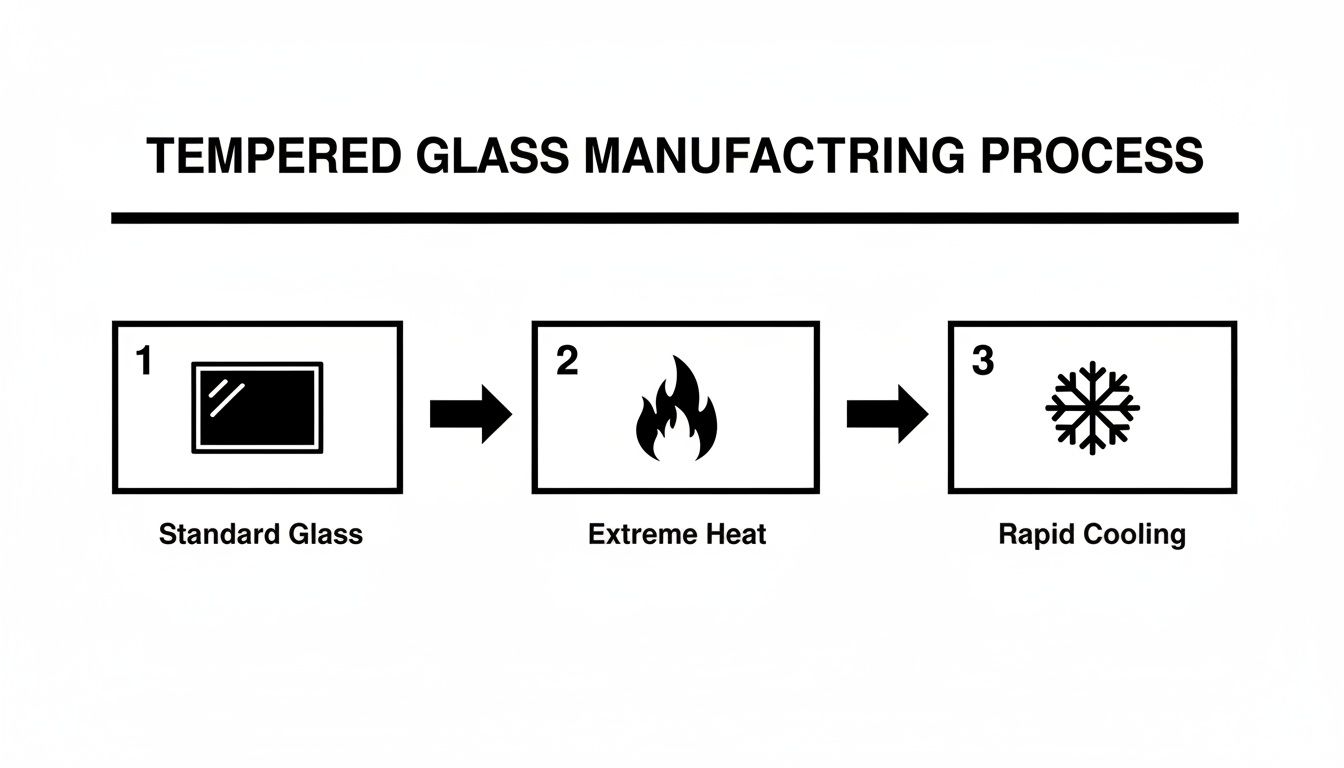
This simple flow shows how we intentionally introduce controlled stress to create a product that is fundamentally stronger and safer.
The Result: A Unique Shatter Pattern
That internal tug-of-war is also what gives tempered glass its most famous safety feature. If an impact is strong enough to finally breach the compressive layer, all that stored energy from the tensioned core is released at once.
Instead of shattering into long, dangerous shards, the entire pane crumbles into small, pebble-like pieces with relatively dull edges. This unique fracture pattern is a direct result of its creation. It’s precisely why you see tempered glass in applications like frameless shower doors and glass railings, where safety is non-negotiable. It’s not just stronger glass; it’s smarter, safer glass, engineered for your peace of mind.
Where You’ll Find Tempered Glass in Your Home
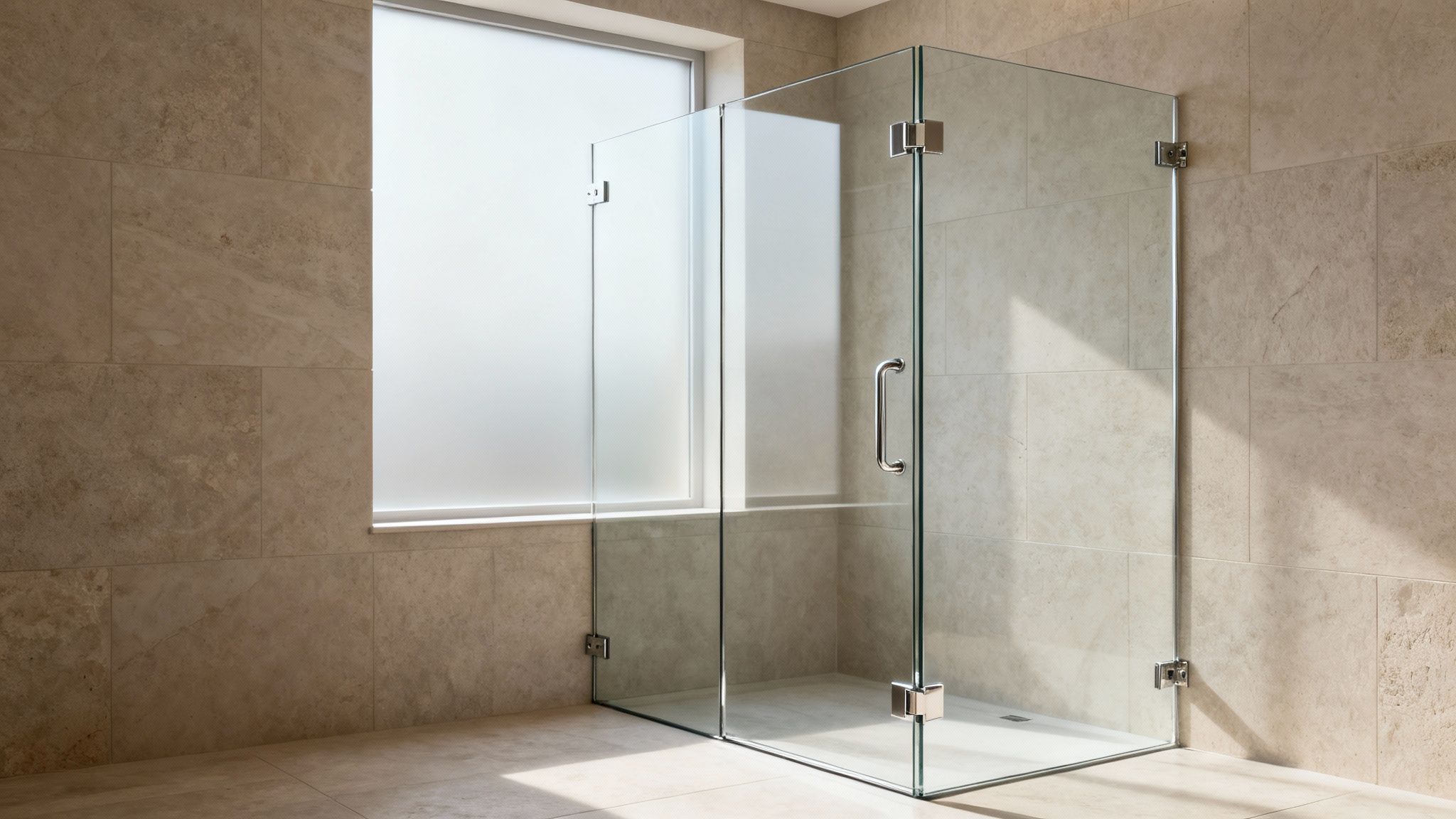
The science is one thing, but the real magic of tempered glass happens when you see how it merges safety and style in your own home. You probably use this incredible material every single day without a second thought. From the steamy enclosure of your morning shower to the patio door you slide open for some fresh air, tempered glass is the unsung hero of modern home design.
Its uses go way beyond basic windows. We rely on tempered glass for its ability to handle both physical impacts and sudden temperature changes, making it the only logical choice for places where regular glass would be a serious hazard. It's this unique combination of brawn and beauty that lets us create stunning, open designs that feel both luxurious and completely secure.
Frameless Shower Doors and Enclosures
Walk into any modern bathroom in Southwest Florida, and you'll likely see tempered glass in a frameless shower door. Standard glass would crack under the shock of hot water, but tempered glass takes it in stride. Even more importantly, in a wet, slippery space, you absolutely need its safe-shattering feature. It’s simply non-negotiable.
A modern frameless shower does more than just keep water off the floor—it turns an ordinary bathroom into a personal spa. Using thick, crystal-clear tempered glass makes the whole room feel bigger, brighter, and more open. It’s a design move that adds real aesthetic and financial value to your home.
This isn't just a trend; the data backs it up. Tempered glass leads the way in consumer appliances and furniture, especially for things like oven doors and shower enclosures—which are core offerings for our luxury residential clients in Naples. The advanced glass market is valued at USD 64.63 billion, and tempered glass dominates because of its resistance to thermal stress. In fact, Consumer Product Safety Commission data shows that its use in furniture alone cuts injury claims by 40% compared to standard glass.
Glass Railings and Partitions
Another place you’ll see tempered glass making a big impact is in railings for stairs, lofts, and balconies. We're seeing more and more homeowners in Bonita Springs and Fort Myers opt for glass railings to flood their homes with natural light and keep those beautiful views completely unobstructed.
Think about it: traditional wood or metal balusters create a cage-like effect. Tempered glass railings, on the other hand, provide an almost invisible safety barrier. You get a clean, contemporary look without sacrificing the strength needed to keep everyone safe.
Here are just a few other common spots where its versatility really stands out:
- Patio and Sliding Doors: These massive panes of glass are in high-traffic zones and must be able to withstand impacts.
- Glass Tabletops and Shelving: Gives you peace of mind, protecting against accidental drops and everyday wear and tear.
- Oven and Microwave Doors: Its ability to handle extreme heat makes it a must-have for kitchen appliances.
- Fireplace Screens: Provides a crucial barrier from sparks and intense heat, all while letting you enjoy the fire.
Kitchens and Specialty Applications
The kitchen is another space where tempered glass has become a go-to material. It’s a fantastic choice for a stunning glass backsplash because it’s tough, heat-resistant, and incredibly easy to wipe clean. Plus, its reflective surface helps brighten up the entire room.
Beyond the usual applications, tempered glass is our secret weapon for custom projects that blend artistry with precision engineering. Here at AmeriGlass, we love bringing a homeowner's unique vision to life—from elegant glass wine enclosures that protect a collection while showing it off, to bespoke mirrors that double as functional art. You can see some of these unique projects in our guide to mirrors and specialty glass styles.
Each of these examples makes it clear why understanding what tempered glass is used for is the first step in creating a home that’s as safe as it is beautiful.
Essential Commercial Uses For Tempered Glass

When it comes to commercial construction, there’s simply no room for error. Architects, business owners, and contractors in Fort Myers and across the region need materials that check three critical boxes: rock-solid safety, long-term durability, and a clean, sophisticated look. This is exactly why tempered glass has become so much more than a design choice—it's a fundamental building block of modern commercial spaces.
Think about it: commercial properties take a beating. From bustling retail storefronts to the daily grind of a busy office building, the glass has to stand up to constant traffic and the occasional bump or knock. Tempered glass delivers that strength while maintaining the crisp, professional appearance that businesses need.
Why Building Codes (And Common Sense) Demand It
In a commercial setting, safety isn't just a nice-to-have; it's the law. The widespread adoption of tempered glass has completely changed the game for architectural safety, making it a cornerstone for everything from windows and facades to railings.
Across the U.S., the International Building Code (IBC) mandates its use in high-risk areas like doors, certain types of windows, and any glass railings over 36 inches tall. Here in Naples and Fort Myers, we take it a step further. Our projects often have to meet Florida’s tough hurricane-resistant standards, where tempered glass has been proven to handle winds up to 150 mph.
At AmeriGlass Industries, we live and breathe these regulations. Our expertise ensures that every commercial project we touch is not only visually stunning but also fully compliant and, most importantly, safe.
Crafting Professional and Productive Spaces
Beyond the rulebook, tempered glass is an incredible tool for shaping the feel of a modern workplace or retail shop. It’s the key to creating bright, open-concept spaces that encourage collaboration and transparency, all without giving up privacy or noise control.
- Office Partitions and Conference Rooms: Swapping drywall for glass walls instantly makes an office feel larger and more connected. It lets natural light pour through the space, which is a proven way to boost employee morale and productivity.
- Storefronts and Display Cases: For any retailer, first impressions are everything. Big, beautiful tempered glass storefronts create an inviting window into your world, showcasing products and drawing customers in. Inside, glass displays offer a secure but elegant way to put your best merchandise in the spotlight.
- Balustrades and Railings: In places like malls, hotels, and office atriums, glass railings provide essential fall protection while keeping sightlines open. They create a strong, reliable barrier that feels almost invisible, contributing to a clean, uncluttered aesthetic.
Choosing the right material for interior design in commercial spaces is a massive decision, and tempered glass consistently proves its value by offering the best of both safety and style.
In a commercial setting, every design element has a job to do. Tempered glass is unique because it pulls double duty, meeting the demands of your aesthetic vision and the practical needs of the space. It's proof that a secure environment can also be an inspiring one.
Beyond the Basics: Specialized Commercial Applications
The versatility of tempered glass really shines in specialized applications that require both brawn and beauty. A perfect example is the custom glass wine enclosures we create for high-end restaurants, country clubs, and luxury homes.
These installations have to be tough enough to protect a priceless collection, yet offer a crystal-clear view that turns a wine cellar into a show-stopping focal point. You can see how we bring these sophisticated spaces to life by exploring our work with custom wine enclosures.
From the sleekest corporate lobbies to the most inviting retail boutiques, tempered glass is what makes modern commercial design work. It delivers the strength required by code, the durability demanded by high-traffic areas, and the elegance that defines a professional brand.
Tempered Glass Versus Other Glass Types
When you’re planning a project, it's easy to think of glass as just… glass. But that couldn't be further from the truth. The type of glass you choose has a massive impact on safety, durability, and even the final look of your space. While tempered glass is a superstar for safety, it's not always the right call. It shares the stage with standard annealed glass and specialized laminated glass, and knowing the difference is key to getting it right.
Think of it like choosing tires for a car. You wouldn't put racing slicks on a family SUV that drives through snow. In the same way, the glass you select has to be perfectly matched to its job. Each type is engineered for a very specific purpose.
Annealed Glass: The Standard Foundation
Annealed glass is the most basic form of flat glass you'll find. It's the starting point for almost all other glass products, cooled slowly during manufacturing to keep it free of internal stress. This process makes it really easy to cut, shape, and work with. The downside? It's quite brittle.
When annealed glass breaks, it shatters into large, dangerously sharp shards that can cause serious injury. This is a massive safety hazard, which is why you'll rarely find it in areas with foot traffic. Building codes are very strict about its use, so it's usually reserved for things like small picture frames or protected windows where the risk of impact is next to zero.
Laminated Glass: The Security Specialist
Laminated glass is the security guard of the glass world. It's built like a sandwich, with a tough, clear vinyl layer (called PVB) bonded tightly between two sheets of glass. That inner layer is what gives it its unique superpower.
If laminated glass is struck hard enough to break, the glass fragments stick to that vinyl core instead of flying everywhere. You see this every day on your car’s windshield—even with a big crack, it stays in one piece, protecting you. This makes it the go-to choice for storefronts, skylights, and anywhere you need extra security or soundproofing. It's fantastic at preventing forced entry because even when broken, it holds the opening closed.
Choosing The Right Glass: Tempered vs. Annealed vs. Laminated
So, how do you decide? It all comes down to where and how the glass will be used. A frameless shower door has completely different safety needs than a storefront window or a skylight.
The real secret is understanding how each glass type is designed to fail. Laminated glass holds together to keep a barrier intact. Tempered glass shatters completely to eliminate the hazard of falling shards. It's a fundamental difference in safety philosophy.
A perfect real-world example is in your car. Tempered glass is used for the side and rear windows. In an emergency, you need to get out fast, and its ability to shatter into small, harmless pebbles is a life-saving feature. This single safety benefit is a huge reason the global tempered glass market is projected to hit USD 86.46 billion by 2030. You can read more about the growth and applications of tempered glass to see just how vital it is worldwide.
This table gives you a quick, at-a-glance comparison of the big three.
| Feature | Tempered Glass | Annealed Glass | Laminated Glass |
|---|---|---|---|
| Strength | 4-5 times stronger than annealed glass | The baseline standard of strength | Similar to annealed but with a resilient core |
| Breakage | Crumbles into small, dull pebbles | Breaks into large, sharp shards | Cracks but stays in place, held by the interlayer |
| Best For | Showers, railings, storefronts, side windows | Small, low-risk windows, picture frames | Windshields, skylights, security windows |
Every project is unique, and our job at AmeriGlass is to guide you to the perfect material for your specific needs. Sometimes, that even means recommending a stunning ultra-clear glass to get the visual pop you're looking for. It’s all about matching the right technology to your vision.
Keeping Your Tempered Glass Looking Its Best
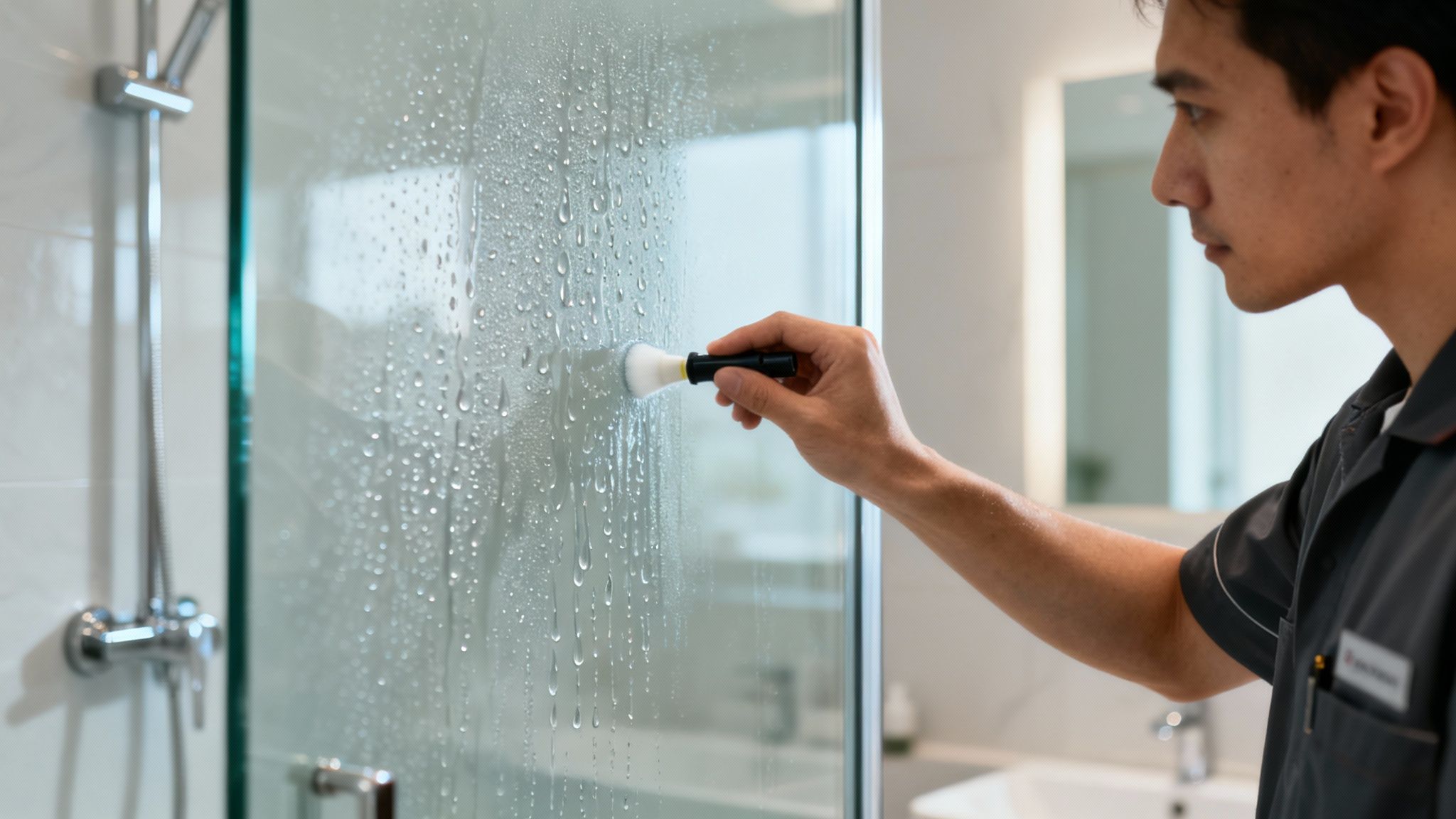
When you invest in beautiful tempered glass—whether it's for a sleek frameless shower or a modern glass railing—you're choosing something designed for lasting elegance. The good news? Keeping it looking brand new is surprisingly easy. It just takes a little more care than grabbing the nearest blue spray bottle.
The trick is to treat the surface with respect. While tempered glass is incredibly strong, its crystal-clear finish can be dulled by the wrong cleaning supplies. Harsh, abrasive cleaners and scouring pads will create tiny, almost invisible micro-scratches. Over time, these little scratches add up, leaving the glass looking permanently cloudy.
Forget the heavy-duty chemicals. A simple mix of white vinegar and water or a good pH-neutral glass cleaner is all you need for routine upkeep. Just use a soft microfiber cloth or a squeegee to wipe away smudges and water spots. A little bit of regular, gentle attention is the real secret to keeping that brilliant shine for years to come.
A Smarter Way to Fight Stains and Buildup
While consistent cleaning is key, the absolute best strategy is to stop stains before they even have a chance to form. This is a huge deal for shower doors, which are in a constant battle with hard water, soap scum, and mineral deposits. Left unchecked, these elements can actually etch themselves into the glass, creating stubborn stains that become a permanent part of the surface.
This is exactly why we recommend Diamond-Fusion, a professional-grade protective treatment. This isn't some temporary coating that just sits on top of the glass. It’s a patented, two-step process that actually bonds with the glass on a molecular level, creating a super-slick, invisible shield. It smooths out the naturally porous surface of the glass, making it water-repellent.
It works a lot like a high-end wax on a car's paint job. Water just beads up and rolls right off, taking all that grime and soap scum with it. One application can cut your cleaning time by up to 90%.
For homeowners and property managers here in Naples, this treatment is a total game-changer. It protects your investment and ensures your glass looks just as clear and stunning as the day it was installed, without the constant scrubbing.
Here’s what that really means for you:
- Less Elbow Grease: A quick squeegee after a shower is often all it takes.
- No More Stubborn Stains: It provides powerful, permanent resistance to hard water spots.
- Lasting Clarity: Your glass stays looking pristine and new, year after year.
By pairing the right cleaning routine with a smart, proactive treatment, you can make sure your glass features remain a highlight of your space. For even more in-depth advice, check out our guide on effective shower door maintenance to keep your bathroom looking flawless.
Your Tempered Glass Questions, Answered
Even after covering the basics, it's natural to have a few more questions pop up. In fact, that's a good thing—it means you're thinking through the details of your project.
To help you feel completely confident, we've put together answers to the most common questions our team at AmeriGlass hears every day from homeowners and builders in Naples, Bonita Springs, and across the region. Let's clear up those final practical details.
How Can You Tell if Glass Is Tempered?
This is probably the number one question we get. Since tempered glass looks exactly like regular glass to the naked eye, you can’t tell just by looking. Thankfully, there’s a simple, required way to check.
Manufacturers are legally required to add a permanent mark to every single piece of tempered glass. Look closely in one of the corners—you’ll find a small, acid-etched or sandblasted stamp, often called a "bug." This little mark is your official confirmation that the glass meets safety standards and has been properly treated.
If you can't find that stamp, you have to assume the glass isn't tempered. It's a non-negotiable safety check, especially if you're assessing existing glass in a home you just bought or a commercial space you're renovating.
Can You Cut or Drill Tempered Glass?
This one’s easy: a hard no. Once a piece of glass has been tempered, it cannot be altered in any way.
Remember how we talked about that incredible internal tension? Any attempt to cut, drill, or even sand the edges will instantly disrupt that tension and release all that stored energy. The result? The entire pane explodes into thousands of those small, harmless, pebble-like pieces. That’s why getting the measurements right from the start is absolutely critical—all fabrication, from cutting and drilling to edge polishing, must happen before the glass goes into the tempering furnace.
Why Is Tempered Glass Required by Code for Showers?
Building codes are all about safety, and bathrooms are high on the list of potential hazard zones. Think about it: water, soap, and slippery surfaces create a perfect storm for falls. If a standard glass shower door were to break from an impact, it would create long, razor-sharp shards that could cause devastating injuries.
By mandating tempered glass, building codes drastically reduce that risk. Since it crumbles into dull, relatively safe pieces, it's required for:
- Shower and Bathtub Enclosures: This is the most common and critical application.
- Glass Doors: Any glass in a door, whether it swings or slides, must be safety glass.
- Low Windows: Windows close to the floor where someone could trip and fall into them.
These rules aren’t just suggestions; they’re life-saving regulations.
Is Tempered Glass Stronger Than Laminated Glass?
This trips a lot of people up because both are types of safety glass, but they're strong in different ways.
When it comes to resisting a direct hit, tempered glass is the clear winner. It's about four to five times stronger than a standard piece of glass the same size and thickness. Laminated glass, on the other hand, is designed for a different kind of strength: security. When it breaks, the plastic interlayer holds the broken pieces together, keeping the pane intact.
So, one is designed to shatter safely, while the other is designed to stay together when broken.
Ready to bring the unmatched safety and style of tempered glass to your home or business? The experts at AmeriGlass Industries are here to guide you every step of the way, from precise measurements to flawless installation.
Contact us today for a free, no-obligation estimate for your project in Southwest Florida.