
If you want to know how to clean glass shower doors, here’s the simplest trick in the book: a 50/50 mix of white vinegar and water. Use it with a non-abrasive sponge, and you'll cut right through most soap scum and hard water spots. For really stubborn areas, a simple paste of baking soda and water offers just enough grit to scrub the glass clean without leaving a scratch.
The Real Reason Your Shower Glass Looks So Cloudy
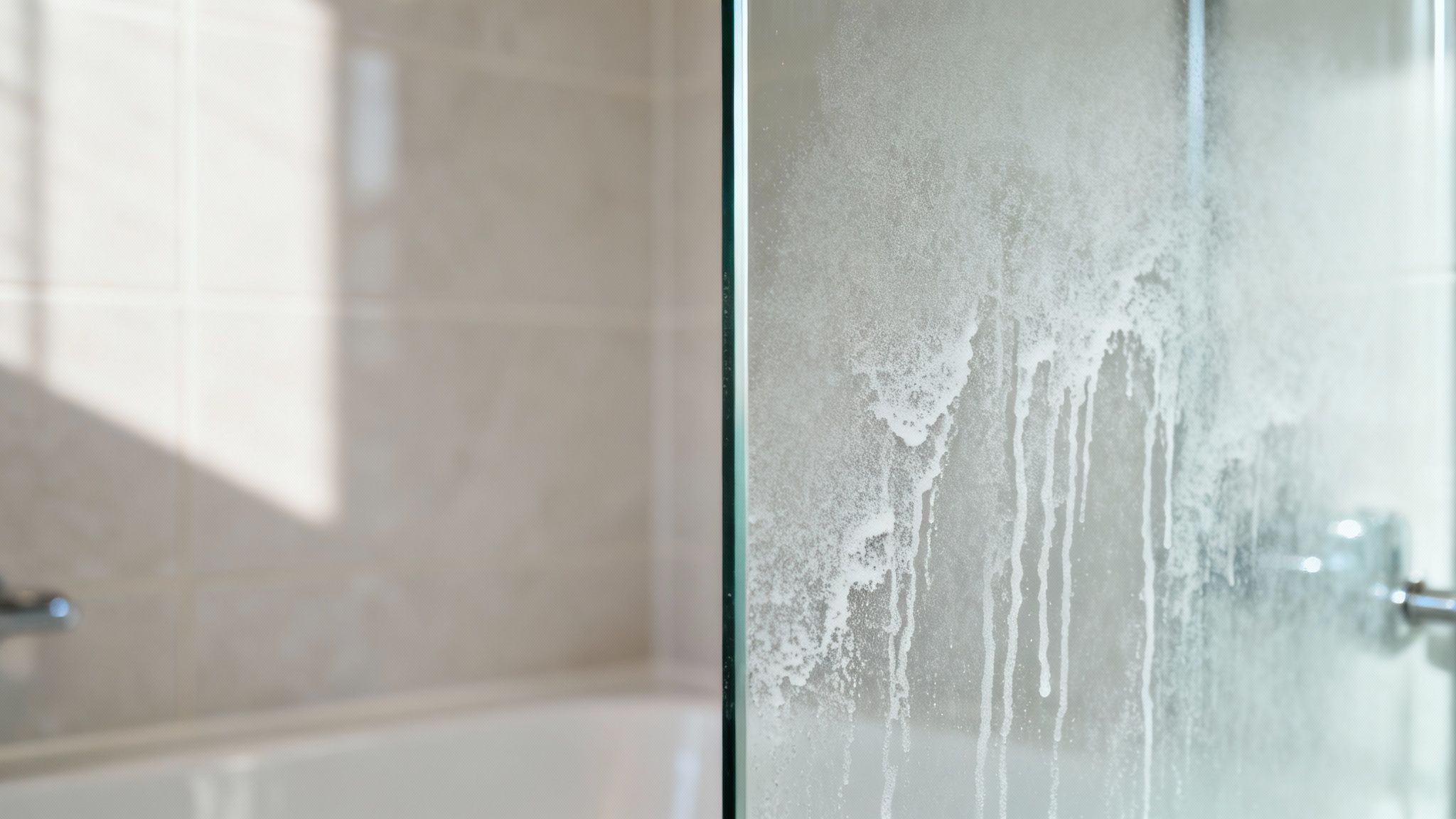
That gorgeous, crystal-clear shower door you fell in love with? It doesn't take long for it to become a cloudy, streaky mess. Before you start scrubbing, it helps to know exactly what you’re up against. That persistent haze isn't just dirt; it's a tag team of two different culprits that cling to the glass for dear life.
The first offender is soap scum. It's the waxy, whitish film left behind when the talc and paraffin in your bar soap react with the minerals in your water. Once it dries, it’s a real pain to get off.
Then you have hard water deposits. If you have hard water, it’s loaded with minerals like calcium and magnesium. When the water evaporates, those minerals get left behind as chalky white spots. Ignore them long enough, and they can actually etch into the glass permanently. If this is a constant battle in your home, it's worth learning how to get rid of hard water for good.
Understanding Your Cleaning Arsenal
Picking the right cleaner is more than half the battle. Whether you reach for a homemade solution or a commercial product really depends on how bad the buildup is and what you're comfortable using in your home. It's a huge market—the global glass cleaner industry was valued at over USD 4 billion in 2024. And what does everyone want? A streak-free finish. That’s always the top priority.
Let's break down your main options:
- DIY Solutions: Things like a vinegar-water spray or a baking soda paste are cheap, easy to make, and don't rely on harsh chemicals. They're fantastic for regular upkeep and dealing with light to moderate grime.
- Commercial Cleaners: These are specifically engineered to obliterate soap scum and mineral deposits. They pack a bigger punch for those tough, neglected jobs but often contain more potent chemicals.
Deciding between the two can feel like a toss-up. Here’s a quick guide to help you choose the right tool for the job.
DIY vs Commercial Cleaners A Quick Comparison
| Cleaner Type | Best For | Pros | Cons |
|---|---|---|---|
| Vinegar & Water | Daily spritzing, light mineral spots, and routine cleaning. | Inexpensive, non-toxic, eco-friendly, multi-purpose. | Strong smell, may not be effective on heavy, caked-on buildup. |
| Baking Soda Paste | Moderate soap scum and stains that need a gentle scrub. | Mildly abrasive, deodorizing, cheap, safe for most surfaces. | Can be messy to apply and rinse off; requires some elbow grease. |
| Commercial Sprays | Heavy soap scum and stubborn hard water stains. | Fast-acting, powerful formulas, convenient spray application. | Can contain harsh chemicals, strong fumes, and be more expensive. |
| Specialty Pastes | Neglected doors with severe, etched-in mineral deposits. | Highly effective on tough jobs, restores clarity. | Pricier, may require ventilation, often single-purpose. |
Ultimately, both approaches work. DIY cleaners are perfect for your weekly routine, while a good commercial cleaner is great to have on hand for a deep clean every few months.
It's also worth remembering that the type of glass can make a difference. For example, maintaining the stunning clarity of low-iron glass requires a bit of specific care. You can learn more about what makes this material special in our guide to ultra-clear glass for shower enclosures.
Mastering Your Daily and Weekly Cleaning Routine
The real secret to spotless shower glass isn't about some miracle product or spending hours scrubbing. It’s all about consistency. Building a few simple habits is what keeps that glass looking brand new and prevents buildup from ever getting a foothold.
Honestly, learning how to clean glass shower doors is less about cleaning and more about preventing the mess in the first place. You can stop nearly 90% of soap scum and hard water spots just by taking two minutes after your shower.
It sounds small, but that tiny habit makes an enormous difference. It turns a dreaded, back-breaking chore into a quick, thoughtless wipe-down.
The Two-Minute Daily Squeegee Habit
Your best friend in this fight is a good squeegee. Seriously. Keep one hanging right in your shower where you can’t miss it. The whole idea is to get the water droplets off the glass before they air-dry and leave all those ugly mineral deposits behind.
Just start at the top corner of the glass and pull the squeegee straight down in one smooth motion. Overlap each pass by an inch or so to make sure you get everything. A few quick swipes, and you’re done.
This one simple action is the cornerstone of keeping your shower glass pristine. You're physically removing the water and soap residue that turns into that cloudy film, which means you'll almost never have to do a heavy-duty scrub.
Your Simple Weekly Wipe-Down Plan
While the daily squeegee does most of the heavy lifting, a quick weekly clean is still a good idea. This tackles any faint residue you might have missed and keeps the hinges and handle looking sharp. This isn't a deep clean; think of it more as a light touch-up.
All you need is a gentle, pH-neutral cleaner or a classic DIY solution.
- Mix It Up: In a spray bottle, combine equal parts white vinegar and water. It’s an old-school trick for a reason—the mild acidity cuts right through light soap film without being harsh on your glass.
- Spray and Wait: Give the glass a light misting. I always pay a little extra attention to the bottom half of the door, since that’s where water and soap tend to collect. Let it sit for about five minutes to do its work.
- Wipe and Buff: Grab a soft microfiber cloth and wipe the glass clean. For that perfect, streak-free finish, follow up with a second, dry microfiber cloth to buff the glass and hardware.
This quick routine is a core part of long-term shower door maintenance. Pair the daily squeegee with this weekly wipe-down, and your glass will stay effortlessly clear for years to come.
Conquering Stubborn Hard Water Stains and Soap Scum
Even if you’re a pro at daily and weekly upkeep, those stubborn spots can still creep in. It’s a common battle, especially if you live in an area with hard water. The minerals in the water conspire with soap scum to leave behind a cloudy, frustrating film on your beautiful glass doors.
When your go-to spray cleaner isn't cutting it anymore, it's time to shift gears into a deep-cleaning mode. But don't reach for harsh, abrasive chemicals just yet. Believe it or not, some of the most powerful solutions for tough grime are probably sitting in your kitchen pantry right now.
Your Secret Weapon: A DIY Cleaning Paste
The trick to dissolving that caked-on buildup is a simple combination: a mild acid paired with a gentle abrasive. This duo is magic for breaking down mineral bonds and lifting away soap scum without putting a single scratch on your glass. Making it into a paste helps it cling to the door, giving it more time to work.
Here are a couple of my tried-and-true recipes:
- Baking Soda & Vinegar: Mix baking soda with a splash of white vinegar until it forms a thick, frosting-like paste. It’ll fizz up at first—just let the science happen and wait for it to settle down before you use it.
- Baking Soda & Lemon Juice: If you prefer a fresher scent, swap the vinegar for fresh lemon juice. The citric acid is a fantastic mineral-buster.
Slather your chosen paste generously over the problem areas using a soft cloth or non-abrasive sponge. Really focus on the bottom of the door and any spots where water tends to sit.
My Best Advice: Let that paste sit on the glass for a good 15-20 minutes. Seriously, don’t rush this part. The dwell time is what allows the acid to really break down the calcium and magnesium, making your scrubbing job a whole lot easier.
Once time is up, scrub gently in small circles. You’ll feel the gritty residue start to give way. Rinse the door completely with warm water, and finish with a good squeegee to reveal that crystal-clear shine.
A Guide to Tough Stain Removal
Sometimes, one pass just isn't enough, especially for stains that have been there a while. That cloudy haze at the bottom of the door is a classic trouble spot where water and soap love to hang out. Don't worry if it's not perfect after the first try—just reapply the paste, let it sit a bit longer (up to 30 minutes), and give it another gentle scrub.
To help you tackle specific messes, I've put together a quick guide. Think of this as your cheat sheet for a sparkling clean shower.
Stain Removal Guide for Glass Shower Doors
| Stain Type | Recommended Cleaner | Application Method | Cautionary Notes |
|---|---|---|---|
| Hard Water Spots | White vinegar and water solution (1:1) or DIY baking soda paste. | Spray and let sit for 10-15 minutes, then scrub gently. For paste, apply and let sit for 20 minutes before scrubbing. | Never mix vinegar with bleach. Ensure good ventilation when using vinegar. |
| Soap Scum | DIY baking soda and lemon juice paste. For commercial options, a cleaner with lactic acid works well. | Apply paste, let sit for 15 minutes, scrub with a non-scratch pad, and rinse thoroughly. | Avoid abrasive powders or steel wool, which will permanently scratch the glass. |
| Mildew/Mold | A solution of hydrogen peroxide and water or a specialized bathroom mildew remover. | Spray on affected areas (usually caulk or seals), let sit for 30 minutes, scrub with a small brush, and rinse. | Wear gloves and ensure the area is well-ventilated. Never mix with other cleaners. |
| Mineral Deposits | A paste of baking soda and water, or for very tough spots, a pumice stone used gently and wet. | Apply the paste and scrub. For the pumice stone, wet both the stone and the glass thoroughly and use light pressure. | A pumice stone should be a last resort. Test on a tiny, inconspicuous area first to ensure it doesn't scratch. |
This table should get you through just about any buildup you encounter, keeping your glass looking brand new.
This flowchart gives a great visual of how a little daily effort makes deep cleaning so much easier.
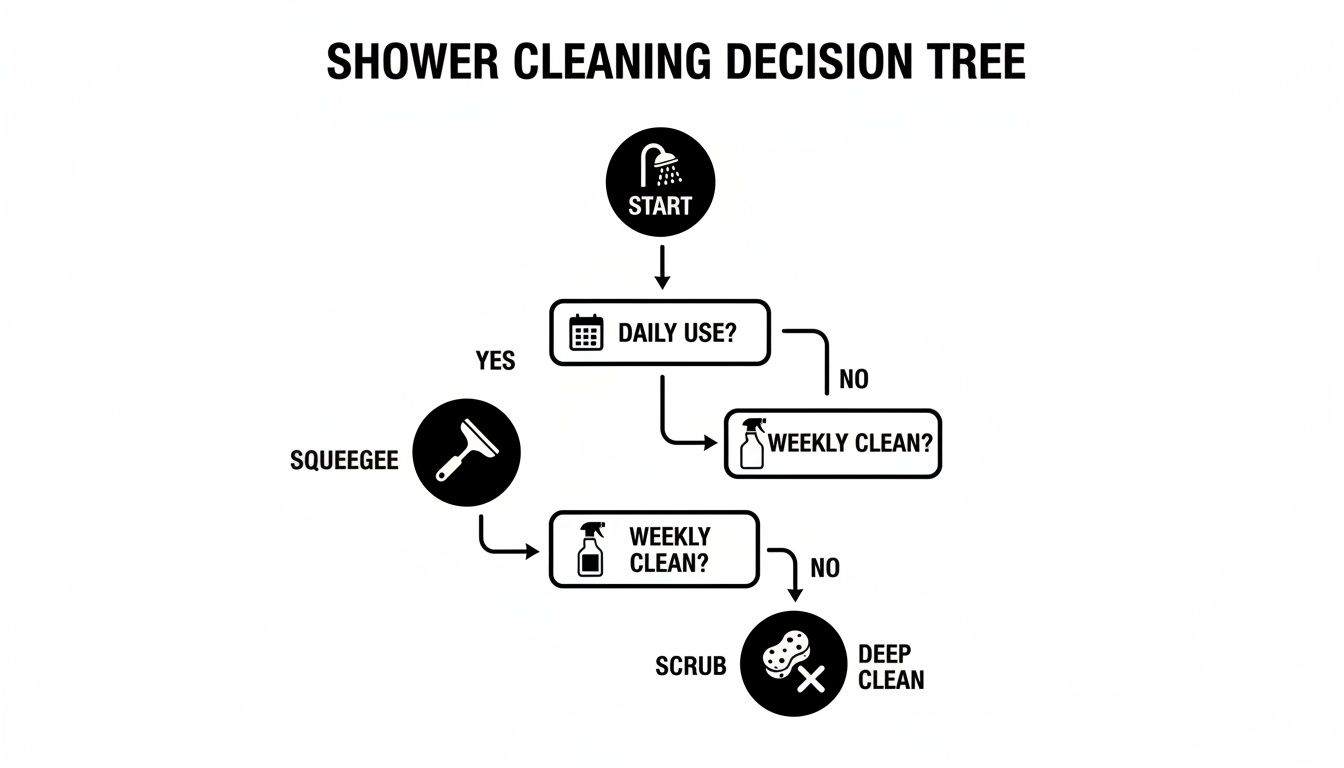
As you can see, using a squeegee every day is your best defense. It dramatically cuts down on how often you'll need to pull out the heavy-duty stuff.
If you’re interested in more natural cleaning hacks, you might want to check out these four lesser-known cleaning uses of vinegar. By pairing these powerful homemade solutions with consistent maintenance, you can officially win the war against hard water stains for good.
The Right Tools for the Job (And What to Leave on the Shelf)
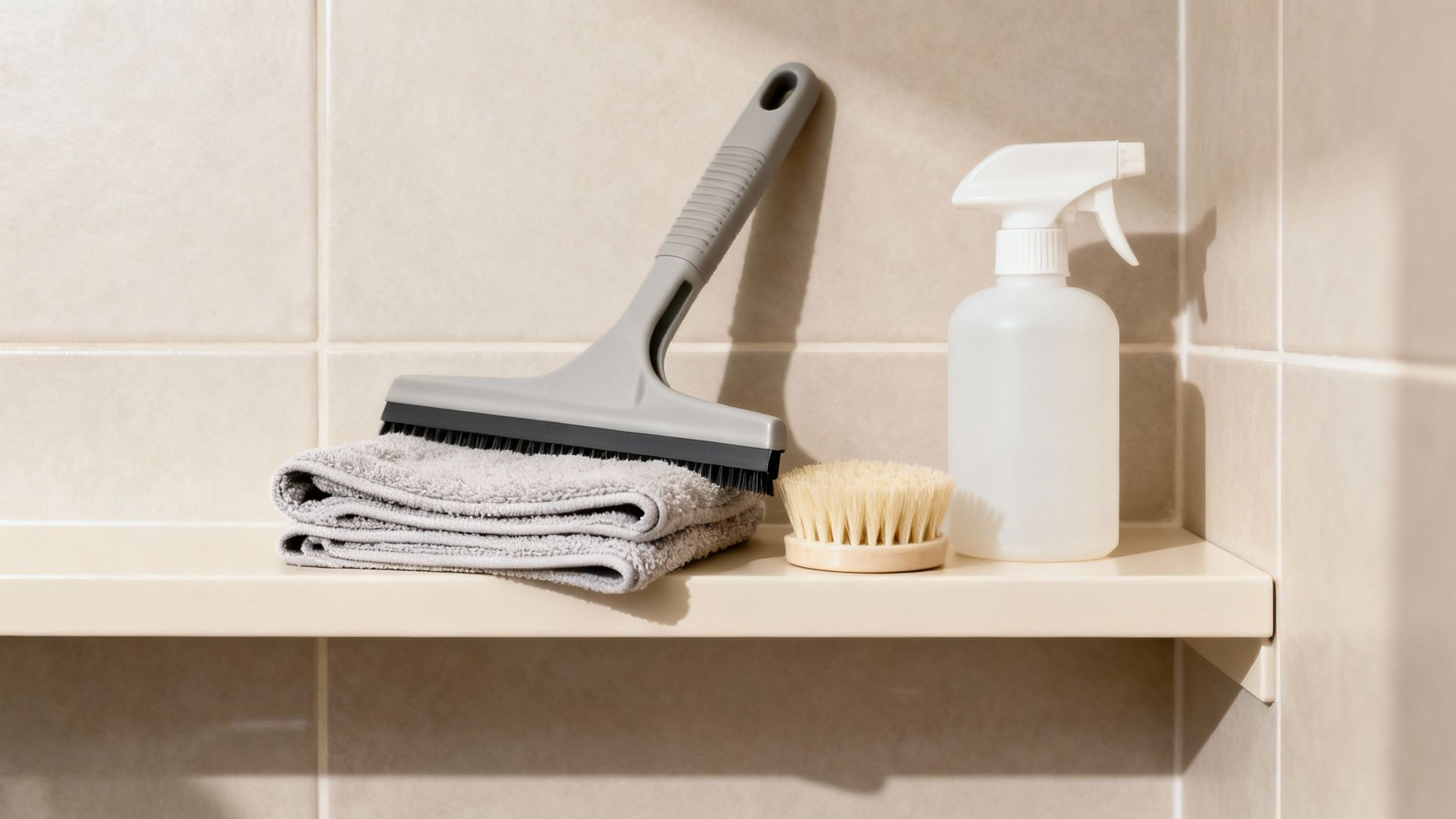
When it comes to cleaning glass shower doors, what you use is just as crucial as how you use it. Grabbing the wrong cleaner can turn a simple chore into a costly mistake, leaving you with permanent scratches or etching on the very surface you’re trying to protect. Think of it as putting together a dedicated maintenance kit for your bathroom's centerpiece.
The right supplies are usually simple, surprisingly effective, and won’t harm your investment. More and more homeowners are opting for these elegant glass enclosures, a trend that’s easy to see in the market numbers. The shower glass door market was already valued at USD 13.7 billion in 2023 and is on track to hit USD 22.7 billion by 2030. Protecting that beautiful glass starts with your cleaning arsenal. You can see more on shower glass door market trends at psmarketresearch.com.
Your Must-Have Cleaning Kit
Building the perfect toolkit doesn't mean a trip to a specialty store. In fact, you probably have most of what you need already. The real secret is using the right tools correctly and, most importantly, consistently.
- A High-Quality Squeegee: This is your number-one weapon in the fight against buildup. Don't cheap out here. Look for one with a flexible, streak-free silicone blade that will last for years. It's the single most important item for your daily routine.
- Microfiber Cloths: You’ll want at least two—one for cleaning, one for buffing dry. Microfiber is a game-changer because it’s incredibly absorbent and soft enough that it won’t leave behind lint or, worse, scratches. It’s perfect for getting that final, streak-free polish on both the glass and the hardware.
- Non-Abrasive Sponges or Pads: For weekly cleanings or tackling light buildup, a sponge clearly marked "non-scratch" is a must. It gives you just enough scrubbing power to lift away grime without hurting the glass.
- Spray Bottles: Keep a couple of these on hand for your homemade cleaning solutions, like a simple vinegar-and-water mix. Just be sure to label them clearly so you know what you’re grabbing.
Here’s a pro tip: Keep your tools where you'll actually use them. I always tell clients to hang the squeegee in the shower and stash the cloths and spray bottle under the sink. If they're out of sight, they're out of mind, and that's how cleanings get skipped and bigger problems start.
Products and Tools to Absolutely Avoid
This next list is just as critical as the one above. I’ve seen beautiful showers ruined because someone used one of these. Using the wrong product can cause irreversible damage, void your warranty, and completely ruin the look of your shower.
- Abrasive Powders and Cleansers: Products like Comet or Ajax are designed for tough surfaces, and they are far too aggressive for glass. Their gritty texture will create thousands of micro-scratches, leaving the glass with a permanently dull, hazy finish.
- Scouring Pads and Steel Wool: These are meant for scrubbing burnt-on food off pots and pans, not delicate glass. They will scratch your shower door on the very first wipe. Don’t even think about it.
- Harsh Chemical Cleaners: Steer clear of anything with ammonia or bleach. These aggressive chemicals can eat away at the protective seals around your door and tarnish or corrode the metal hardware like hinges and handles.
- Magic Erasers: I know they seem soft, but these are actually a form of micro-abrasive. They can easily damage any protective coatings on your glass and create a network of fine scratches.
For more expert advice on taking care of your glass installations, feel free to explore our full library of articles on the AmeriGlass Industries blog.
Protecting Your Glass for Long-Term Clarity
What if you could win the war against soap scum and hard water stains before the battle even begins? While consistent cleaning definitely works, the best strategy is always proactive protection. This is where professional-grade protective coatings completely change the game for maintaining your shower.
These treatments create an ultra-thin, invisible barrier that makes the glass surface hydrophobic. That’s just a technical way of saying it repels water. Instead of clinging to the glass and leaving behind those chalky mineral deposits, water beads up and rolls right off, taking soap residue along for the ride. It’s the same effect you see on a freshly waxed car.
The long-term value is undeniable. By preventing grime from bonding to the glass in the first place, you drastically cut down on cleaning frequency and eliminate the need for harsh, abrasive chemicals for good.
Professional Coatings vs. DIY Sprays
As you start looking into protective treatments, you'll quickly find two main options: professionally applied coatings and the DIY sprays you can buy at a hardware store. While both promise easier cleaning, their performance and durability are worlds apart.
A professionally applied coating, like the Diamond-Fusion treatment we use, is a permanent solution. It actually bonds with the glass on a molecular level.
This isn't just a temporary layer sitting on top; it truly becomes part of the glass itself. It’s engineered to last for years, giving you consistent protection that won't just wash away or break down over time.
DIY products, on the other hand, are temporary. Think of them like a raincoat for your glass—they offer some water-repelling properties at first, but they wear off within weeks or months. You’ll find yourself constantly reapplying them to keep up the effect.
Let's break down the real difference:
| Feature | Professional Coating (e.g., Diamond-Fusion) | DIY Spray-On Product |
|---|---|---|
| Durability | Permanent; designed to last 10+ years. | Temporary; lasts a few weeks to a few months. |
| Application | Applied by trained technicians in a controlled environment. | Applied at home with a spray bottle and a microfiber cloth. |
| Effectiveness | Creates a highly repellent, genuinely low-maintenance surface. | Effectiveness varies and degrades quickly with each use. |
| Long-Term Cost | Higher upfront investment, but no recurring costs. | Low initial cost, but requires constant repeat purchases. |
Protective glass technologies can dramatically reduce the time you spend scrubbing. While the shower cleaner market is growing, the faster-growing glass cleaner market shows a clear trend: people want easier maintenance. Manufacturers often claim these coatings can cut cleaning efforts by 50% or more, a statistic that makes perfect sense when you discover more insights about the shower cleaner market on datahorizzonresearch.com.
Ultimately, choosing a professional coating is an investment in long-term clarity and convenience. It's one of the smartest upgrades you can make for any glass shower enclosure. This same technology can also be applied to other surfaces, which you can learn about in our guide to mirrors and specialty glass styles.
Common Questions About Shower Door Care
Even with the best cleaning routine, questions are bound to come up. Getting the right answers can save you a ton of frustration, prevent accidental damage, and keep your shower glass looking brand new for years. Here are a few of the most common things we hear from homeowners.
How Often Should I Really Clean My Shower Door?
Think of it in layers. A quick, two-minute squeegee after every single shower is your best friend. Seriously, this little habit is the secret weapon for stopping water spots before they even have a chance to form.
From there, a light weekly wipe-down with a pH-neutral cleaner or your simple 50/50 vinegar and water spray is usually enough to catch anything the squeegee missed. You’ll only need to do a deep, focused clean every one to three months, and that really just depends on how hard your water is and how faithful you are with that daily squeegee.
Can I Use Magic Erasers on Stubborn Spots?
Please don't. I know it’s tempting, but a magic eraser is basically super-fine sandpaper. It might feel soft, but it can create thousands of microscopic scratches that will permanently dull the surface of your glass.
Using abrasive tools like that can also strip off any protective coatings applied to your glass. Once that coating is gone, cleaning becomes a much bigger chore. It’s always better to stick with a non-abrasive pad or a soft microfiber cloth to avoid doing irreversible damage.
My Water Is Extremely Hard. What Is the Best Solution?
Living with hard water means you're in a constant fight against mineral buildup. Hands down, the most effective defense is having a professional protective coating applied to the glass. It creates an invisible, water-repellent barrier that keeps minerals like calcium and magnesium from sticking in the first place.
Combine a quality coating with a strict habit of squeegeeing after every shower, and hard water pretty much becomes a non-issue. You’re tackling the problem at the source instead of just cleaning up the mess later.
Is a Water Softener Worth It Just for My Shower Glass?
A whole-home water softener is a fantastic investment, but its benefits go way beyond your bathroom. It protects your pipes, faucets, and all of your appliances from scale buildup, which helps them run more efficiently and last longer.
But if your only concern is the shower glass, it might be a bigger solution than you need. A high-quality, professionally applied glass coating is a more direct and budget-friendly way to solve that specific problem right where it happens.
Still have questions? We’ve got answers. Feel free to explore more frequently asked questions about glass care to make sure you’re taking the best possible care of your investment.
Ready to upgrade to a stunning, low-maintenance shower enclosure? The team at AmeriGlass Industries specializes in precision-designed frameless shower doors with optional Diamond-Fusion protective coatings. Schedule your free estimate today!