
You've finished the tile, picked the fixtures, and walked into the bathroom expecting a clean, expensive look. Then the shower glass goes in, and that faint green edge shows up on the panel. It's small, but in a white, modern space, it can be the one detail that keeps the room from feeling complete.
That's where ultra clear low iron glass earns its place. It's not a gimmick, and it's not just for glossy magazine photos. It's a material choice that changes how light, color, and edge detail read in real life, especially in Southwest Florida homes where bright finishes and open layouts make glass part of the design, not just a barrier. For homeowners who care about the final look, the essential question isn't whether low-iron glass is better. It's whether the premium is justified for your specific project.
The Hidden Detail in Your Dream Design
A master bathroom can look perfect on paper and still miss the mark after installation. White tile, polished fixtures, and frameless glass should feel crisp and calm, but standard glass can introduce a subtle green cast that changes the mood of the whole room. On a shower door, that tint is most obvious at the edge, where the glass thickness is easiest to see.
That tiny color shift matters because bathrooms are full of light, reflection, and hard surfaces. A panel that looks fine in a showroom can read differently once it sits against bright grout, pale stone, or a clean white wall. If you've ever wondered why a space feels a little less polished than expected, the glass may be the reason.
Why this detail stands out so quickly
Ultra clear low iron glass was developed to solve that visual problem. By reducing iron oxide in the raw materials, it removes much of the green absorption band that gives standard float glass its tint. The result is a cleaner, more neutral look that helps the rest of your finishes stay true.
If you're planning a high-end renovation, this is the kind of choice that shows up in the final impression more than in a spec sheet. A homeowner trying to create a luxury feel often starts with the tile and hardware, then realizes the glass can either support the design or soften it. For a broader look at how glass choices contribute to a refined home, see how a glass company can make your home feel luxurious.
A good rule is simple. If the glass is meant to disappear, standard clear glass can be acceptable in some spaces. If the glass is meant to showcase the room, low-iron glass usually gives the cleaner result.
Seeing the Difference What Is Ultra Clear Glass
Ultra clear glass is glass made to look as neutral as possible. The main difference from standard clear glass is the iron content. In ordinary float glass, that iron creates the familiar green cast, especially along edges and in thicker panels. Ultra clear glass is refined to reduce that effect so the glass itself doesn't compete with the design behind it.
Imagine spring water versus tap water. Both are clear, but one has fewer impurities that change the way it looks. Standard glass is still “clear,” but it isn't colorless. Ultra clear glass gets much closer to that colorless appearance, which is why it's favored in projects where true color matters.
The technical numbers back that up. One industry source describes ultra-clear glass as having Fe₂O₃ at ≤0.015%, about one-tenth or less than ordinary clear glass, with visible light transmittance of 91–92% compared with 83–86% for standard clear float glass. That same source notes it's typically 30–50% more expensive than standard clear float glass, with custom uses sometimes costing up to double. Kailansen's overview of ultra-clear glass is a useful reference point for understanding why the premium exists.
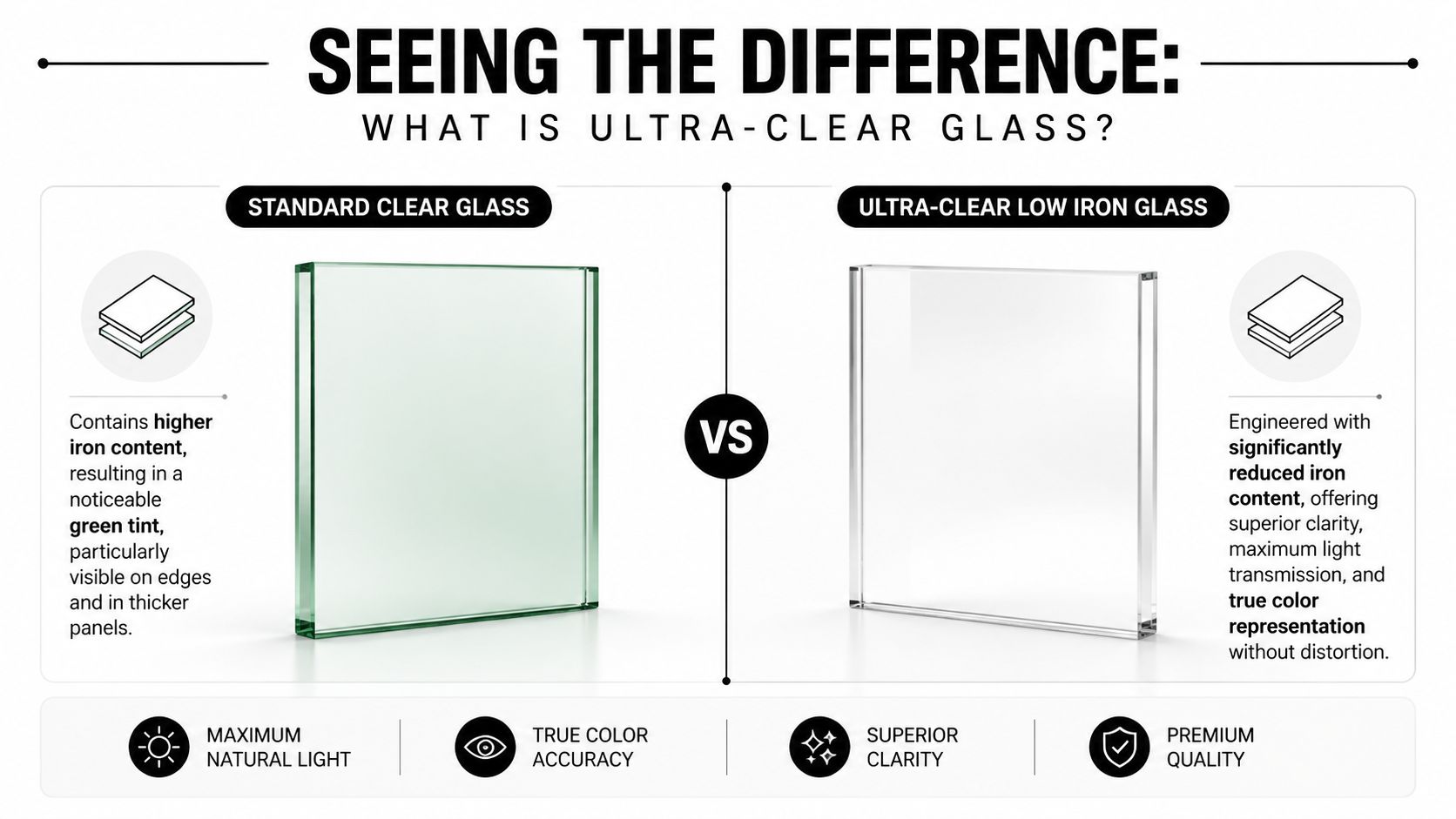
Standard Clear Glass vs. Ultra-Clear Low-Iron Glass
| Feature | Standard Clear Glass | Ultra-Clear Low-Iron Glass |
|---|---|---|
| Visual tone | Slight green cast, especially at edges | Neutral, colorless appearance |
| Light transmission | Lower than low-iron glass | Higher visible light transmission |
| Color rendering | Can subtly shift whites and neutrals | Preserves truer color |
| Best visual effect | Practical, everyday clarity | Premium clarity for design-focused spaces |
| Typical cost | Lower | Higher |
For a deeper product comparison, mirrors and specialty glass styles can help you see how clarity level changes the finished look in different applications.
The Tangible Benefits of Unmatched Clarity
The biggest benefit of ultra clear low iron glass is not abstract. It's what it does to the materials around it. White tile stays white. Stone keeps its intended tone. Soft neutrals don't pick up a green filter that makes them feel duller than they should.
That matters in Southwest Florida, where many homes lean into bright interiors, open sightlines, and clean architectural lines. In a room with lots of daylight, even a subtle color shift can become more visible. The clearer glass gets out of the way, and that's what lets the rest of the room feel intentional.
Color accuracy, brightness, and restraint
Premium low-iron glass reaches a visible light transmittance of around 90% to 91.5%, versus roughly 83% to 88% for standard clear glass, according to a technical source on low-iron glass performance. That same source notes the lower iron content improves color neutrality and minimizes the green cast, especially as glass thickness increases. JNS Glass on low-iron performance is a helpful technical reference if you want the optical reason behind the visual effect.
That extra clarity produces a simpler emotional result. The room feels brighter. Materials look more exact. The glass stops announcing itself and starts supporting the rest of the design.
In a modern interior, the best glass is often the glass you notice the least.
Here's where the upgrade tends to feel most valuable:
- White and light finishes: The cleaner base glass helps keep whites from reading slightly green.
- Open, airy rooms: Higher light transmission helps the space feel less visually blocked.
- Minimalist design: A neutral pane preserves the sharp, clean edge that modern projects depend on.
- Feature walls and luxury materials: When stone, tile, or hardware has a specific tone, clearer glass lets that tone stay intact.
A practical example helps. If you've chosen a warm marble, a soft ivory tile, or a carefully matched paint color, standard glass can slightly mute the effect. Low-iron glass keeps the visual message closer to what you approved in the showroom.
Ideal Applications in Southwest Florida Homes
In this market, the best uses for ultra clear low iron glass tend to be the ones where the glass is thick, visible, and part of the design language. Frameless shower enclosures are the clearest example. When a thick panel sits beside light-colored tile, the edge color becomes obvious, and low-iron glass helps preserve the spa-like feel people want in a premium bathroom.
Where the material earns its keep
Custom mirrors are another strong candidate, especially when the goal is a truer reflection with less color bias. Railings and partitions also benefit because they're often there to preserve views and daylight, not block them. In those cases, clearer glass helps the space feel open instead of interrupted.
For luxury wine enclosures, the effect is even more obvious. Labels, bottles, and interior finishes stay truer to color, so the enclosure feels like part of the display rather than a filter over it. That's why designers often reach for low-iron glass in spaces where the visual payoff is immediate.
The glass's visual impact becomes clearer in larger, more exposed installations, especially where edges are polished and the panel thickness is easy to see. In a small cabinet door, a standard clear panel may show little noticeable difference. In a shower wall or railing, the difference is much easier to spot, which is why frameless shower door installation in Naples, Florida is often where homeowners first notice the upgrade.
This is also why the product shows up so often in places built around daylight. Southwest Florida interiors tend to celebrate light, and low-iron glass supports that goal without drawing attention to itself.
A short video example can help you visualize the installation mindset and the finished effect.
The takeaway is simple. If the glass is part of a visible design feature, not just a functional divider, low-iron glass is usually worth serious consideration.
Specifying and Protecting Your Investment
The decision point is not whether low-iron glass looks better. It usually does. The question is whether that better look will be visible in your project. Industry guidance notes that the visual impact is most noticeable when the glass is thick or when adjacent materials need accurate color rendering, which is why it matters more in some installations than others. Vitro Glazings on achieving a true low-iron look is a good reminder that the upgrade is application-specific, not automatic.
That distinction helps homeowners spend wisely. In a thin panel, the difference may be modest. In a thicker shower wall, railing, or other exposed feature, the color shift in standard glass becomes far more noticeable. If you're deciding where to allocate budget, that's the first question to ask.
How to protect the look once you've paid for it
Because these installations are meant to stay visually clean, maintenance matters. A quality protective coating can make a meaningful difference by helping repel water, soap scum, and mineral buildup. If you've ever seen shower glass lose its crisp look over time, you already know why easier cleaning matters.
For homeowners who already care about preserving refined finishes, it can help to think the same way custom framers think about archival framing services. The goal is the same, protecting what you paid for so it keeps looking intentional instead of tired.
- Choose low-iron glass for thick panels: The edge color is more visible, so the upgrade pays off faster.
- Use standard clear glass in lower-impact spots: Some thinner or simpler panels don't need the premium.
- Add a protective coating: It helps keep the surface cleaner and the glass visually quieter.
- Match the glass to the surrounding materials: White tile, light stone, and clean neutrals show the benefit most clearly.
Safety still comes first. Glass used in doors, showers, and railings should be tempered so it meets the right safety expectations for breakage and daily use. The optical upgrade doesn't replace that requirement, it works alongside it.
For practical upkeep, shower door maintenance tips can help you keep the surface looking as clear as the day it was installed. Protecting the finish is part of protecting the investment.
Choose Perfect Clarity with AmeriGlass Industries
If your project needs the cleanest possible finish, ultra clear low iron glass is the safer choice for appearance. If the design is simple and the glass won't be a focal point, standard clear glass may be enough. The difference comes down to how much you want the glass to disappear, and how much color accuracy matters to the room.
For homeowners, designers, and builders in Naples, Fort Myers, Bonita Springs, and across Southwest Florida, the smartest next step is to compare both options in person. Side-by-side samples make the visual difference easy to judge, especially under the kind of bright light common in local homes. If you're ready to price a project, start with a free quote and use the conversation to match the glass to the actual room, not just the catalog photo.
Luxury design is usually about restraint. The right glass doesn't call attention to itself, it lets the tile, stone, hardware, and view do their job. That's why the premium is justified when the installation is large, visible, and meant to feel polished from every angle.
If you're weighing standard clear against ultra clear low iron glass for a shower, railing, mirror, or wine enclosure, contact AmeriGlass Industries to schedule a showroom visit or request a no-obligation consultation. Seeing both glass types in person is the fastest way to decide whether the upgrade is worth it for your home.