
Ever notice that cloudy film on your shower door that just won't wipe away? That’s not just stubborn grime. It's the result of a chemical reaction, a pesky souvenir left behind by the mineral-rich water flowing through your pipes. The secret to getting your glass clear again lies in using a mild acid, like simple vinegar or lemon juice, to dissolve the bond between those minerals—mainly calcium and magnesium—and the glass itself.
Why Your Glass Looks Permanently Foggy
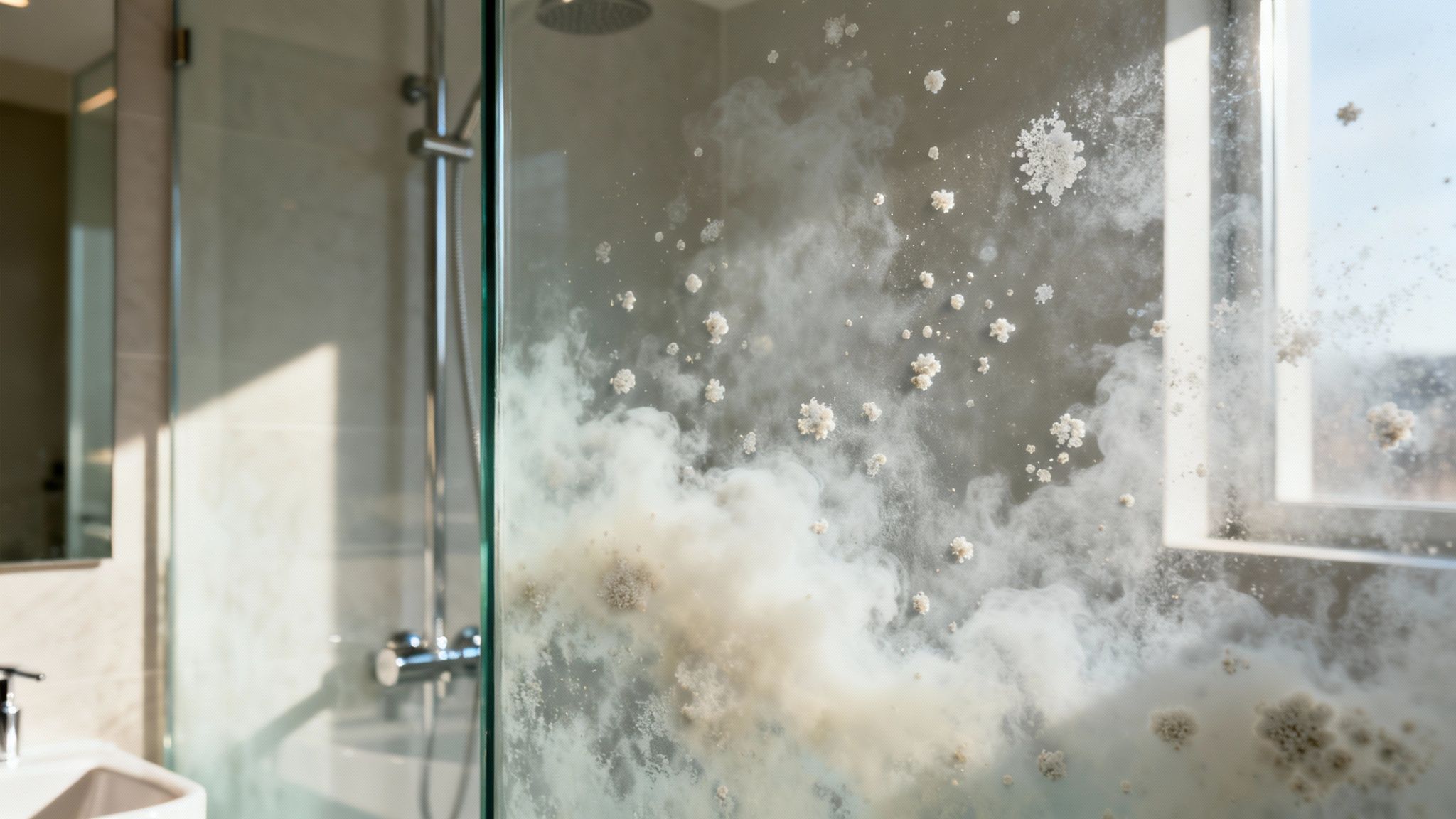
If you've ever scrubbed a shower door until your arms ached, only to have those milky spots reappear the second it dries, you know the frustration. Trust me, it’s not your cleaning skills failing you; you’re up against basic chemistry. The real culprit is "hard water," which is just a term for water that’s loaded with dissolved minerals.
Here in Southwest Florida, our water supply is primarily groundwater. As it travels through layers of limestone, it picks up a heavy dose of calcium and magnesium. So, when that water evaporates off your shower doors, windows, or custom mirrors, those minerals get left behind.
The Science Behind Stubborn Stains
What starts as a few harmless water spots can quickly build into a tough, chalky film. These mineral deposits don't just sit on the surface; they actually form a chemical bond with the silica in the glass. That's why a quick spritz of your average all-purpose cleaner does next to nothing. You're not just wiping off dirt—you're trying to break a molecular bond.
This buildup has a few signature looks:
- A cloudy or foggy appearance that never seems to go away.
- White, chalk-like spots that often feel rough to the touch.
- A noticeable loss of transparency, making everything look hazy.
Left unchecked, this becomes more than just an eyesore. The alkaline minerals can start to corrode the glass surface in a process called etching. This is permanent damage, creating tiny pits in the glass that make it even easier for new stains to grab hold. A dead giveaway for etching is when a section of the glass stays cloudy even when it's wet. That’s how you know the damage is no longer just on the surface.
It's crucial to understand the difference here: stains are a buildup on the glass, while etching is damage to the glass. Knowing what you're up against is the first step toward finding the right fix and preventing more damage.
Why Location Matters for Your Glass Care
Living in places like Naples or Fort Myers puts you on the front lines in the battle against hard water. We have some of the hardest water in the country. Sprinklers hitting your windows, daily showers, and even a splash on the bathroom mirror all contribute to the problem. The combination of high mineral content and our intense sun and heat speeds up the bonding process, making those stains set in faster and harder.
This local reality means that being proactive is non-negotiable if you want to keep your glass looking its best. The stunning clarity of premium materials, like those we explore in our guide to ultra-clear glass, can be completely ruined by hard water buildup. This is exactly why we need to ditch the generic cleaners and embrace smarter, more effective strategies.
Your Go-To Methods for Everyday Stain Removal
Before you start reaching for heavy-duty chemicals or thinking about calling a professional, let's talk about the first line of defense. Most of the time, the best tools for tackling those everyday water spots and light mineral rings are probably already in your kitchen pantry.
These are the simple, effective methods you should turn to for regular upkeep. The real secret is to catch the stains early. When they're fresh, hard water spots are just mineral deposits sitting on the surface, making them easy to dissolve and wipe away. The longer you let them sit, the deeper they bond with the glass, and the tougher the fight becomes.
The Classic Vinegar and Water Solution
You've probably heard about using vinegar to clean glass, and for good reason—it works. The magic is in the acidity of plain white vinegar, which is perfect for breaking down the alkaline mineral deposits (mostly calcium and magnesium) that cause those chalky, cloudy marks.
But there's a technique to it. You can't just splash it on and hope for the best.
- Mix it right: Grab a spray bottle and fill it with a 50/50 mix of white vinegar and distilled water. I always recommend distilled water because it’s mineral-free, so you’re not accidentally adding new deposits while you clean.
- Saturate the glass: Spray the solution generously all over the stained area. You want to see the liquid clinging to the glass, fully covering every spot.
- Give it time to work: This is the step most people skip. Let the solution sit and work its magic for at least 10-15 minutes. This "dwell time" is crucial; it allows the acid to actually dissolve the mineral bonds. On a vertical surface like a shower door, you might have to spritz it again to keep it wet.
- Scrub and dry: After it has dwelled, use a non-abrasive sponge or a microfiber cloth to gently scrub the glass. You should feel the gritty texture of the stains start to smooth out. Once you’re done, rinse the glass with clean water and—this is key—dry it completely with a clean, dry microfiber towel to prevent new spots from forming.
This simple trick is incredibly effective, especially for newer stains. It's no wonder it's so popular, considering that hard water is a problem for up to 85% of U.S. households. Those mineral deposits can cut glass clarity by a staggering 40-60% in less than a year. A good vinegar solution can knock out about 70% of these light stains, but its power definitely fades on buildup that's been there for more than a few months. You can find more data on this over at CleanAndClearMN.com.
Using Baking Soda for a Little Extra Scrubbing Power
Sometimes, an acidic spray isn't quite enough on its own, especially for stains that feel a bit rough to the touch. That’s when I bring in some baking soda. It works as a very mild abrasive, giving you just enough grit to physically scrub away deposits without scratching the glass.
Think of it as a gentle polish. While the vinegar dissolves the minerals from the outside in, the baking soda helps lift them off the surface.
A Quick Word of Warning: Please, never use harsh scouring powders or steel wool on glass (with the rare exception of #0000 grade, which we'll get to later). You'll end up with a mess of fine scratches that permanently mar the surface and, ironically, give new stains even more places to cling to.
Making a paste is simple:
- Just mix baking soda with a tiny bit of water until you get a thick consistency, almost like toothpaste.
- Apply this paste directly to the stubborn spots and let it sit for a few minutes.
- Then, using a damp cloth, gently scrub in small circles. The fine particles will do the work for you.
Rinse it all off completely and dry the glass thoroughly. This one-two punch of dissolving with acid and gently scrubbing with a mild abrasive is your best bet for most hard water headaches. For more tips on keeping your shower looking brand new, check out our complete guide on shower door maintenance.
When DIY Fixes Aren't Enough: Tackling Stubborn Mineral Buildup
So, you’ve tried the vinegar spray and the baking soda paste, but that chalky, stubborn film just won’t budge. This is a classic sign you're dealing with more than just a light surface stain. It’s the point where many people either give up in frustration or, much worse, grab a green scouring pad and end up with permanent scratches.
Before you throw in the towel, it’s time to bring in the heavy hitters. Sometimes, household remedies simply don’t have the chemical muscle to break down years of bonded calcium and magnesium deposits.
Choosing the Right Commercial Cleaner
When you walk down the cleaning aisle, you’re bombarded with products promising to erase tough stains. To cut through the noise, look for a cleaner specifically formulated with mild acids, like sulfamic or phosphoric acid. These ingredients are designed to dissolve heavy mineral deposits far more effectively than vinegar ever could, without being overly aggressive on the glass itself.
Products like CLR (Calcium, Lime & Rust Remover) or Lime-A-Way are popular for a reason—they get the job done. Just make sure to follow the manufacturer's directions to the letter. This typically means applying the cleaner, letting it sit for a very specific (and often brief) period, and then rinsing it away completely.
Crucial Safety Tip: Always wear gloves and work in a well-ventilated area when using these potent cleaners. Under no circumstances should you ever mix them with other cleaning agents, especially bleach, as this can create dangerous toxic fumes.
Is It a Stain or Is It Permanent Etching?
Here’s a critical distinction you need to make before you start scrubbing. Are you dealing with a stain, or has the glass become etched? A stain is a mineral deposit sitting on top of the glass. Etching, on the other hand, is physical damage to the glass surface, where the alkaline minerals in the water have literally eaten away at it, creating microscopic pits.
So, how can you tell the difference? It's pretty simple.
- Try the wet test: Spray the cloudy spot with water. If the fogginess vanishes while the glass is wet but reappears as it dries, you’re looking at a surface stain you can remove.
- Identify etching: If the glass stays cloudy and opaque even when it's soaking wet, the surface has likely been etched. This damage is permanent, and no cleaner in the world can fix it.
Knowing this is key because you can scrub etched glass for hours and you'll only get more frustrated. This quick decision tree can help you choose the right starting point for your cleaning attack.
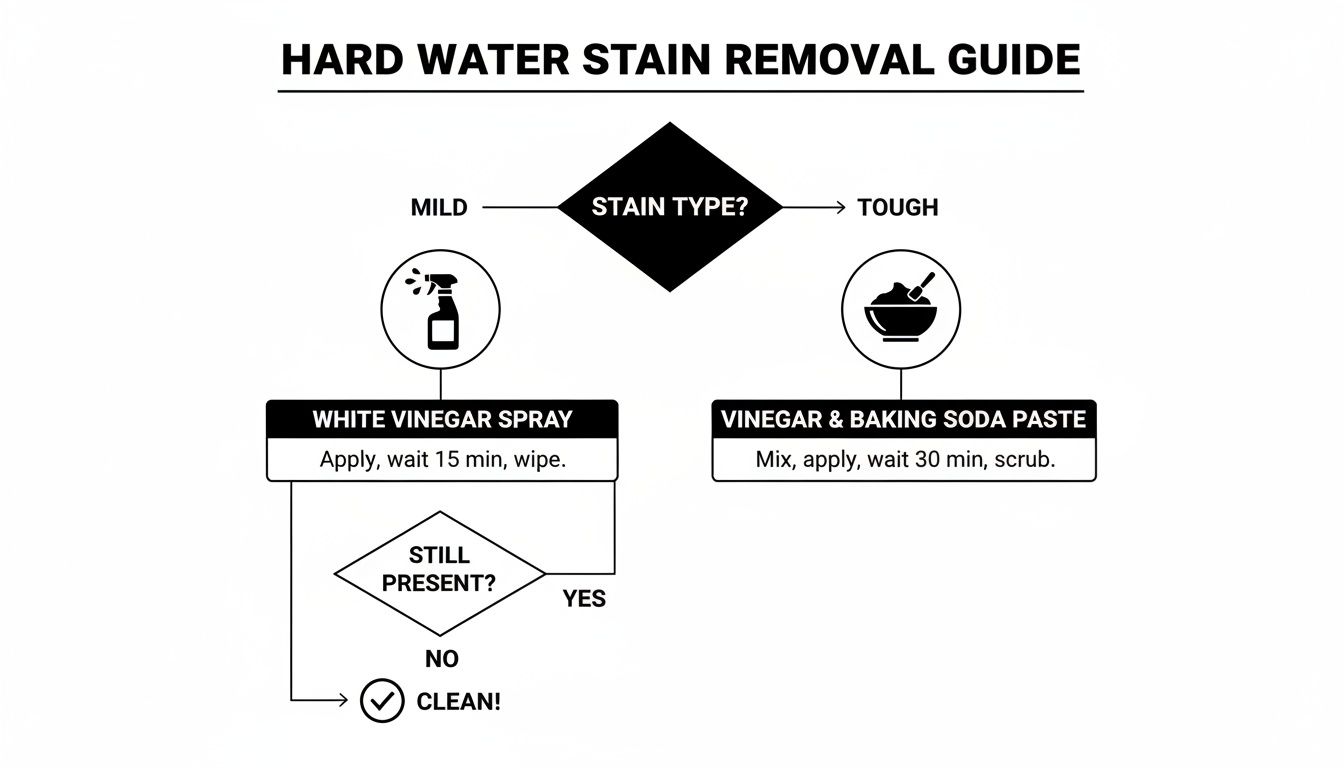
This chart helps visualize the process, pointing you toward a simple spray for light spots or a more targeted paste for tougher, concentrated mineral buildup.
To help you decide on the best approach, here’s a quick breakdown of the methods we've discussed.
Comparing Hard Water Stain Removal Methods
Choosing the right tool for the job is everything when it comes to glass. What works for a light film can be useless against thick buildup, and using a method that’s too aggressive can cause irreversible damage. This table compares the common tactics.
| Method | Best For | Effectiveness | Risk of Damage |
|---|---|---|---|
| Vinegar & Water Spray | Light, recent mineral spots and routine cleaning. | Moderate | Very Low |
| Baking Soda Paste | Mild to moderate buildup that needs a gentle abrasive. | Good | Low |
| Commercial Cleaners | Heavy, stubborn, and long-term mineral stains. | High | Medium (if misused) |
| #0000 Steel Wool | Extreme, caked-on deposits after all else fails. | Very High | High (if not used correctly) |
Ultimately, the goal is to use the least aggressive method that gets the job done. Always start with the gentlest option and only escalate if necessary.
The Last Resort: A Pro-Level Trick for the Toughest Stains
If you’ve confirmed you're dealing with a stubborn surface stain (not etching) and even the commercial cleaners aren’t cutting it, there's one final tool you can try before calling a professional: #0000 grade steel wool.
Let me be crystal clear: this requires extreme caution. We are only talking about super-fine, four-zero (#0000) grade steel wool. Any other grade is far too coarse and will absolutely scratch your glass. This method works by using the incredibly fine metal fibers to physically shear the mineral deposits right off the surface.
Here’s how to use it safely:
- Always work on a wet surface. Use a vinegar solution or plain water as a lubricant. Never, ever use steel wool on dry glass.
- Use incredibly light pressure. Let the tool do the work. Pressing too hard is the fastest way to create scratches you can't remove.
- Work in small, circular motions. Focus on one small section at a time to keep things controlled and ensure even removal.
- Rinse and check constantly. After a few gentle circles, rinse the area, wipe it dry, and check your progress. Stop as soon as the stain is gone.
This technique should truly be your last resort for the most resilient buildup. For more in-depth guidance on achieving perfectly clear surfaces, check out this expert advice on how to remove water spots from glass. Stepping up to these more powerful methods can restore your glass to its former glory, but knowing when a stain has become permanent damage is the key to avoiding a costly mistake.
The Secret To Permanently Spotless Glass
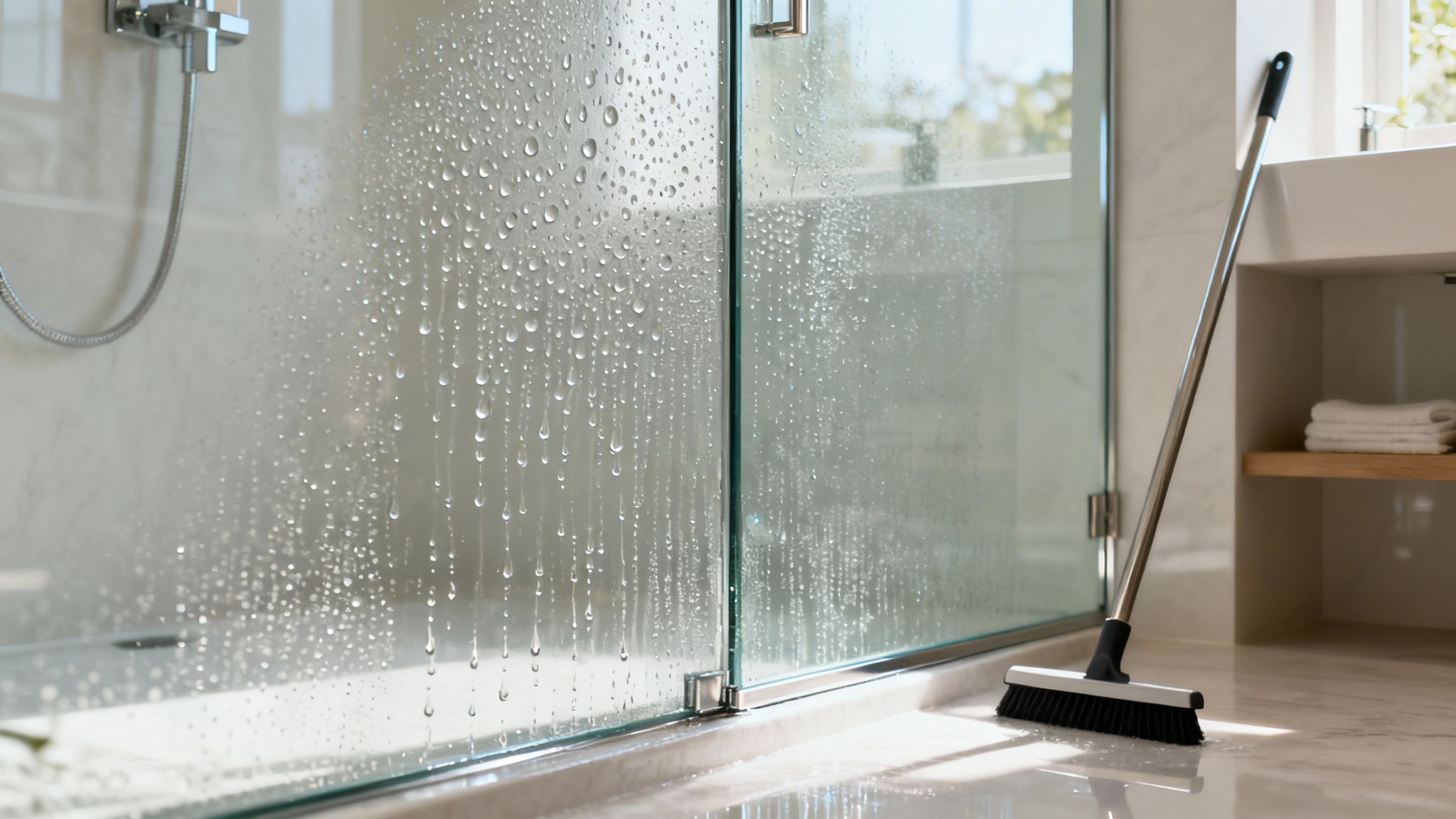
You know the drill: you spend an hour scrubbing away mineral spots and, before you know it, those cloudy rings are back. Chasing stains is frustrating—and frankly, a never-ending battle. The real secret lies not in stronger cleaners but in shifting to a prevention-first mindset.
Glass features—think frameless shower doors, custom mirrors or sleek railings—are an investment. When minerals cloud their surface, you lose both that clear view and the style impact you paid for. Let’s look at simple routines and professional treatments that lock out stains for good.
Simple Habits That Make A Huge Difference
Never underestimate the power of a quick swipe. Keep a good-quality squeegee within arm’s reach of your shower and give the glass a couple of swipes after each use.
- Removes 90% of water droplets before they dry
- Takes less than a minute daily
- Same trick works on windows, mirrors or railings with a microfiber cloth
In South Florida’s humidity, homeowners who stick to this habit report preventing 95% of new mineral buildup. The goal is straightforward: don’t let water sit long enough to leave a trace.
If water never lingers, it can’t deposit minerals. That’s why a little effort up front beats a heavy duty scrub later.
The Ultimate Solution Protective Coatings
Daily squeegeeing is terrific, but a hydrophobic coating takes things to the next level. Imagine an invisible shield that makes water bead and roll off, hauling minerals and soap scum with it.
One standout option is Diamond-Fusion, a chemical treatment that bonds at a microscopic level. Here’s what that kind of barrier delivers:
- Reduced Cleaning Time: Maintenance drops by up to 90%, often just a damp cloth pass
- Stain Resistance: Blocks minerals and grime from ever sticking
- Enhanced Appearance: Glass stays crystal-clear, preserving your design choices
- Long-Term Protection: Backed by warranties that last for years
Commercial properties use these coatings because they face relentless traffic and moisture. Laboratory tests show Diamond-Fusion prevents 99% of mineral adhesion. In fact, up to 50% of untreated glass surfaces in U.S. buildings show hard water damage within 18 months. For a peek behind the science, check out this expert discussion.
Pairing a few daily squeegee strokes with a professional-grade coating is the only way to truly end the cycle of scrubbing. Ready to treat your glass like the luxury feature it is? Discover more about upgrading your home’s glass in our guide on how a glass company can make your home feel luxurious.
When It’s Time to Call a Glass Specialist
You’ve scrubbed, sprayed, and tried every trick in the book. Still, that stubborn, foggy haze on your glass just won’t budge. This is the point where persistence can actually start to cause damage. Sometimes, the problem has moved beyond a simple surface stain and has become a permanent flaw in the glass itself. Continuing to scrub can do more harm than good.
Knowing when to put down the cleaning tools and call a professional isn't admitting defeat. It's a smart move to protect your investment. The line between a tough stain and permanent damage can be surprisingly thin, and a glass specialist has the trained eye and right tools to tell the difference. More often than not, they can salvage glass that looks like a lost cause.
Recognizing the Signs of Permanent Etching
The most critical sign that you’re dealing with more than just a stain is etching. This is what happens when the alkaline minerals in hard water sit on the glass for so long that they actually corrode the surface, creating microscopic pits and roughness. This isn't a deposit on the glass; it's damage to the glass.
So, how can you be sure?
- The Wet Test is Your Best Friend: Grab a spray bottle and douse the cloudy area with water. If the haze disappears while the glass is wet, you’re in luck—it's most likely still just a surface-level mineral deposit. But if the glass stays foggy and opaque even when soaking wet, that’s the classic sign of etching.
- Feel for a Rough Texture: Gently run your fingernail over a clean, dry section of the affected area. Does it feel gritty or rough compared to the smooth, untouched glass nearby? If so, the surface has likely been compromised.
When glass stays cloudy even while wet, you've officially crossed from a cleaning issue to a restoration problem. At this point, no amount of vinegar or off-the-shelf cleaner is going to reverse the damage.
Trying to scrub away etched glass is not just pointless; it can make the situation worse. You risk creating fine scratches that will make the glass even more prone to future staining and damage. This is precisely the moment when professional help becomes essential.
How a Glass Professional Can Restore Your Glass
When DIY methods have hit a wall, a glass specialist brings more than just stronger chemicals to the table. They come equipped with specialized polishing systems and proven techniques that simply aren't available to the public.
The process usually involves a multi-stage polishing system that uses a series of fine, abrasive compounds and mechanized buffers. The goal is to carefully and evenly grind down the microscopic top layer of the glass, effectively removing the etched pits and restoring a smooth, clear surface. It’s a delicate procedure that demands real precision and experience to get right without distorting the glass.
A specialist can:
- Accurately Assess the Damage: They can quickly determine the depth of the etching and tell you if restoration is a realistic option, potentially saving you the cost of a full replacement.
- Use Professional Polishing Equipment: This machinery removes the damaged layer with perfect uniformity—something impossible to achieve by hand with steel wool or abrasive pads.
- Restore Optical Clarity: The final polishing stages bring back the glass's original smoothness and transparency, making it look brand new again.
This kind of restoration is far safer and more effective than any aggressive DIY attempt. Trying to mimic this with a handheld drill and a polishing kit often results in a wavy, distorted finish or, even worse, deep scratches that can't be fixed.
If your glass is showing the tell-tale signs of etching, the safest and most effective next step is to get a professional opinion. You can easily connect with a specialist and request a free estimate to explore your options.
Your Top Hard Water Stain Questions, Answered
When you're deep in the trenches of a tough cleaning project, questions always come up. It's one thing to read a guide, but another to be face-to-face with a stubborn, cloudy mess on your shower door. Let's walk through some of the most common questions we get from homeowners about getting rid of hard water stains for good.
Getting the right answer can be the difference between finally winning the battle and just giving up in frustration.
Can Hard Water Stains Actually Become Permanent?
This is the question on everyone's mind, and the answer isn't a simple yes or no. The mineral deposits themselves—the white, chalky stuff you see—are not permanent. With the right tools and a little elbow grease, they can almost always be removed.
The real danger is what happens when those deposits are ignored for too long, often for months or even years. The alkaline minerals start to corrode the glass surface in a process called etching. This is what you feel when you run your hand over the glass and it feels rough or pitted. That damage, the microscopic pitting from corrosion, is unfortunately permanent.
Regular cleaning is your absolute best defense. It stops the minerals from getting a foothold long enough to cause irreversible etching.
How Often Should I Clean to Keep Stains from Coming Back?
Honestly, prevention is so much easier than the cure. The right cleaning schedule really depends on how hard your water is and how much water hits the glass.
For a shower door here in Southwest Florida, where the water is notoriously hard, a quick daily wipe-down is a game-changer.
- Daily: Grab a squeegee or a microfiber towel and wipe the glass after the last shower of the day. This simple, 30-second task removes over 90% of the water before the minerals can dry and bond to the surface.
- Weekly: Do a quick spray-down with a 50/50 mix of white vinegar and water. This will dissolve any light spotting that managed to appear during the week.
For windows that get hit by sprinklers, you'll want to clean them weekly. For other glass, a bi-weekly clean is usually plenty. The key is consistency. A little effort now saves you from a major scrubbing session later.
Think of it this way: a quick daily wipe prevents the chemical bond from ever forming. That's a whole lot less work than spending an hour trying to break that bond once it's set.
What’s the Difference Between a Cleaner and a Protectant?
This is a really important distinction that saves a ton of work down the line. It's the difference between being reactive and proactive.
- Cleaners: These are your problem-solvers. Products like vinegar, baking soda pastes, or commercial-grade removers are designed to chemically dissolve mineral stains that are already stuck to your glass. They are reactive tools.
- Protectants: Think of these as a shield. Hydrophobic coatings like Diamond-Fusion create an ultra-thin, invisible barrier that makes the glass surface slick. Water can't cling to it; instead, it beads up and rolls right off, taking the minerals with it. They are proactive.
A cleaner gets your glass back to a clean slate. A protectant keeps it that way with very little effort. We've seen it time and again—clients are blown away by how much easier life is when a deep clean is followed up with a professional coating.
If you have more questions, you can always find more answers in our complete company FAQs. Ultimately, knowing the difference between cleaning and protecting empowers you to keep your glass looking brand new for years.
Ready to stop fighting a never-ending battle with hard water stains? The team at AmeriGlass Industries can restore your glass to its original clarity and apply a professional-grade protective coating to keep it that way. Get your free estimate today and discover how easy it can be to have permanently spotless glass.